
The Renovation Reality: Why Wire Colours Matter Before You Demo
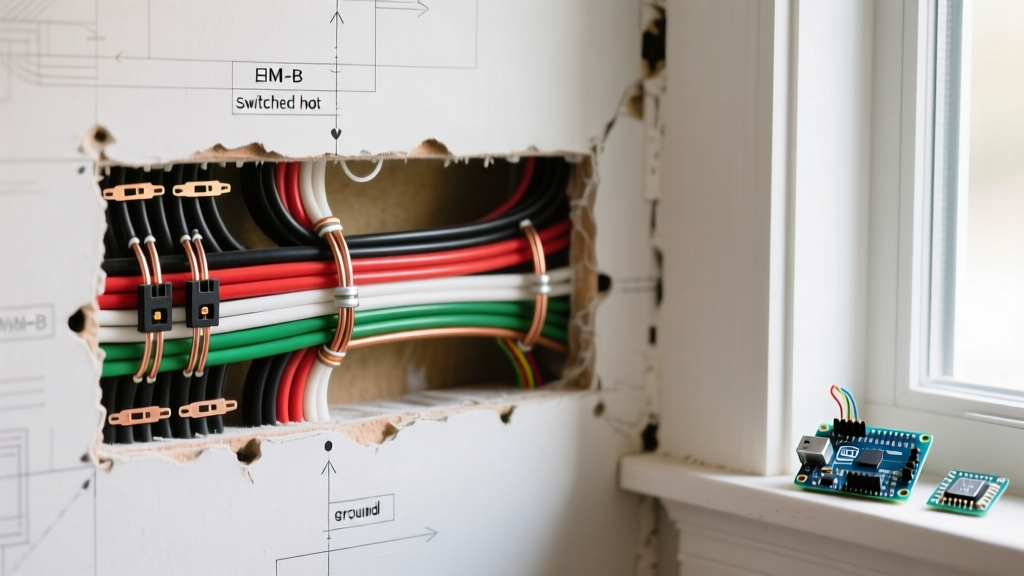
When you swing a sledgehammer into the drywall of a mid-century home during a kitchen or bathroom remodel, you are rarely greeted by the pristine, color-coded wiring found in new construction. Instead, you might encounter a chaotic mix of fading cloth jackets, ungrounded metal-clad cables, and modern non-metallic (NM-B) wires spliced together. Understanding house electrical wiring colours is not just an academic exercise for electricians; it is a critical safety and budgeting imperative for any homeowner or general contractor planning a 2026 renovation.
Misidentifying a wire can lead to catastrophic short circuits, severe shock hazards, or immediate failures during municipal rough-in inspections. According to the Electrical Safety Foundation International (ESFI), electrical malfunctions in older, un-upgraded homes account for tens of thousands of residential fires annually. This guide breaks down modern sheath colours, individual conductor identification, and the legacy wiring nightmares you must plan for when opening up old walls.
Modern NM-B Cable Sheath Colours (2026 Standards)
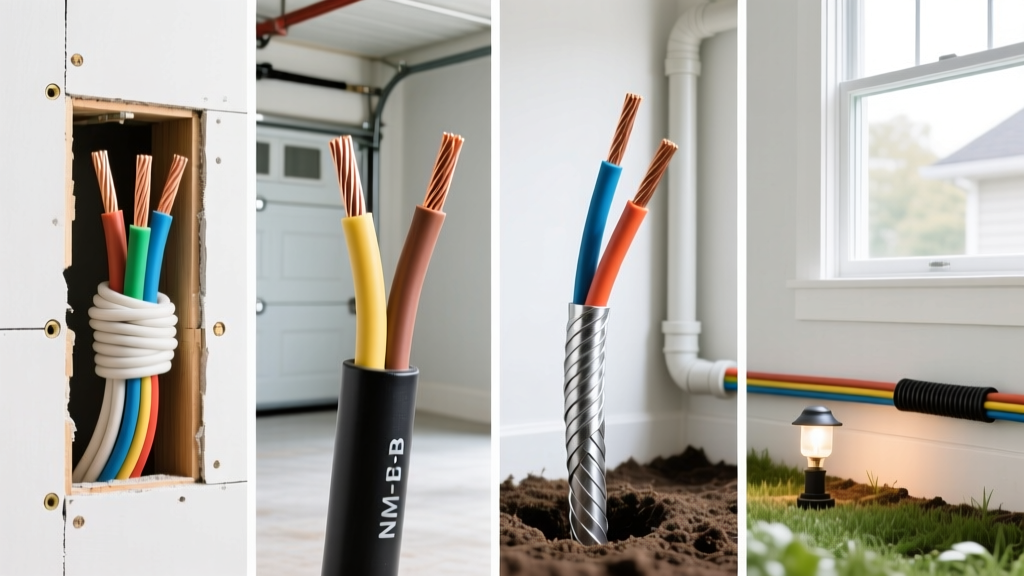
In modern residential renovations, you will primarily be pulling NM-B (Non-Metallic Sheathed Cable), commonly referred to by the brand name Romex. The outer PVC jacket colour is not arbitrary; it is a standardized visual indicator of the wire gauge (AWG) and the maximum amperacity of the circuit. While manufacturers like Southwire and Cerro Wire dominate the North American market, the colour coding remains universal across the industry.
| Jacket Colour | Wire Gauge (AWG) | Max Amperage | Common Renovation Applications | 2026 Avg. Cost (250ft Roll) |
|---|---|---|---|---|
| White | 14 AWG | 15 Amps | Standard lighting circuits, low-draw bathroom exhaust fans. | $95 - $115 |
| Yellow | 12 AWG | 20 Amps | Kitchen countertop receptacles, bathroom GFCI circuits, dining room outlets. | $145 - $165 |
| Orange | 10 AWG | 30 Amps | Electric water heaters, dedicated window AC units, dryers (if 120V/30A). | $210 - $240 |
| Black | 6 AWG or 8 AWG | 50 - 40 Amps | Electric ranges, sub-panel feeds, heavy-duty EV charger circuits (Level 2). | $350 - $450 |
Renovation Tip: For any 2026 kitchen or bathroom remodel, default to Yellow (12/2 or 12/3) NM-B. The National Fire Protection Association (NFPA) and the National Electrical Code (NEC) mandate 20-amp circuits for kitchen small-appliance branches and bathroom receptacles. Using 14 AWG (White) in these zones will result in an automatic inspection failure.
Individual Conductor Colours: Decoding the Inside of the Jacket
Once you strip back the NM-B sheath, you are met with individual conductors. The NEC strictly governs the use of these colours to prevent cross-wiring and ensure safe maintenance down the line.
- Black (Ungrounded / Hot): The primary current-carrying wire. It brings 120V from the breaker panel to the device. Always treat black wires as live until verified with a non-contact voltage tester (like the Klein Tools NCVT-3).
- Red (Secondary Hot / Traveler): Found in 3-wire cables (e.g., 12/3 NM-B). Used for 240V appliances, shared-neutral multi-wire branch circuits (MWBC), or as a traveler wire in 3-way and 4-way switch configurations.
- White (Grounded / Neutral): The return path for the current back to the panel. Under NEC Article 200, white or gray must exclusively be used for grounded conductors. Never use a white wire as a hot wire without proper re-identification (see below).
- Bare Copper or Green (Equipment Ground): Governed by NEC Article 250, this wire provides a safe path to earth in the event of a short circuit. It connects to the grounding bus bar in the panel and the green grounding screw on receptacles.
- Blue & Yellow (Travelers / Commercial): While rarely found inside standard residential NM-B cable, you will see blue and yellow THHN wires pulled through metal or PVC conduit. These are typically used as travelers for complex 3-way/4-way switch setups or as switched legs for ceiling fans.
Legacy Wiring Nightmares: What You Will Actually Find
If your renovation involves a home built before 1985, you must budget for legacy wiring remediation. Opening a wall in a 1960s split-level often reveals wiring that completely ignores modern colour conventions.
Pre-1950s: Cloth and Rubber Insulation
Homes from the early 20th century often feature knob-and-tube or early cloth-sheathed wiring. The colours here are usually faded black (hot) and white or grey (neutral) rubberized cloth. The Danger: The rubber insulation becomes brittle over time and crumbles when disturbed. If you are doing a whole-home remodel, budget $8,000 to $15,000 to completely abandon and replace this wiring, as insurance companies will often drop coverage for homes with active knob-and-tube systems.
1950s-1970s: Metal-Clad (BX) and Ungrounded Receptacles
You will frequently find BX (armored cable) featuring a black hot and a white neutral, but no dedicated ground wire. The metal sheath was intended to act as the ground, but the internal bonding strip often degrades, rendering the ground path useless. During a renovation, you must either replace these runs with modern NM-B or install GFCI receptacles marked "No Equipment Ground" to meet modern safety codes.
CRITICAL RENOVATION WARNING: Aluminum Branch Wiring (1965-1973)
During the copper shortage of the late 1960s, builders used single-strand aluminum wire (often featuring a dull grey or silver conductor colour instead of copper). This AA-1350 alloy expands and contracts at a different rate than brass or copper terminals, leading to loose connections, arcing, and fires. If you expose grey aluminum wire during your demo, halt work and consult a licensed electrician. Remediation requires pigtailing with copper using specialized AlumiConn or COPALUM connectors, or a full rewire.
The Switch Loop Exception: Re-identifying White Wires
One of the most confusing sights for a DIY renovator is opening a ceiling junction box or a switch enclosure and finding a white wire connected to a black wire or a brass screw. Is it a code violation? Not necessarily.
Under NEC Article 200.7(C), a white wire can be used as an ungrounded (hot) conductor in a switch loop, provided it is permanently re-identified. In older homes, electricians would run a 14/2 cable from a ceiling light down to a wall switch. The black wire carries constant hot down to the switch, and the white wire carries the "switched hot" back up to the light fixture. The Rule: The white wire must be wrapped in black or red electrical tape (or painted) at every termination point to indicate it is hot. If you find this in your renovation, ensure the tape is intact; if it has peeled off, re-tape it before closing the drywall to protect future homeowners.
Renovation Budgeting: Rewiring and Upgrade Cost Matrix
Integrating electrical upgrades into your renovation plan requires accurate budgeting. Below is a 2026 cost matrix for common electrical remediation tasks encountered during residential remodels.
| Renovation Scenario | Wiring Issue Identified | Required Action | Estimated 2026 Cost (Materials + Labor) |
|---|---|---|---|
| Kitchen Demo | Ungrounded 15A circuits (White/Yellow NM-B missing ground) | Run new 12/2 Yellow NM-B (20A) for small appliance branches. | $800 - $1,200 per circuit |
| Bathroom Remodel | Shared neutral or no GFCI protection on legacy wiring. | Install dedicated 12/2 20A circuit with GFCI breaker or receptacle. | $450 - $750 |
| Whole-Home Open Concept | Faded cloth/rubber wiring or active Knob & Tube. | Full home rewire (abandon old, pull new NM-B, upgrade panel). | $12,000 - $25,000+ |
| Basement Finishing | Exposed 6 AWG Black NM-B improperly spliced. | Install proper junction boxes, update sub-panel feeds. | $600 - $900 |
Final Planning Advice for the 2026 Renovator
Never assume the colour of a wire dictates its current state in an older home. A previous homeowner may have improperly used a white wire as a hot, or a black wire may have been disconnected upstream but still retains induced voltage. Always invest in a high-quality multimeter (such as the Fluke 117) and a non-contact voltage tester before cutting, stripping, or capping any wire you uncover during demolition.
By understanding the standardized house electrical wiring colours and anticipating the legacy anomalies hidden behind the plaster, you can plan your renovation timeline accurately, budget for necessary remediations, and ensure your finished space is both beautiful and fundamentally safe.