
The Professional Approach to Troubleshooting Electrical Wiring Problems
Electrical faults rarely announce themselves before they cause damage. Whether you are dealing with a flickering lighting circuit, a nuisance-tripping AFCI breaker, or a receptacle that melts under a continuous 15-amp load, troubleshooting electrical wiring problems requires a systematic, data-driven approach. Guessing and swapping parts is not just inefficient; it is a severe fire hazard. According to the U.S. Consumer Product Safety Commission (CPSC), electrical malfunctions account for tens of thousands of residential fires annually, many stemming from undetected high-resistance connections and overloaded neutrals.
This guide moves beyond basic outlet testers and flashlights. We will cover advanced diagnostic techniques, voltage drop calculations under load, multi-wire branch circuit (MWBC) hazards, and thermal imaging protocols expected of master electricians in 2026.
Phase 1: Assembling the 2026 Diagnostic Toolkit
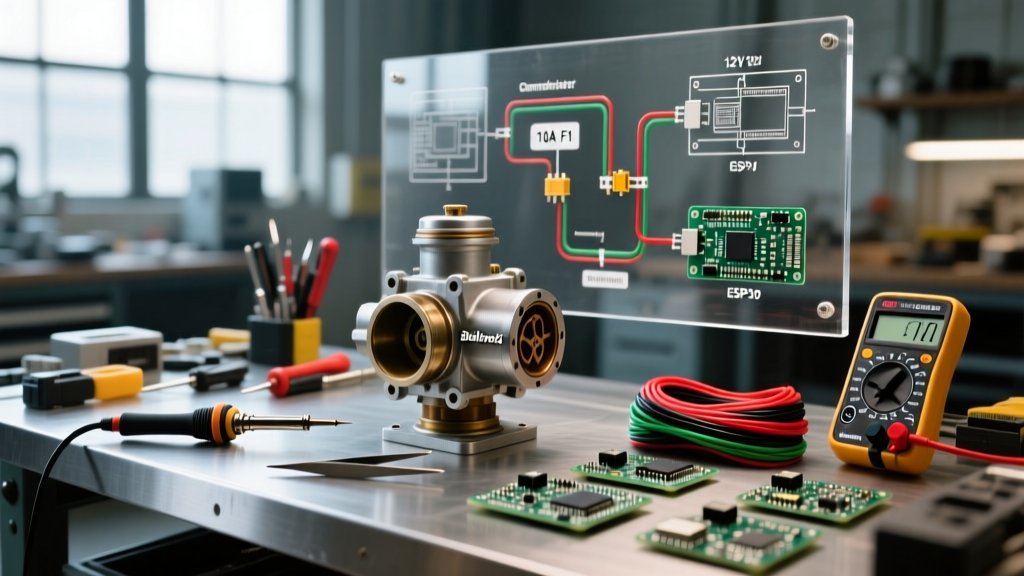
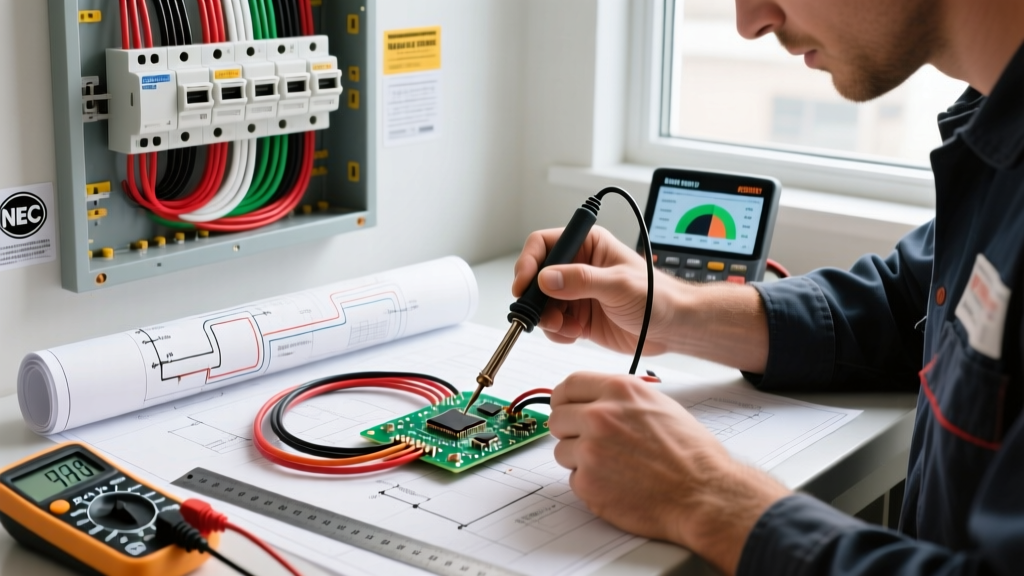
You cannot accurately troubleshoot modern electrical systems with a $15 analog multimeter. Modern homes feature sensitive electronics, combination-type arc fault breakers, and smart panels that require precise diagnostic tools.
- True-RMS Digital Multimeter: The Fluke 117 True RMS Electricians Multimeter (approx. $200) is the industry standard. It provides accurate readings on non-linear loads and features VoltAlert for non-contact voltage detection.
- Thermal Imaging Camera: The FLIR E4 or E5 (approx. $400-$600) is essential for identifying high-resistance terminations inside panels before they ignite.
- Torque Screwdriver: The Klein Tools 32308 or an equivalent calibrated torque screwdriver. As mandated by NEC 110.14(D), terminations must be torqued to manufacturer specifications (typically 14-16 in-lbs for 14-10 AWG copper on standard 15A/20A devices).
- Circuit Tracer: The Amprobe AT-3500 or similar advanced tracer to identify circuits in chaotic, unlabeled panels.
Phase 2: Voltage Drop Testing Under Load
Many DIYers and junior electricians test voltage at a receptacle with no load attached, read 122V, and declare the circuit healthy. This is a critical diagnostic error. A circuit with a corroded splice or a backstabbed push-in connection might show 122V at rest, but the moment a 1500W space heater (drawing 12.5A) is plugged in, the voltage can plummet to 105V, generating massive heat at the point of resistance.
The 3% Rule and NEC Guidelines
While the National Electrical Code (NEC) primarily enforces voltage drop through informational notes rather than strict mandatory limits for standard residential branch circuits, NFPA 70 (NEC) 210.19(A) Informational Note No. 4 recommends a maximum 3% voltage drop on branch circuits for reasonable efficiency. On a 120V circuit, a 3% drop equates to 3.6V. If your loaded voltage drops below 116.4V, you have a high-resistance fault or undersized wiring.
How to Perform a Loaded Voltage Drop Test
- Plug a known resistive load (like a 1500W hair dryer or a dedicated load tester) into the suspect receptacle.
- Set your Fluke 117 to AC Voltage.
- Measure the voltage at the receptacle while the load is actively running.
- Next, measure the voltage at the main panel bus bar or the breaker terminal feeding that circuit.
- Subtract the receptacle voltage from the panel voltage. If the difference exceeds 3.6V, you must isolate the fault by testing intermediate junction boxes and splices.
Diagnostic Matrix: Common Wiring Faults
Use this matrix to cross-reference symptoms with multimeter readings and physical inspections.
| Fault Type | Primary Symptom | Diagnostic Test | Expected / Faulty Reading |
|---|---|---|---|
| High-Resistance Splice | Receptacle melts; lights dim when appliance starts. | Loaded Voltage Drop Test | Panel: 122V | Receptacle (Loaded): <115V |
| Shared / Loose Neutral (MWBC) | 120V appliances overvoltage and burn out; lights surge. | Line-to-Neutral & Line-to-Line Test | Line-Neutral: 140V+ on one leg, 90V on the other. Line-Line: 240V. |
| Backstabbed Push-In Terminal | Intermittent power loss; thermal hotspot on device cover. | Thermal Imaging & Physical Pull Test | Temperature delta >15°F above ambient; wire pulls out with moderate force. |
| Phantom Voltage (Induced) | Dead wire reads 40V-80V on high-impedance meter. | Low-Impedance (LoZ) Voltage Test | LoZ reading drops to 0V, confirming no actual current capacity. |
Phase 3: Multi-Wire Branch Circuits (MWBC) and Floating Neutrals
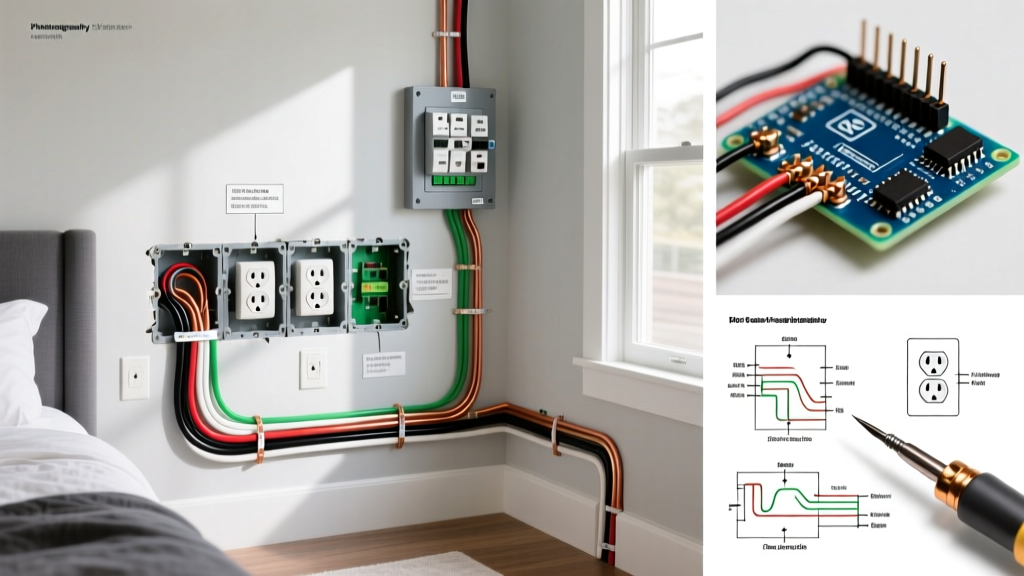
One of the most lethal troubleshooting scenarios involves Multi-Wire Branch Circuits (MWBCs). An MWBC consists of two ungrounded (hot) conductors sharing a single grounded (neutral) conductor. The two hots must be on opposite phases (e.g., Leg A and Leg B in a standard 120/240V split-phase system) so the neutral only carries the unbalanced load.
The Floating Neutral Hazard
If the shared neutral is disconnected, broken, or improperly terminated at the panel, the circuit essentially becomes a 240V series circuit. The voltage will divide inversely proportional to the resistance of the connected loads. A 15W LED lamp on Leg A and a 1500W microwave on Leg B will cause the LED lamp to experience nearly 240V, resulting in immediate component destruction and a potential fire. Furthermore, NEC 210.4(B) requires simultaneous disconnect (via a 2-pole breaker or handle tie) to prevent an electrician from turning off only one leg and assuming the neutral is safe to touch. When troubleshooting an MWBC, always verify the neutral continuity and ensure both poles are tied together.
Phase 4: AFCI Nuisance Tripping Diagnostics
As of the 2026 NEC cycle, Combination-Type Arc Fault Circuit Interrupters (CAFCIs) are required in almost all living spaces. A common troubleshooting headache is the "nuisance trip," where the breaker trips without an obvious fault.
Isolating the Arc Fault
Modern CAFCIs (like the Siemens QAF2 or Eaton CHFD series) analyze high-frequency current signatures to distinguish between normal operational arcing (like a vacuum motor or drill) and dangerous parallel or series arcing.
Expert Diagnostic Tip: If a CAFCI trips immediately upon resetting, it is typically a hard short or a direct ground fault. If it trips randomly after 5 to 10 minutes of operation, you are likely dealing with a series arc (a loose terminal screw) or a shared neutral situation where the breaker's microprocessor detects an imbalance between the hot and neutral current return paths.
To troubleshoot, unplug all electronic devices with brush motors. Inspect all receptacles on the circuit for backstabbed connections. Push-in terminals are notorious for creating micro-arcs under thermal expansion and contraction cycles. Strip the wires, pigtail them using ideal wire-nuts or Wago 221 lever connectors, and terminate them on the side-screw terminals torqued to spec.
Phase 5: Thermal Imaging for Termination Failures
Visual inspections miss internal oxidation and loosening caused by thermal cycling. Aluminum wiring (common in homes built between 1965 and 1973) is particularly susceptible to creep and oxidation if not terminated with CO/ALR rated devices and antioxidant compound (like Noalox).
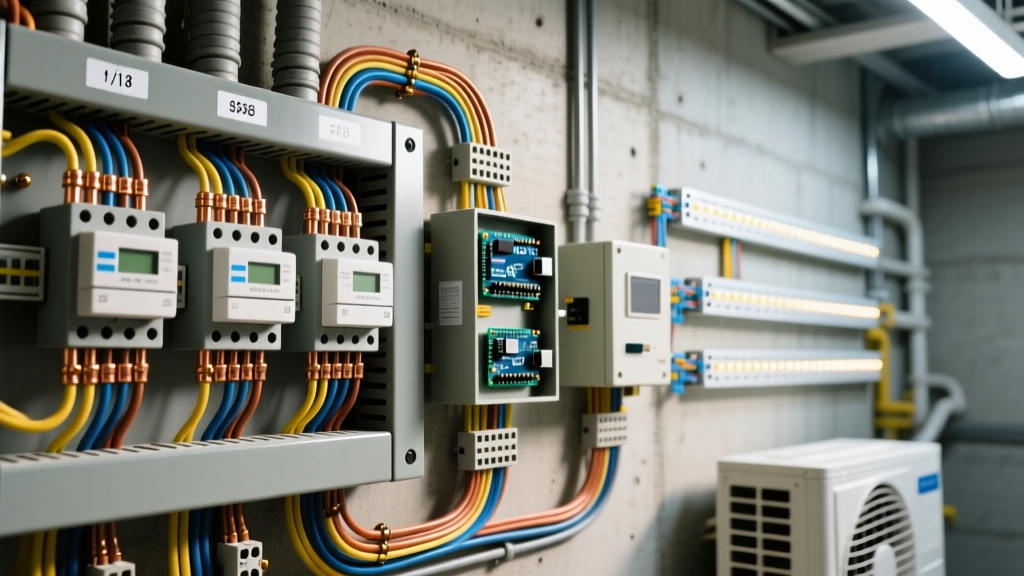
When using a FLIR thermal camera, open the panel cover (exercising extreme PPE and arc-flash safety protocols) and scan the breaker terminals and neutral/ground bars. A healthy termination should be within 2°F to 3°F of adjacent identical terminations. A hotspot showing a 15°F or greater delta indicates a high-resistance connection. Turn off the main breaker, verify zero energy with your Fluke 117, and re-torque the connection or replace the breaker if the bus stabs are pitted.
Summary and Next Steps
Troubleshooting electrical wiring problems is an exercise in physics and patience. By relying on loaded voltage drop testing, thermal imaging, and a strict adherence to NEC torque and MWBC requirements, you transition from a parts-swapper to a true diagnostician. Always prioritize safety: utilize Lockout/Tagout (LOTO) procedures, wear appropriate PPE, and consult a licensed master electrician if your diagnostic readings indicate panel-level bus damage or service entrance faults.