
Navigating Home Electrical Wiring Eastern Suburbs: A Code & Standards Explainer
When undertaking residential electrical projects in the Eastern Suburbs of major metropolitan areas, electricians and homeowners face a unique intersection of aging housing stock and stringent municipal code overlays. Many Eastern Suburb homes were built during the post-war boom (1940s–1970s), meaning the original infrastructure is now reaching the end of its safe operational lifespan. As we move through 2026, local jurisdictions are aggressively adopting and amending the National Electrical Code (NEC) 2023 standards to address modern load demands, electric vehicle (EV) integration, and legacy fire hazards.
This guide breaks down the critical code requirements, municipal amendments, and practical wiring standards you must follow when upgrading or remodeling home electrical wiring in Eastern Suburbs neighborhoods. Whether you are dealing with a 1950s colonial or a 1970s split-level, understanding these standards is non-negotiable for safety and compliance.
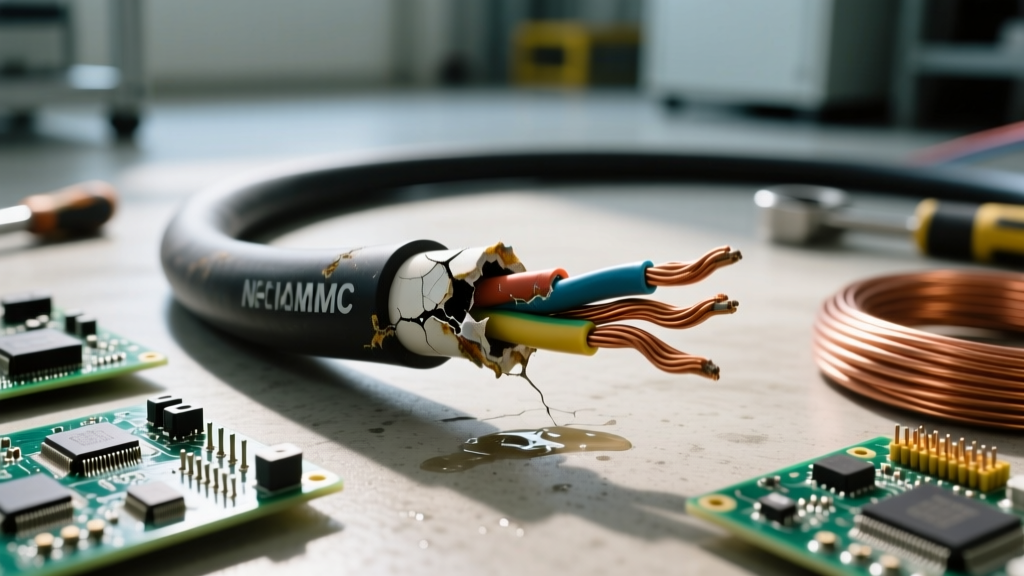
The Legacy Wiring Challenge: Aluminum and Knob-and-Tube
A significant percentage of Eastern Suburb homes built between 1965 and 1973 were wired with solid aluminum branch circuit conductors due to copper shortages. According to the U.S. Consumer Product Safety Commission (CPSC), homes wired with pre-1972 aluminum wire are up to 55 times more likely to have one or more connections reach fire hazard conditions compared to homes wired with copper.
Code-Compliant Remediation Strategies
Under current NEC guidelines and local Eastern Suburb inspector mandates, simply pigtailing aluminum to copper with standard wire nuts is a severe code violation. You must use one of the following approved methods:
- COPALUM Crimp System: A specialized, proprietary cold-weld crimping tool that permanently bonds copper to aluminum. This requires a licensed contractor certified by the manufacturer.
- Alumiconn Connectors: The most common field solution for Eastern Suburb remodels. The King Innovation Alumiconn 3-port lug connector (Part #95120) uses independent set-screws and an antioxidant compound to prevent galvanic corrosion and thermal expansion issues.
Inspector Note: In many Eastern Suburb municipalities, if you are altering more than 30% of an existing aluminum branch circuit, the local authority having jurisdiction (AHJ) will mandate a complete circuit replacement with modern copper THHN/THWN-2 conductors rather than allowing pigtailing.
Grounding and Bonding: Correcting the 'Water Pipe Only' Fallacy
Older Eastern Suburb homes frequently rely solely on the metallic underground water pipe as the primary grounding electrode. However, as municipalities replace aging iron water mains with non-conductive PVC, this grounding method becomes dangerously compromised.
NEC Article 250.53(D)(2) explicitly requires that when a metallic underground water pipe is used as a grounding electrode, it must be supplemented by an additional electrode (such as a ground rod or concrete-encased electrode).
Upgrading the Grounding Electrode System (GES)
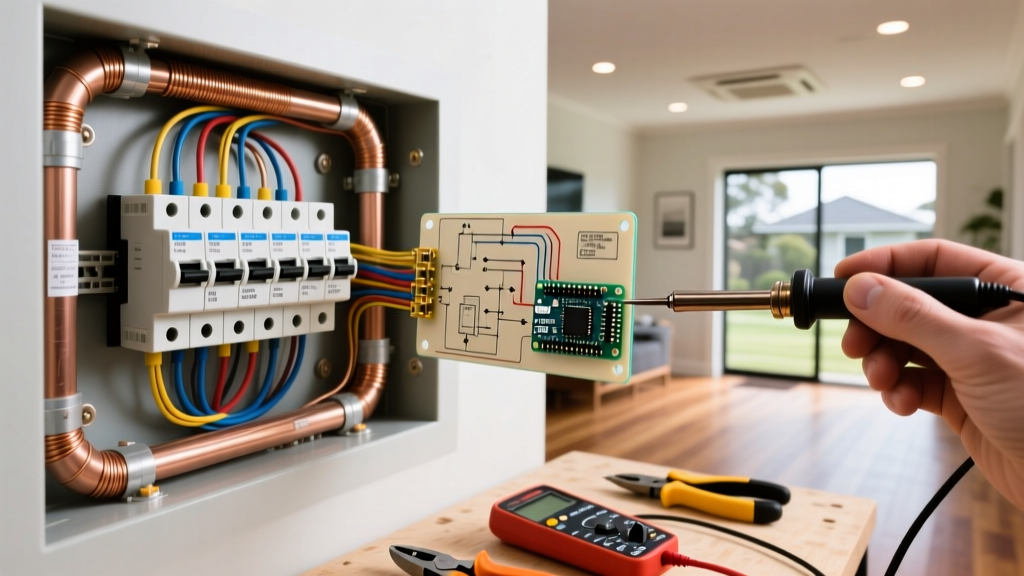
To bring an older Eastern Suburb home up to 2026 code standards during a panel upgrade, you must install a supplemental grounding system. The standard practice involves driving two 5/8-inch copper-clad steel ground rods (minimum 8 feet in length) at least 6 feet apart, connected to the grounding electrode conductor (GEC) using an acorn clamp. For a standard 200-amp residential service, the GEC must be a minimum of 4 AWG bare copper wire per NEC Table 250.66.
Panel Upgrades and Whole-Home Surge Protection
The standard 100-amp or 120-amp panels found in mid-century Eastern Suburb homes are entirely inadequate for modern loads, particularly with the addition of heat pumps, induction ranges, and Level 2 EV chargers. Upgrading to a 200-amp service is the baseline for any major renovation.
Mandatory Surge Protection (NEC 230.85)
The most significant shift in recent code cycles is the mandate for whole-home surge protection. NEC Section 230.85 requires a Type 1 or Type 2 Surge Protective Device (SPD) on all new or upgraded residential services. Eastern Suburb inspectors strictly enforce this to protect sensitive smart-home electronics and HVAC control boards from grid transients.
Recommended Equipment: The Eaton CHSPT2ULTRA (Type 2, 36kA max surge current) or the Square D HEPD80 are widely accepted by local AHJs. These units typically mount directly adjacent to the main service disconnect and cost between $120 and $180 for the hardware, with installation adding $250 to $400 to a panel upgrade project.
Municipal Code Amendments: Eastern Suburbs vs. Base NEC
While the NEC serves as the baseline, many affluent Eastern Suburb municipalities adopt localized amendments to ensure higher safety margins and aesthetic standards. Below is a comparison of base NEC 2023 requirements versus common Eastern Suburb municipal overlays as of 2026.
| Code Requirement Area | Base NEC 2023 Standard | Typical Eastern Suburb Municipal Amendment (2026) |
|---|---|---|
| Branch Circuit Conductor | 14 AWG permitted for 15A circuits | 12 AWG minimum for ALL 15A and 20A residential branch circuits to mitigate voltage drop. |
| AFCI Protection | Required in living areas, bedrooms, kitchens | Required on ALL 120V, 15A/20A branch circuits, including garages and unfinished basements. |
| EV Readiness | EV-ready space required in new construction | Mandates a dedicated 60A conduit run to the garage during any panel upgrade over 150A. |
| Working Space | 30 inches wide, 36 inches deep (NEC 110.26) | 36 inches wide minimum, with dedicated LED task lighting required directly above the panel. |
AFCI and GFCI Expansion: Eliminating Nuisance Tripping
The expansion of Arc-Fault Circuit Interrupter (AFCI) and Ground-Fault Circuit Interrupter (GFCI) requirements is a major focus for the Electrical Safety Foundation International (ESFI) and local inspectors alike. Under NEC 210.12, AFCI protection is now required in virtually every room of an Eastern Suburb home, including kitchens and laundry areas.
Selecting the Right Breakers for Older Wiring
When retrofitting AFCI breakers into older Eastern Suburb homes, electricians frequently encounter 'nuisance tripping' caused by degraded wire insulation or shared neutrals in old multi-wire branch circuits (MWBCs).
- Solution for Shared Neutrals: You must use a 2-pole AFCI breaker (e.g., Eaton BRCAF220) that monitors both hot legs and the shared neutral simultaneously. Replacing an MWBC with two single-pole AFCI breakers will result in immediate tripping and a failed inspection.
- Dual Function Breakers: For kitchen and laundry circuits, use Dual Function (AFCI + GFCI) breakers like the Square D HOM120CAFIC. This eliminates the need for GFCI receptacles at the first outlet, providing a cleaner aesthetic and easier resetting at the panel.
Branch Circuit Wiring and Voltage Drop Calculations
Eastern Suburb lots are often larger, meaning longer wire runs from the main panel to the far corners of the house. While the NEC only strictly recommends keeping voltage drop under 3% for branch circuits (Informational Note to NEC 210.19), many Eastern Suburb AHJs make this a mandatory enforceable rule.
Practical Application: If you are running a 120V, 20A circuit to a detached garden shed or a distant master bedroom (a run exceeding 75 feet), using standard 12 AWG copper will result in a voltage drop exceeding 3% under full load. You must upsize the conductors to 10 AWG THHN/THWN-2 pulled through a 1/2-inch EMT or PVC conduit to maintain compliance and ensure optimal performance for sensitive electronics.
Future-Proofing: EV Chargers and Solar Integration
With the surge in EV adoption in suburban areas, NEC Article 625 governs Electric Vehicle Charging System Equipment. For a standard Level 2 home charger (like the ChargePoint Home Flex or Tesla Wall Connector), a dedicated 50-amp, 240-volt circuit using 6 AWG copper wire is standard. However, Eastern Suburb homeowners planning for future solar integration should also consider installing a Line-Side Tap or a dedicated solar-ready subpanel during their main service upgrade, adhering to the 120% busbar rule outlined in NEC 705.12(B).
Summary and Cost Expectations
Upgrading home electrical wiring in Eastern Suburbs requires navigating a complex web of legacy infrastructure challenges and strict municipal code amendments. Homeowners should budget between $2,800 and $4,500 for a comprehensive 200-amp panel upgrade with whole-home surge protection and updated grounding. A full home rewire for a 2,200-square-foot colonial, replacing aluminum or knob-and-tube with modern copper THHN in conduit or Romex, typically ranges from $16,000 to $26,000 depending on drywall repair and access constraints.
Always verify specific amendments with your local building department before pulling permits, as Eastern Suburb inspectors are known for their rigorous enforcement of both the letter and the spirit of the National Electrical Code.
For the most current and comprehensive code documentation, always refer directly to the National Fire Protection Association (NFPA) and consult with a licensed master electrician familiar with your specific municipal jurisdiction.