
The Core Purpose of a Commercial Grounding Electrode System
In commercial electrical infrastructure, the distinction between an equipment grounding conductor (EGC) and a ground electrode is a frequent point of confusion among junior electricians and project managers. While the EGC provides a low-impedance fault-current path back to the source to trip a breaker, the Grounding Electrode System (GES) serves an entirely different, yet equally critical, function. The primary purpose of a commercial ground electrode is to stabilize system voltage to earth during normal operation and to dissipate high-voltage transients—such as lightning strikes or utility line surges—safely into the earth.
When designing a commercial facility, relying on a single 8-foot ground rod is rarely sufficient and often violates code. Commercial structures possess massive structural footprints, high fault current availability, and complex utility interconnections. Therefore, engineers and electrical contractors must design a holistic Grounding Electrode System that bonds all available, qualifying electrodes together to create a unified, low-resistance reference plane.
NEC Article 250: Mandated Commercial Electrodes
According to NFPA 70 (National Electrical Code) Article 250.50, all grounding electrodes that are present at each building or structure must be bonded together to form the GES. You cannot simply pick the most convenient one; if it exists, it must be part of the system. In commercial construction, three primary electrodes dominate the landscape.
Concrete-Encased Electrode (Ufer Ground)
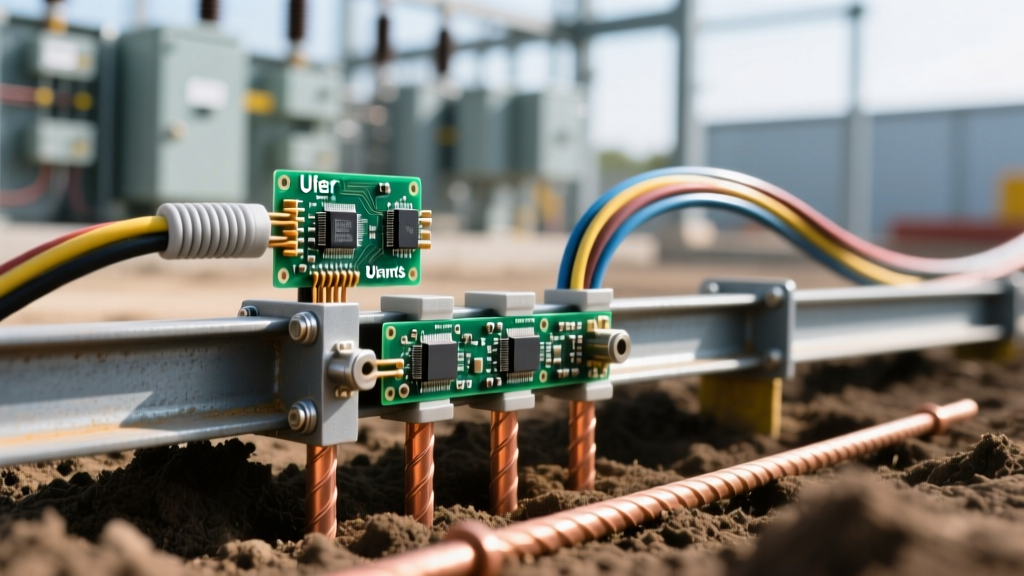
Defined in NEC 250.52(A)(3), the Ufer ground is widely considered the most effective and reliable ground electrode in commercial construction. It consists of at least 20 feet of bare copper conductor (minimum 4 AWG) or 20 feet of steel reinforcing bar (minimum 1/2 inch in diameter) encased by at least 2 inches of concrete. The alkaline nature of curing concrete (typically a pH of 10 to 12) creates a highly conductive, moisture-retaining interface with the surrounding soil. Because commercial foundations require massive amounts of rebar and concrete, the Ufer ground naturally yields incredibly low earth-resistance values, often below 5 ohms without any chemical enhancement.
Metal In-Ground Support Structure (Building Steel)
Per NEC 250.52(A)(2), the metal structural frame of a commercial building qualifies as a ground electrode if it has at least 10 feet of its length in direct contact with the earth. This includes steel H-piles driven into the bedrock or concrete-encased steel columns extending into deep footings. The massive surface area of a commercial building's steel skeleton provides an exceptional path for dissipating lightning energy. However, the electrical contractor must ensure that the structural engineer has approved the bonding connections and that the steel is electrically continuous.
Metal Underground Water Pipe
Historically the most common ground electrode, NEC 250.52(A)(1) recognizes metal underground water pipes in direct contact with the earth for 10 feet or more. However, in modern commercial projects, this is becoming obsolete. Municipalities are increasingly using PEX, PVC, or dielectric unions at the water main entry. If a metal water pipe is used, NEC 250.53(D)(2) strictly mandates that it be supplemented by an additional electrode (like a Ufer or ground rod), because a plumber could easily replace a section of pipe with plastic in the future, inadvertently severing the building's only connection to earth.
Commercial Ground Electrode Viability Matrix
Choosing the right configuration requires understanding the physical and electrical characteristics of the site. Below is a comparison of common electrodes used in commercial projects.
| Electrode Type | NEC Reference | Typical Resistance | Commercial Viability & Notes |
|---|---|---|---|
| Ufer (Concrete-Encased) | 250.52(A)(3) | 1 to 10 Ohms | Excellent. Highly reliable, immune to seasonal soil drying, standard in new commercial builds. |
| Building Steel | 250.52(A)(2) | 0.5 to 5 Ohms | Excellent. Massive surface area, but requires coordination with structural steel contractors. |
| Metal Water Pipe | 250.52(A)(1) | 5 to 25 Ohms | Poor. High risk of future disconnection via plastic pipe repairs; always requires supplementation. |
| Ground Rod (5/8" x 10') | 250.52(A)(5) | 25 to 100+ Ohms | Fair. Used as a supplementary electrode or in small outbuildings; highly dependent on soil moisture. |
Advanced Connection Methods: Exothermic Welding
In commercial and industrial environments, mechanical clamps (like standard bronze acorn clamps) are often insufficient for connecting grounding electrode conductors to building steel or Ufer rebar. High fault currents and lightning surges can generate immense thermal and magnetic forces that can loosen mechanical set-screws over time.
The industry standard for permanent, high-reliability connections is exothermic welding, commonly known by the brand name nVent ERICO Cadweld. This process utilizes a chemical reaction between copper(II) oxide and aluminum powder. When ignited, the reaction reaches temperatures exceeding 2,500°F (1,370°C), melting the copper and fusing it directly to the steel electrode. The result is a permanent, molecular bond that possesses a higher melting point than the parent materials and will never loosen due to thermal cycling or vibration. While the upfront cost per connection is higher than a mechanical clamp, the lifetime reliability and reduced maintenance make it mandatory for critical commercial infrastructure like data centers and hospitals.
Managing High-Resistivity Soils with GEM
Commercial sites located in rocky, sandy, or permafrost regions often struggle to achieve the target ground resistance of less than 5 ohms (as recommended by the IEEE Green Book). When driving standard ground rods or installing a Ufer is impossible or yields high resistance, engineers turn to Ground Enhancement Materials (GEM).
GEM products, such as conductive concrete or bentonite clay-based compounds, are mixed with water and poured around the ground electrode. These materials are engineered to absorb and retain moisture from the surrounding soil while providing a highly conductive carbon or metallic matrix. A 50-pound bag of conductive GEM can increase the effective surface area of a single 10-foot ground rod by over 400%, dramatically dropping the earth-resistance value in arid or rocky commercial terrains.
Testing Ground Resistance: The Fall-of-Potential Method
Visual inspection is not enough; commercial grounding systems must be quantitatively verified. The most accurate and universally accepted method for testing a ground electrode is the Fall-of-Potential test, detailed in the IEEE 81 standard. Using a specialized earth ground tester (such as the Fluke 1625-2 KIT), technicians inject a known alternating current between the ground electrode under test and a remote current probe (C).
According to Fluke's guide on ground resistance testing, a second probe—the potential probe (P)—is driven into the earth at exactly 62% of the distance between the electrode and the current probe. By measuring the voltage drop at this specific 62% interval, the tester calculates the exact resistance of the electrode in ohms. For commercial facilities with sensitive microprocessor-based equipment, specifications typically demand a GES resistance of less than 5 ohms, far stricter than the NEC's baseline requirement of 25 ohms for a single supplementary rod.
Common Commercial Failure Modes and Troubleshooting
Even well-designed commercial GES installations can fail if site conditions and material science are ignored. Below are the most common failure modes encountered in the field:
- Galvanic Corrosion: Connecting bare copper directly to galvanized steel building columns using mechanical clamps in damp soil creates a galvanic cell. The steel acts as the anode and corrodes rapidly, eventually severing the ground path. Exothermic welding or the use of dielectric isolation compounds is required to prevent this.
- Concrete Desiccation: In extremely arid climates, if a Ufer ground is poured near the surface or in a parking garage ramp where it is exposed to direct sunlight and air, the concrete can dry out. Dry concrete is an electrical insulator. Ufer electrodes must be placed in deep, below-grade footings where earth moisture is constant.
- Copper Theft and Vandalism: On large commercial construction sites, the exposed 4/0 AWG bare copper grounding electrode conductor is a prime target for theft before the building is secured. Contractors should use copper-clad steel wire or conceal the grounding conductors in rigid metal conduit (RMC) to deter theft and protect the conductor from physical damage by heavy machinery.
Expert Troubleshooting Tip: If your Fall-of-Potential test yields wildly fluctuating ohm readings, do not immediately assume the ground electrode is faulty. In commercial environments, stray DC currents from nearby transit systems, cathodic protection systems on buried gas lines, or massive variable frequency drives (VFDs) can interfere with the test equipment. Switch your ground tester to an automatic frequency tracking (AFT) mode to filter out electrical noise and isolate the true resistance of your electrode.
Conclusion
Designing a commercial ground electrode system requires moving beyond the simplistic "drive a rod and clamp a wire" mentality of residential wiring. By leveraging the structural mass of Ufer grounds and building steel, utilizing exothermic welding for permanent connections, and rigorously testing via the Fall-of-Potential method, electrical professionals can ensure their commercial facilities remain safe, code-compliant, and protected against the most severe electrical transients.