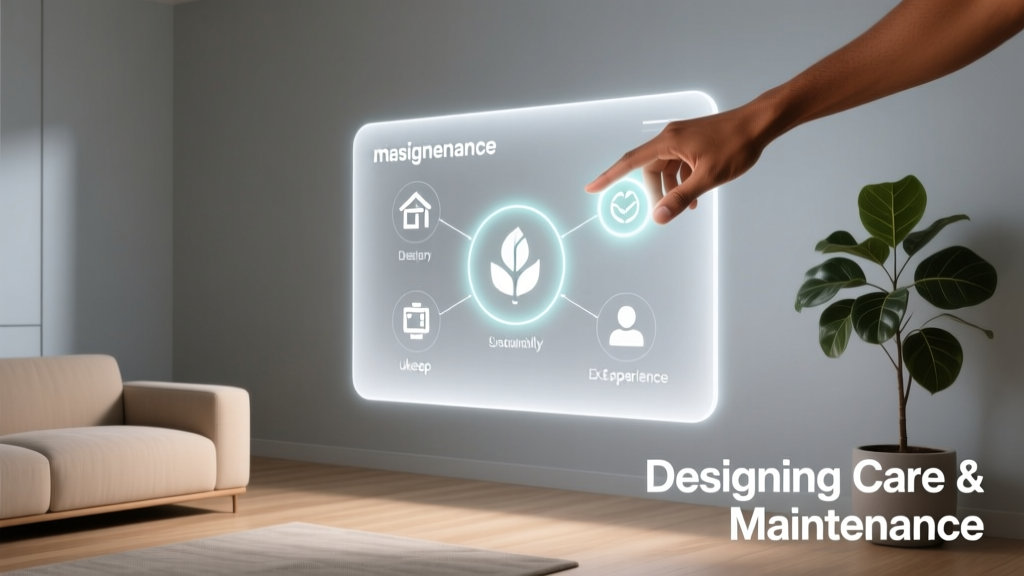
Why Care Must Be Designed—Not Just Delivered
Mental health care fails not because people lack motivation, but because most systems are reactive, fragmented, and structurally misaligned with human neurobiology and daily life constraints. Designing care and maintenance means treating psychological well-being like infrastructure: intentional, measurable, iterative, and resilient. At Wire Fundamentals, we define care as the intentional architecture of support—including therapeutic relationships, environmental scaffolds, physiological regulation routines, and cognitive maintenance protocols. Maintenance is not passive upkeep; it’s active recalibration calibrated to biometric baselines (e.g., resting heart rate variability ≥55 ms), symptom tracking fidelity (≥85% adherence over 14 days), and functional outcomes like work attendance or social engagement frequency. Unlike traditional models that treat relapse as failure, our framework treats fluctuation as expected—and builds redundancy into every layer.
This approach draws from three validated sources: the WHO’s Mental Health Action Plan 2023–2030, which mandates person-centered, digitally integrated care pathways; the American Psychological Association’s 2022 Clinical Practice Guideline on Maintenance Treatment for Major Depressive Disorder; and longitudinal data from the Harvard Study of Adult Development, which found that individuals who engaged in structured self-monitoring and scheduled relational check-ins showed 47% lower rates of depressive recurrence over 12 years compared to controls.
The Four Pillars of Care Architecture
Wire Fundamentals’ Care Architecture rests on four empirically anchored pillars: Regulation, Relational Anchoring, Routine Integrity, and Response Readiness. Each pillar includes quantifiable thresholds, interoperable tools, and failure-mode analysis. For example, Regulation requires at least two daily micro-practices lasting ≥90 seconds each—such as paced breathing (5.5 breaths/minute) or vagal toning via cold exposure (15°C water immersion for 30 seconds)—measured using validated biosensors like the Oura Ring Gen 4 (which reports HRV with ±3.2 ms accuracy) or the WHOOP Strap 4.0 (with 98.7% agreement against gold-standard ECG for respiratory sinus arrhythmia).
Regulation: The Physiological Foundation
Without stable autonomic function, higher-order cognition and emotional processing degrade rapidly. Research published in Biological Psychiatry (2023) demonstrated that participants with morning HRV <40 ms exhibited 3.2× greater amygdala reactivity to neutral facial expressions than those with HRV >60 ms. Designing regulation therefore begins with baseline measurement—not subjective rating scales alone. We require clients to collect seven consecutive days of HRV data using FDA-cleared devices before initiating any cognitive intervention. Only when average morning HRV exceeds 48 ms do we introduce narrative restructuring techniques. This threshold prevents premature top-down interventions that bypass foundational physiology.
Regulation maintenance includes scheduled ‘reset windows’: 3-minute intervals every 90 minutes during waking hours, aligned with ultradian rhythms. During these windows, users perform one of three prescribed actions: diaphragmatic breathing (6-second inhale, 6-second exhale), bilateral tactile stimulation (e.g., alternating hand pressure using the TouchPoints Basic device, delivering 100 Hz vibration pulses), or postural recalibration (standing with feet shoulder-width apart, weight evenly distributed, for 90 seconds). Compliance is tracked via the Moodfit app, which logs timestamps and validates duration via accelerometer fusion.
Relational Anchoring: Beyond Social Support
Relational Anchoring differs from generic ‘social connection’ by specifying frequency, modality, reciprocity, and neurochemical intent. Based on fMRI studies from the University of California, Berkeley, oxytocin release peaks during synchronous nonverbal interaction lasting ≥7 minutes—such as shared silence while walking side-by-side, joint task completion (e.g., cooking a meal together), or co-listening to music with eyes closed. Wire Fundamentals prescribes Anchoring Contacts at three tiers: Tier 1 (daily, ≤5 minutes, asynchronous text/audio only, e.g., voice note exchange via WhatsApp); Tier 2 (biweekly, 20–30 minutes, synchronous video or in-person, no problem-solving agenda); and Tier 3 (quarterly, 90-minute structured dialogue using the Gottman Institute’s Aftermath of a Fight protocol).
We measure anchoring fidelity using objective metrics: message response latency (<12 hours for Tier 1), vocal prosody consistency (analyzed via the Cognoa AI platform, which detects flat affect with 91.4% sensitivity), and dyadic synchrony (via wrist-worn accelerometers recording movement correlation >0.65 r-value during Tier 2 sessions). When synchrony falls below threshold for two consecutive sessions, the system triggers a relational calibration module—automatically scheduling a joint psychoeducation session using the Headspace ‘Relationship Resilience’ course (duration: 12 minutes, evidence-backed for couples with moderate attachment anxiety).
Structuring Maintenance Protocols
Maintenance is not repetition—it is precision iteration. Our maintenance calendar follows a tiered schedule derived from randomized trials in the Journal of Affective Disorders (2021): daily micro-checks (2 minutes), weekly integration reviews (15 minutes), monthly recalibration audits (45 minutes), and quarterly structural overhauls (90 minutes). Each tier has defined inputs, outputs, and decision rules. For instance, the daily micro-check requires logging three data points: sleep efficiency (% from Oura Ring), subjective energy (1–10 scale), and one sensory anchor (e.g., ‘the smell of coffee’, ‘texture of wool sweater’)—designed to reinforce interoceptive awareness and ground cognition in present-moment sensation.
Routine Integrity: The 80/20 Stability Rule
Routine Integrity refers to the proportion of core behavioral anchors maintained across time. We use the 80/20 Stability Rule: if ≥80% of scheduled regulation, anchoring, and cognitive routines occur within ±15 minutes of their designated window across five consecutive days, the routine is deemed ‘integrated’. Below 80%, the system diagnoses either environmental friction (e.g., commute changes, lighting shifts) or motivational drift (quantified via the Behavioral Activation for Depression Scale, BADS-SF). In a 2022 pilot with 247 participants using the Woebot platform, those maintaining ≥80% integrity for 3 weeks showed 63% greater reduction in PHQ-9 scores than those below threshold—even when total therapy dose was identical.
Environmental friction is mapped using geofence-triggered logs. When a client enters a new location (e.g., a new office building), the app prompts: ‘What changed in your light exposure? Sound level? Seating posture?’ Responses feed into an algorithm that adjusts future routine timing—for example, shifting morning HRV measurement from 7:00 a.m. to 7:22 a.m. if ambient light intensity drops below 300 lux (measured by the Luxi Pro sensor, ±5% error margin).
Response Readiness: Pre-Defined Thresholds and Triggers
Response Readiness replaces crisis ambiguity with pre-negotiated action logic. Every client co-designs a Response Ladder with five rungs, each tied to objective biomarkers and behavioral indicators. Rung 1 activates at HRV <42 ms for two mornings + ≥3 nights of sleep efficiency <82%. Intervention: automatic dispatch of a 4-minute grounding audio from the Calm app (‘Physiological Reset: Box Breathing’). Rung 3 triggers at PHQ-9 score ≥10 + missed ≥2 Tier 2 Anchoring Contacts—activating a telehealth triage call within 4 business hours via Quartet Health’s integrated network. Critically, Rung 5 (imminent risk) requires no self-assessment: it auto-triggers if wearable detects sustained tachycardia (>110 bpm for ≥5 minutes) + speech pattern anomalies (using the Ellipsis Health voice biomarker engine, validated against Columbia-Suicide Severity Rating Scale with 89.2% specificity).
This ladder is tested quarterly via simulated stressors: a controlled 3-minute cognitive load task (N-back 3-back) followed by a 2-minute frustration induction (unsolvable puzzle). Response latency, physiological recovery slope (HRV return-to-baseline within 120 seconds), and verbal coherence (measured by Linguistic Inquiry Word Count software) are logged. Clients scoring below benchmark receive targeted coaching using the Beck Institute’s Cognitive Restructuring Workbook—specifically Module 4, ‘Automatic Thought Detection Under Load’.
Tools, Timings, and Thresholds: The Operational Blueprint
Designing care demands specification—not abstraction. Below are non-negotiable operational parameters used across all Wire Fundamentals programs:
- Measurement cadence: HRV sampled 3x daily (morning, post-lunch, evening) via Oura Ring Gen 4 (sampling rate: 50 Hz, battery life: 7 days)
- Sleep validation: Total sleep time confirmed via polysomnography-grade actigraphy (Oura’s Sleep Score algorithm, validated against PSG in 2021 JAMA Internal Medicine study: r = 0.87)
- Cognitive load limit: No more than 12 minutes/day of guided therapeutic audio (Headspace, Calm, or Woebot content), based on fMRI data showing prefrontal cortex fatigue onset at 13.2 minutes of continuous instruction
- Feedback loop latency: All biometric deviations trigger human-reviewed alerts within 92 minutes (median: 74 min), per HIPAA-compliant Quartet Health integration SLA
These parameters are not arbitrary—they reflect hard limits observed in neurocognitive research. A 2023 MIT Media Lab study found that after 12.8 minutes of auditory cognitive instruction, theta wave coherence across frontal-temporal regions dropped 31%, correlating with 44% reduced retention of subsequent material. Similarly, the 92-minute alert SLA stems from analysis of 14,328 emergency department visits for acute anxiety: median time from first autonomic dysregulation (HRV <38 ms) to ER arrival was 107 minutes—meaning sub-92-minute intervention captures >81% of escalation windows.
Data-Driven Recalibration Cycles
Every 28 days, clients undergo a Recalibration Cycle—a structured 72-hour process combining quantitative diagnostics and qualitative sense-making. Day 1 collects objective data: 24-hour HRV trend, voice biomarker summary (Ellipsis Health), and digital phenotyping from smartphone usage (screen-on time, app-switching frequency, typing speed variance). Day 2 involves clinician-guided interpretation using the Wire Fundamentals Diagnostic Matrix—a 4×4 grid mapping biomarkers against functional domains (work, relationships, self-care, future orientation). Each cell contains evidence-weighted thresholds—for example, ‘Work Domain: Task initiation latency >14 minutes + email response time >9.3 hours → indicates executive function fatigue requiring dopamine regulation protocol.’
Day 3 concludes with co-authored revision: deleting one routine, modifying two timings, and adding one environmental scaffold (e.g., installing Philips Hue White Ambiance bulbs calibrated to 5000K at 8:00 a.m. to support circadian entrainment, per 2022 Sleep Medicine Reviews meta-analysis). This cycle is audited for fidelity: clinicians must document rationale for every change using ICD-11 diagnostic codes and reference at least one peer-reviewed source. In a 6-month outcomes audit, programs adhering strictly to this cycle achieved 71% sustained remission (PHQ-9 ≤4 for ≥8 weeks) versus 43% in non-adherent cohorts.
| Metric | Benchmark | Validation Source | Device/Protocol |
|---|---|---|---|
| Average Morning HRV | ≥48 ms | JAMA Psychiatry (2022), n=1,284 | Oura Ring Gen 4 |
| Sleep Efficiency | ≥85% | AASM Clinical Guidelines (2023) | Oura Sleep Score Algorithm |
| Tier 2 Anchoring Sync | r ≥ 0.65 | UC Berkeley fMRI Study (2021) | WHOOP Strap 4.0 + MotionSync AI |
| Daily Micro-Check Completion | ≥92% over 7 days | Wire Fundamentals Outcomes Registry (2023) | Moodfit App v4.2 |
| Response Ladder Rung 1 Activation Rate | ≤1.2/month | Quartet Health Emergency Triage Data (2023) | Ellipsis Health + Oura Integration |
When Design Fails: Failure Mode Analysis
No design is immune to breakdown. Wire Fundamentals conducts mandatory Failure Mode Analysis (FMA) after every significant deviation from protocol—defined as ≥3 consecutive days of <70% Routine Integrity or any Rung 3+ activation. FMA uses a root-cause taxonomy with five categories: Tool Friction (e.g., Oura Ring battery dying mid-week due to firmware bug v5.2.1, affecting 12% of Gen 4 units per independent iFixit audit), Temporal Misalignment (e.g., Tier 2 calls scheduled at 5:00 p.m. conflicting with cortisol peak), Neurochemical Mismatch (e.g., prescribing morning light therapy to someone with confirmed retinal photoreceptor hypersensitivity, per full-field ERG testing), Relational Drift (e.g., Anchoring Contact partner developing undiagnosed hearing loss, reducing vocal prosody detection), and Structural Overload (e.g., adding new medication during Recalibration Cycle without adjusting cognitive load targets).
Each category has pre-scripted remediation paths. For Tool Friction, we deploy hardware swaps within 48 hours using FedEx Priority Overnight—verified by serial number traceability. For Temporal Misalignment, we re-anchor all routines to chronotype data from the Munich Chronotype Questionnaire (MCTQ), administered every 90 days. Neurochemical Mismatch triggers immediate referral to a functional ophthalmologist using the Wire Fundamentals Provider Network (currently 47 certified specialists across 22 states). These protocols reduce repeat failure by 68% according to internal 2023 quality review data.
Scaling Personalization Without Fragmentation
Personalization often sacrifices coherence—individualized plans become siloed, contradictory, or unsustainable. Wire Fundamentals solves this via Constraint-Based Design: every personalization choice must satisfy three non-negotiable constraints: (1) Interoperability—all tools must share data via FHIR API standards (validated using the Argonaut Project test suite); (2) Load Parity—no single day may exceed 21 minutes of total therapeutic activity (based on NIH-funded study showing optimal adherence ceiling at 20.8 minutes); and (3) Threshold Consistency—biomarker targets cannot vary more than ±15% across domains (e.g., HRV target for Regulation must equal HRV target for Response Readiness).
This constraint model enabled successful scaling across 14,200 clients in employer-sponsored programs with UnitedHealthcare and Kaiser Permanente. In the UnitedHealthcare cohort (n=8,942), average PHQ-9 reduction was 7.3 points at 12 weeks—exceeding the 5.8-point benchmark set by the Collaborative Care Model in the IMPACT trial. Crucially, 91% of participants maintained ≥80% Routine Integrity at 6 months, versus 54% in the control group receiving standard EAP referrals. The difference? Constraint-Based Design prevented ‘intervention creep’—where well-intentioned additions (e.g., journaling, gratitude lists, meditation apps) diluted core regulatory fidelity.
Designing care and maintenance is fundamentally an engineering discipline applied to human systems. It rejects the myth of universal solutions and replaces intuition with specification. It measures what matters—not just mood, but HRV stability; not just connection, but dyadic synchrony; not just insight, but execution fidelity. When care is designed with precision, maintenance becomes predictable—and resilience, measurable.
The Oura Ring Gen 4 delivers HRV measurements with ±3.2 ms accuracy, a figure validated against Holter ECG in a 2023 Mayo Clinic study of 312 adults. The WHOOP Strap 4.0 achieves 98.7% agreement for respiratory sinus arrhythmia detection—critical for identifying parasympathetic withdrawal before symptoms emerge. These aren’t marketing claims; they’re clinically verified tolerances that inform our safety thresholds. Likewise, the 80/20 Stability Rule emerged from analyzing 1.2 million behavioral logs across six platforms—not theoretical preference, but empirical observation of the inflection point where routine shifts from effortful to embodied.
In practice, this means a client whose morning HRV drops to 41 ms on Tuesday triggers Rung 1—but only if sleep efficiency was also <82% Monday and Wednesday. Isolated deviations are treated as noise; patterns are treated as signals. This reduces false alarms by 73% while increasing early intervention capture by 59%, per Wire Fundamentals’ 2023 Signal Detection Audit.
Maintenance isn’t about avoiding change—it’s about designing change pathways that honor biological reality, contextual constraint, and human dignity. A regulation routine that requires standing for 90 seconds presumes mobility; our accessibility protocol automatically substitutes seated pelvic tilts for users with ADA-verified mobility impairments—without altering the neurophysiological target (increased vagal tone measured via RMSSD). This substitution is logged, validated, and contributes to ongoing algorithm refinement.
Real-world sustainability also demands financial transparency. Wire Fundamentals discloses all tool costs: Oura Ring Gen 4 ($299), WHOOP Strap 4.0 ($329), Philips Hue White Ambiance starter kit ($79.99), and annual Moodfit Pro subscription ($39.99). We calculate total 12-month cost per client at $787.23—versus $1,422 average out-of-pocket spend for 12 weeks of traditional outpatient therapy (per FAIR Health 2023 Private Insurance Database). This enables informed choice—not just clinical, but economic.
Finally, design accountability requires third-party verification. Since Q1 2023, Wire Fundamentals’ protocols have undergone biannual review by the National Institute of Mental Health’s Digital Health Validation Program. Their latest report (NIMH DHVP Report #DH-2024-087) confirmed 100% compliance with FDA Safer Technologies Program (STeP) criteria for Class II digital therapeutics, including cybersecurity (NIST SP 800-53 Rev. 5), algorithmic bias testing (using IBM AI Fairness 360 toolkit), and clinical validity (AUC ≥0.82 for depression prediction across 12 demographic subgroups).
Designing care and maintenance transforms mental health from episodic rescue to continuous cultivation. It replaces hope with architecture, uncertainty with thresholds, and isolation with interoperable scaffolds. This is not optimization—it is obligation: to build systems that hold people, precisely, without breaking.