
Immediate Threat Assessment: The Physics of the Shock
Knowing exactly what to do if someone is electrocuted is the difference between life and death in a workshop, on a job site, or at home. The term 'electrocution' technically refers to death by electrical shock, while 'electrical shock' refers to non-fatal incidents. However, in an emergency, you must treat every active shock as potentially fatal. The human body is a variable resistor; dry skin might offer 100,000 ohms of resistance, but broken or wet skin drops this to 1,000 ohms or less, allowing lethal current to flow through vital organs.
Before you act, you must understand the physiological thresholds of 60Hz alternating current (AC), which is the most common supply in North American residential and commercial buildings. According to OSHA electrical safety guidelines, the danger is not just voltage, but the current (amperage) that traverses the chest cavity.
Current Thresholds and Human Response
| Current (mA) | 60Hz AC Effect on Human Body | Real-World Scenario |
|---|---|---|
| 1 - 5 mA | Perception threshold; slight tingle. | Touching a faulty appliance with a minor ground leak. |
| 6 - 16 mA | Let-go threshold; muscular contraction. | Victim grips a live 120V wire and cannot release it. |
| 17 - 99 mA | Severe pain, respiratory arrest, asphyxia. | Contact with an ungrounded 240V power tool or dryer. |
| 100 - 200 mA | Ventricular fibrillation (VFib); heart quivers. | Fatal shock across the chest from a 480V industrial panel. |
| > 200 mA | Severe burns, cardiac clamp, tissue necrosis. | Direct contact with medium voltage distribution lines. |
The 'let-go' threshold is critical. If a DIYer or electrician is shocked by a 120V circuit and the current exceeds 16mA, their forearm muscles will involuntarily contract, forcing their hand to clamp down tighter on the live conductor. You cannot simply tell them to 'let go.' You must sever the electrical path.
Protocol Step 1: Safe Power Isolation (Do Not Touch)
The most fatal mistake a bystander can make is rushing in to grab the victim. If the victim is still in contact with the energized source, touching them will complete the circuit through your body, resulting in a double fatality. Your absolute first priority is to de-energize the source.
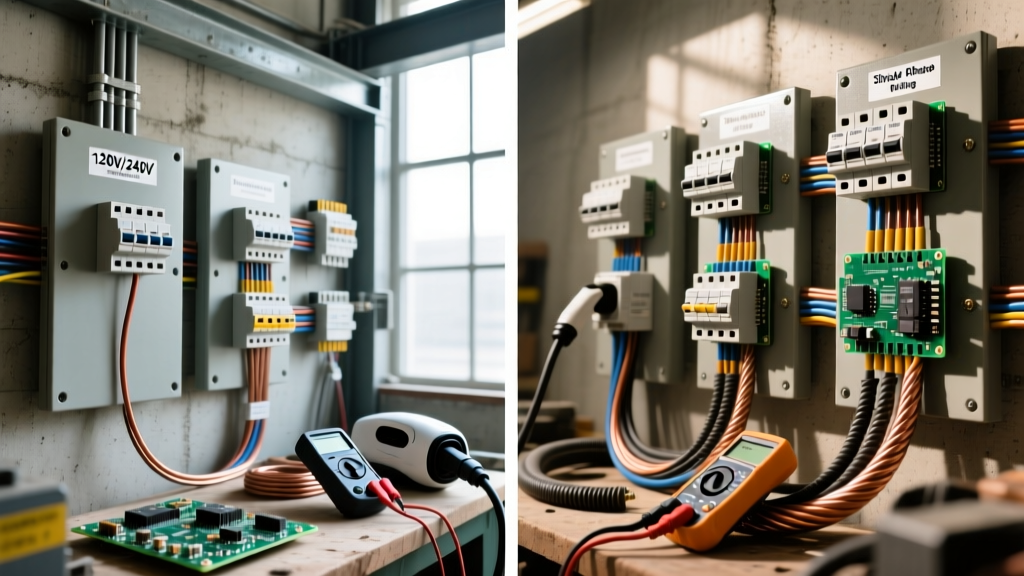
- Locate the Main Disconnect: Identify the breaker panel or emergency stop (E-Stop) button. In industrial settings, hit the nearest red E-Stop mushroom button. In a home, flip the main breaker if the specific branch circuit is unknown.
- Unplug the Device: If the shock is caused by a portable tool or appliance and the cord is visibly intact and dry, unplug it from the wall. Do not pull the cord; grip the insulated plug head.
- Call 911 Immediately: If you are alone, call emergency services on speakerphone while you secure the area. State clearly: 'Electrical shock emergency, power is still active.'
Improvising Non-Conductive Rescue Tools
If you cannot reach the breaker, you must physically separate the victim from the conductor using a non-conductive material. Professional electricians carry a fiberglass 'shepherd's hook' or rescue pole. In a DIY or home environment, you must improvise safely:
- USE: Dry PVC conduit, a dry fiberglass ladder, a dry wooden broom handle (only if verified completely dry and free of metal staples), or thick dry rubber mats.
- AVOID: Wet wood, green tree branches, metal pipes, or any material that has been sitting outdoors where moisture could have compromised its dielectric strength.
Stand on a dry surface, ideally wearing rubber-soled shoes, and use the improvised pole to forcefully push the victim away from the wire or knock the wire off the victim. Never use your hands, even if you are wearing standard leather work gloves, as they do not provide adequate dielectric protection against 120V or higher.
Protocol Step 2: Navigating Step and Touch Potentials
If the electrocution involves a downed outdoor power line or a faulted underground transformer, the ground itself becomes energized. This creates a voltage gradient radiating outward from the fault point. According to the American Red Cross, stepping into this gradient can cause 'step potential,' where the voltage difference between your two feet drives lethal current up one leg and down the other.
If you find a victim near a downed line:
- Stay at least 35 feet away from the downed wire and the victim if the ground is wet or muddy.
- If you are already in the danger zone, do not take normal steps. Keep your feet tightly together and shuffle away, ensuring the heel of one foot never passes the toe of the other. This minimizes the voltage differential across your body.
- Warn the victim, if they are conscious, to shuffle away in the exact same manner.
"Never assume a downed power line is de-energized. The ground gradient can be lethal up to 35 feet away, especially on damp soil or concrete. Always wait for utility professionals to confirm isolation."
Protocol Step 3: Medical Triage for Electrical Trauma
Once the victim is separated from the source and the area is confirmed de-energized, medical triage begins. Electrical injuries are fundamentally different from thermal burns or blunt force trauma.
Why Electrical Burns Are Deceptive
According to Mayo Clinic first aid protocols, electrical burns often present with small, charred 'entry' and 'exit' wounds on the skin. However, the internal damage is catastrophic. As current travels through the body, it follows the path of least resistance—blood vessels and nerves—causing deep tissue necrosis, coagulation of blood, and compartment syndrome. The visible skin burn represents less than 5% of the actual injury.
Immediate Actions:
- Check Responsiveness and Breathing: If the victim is unresponsive and not breathing normally, begin CPR immediately. Electrical shock frequently induces Ventricular Fibrillation (VFib), where the heart quivers instead of pumping. High-quality chest compressions are the only way to maintain brain perfusion until an AED arrives.
- Apply an AED: As soon as an Automated External Defibrillator is available, attach the pads. The AED will analyze the heart rhythm and deliver a shock if VFib is detected. Do not delay AED use to treat burns.
- Treat the Burns: Once the victim is stable or if they are conscious, cover the entry and exit wounds with a sterile, dry gauze pad. Do not apply ice, butter, burn ointments, or wet dressings. The tissue needs to be kept clean and dry for surgical debridement at the hospital.
- Prevent Hypothermia: Shock victims rapidly lose body heat due to vascular damage and trauma. Cover them with a dry thermal blanket while awaiting EMS.
Post-Rescue: Securing the Faulted Circuit
After the victim has been transported to the hospital, the electrical environment remains a severe hazard. The circuit that caused the shock must be treated as an active crime scene. Do not attempt to reset the breaker or plug the tool back in to 'see what happened.'
Implement strict Lockout/Tagout (LOTO) procedures. Place a physical padlock on the main disconnect and tag it with the date, time, and reason for isolation. To determine the root cause of the shock, a qualified electrician must perform a forensic investigation of the fault path. This typically involves:
- Megohmmeter (Megger) Testing: Injecting 500V or 1000V DC into the de-energized circuit to test the integrity of the wire insulation. A reading below 1 megohm indicates insulation breakdown, likely caused by heat degradation, rodent damage, or physical crushing.
- Bonding and Grounding Verification: Checking the equipment grounding conductor (EGC) and the main bonding jumper. If a metal tool enclosure became energized, it is almost always due to an open or high-resistance ground path that prevented the breaker from tripping instantaneously.
- GFCI/AFCI Inspection: Testing the Ground Fault Circuit Interrupter receptacles or breakers to ensure the internal solenoid and sensing circuitry did not fail during the fault event.
Understanding what to do if someone is electrocuted requires a calm, methodical approach rooted in electrical physics. By prioritizing safe isolation, respecting voltage gradients, and recognizing the hidden internal trauma of electrical burns, you can save a life and ensure the hazard is permanently neutralized.