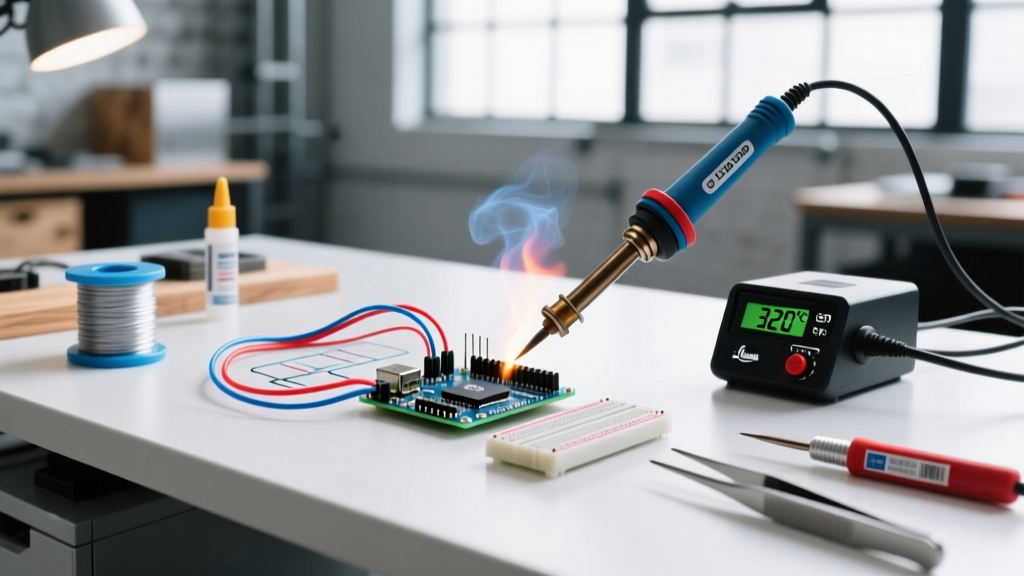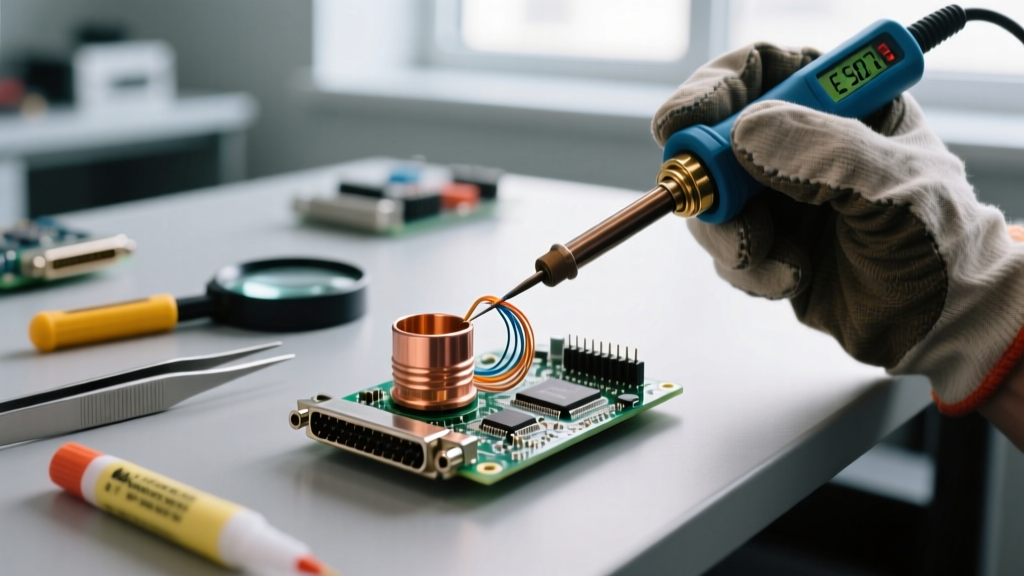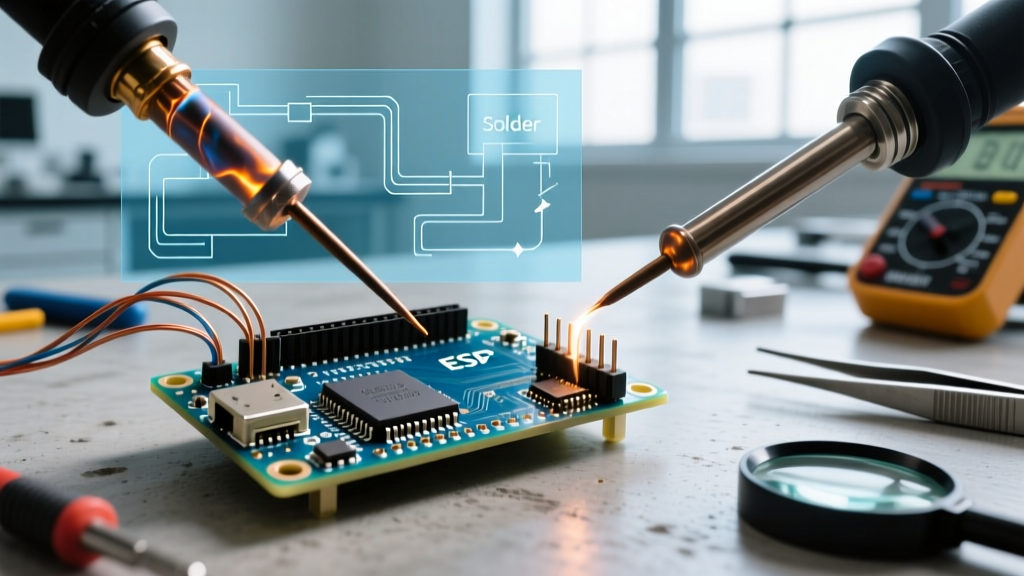

The Core Metallurgical Divide: Fusion vs. Capillary Action
When evaluating welding and soldering for a fabrication or electronics project, the fundamental difference lies in metallurgy, not just temperature. Welding is a fusion process. It requires melting the base metals themselves—often exceeding 1,370°C (2,500°F) for steel—so they coalesce into a single continuous piece upon cooling. Soldering, conversely, is an adhesion and capillary process. The base metals remain entirely solid, while a lower-melting-point filler metal (the solder) is drawn into the joint via capillary action, bonding to the surface through the formation of an intermetallic compound (IMC) layer.
Understanding this distinction is critical for structural integrity. A welded joint can theoretically achieve 100% of the base metal's tensile strength. A soldered joint relies on the shear strength of the IMC layer and the mechanical interlock of the joint geometry, making it unsuitable for load-bearing structural applications but ideal for electrical conductivity and hermetic sealing.
Comprehensive Process Comparison Matrix
| Feature | Soldering (Electronics/Plumbing) | Brazing (The Middle Ground) | Welding (TIG/MIG/Stick) |
|---|---|---|---|
| Temperature Range | 183°C – 450°C (361°F – 842°F) | >450°C (842°F) up to ~1,100°C | 1,370°C – 3,500°C+ (2,500°F – 6,300°F+) |
| Base Metal State | Solid (Never melts) | Solid (Never melts) | Liquid (Melts and fuses) |
| Joint Mechanism | Capillary action & IMC formation | Capillary action & alloy diffusion | Metallurgical coalescence (fusion) |
| Primary Strength | Low tensile, high shear/conductivity | Moderate to high tensile & shear | Maximum tensile & structural yield |
| Heat-Affected Zone | Minimal to none | Moderate (can alter temper) | Severe (requires post-weld heat treatment) |
| Governing Standards | IPC J-STD-001, ASTM B32 | AWS A5.8, ISO 17672 | AWS D1.1, ASME Section IX |
Soldering: Precision, Electronics, and Flux Chemistry
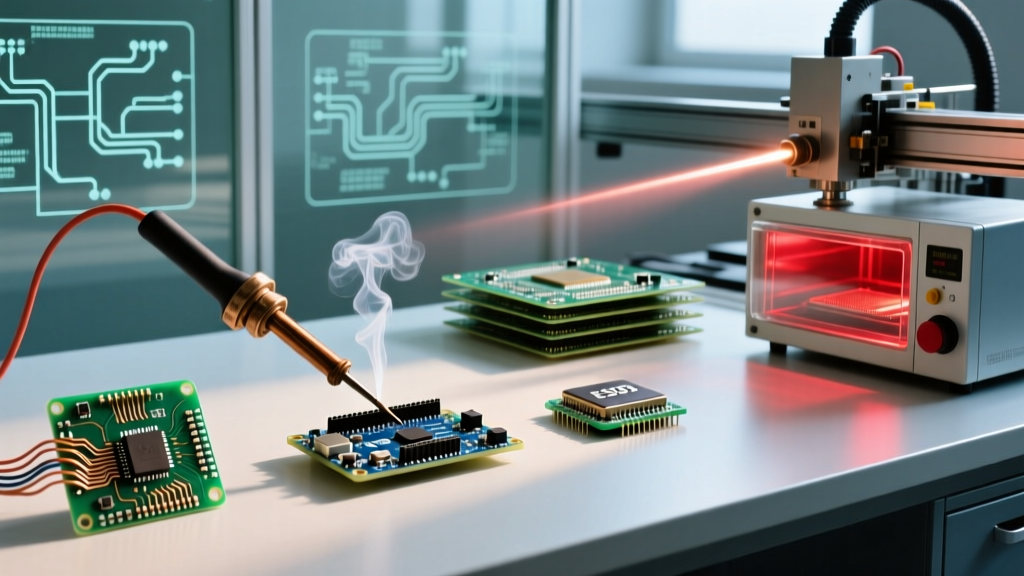
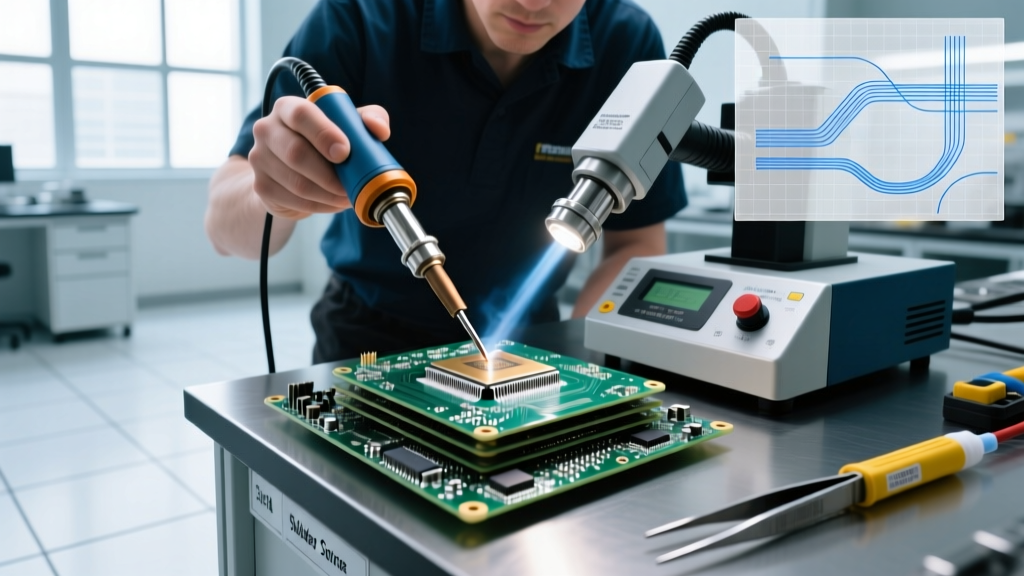
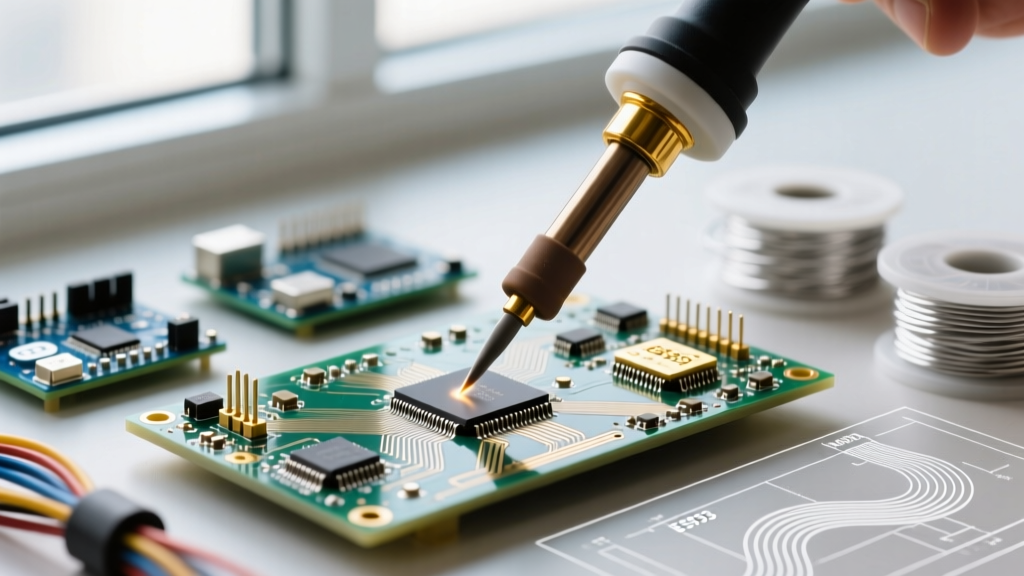
In the realm of electronics and precision plumbing, soldering dominates. Modern electronics manufacturing and high-end DIY prototyping rely heavily on lead-free alloys to comply with RoHS (Restriction of Hazardous Substances) directives. The industry standard in 2026 remains SAC305 (96.5% Tin, 3.0% Silver, 0.5% Copper), which has a melting point of 217°C (423°F). For hobbyists and legacy aerospace repairs where lead exemptions apply, Sn63/Pb37 (63% Tin, 37% Lead) is still prized for its eutectic properties, melting and freezing instantly at exactly 183°C (361°F) without a plastic (semi-solid) state.
The Critical Role of Flux
Solder will not bond to oxidized copper or gold. Flux is a chemical cleaning agent that removes oxidation at operating temperatures. According to the IPC (Association Connecting Electronics Industries), flux chemistries are strictly categorized:
- RO (Rosin): Derived from pine sap. Mildly active, leaves a benign residue. Ideal for general-purpose PCB work.
- RA (Rosin Activated): Contains aggressive activators (like halides). Excellent for heavily oxidized through-hole components but requires solvent cleaning post-soldering to prevent electrochemical migration.
- No-Clean (NC): Formulated with synthetic resins that leave a highly insulative, transparent residue. Dominates modern automated SMT (Surface Mount Technology) assembly.
Welding: Fusion, Structural Integrity, and the HAZ
Welding is mandatory when the joint must bear mechanical loads, withstand high pressure, or endure extreme environmental stress. The most common processes for fabricators and advanced DIYers are Gas Tungsten Arc Welding (GTAW/TIG) and Gas Metal Arc Welding (GMAW/MIG).
TIG Welding (GTAW) for Precision
TIG welding uses a non-consumable tungsten electrode and a separate filler rod, shielded by argon gas. It offers unparalleled control over heat input, making it the definitive choice for thin-gauge aluminum, titanium, and stainless steel. However, the heat input inevitably creates a Heat-Affected Zone (HAZ). In 304 stainless steel, holding the HAZ in the 425°C–850°C range for too long causes chromium carbides to precipitate at the grain boundaries, depleting the surrounding matrix of chromium and making the steel susceptible to intergranular corrosion. This failure mode, known as HAZ sensitization, is mitigated by using low-carbon filler metals like ER308L or by post-weld solution annealing.
MIG Welding (GMAW) for Production
MIG welding feeds a continuous consumable wire electrode through the gun. It is significantly faster than TIG and easier to learn, making it the standard for structural steel fabrication and automotive chassis work. The American Welding Society (AWS) strictly governs the structural parameters for these joints, particularly regarding joint penetration and porosity limits in load-bearing applications.
Expert Insight: The bridge between welding and soldering is brazing. If you need to join thick copper pipes for high-pressure HVAC refrigerant lines (up to 400+ PSI), soldering with standard 95/5 tin-antimony will fail under vibration and thermal expansion. You must use silver brazing alloys (like Sil-Fos 15, melting at ~640°C) which diffuse into the copper grain structure, providing joint strengths exceeding 40,000 PSI.
Common Failure Modes and Edge Cases
Understanding how joints fail separates novices from experts. Here are the specific failure modes you must engineer against:
Soldering Failures
- Kirkendall Voids: In SAC305 lead-free solder joints, the differing diffusion rates of copper and tin can create microscopic voids at the IMC boundary over years of thermal cycling, leading to brittle fracture. Mitigation: Use nickel-doped SAC alloys (like SAC305+Ni) in high-reliability automotive electronics.
- Tombstoning: In surface-mount reflow, uneven heating causes one pad's solder to wet faster, pulling the component upright. Mitigation: Ensure perfectly symmetrical PCB trace routing to pads and use a controlled soak zone in the reflow profile.
- Cold Joints: Caused by insufficient heat transfer, resulting in a dull, grainy appearance and high electrical resistance. The flux activates, but the solder fails to properly alloy with the base metal.
Welding Failures
- Porosity: Gas pockets trapped in the weld pool. In MIG welding, this is almost always caused by inadequate shielding gas coverage (e.g., wind blowing away the argon/CO2 mix) or moisture on the base metal.
- Undercut: A groove melted into the base metal adjacent to the weld toe, left unfilled. This creates a severe stress concentration point that will initiate fatigue cracking under cyclic loading. Caused by excessive travel speed or amperage.
- Hydrogen-Induced Cold Cracking (HICC): Occurs in high-carbon steels hours after welding. Hydrogen from moisture in the flux or atmosphere diffuses into the HAZ, causing delayed, catastrophic brittle failure. Mitigation: Bake low-hydrogen electrodes (like E7018) at 250°C before use and apply pre-heat to the base metal.
2026 Equipment Cost & Buyer Breakdown
Capital expenditure varies wildly between these disciplines. Below is a realistic 2026 pricing matrix for serious hobbyists and light professional setups.
| Process | Entry/Prosumer Model | Approx. Cost | Professional/Industrial Model | Approx. Cost |
|---|---|---|---|---|
| Precision Soldering | Weller WE1010 Digital Station | $125 | Hakko FX-951 or JBC CD-2BQF | $280 - $650 |
| Reflow Soldering | Pine64 Pinecil + Hotplate | $75 | Heller 1800EXL (Industrial) | $45,000+ |
| MIG Welding | Lincoln Electric POWER MIG 140C | $650 | Miller Millermatic 255 | $2,800 |
| TIG Welding | YesWelder TIG-250P AC/DC | $450 | Miller Dynasty 210 DX | $4,100 |
Note: Welding costs must also factor in shielding gases (Argon/CO2 mixes cost roughly $0.40 to $0.60 per cubic foot in 2026), auto-darkening helmets ($200-$800), and fume extraction systems, which are mandatory for OSHA compliance in enclosed shops.
Decision Framework: Which Process Should You Choose?
Use this rapid diagnostic to select the correct joining method for your project:
- Is the primary requirement electrical conductivity or micro-precision?
Choose Soldering. Use Sn63/Pb37 for prototyping, SAC305 for RoHS-compliant production, and a high-wattage station (70W+) to prevent cold joints on ground planes. - Does the joint need to hold structural weight, withstand vibration, or contain high-pressure fluids?
Choose Welding. Use TIG for thin, precision aluminum/stainless work, and MIG for thick mild steel chassis or structural frames. - Are you joining dissimilar metals (e.g., copper to brass) or working on thin-walled tubing where fusion would burn through?
Choose Brazing. The capillary action of silver-bearing brazing alloys provides immense shear strength without melting the base tubing.
For further technical specifications on joint design and safety protocols, fabricators should consult the Lincoln Electric Process and Theory guides, while electronics engineers must adhere strictly to the IPC-A-610 acceptability standards for electronic assemblies. Mastering the boundary between welding and soldering ensures your projects are not just functional, but engineered for long-term reliability.