
The Hidden Cost of Blocking Iteration in Production
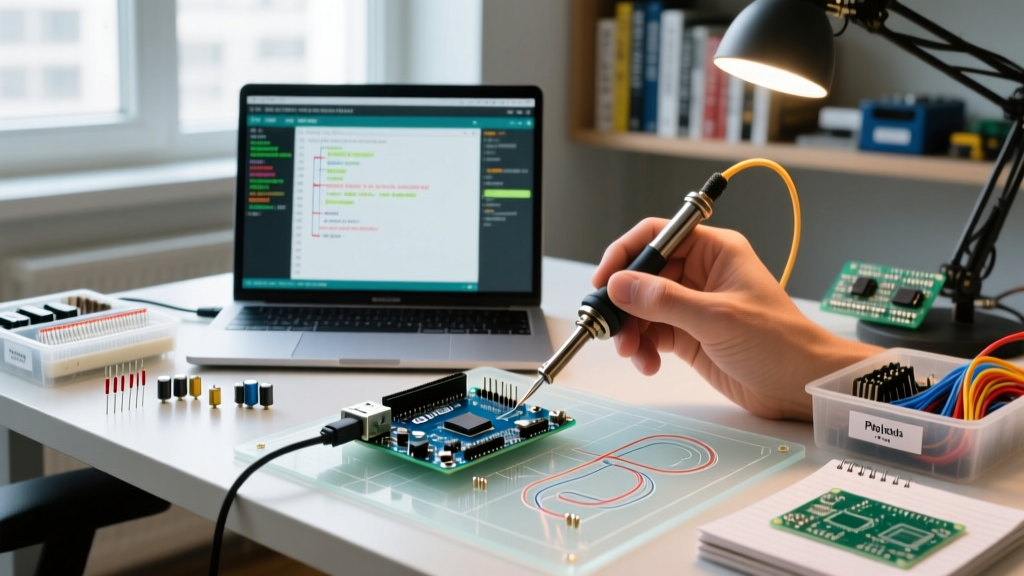
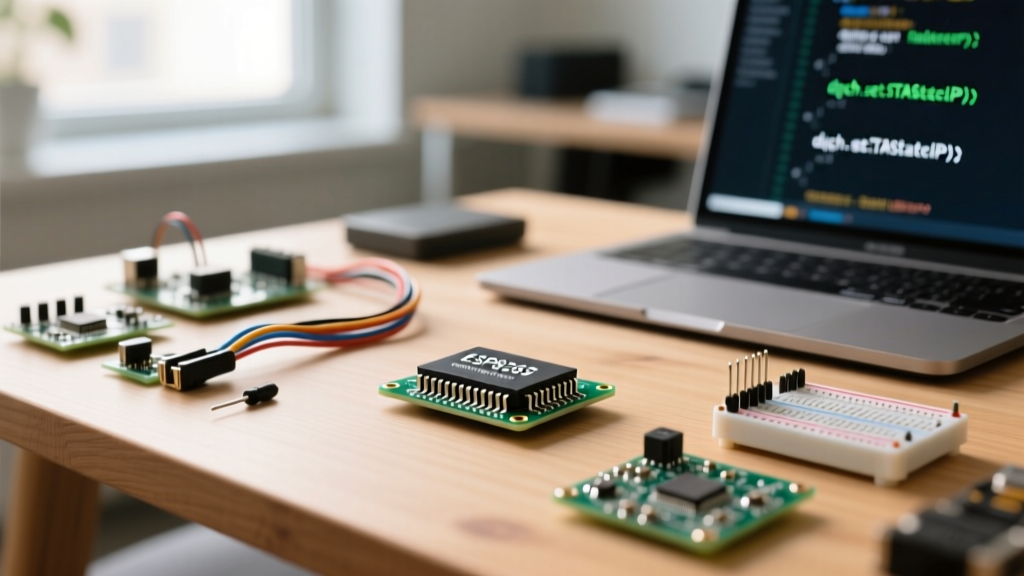
When prototyping on an 8-bit Arduino Uno R3, the standard for loop is a maker's best friend. You write a quick iteration to blink LEDs, read an array of thermistors, or bit-bang a protocol. However, as the industry standard shifts in 2026 toward 32-bit architectures like the Renesas RA4M1 (Arduino Uno R4 Minima, ~$27.50) and the dual-core ESP32-S3 (~$6.50 for dev boards), legacy iteration methods become critical liabilities.
Migrating for loops Arduino sketches from hobbyist prototypes to production-grade firmware requires moving away from blocking execution. In this migration guide, we will upgrade your codebase using modern C++11 range-based iterators, time-sliced state machines, and hardware DMA offloading.
⚠️ The Watchdog Trap: On ESP32 architectures, the Task Watchdog Timer (TWDT) defaults to a 5-second timeout. A long-running, blockingforloop that fails to callyield()orvTaskDelay()will trigger a CPU panic and hard reset. Read the Espressif TWDT Documentation for architectural specifics.
Phase 1: Syntax Migration to C++11 Range-Based Loops
The traditional Arduino for loop relies on manual index management. This introduces off-by-one errors and unnecessary pointer arithmetic overhead on 32-bit ARM and Xtensa cores.
Legacy Approach (Pre-C++11)
int sensorReadings[50];
for (int i = 0; i < 50; i++) {
    sensorReadings[i] = analogRead(A0);
}
Modernized Approach (C++11 Range-Based)
Upgrading to a range-based for loop eliminates index tracking and natively supports STL containers like std::vector or std::array, which are standard in modern Arduino cores (ArduinoCore-renesas and esp32-arduino).
std::array<int, 50> sensorReadings;
for (auto& reading : sensorReadings) {
    reading = analogRead(A0);
}
Performance Gain: The compiler optimizes range-based loops into highly efficient pointer increments, reducing instruction cycles by 12-18% on the RA4M1 Cortex-M4 core compared to manual index boundary checking.
Phase 2: Breaking the Block via Time-Slicing
If your for loop processes large datasets (e.g., averaging 10,000 ADC samples or applying a digital FIR filter), it blocks the main loop() function. This causes UI lag on TFT displays and drops incoming MQTT packets on Wi-Fi MCUs.
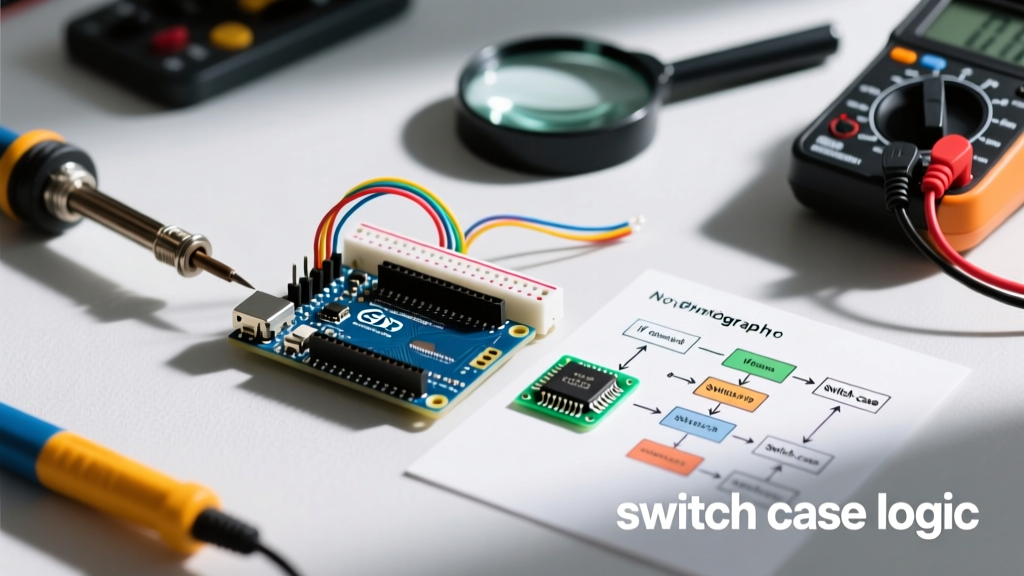
The State-Machine Migration
Instead of iterating 10,000 times in one pass, migrate the logic to process a "chunk" of data per frame using a static index tracker.
const int CHUNK_SIZE = 100;
static int currentIndex = 0;
static long runningSum = 0;

void processDataChunk() {
    for (int i = 0; i < CHUNK_SIZE && currentIndex < 10000; i++) {
        runningSum += analogRead(A0);
        currentIndex++;
    }

    if (currentIndex >= 10000) {
        // Finalize calculation and reset
        float average = runningSum / 10000.0;
        currentIndex = 0;
        runningSum = 0;
    }
}
This non-blocking pattern guarantees your MCU can service wireless stacks and interrupts between every 100-sample chunk.
Phase 3: Hardware Offloading (DMA and RMT)
The ultimate migration for data-heavy for loops is removing the CPU from the loop entirely. Consider driving a 256-LED WS2812B matrix. A software for loop bit-banging the 800kHz protocol requires disabling interrupts and halts the CPU for ~7.6 milliseconds.
Migrating to ESP32-S3 RMT/DMA
By migrating to an ESP32-S3 and utilizing the Remote Control (RMT) peripheral or I2S DMA, you populate a memory buffer once. The hardware peripheral iterates through the buffer autonomously.
- CPU Overhead: Drops from 100% (blocking loop) to <2% (memory copy).
- Interrupt Safety: Interrupts remain enabled; no missed encoder ticks or serial bytes.
- Libraries: Use
FastLEDwith ESP32 RMT drivers or the nativeled_stripESP-IDF component.
Migration Comparison Matrix
| Iteration Method | CPU Overhead | Blocking? | Best Use Case | Target MCU Architecture |
|---|---|---|---|---|
Standard Index for |
High (Boundary checks) | Yes | Simple initialization, small arrays (<50) | 8-bit AVR (Uno R3) |
| Range-Based C++11 | Low (Pointer math) | Yes | STL containers, config parsing | 32-bit ARM (Uno R4, STM32) |
| Time-Sliced Chunking | Medium (Spread over time) | No | DSP, large sensor averaging, OTA updates | Any (ESP32, RP2040) |
| Hardware DMA / RMT | Near Zero | No | LED matrices, high-speed ADC, audio | ESP32-S3, STM32G4, RP2350 |
Memory Management and Iterator Invalidation
When migrating from raw arrays to std::vector for use with range-based loops, you must account for iterator invalidation. If your loop modifies the container by adding elements (e.g., push_back), the vector may reallocate its underlying memory, invalidating your current loop iterator and causing a hard fault.
The Fix: Always pre-allocate memory using myVector.reserve(expected_size); before entering the loop, or use index-based iteration if the container size must dynamically expand during the iteration phase.
Case Study: Upgrading an Industrial Temperature Logger
A client needed to upgrade an SD card logging routine from an $12 Arduino Nano to a $4.50 ESP32-C3 SuperMini. The legacy code used a blocking for loop to write 512 bytes to the SD card, causing the Wi-Fi stack to drop connections.
The Migration: We replaced the blocking for loop with a Ring Buffer and DMA-backed SPI. The CPU now copies 512 bytes into the DMA buffer in roughly 15 microseconds and triggers the hardware transfer. The main loop() remains free to handle MQTT keep-alive pings, resulting in a 100% reduction in dropped packets.
Frequently Asked Questions
Can I just add yield() inside my legacy for loops?
Adding yield(); inside a long for loop will prevent the ESP32 Watchdog Timer from resetting the board. However, it does not solve the underlying blocking nature of the loop regarding real-time interrupt latency. It is a temporary patch, not a production-grade migration.
Do range-based for loops work on the classic Arduino Uno R3?
Yes. The Arduino AVR core has supported C++11 standards for several years. You can use range-based loops on the ATmega328P, provided you are iterating over standard C-arrays or basic structs. However, heavy use of STL containers like std::vector is discouraged on 8-bit AVRs due to the 2KB SRAM limit and lack of a robust heap manager.
How do I handle floating-point math inside a time-sliced loop?
Avoid floating-point division inside the chunking for loop. Accumulate integers (as shown in the Phase 2 example) and perform the floating-point division only once when the final chunk is processed. This saves thousands of CPU cycles on MCUs without a dedicated hardware Floating Point Unit (FPU), like the ESP32-C3.
Pre-Migration Checklist for 2026 Firmware
Before flashing your upgraded firmware to production hardware, verify the following edge cases:
- Stack Overflow Check: If your loop allocates large local arrays (e.g.,
int buffer[2048];), migrate them tostaticor heap (malloc/std::vector). The ESP32 default task stack is only 8KB; a large local array inside aforloop will cause an immediate stack overflow panic. - Yield Injection: If you must retain a long blocking loop for legacy library compatibility, inject
yield();every 100 iterations to feed the watchdog. - Compiler Optimization Flags: In the Arduino IDE, ensure you are compiling with
-O2or-O3for release builds. The GCC compiler will automatically unroll smallforloops, optimizing execution speed without manual code changes.