
The State of the Arduino Ecosystem in 2026
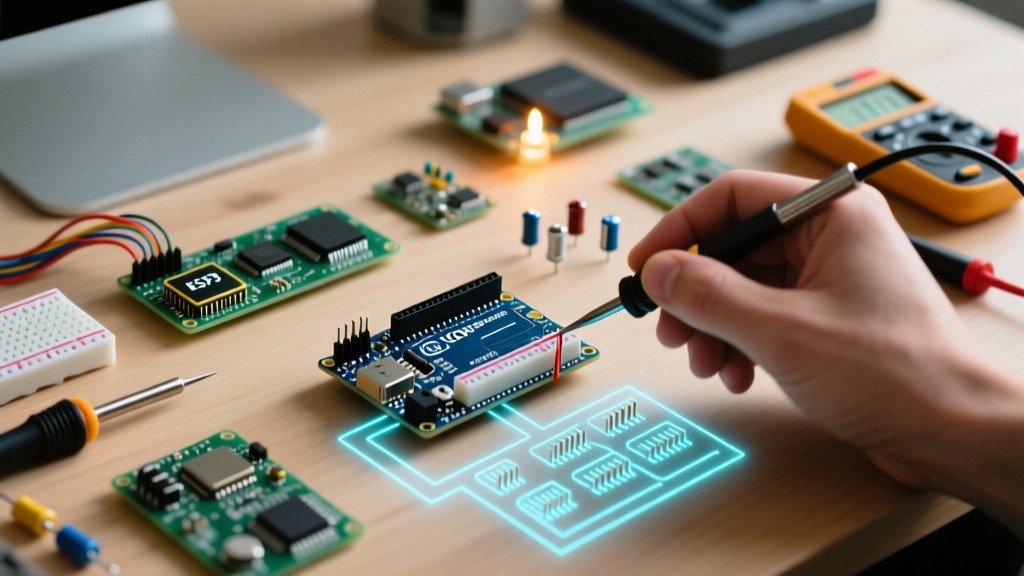
The Arduino ecosystem has evolved far beyond the simple blink sketches of the 2010s. Today, integrating complex peripherals requires highly optimized, community-maintained code. When sourcing components, international makers often search for an Arduino modul (the common shorthand or regional spelling for module) and find thousands of unbranded, generic PCBs on distributors like Mouser, Digi-Key, or AliExpress. While the hardware is abundant, the real challenge lies in finding reliable, low-latency software libraries to drive them.
Official first-party libraries are excellent for getting started, but they often lack the memory optimization, DMA (Direct Memory Access) support, and edge-case handling required for production-grade maker projects. In 2026, the most critical resources for any microcontroller engineer are community-driven GitHub repositories, specialized Discord servers, and independent wikis. This roundup curates the absolute best community resources for the most popular Arduino modules on the market today.
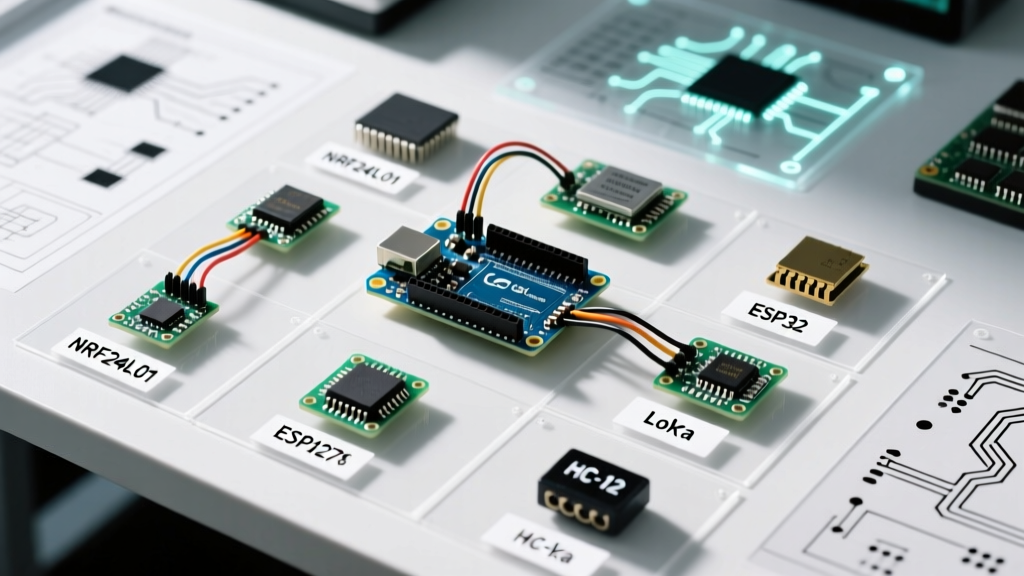
Wireless & RF Modules: Beyond the Basics
Communication modules are the backbone of IoT and telemetry projects. Whether you are deploying LoRaWAN nodes in agricultural settings or building low-latency RC telemetry, the choice of library dictates your battery life and range.
The RadioLib Standard
For years, the community relied on the RadioHead library for sub-GHz RF communication. While revolutionary, its monolithic architecture often consumed over 10KB of flash memory, which is fatal for ultra-low-power ATtiny or AVR-based nodes. Enter RadioLib, maintained by Jan Gromeš. RadioLib is currently the undisputed champion for wireless modules in 2026.
- Supported Hardware: SX1276/SX1278 (LoRa), nRF24L01+, CC1101, and Si4432.
- Performance Edge: Modular compilation means unused radio protocols are stripped out at compile time, reducing flash footprint by up to 60% compared to legacy libraries.
- Community Resource: The RadioLib GitHub Discussions board is actively monitored, with community members providing custom modem presets for specific regional ISM band regulations.
ESP32-C3 and ESP32-S3 Wi-Fi/BLE
Espressif’s official ESP-IDF is powerful but steep. For Arduino IDE users, the community-maintained esp32-arduino core on GitHub is essential. The community wiki on the Espressif forums provides critical workarounds for the ADC non-linearity issues present in early ESP32-S3 silicon revisions, offering software calibration curves that official documentation often glosses over.
High-Performance Display Modules
Driving TFT displays like the ILI9341 (320x240) or ST7789 (240x240) over standard SPI can bottleneck your microcontroller. If you are using the default Adafruit_GFX library on an ESP32 or RP2040, you are likely leaving massive performance gains on the table.
LovyanGFX and TFT_eSPI
For high-framerate rendering, the community universally recommends LovyanGFX by lovyan03 and TFT_eSPI by Bodmer. These libraries bypass standard SPI abstractions and utilize the hardware’s native DMA controllers.
"By configuring DMA on the ESP32-S3, LovyanGFX allows the MCU to offload pixel data transmission to the background, freeing the CPU to handle physics calculations or sensor polling simultaneously." — Embedded Systems Maker Forum, 2025 Hardware Acceleration Thread
Pro-Tip for 2026: When wiring an ST7789 module, ensure your SPI clock phase (CPOL/CPHA) matches the library's User_Setup.h configuration. Many cheap modules use non-standard shift registers; setting the SPI speed to 80MHz in TFT_eSPI requires high-quality 22AWG silicone jumper wires to prevent signal degradation and screen tearing.
Environmental & IMU Sensor Modules
Precision sensors require precise timing and bus management. The Bosch BME688 (gas, humidity, pressure, temperature) and TDK ICM-42688-P (6-axis IMU) are industry standards, but their default I2C implementations often fail in complex daisy-chained setups.
Bosch Sensortec GitHub Repositories
Instead of third-party wrappers, the most reliable resource for BME modules is the official BoschSensortec GitHub organization, which is heavily moderated by community embedded engineers. Their C++ API includes the Bosch AI environmental cluster library for gas sensor calibration.
The I2C Bus Capacitance Problem
A frequent point of failure discussed in the r/arduino and r/PrintedCircuitBoard communities is I2C bus capacitance. The I2C specification limits bus capacitance to 400pF. When wiring multiple sensor modules, the trace and wire capacitance easily exceeds this, causing data corruption at 400kHz (Fast Mode).
| I2C Speed Mode | Max Bus Capacitance | Recommended Pull-Up Resistor | Common Failure Symptom |
|---|---|---|---|
| Standard (100kHz) | 400pF | 4.7kΩ | Occasional dropped packets |
| Fast (400kHz) | 400pF | 2.2kΩ | Hard lockups, SDA line stuck LOW |
| High-Speed (1MHz) | 100pF | 1.0kΩ (Active Pull-ups preferred) | Complete bus failure, NACK errors |
Community hardware designers strongly recommend using dedicated I2C multiplexers like the TCA9548A or active pull-up accelerators (like the PCA9600) when chaining more than three sensor modules on a single bus.
Official vs. Community Libraries: A Decision Framework
When should you use the library provided by the module manufacturer, and when should you switch to a community fork? Use this matrix to decide:
| Criteria | Official / Manufacturer Library | Community-Maintained Fork |
|---|---|---|
| Prototyping Speed | Excellent (Plug-and-play examples) | Moderate (Requires reading wikis/headers) |
| Memory Footprint | High (Bloated with unused features) | Low (Optimized for specific architectures) |
| Edge-Case Handling | Poor (Assumes perfect wiring) | Excellent (Handles timeouts and bus resets) |
| Long-Term Support | Variable (Often abandoned after 1 year) | High (Driven by active user demand) |
Troubleshooting Edge Cases: The Counterfeit Chip Epidemic
One of the most valuable aspects of the community resource network is crowd-sourced hardware debugging. A prime example in 2026 is the proliferation of counterfeit nRF24L01+ modules. Many inexpensive modules use the SI24R1 clone chip instead of the genuine Nordic nRF24L01+.
The SI24R1 has a known hardware bug: it fails to transmit reliably at 2Mbps and requires significantly more current during TX bursts, causing brownouts on standard Arduino Uno 3.3V regulators. The community-developed RF24 library includes specific workarounds for this. By utilizing the community wiki on the TMRH20 GitHub page, makers can implement a software patch that forces the PA (Power Amplifier) level to RF24_PA_MIN during initialization, or caps the data rate at 1Mbps, entirely bypassing the silicon defect.
Essential Community Hubs to Bookmark
To stay updated on module-specific quirks, firmware updates, and schematic reviews, add these hubs to your daily rotation:
- The Arduino Forum (Hardware & Peripherals Section): Still the most heavily indexed repository of obscure I2C address conflicts and SPI pin-mapping errors for non-standard boards.
- EEVblog Forum (Microcontrollers Sub-board): Best for deep-dive discussions on power consumption profiling, decoupling capacitor placement for RF modules, and logic analyzer trace decoding.
- Discord - 'The Maker's Lounge' & 'ESP32 Community': Real-time troubleshooting where you can share oscilloscope screenshots and get immediate feedback on signal integrity issues from senior embedded engineers.
Final Thoughts on Module Integration
Mastering the Arduino ecosystem in 2026 means looking past the official Arduino Language Reference and diving into the trenches of community-maintained code. Whether you are optimizing a LoRaWAN payload with RadioLib, pushing 60FPS to an ST7789 via DMA, or debugging I2C pull-up resistors on a BME688 breakout, the collective knowledge of the open-source hardware community is your most valuable tool. Always check the GitHub 'Issues' tab of a library before integrating it into your production firmware, and never underestimate the importance of proper hardware decoupling when working with high-speed communication modules.