
The Evolution of Arduino Education in 2026
The landscape of embedded systems education has shifted dramatically. While early tutorials focused on blinking LEDs and basic sensor reads, modern arduino classes must address the complexities of professional firmware development. In 2026, with the proliferation of multi-core MCUs like the ESP32-S3 and the Raspberry Pi Pico W (RP2040), hobbyists and junior engineers are hitting severe workflow bottlenecks when relying solely on beginner-level knowledge.
Optimizing your maker workflow means moving beyond the default Arduino IDE 2.3 environment and embracing professional tools. The right coursework will transition you from fragile, spaghetti-code sketches to modular, testable, and version-controlled firmware architectures. According to the Arduino Education portal, the demand for intermediate-to-advanced embedded training has surged, driven by makers transitioning into commercial IoT product development.
Why Standard "Blinky" Courses Kill Your Workflow
Most entry-level courses teach a linear, blocking approach to programming. They rely heavily on delay(), global variables, and monolithic loop() functions. While this lowers the barrier to entry, it creates a massive technical debt that halts workflow optimization.
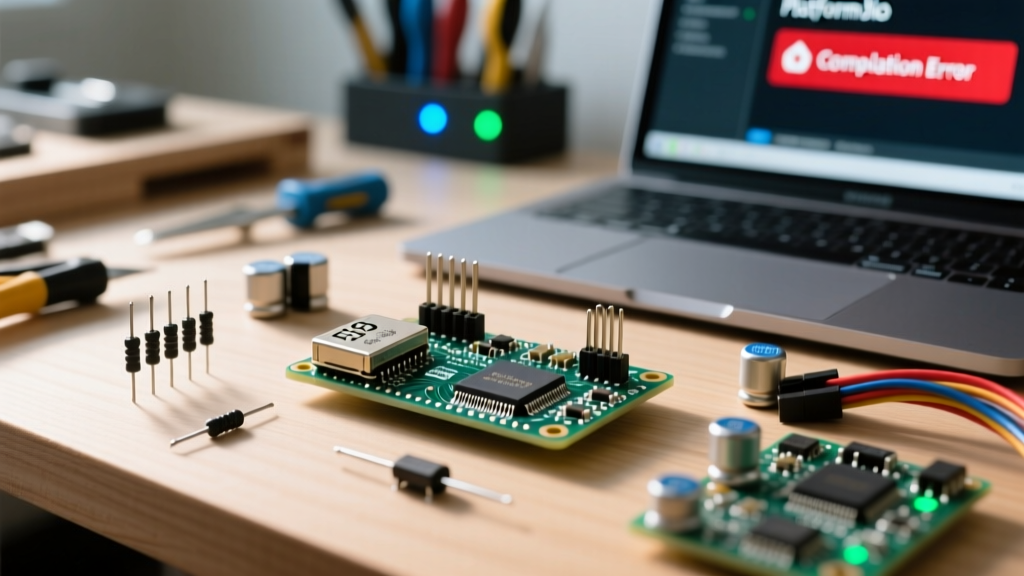
- Compilation Bottlenecks: Standard IDE workflows lack incremental build caching for large projects, leading to 30+ second compile times on complex ESP32 codebases.
- Library Hell: Manually downloading ZIP files and managing dependencies via the IDE library manager breaks reproducibility across different machines.
- Zero Automated Testing: Without CI/CD pipelines, firmware bugs are only caught after flashing the physical hardware, wasting hours of debug time.
To solve these issues, you need advanced Arduino classes that treat microcontroller programming as a software engineering discipline.
Top-Tier Arduino Classes for Professional Workflows
When evaluating where to invest your time and money, prioritize courses that integrate modern toolchains. Below is a comparison matrix of the most effective learning paths available in 2026 for workflow optimization.
| Platform / Course Type | Core Workflow Focus | 2026 Price Range | Best For |
|---|---|---|---|
| University Embedded Certificates (e.g., Coursera/edX) | RTOS, Memory Management, C++ OOP | $39 - $59 / month | Engineers needing deep architectural theory |
| PlatformIO & CI/CD Masterclasses (Udemy/Specialized) | VS Code integration, GitHub Actions, YAML | $14.99 - $19.99 (Sale) | Makers wanting immediate toolchain upgrades |
| Hardware-in-the-Loop (HIL) Bootcamps | Automated testing, PyTest for embedded | $200 - $450 (Cohort) | IoT startups and commercial product teams |
| Official Arduino Pro / Cloud Workshops | OTA updates, Fleet management, Secure boot | Free - $99 / module | IoT deployments and remote device management |
4 Critical Workflow Skills Your Arduino Class Must Cover
Before purchasing any advanced embedded course, review the syllabus for these four non-negotiable workflow optimization pillars. If a class does not cover these, it is likely stuck in 2018.
1. PlatformIO and VS Code Integration
The PlatformIO documentation and ecosystem represent the gold standard for embedded workflow in 2026. A premium class will teach you how to configure the platformio.ini file to manage board definitions, build flags, and library dependencies (lib_deps). This ensures that anyone cloning your repository can compile the firmware instantly without manually hunting for specific library versions.
2. Object-Oriented State Machines
Transitioning from procedural C to Object-Oriented C++ is vital for scaling Arduino projects. Advanced classes teach you to encapsulate hardware peripherals into classes. For example, instead of blocking the main loop with Wire.requestFrom() for an I2C BME280 sensor, you learn to implement a non-blocking state machine class that handles I2C transactions asynchronously, freeing up the CPU for high-priority RTOS tasks.
3. Git Version Control for Embedded
Managing firmware requires a different Git strategy than web development. Quality coursework provides explicit .gitignore templates tailored for PlatformIO and Arduino IDE build directories. You will learn how to use Git submodules for custom internal libraries and how to tag releases that automatically trigger binary compilation.
4. Automated CI/CD with GitHub Actions
This is the ultimate workflow multiplier. Top-tier courses walk you through writing YAML workflows for GitHub Actions. Every time you push a commit, the cloud server spins up an Ubuntu instance, installs the Arduino CLI or PlatformIO Core, compiles your code for multiple targets (e.g., Arduino Nano ESP32 and Adafruit Feather RP2040), and runs static analysis tools like cppcheck. This catches memory leaks and syntax errors before you ever touch a physical breadboard.
Decision Matrix: Choosing the Right Learning Path
How do you decide which class to take? Use this rapid-filter framework based on your current project bottlenecks:
🛠️ The Debugging Bottleneck: If you spend hours chasing memory leaks and timing bugs, choose a course focused on RTOS (Real-Time Operating Systems) and FreeRTOS task management. Look for modules covering stack watermarking and mutex implementation.
🚀 The Deployment Bottleneck: If flashing 50+ devices manually is slowing you down, seek out classes on OTA (Over-The-Air) Update Architectures and Arduino Cloud Fleet Management.
🤝 The Collaboration Bottleneck: If your team keeps overwriting each other's code, immediately enroll in a PlatformIO and Git for Embedded Systems masterclass.
Real-World Workflow Optimization: Before vs. After
To understand the ROI of advanced Arduino classes, consider the typical development cycle for a custom ESP32-based environmental monitor.
Before Advanced Training (The Hobbyist Workflow):
- Write code in Arduino IDE using global variables.
- Commit raw
.inofiles to GitHub (including 50MB of hidden build folders). - Manually download the Adafruit BME280 library via the IDE GUI.
- Flash the board, realize the I2C address is wrong, tweak code, re-flash (15 minutes lost).
After Advanced Training (The Optimized Workflow):
- Write modular C++ classes in VS Code using PlatformIO.
- Push clean code; GitHub Actions automatically compiles the ESP32 binary and runs
cppcheck. - Dependencies are resolved automatically via
lib_depsin the INI file. - Flash the board using a pre-configured JTAG debug probe, setting hardware breakpoints to catch the I2C fault in real-time without serial printing.
Final Thoughts on Upskilling in 2026
The era of treating Arduino as a mere prototyping toy is over. With the integration of AI-assisted coding tools and sophisticated edge-computing MCUs, the baseline for embedded development has risen. By strategically selecting arduino classes that prioritize toolchain mastery, CI/CD pipelines, and modular software architecture, you transform your workflow from a frustrating cycle of trial-and-error into a streamlined, professional engineering pipeline. Explore the embedded systems catalogs on major MOOC platforms or specialized maker academies, and start building firmware that scales.