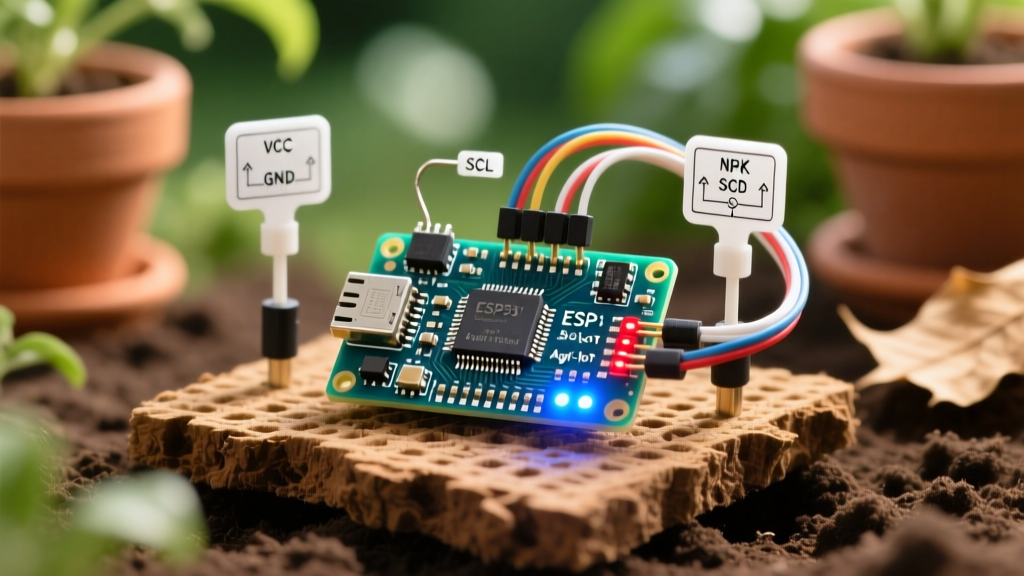

The Agri-IoT Ecosystem: Redefining Crop Yield Management
In 2026, the intersection of microcontroller ecosystems and precision agriculture has matured from hobbyist experiments into robust, commercial-grade deployments. When we discuss arduino esp32 yield tracking, we are no longer just talking about reading a single soil moisture pin. We are referring to a comprehensive Agri-IoT ecosystem where Espressif’s silicon, the Arduino development environment, industrial RS485 sensors, and MQTT telemetry converge to predict, monitor, and optimize crop yields.
Ecosystem Insight: True yield optimization requires continuous, high-fidelity data. The modern ESP32-Arduino ecosystem provides the necessary edge-computing power to process NPK (Nitrogen, Phosphorus, Potassium) levels, micro-climate humidity, and soil dielectric permittivity locally before transmitting actionable telemetry to cloud dashboards like ThingsBoard.
Hardware Selection: Matching Silicon to Soil
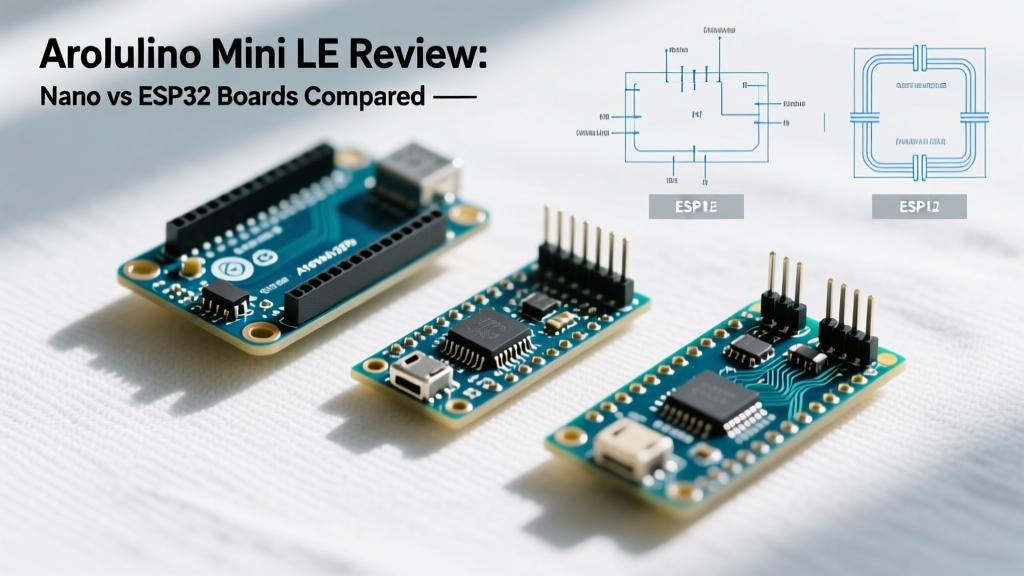
Choosing the right board is the first critical step in building a reliable yield-monitoring node. The original ESP32’s ADC (Analog-to-Digital Converter) non-linearity on pins GPIO34 through GPIO39 historically plagued precise capacitive soil moisture readings. Today, the ecosystem offers refined alternatives.
| Board Model | 2026 Avg. Price | ADC Architecture | Deep Sleep Current | Best Ecosystem Use Case |
|---|---|---|---|---|
| Arduino Nano ESP32 | $22.00 | 12-bit SAR (Improved calibration) | ~15 µA (with RTC) | Rapid prototyping, educational Agri-IoT kits |
| ESP32-S3-DevKitC-1 | $4.50 | 12-bit SAR (High linearity) | ~10 µA | High-volume commercial yield nodes, AI edge inference |
| ESP32-C3 SuperMini | $2.80 | 12-bit SAR (Single channel) | ~5 µA | Low-cost, single-sensor moisture tracking |
For professional yield prediction, the ESP32-S3 is the undisputed king of the ecosystem. Its improved ADC linearity ensures that capacitive soil moisture sensors (like the v1.2 or v2.0 variants) provide accurate volumetric water content (VWC) readings without requiring an external I2C ADC like the ADS1115.
The Sensor Layer: Capturing Yield-Determining Variables
Crop yield is directly correlated to soil nutrient density and moisture retention. The ecosystem relies heavily on industrial-grade probes rather than cheap resistive forks.
RS485 NPK Sensors and Logic Level Translation
Industrial 7-in-1 soil sensors (measuring NPK, pH, EC, moisture, and temperature) typically cost between $65 and $85. They communicate via Modbus RTU over RS485. Integrating these into the Arduino ESP32 ecosystem requires strict attention to hardware realities:
- Voltage Translation: ESP32 GPIOs are strictly 3.3V. Standard MAX485 modules operate at 5V. You must use a bidirectional logic level shifter (e.g., BSS138 MOSFET-based shifters) to prevent frying the ESP32’s RX/TX pins.
- Bias and Termination: For RS485 runs exceeding 5 meters to the central node, install 120Ω termination resistors at both ends of the bus, and use 470Ω pull-up/pull-down bias resistors on the A and B lines to prevent floating states during ESP32 deep sleep.
- Power Isolation: NPK sensors draw up to 150mA during active measurement. Use a dedicated buck converter (like the LM2596 set to 5V) powered directly from your 12V solar battery, rather than relying on the ESP32 board’s onboard 3.3V LDO.
Power Architecture: Surviving the 120-Day Harvest Cycle
A yield monitoring node deployed in a corn or wheat field must survive an entire season without manual intervention. The Arduino ESP32 ecosystem handles power management through FreeRTOS deep-sleep stubs.
The Solar-LiFePO4 Topology
While Li-Ion (18650) cells are common, the 2026 standard for outdoor Agri-IoT is LiFePO4 (Lithium Iron Phosphate). LiFePO4 operates natively at 3.2V–3.6V, which can power the ESP32-S3 directly via the 3V3 pin (bypassing the inefficient onboard LDO), while safely tolerating the voltage spikes from a 6V solar panel routed through a CN3791 solar charge controller.
- Wake-up Sequence: The ESP32 wakes from deep sleep via an external RTC interrupt (e.g., DS3231) every 4 hours.
- Sensor Polling: Power the RS485 bus via a MOSFET switch (e.g., AO3400) to ensure zero parasitic drain while sleeping.
- Telemetry Burst: Connect to LoRaWAN or WiFi, transmit the JSON payload, and immediately return to sleep. Total wake time: < 4 seconds.
Software Stack: FreeRTOS and MQTT Telemetry
The Arduino IDE 2.x environment abstracts the ESP-IDF, but for yield tracking, you must leverage FreeRTOS to prevent the WiFi/LoRa stack from crashing during long Modbus sensor reads.
Task Separation Strategy
Assign the Modbus RTU polling to Core 0, and the network telemetry to Core 1. This ensures that if a sensor probe experiences a timeout due to soil compaction or cable damage, the ESP32 can still transmit a diagnostic "sensor offline" heartbeat to your ThingsBoard dashboard.
Standardized JSON Payload for Yield Analytics:
{
  "node_id": "field_04_zone_B",
  "timestamp": 1715623400,
  "soil_vwc": 24.5,
  "npk_n": 42,
  "npk_p": 18,
  "npk_k": 35,
  "ec_ms": 1.2,
  "battery_mv": 3340
}
Field Failure Modes and Troubleshooting
Deploying the Arduino ESP32 ecosystem in harsh agricultural environments introduces unique failure modes that bench-testing cannot replicate.
- Condensation in IP67 Enclosures: Even sealed enclosures suffer from internal condensation due to diurnal temperature swings. Solution: Place a 5-gram silica gel desiccant packet inside the enclosure and coat the ESP32 PCB with acrylic conformal coating (MG Chemicals 419D).
- Ground Loops on RS485: When multiple NPK probes share a common ground with a solar charge controller, ground loops can corrupt Modbus packets. Solution: Use an isolated RS485 transceiver module (like the ISO3082) to galvanically isolate the ESP32 from the sensor bus.
- Watchdog Timer (WDT) Resets: If the MQTT broker is unreachable due to poor crop canopy RF penetration, the ESP32 may hang and trigger a WDT reset. Solution: Always implement a 10-second hardware watchdog timer and cap network connection attempts to 5 retries before forcing a deep sleep.
Frequently Asked Questions
Can the standard Arduino Uno R4 WiFi be used for field yield tracking?
While the Uno R4 WiFi features an ESP32-S3 coprocessor, its physical footprint and lack of native deep-sleep current optimization make it unsuitable for solar-powered field nodes. Stick to barebones ESP32-S3 or C3 modules for deployments requiring sub-15µA sleep currents.
How accurate are cheap NPK sensors for real yield prediction?
Sub-$20 optical or basic EC-based "NPK" sensors are largely inaccurate for actual chemical nutrient measurement. For genuine yield correlation, you must invest in industrial $70+ ion-selective electrode (ISE) or multi-frequency dielectric sensors, and calibrate them against local soil laboratory baselines.
Does the crop canopy affect WiFi telemetry from the ESP32?
Yes. Dense canopies like mature corn or tomatoes severely attenuate 2.4GHz WiFi signals. For mid-to-late season yield tracking, the ecosystem strongly favors Sub-GHz LoRaWAN (868MHz/915MHz) modules like the RYLR998, which can penetrate foliage and reach gateways up to 5km away.