
Beyond the Basics: Learning Through Real-World Tool Reviews
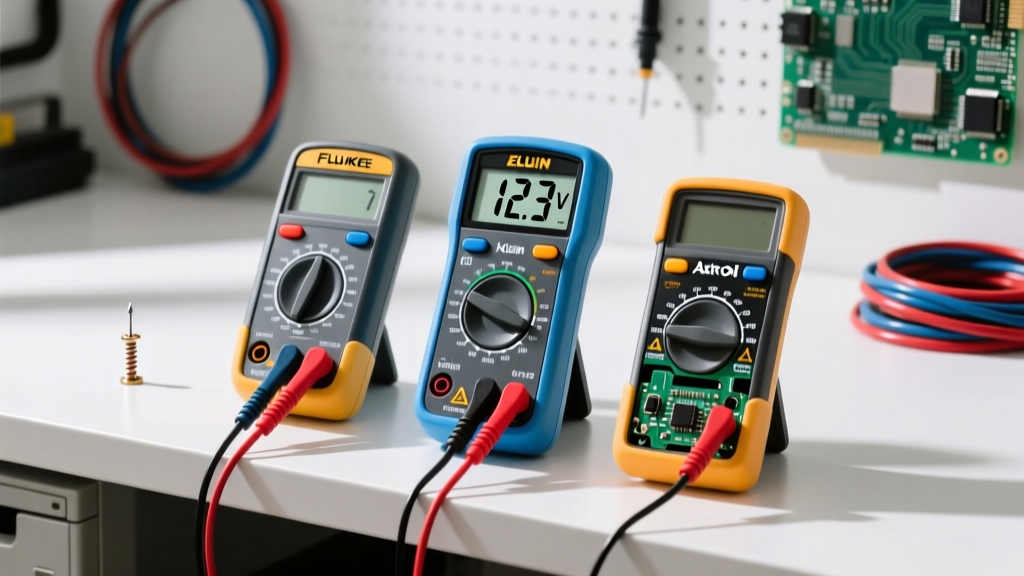
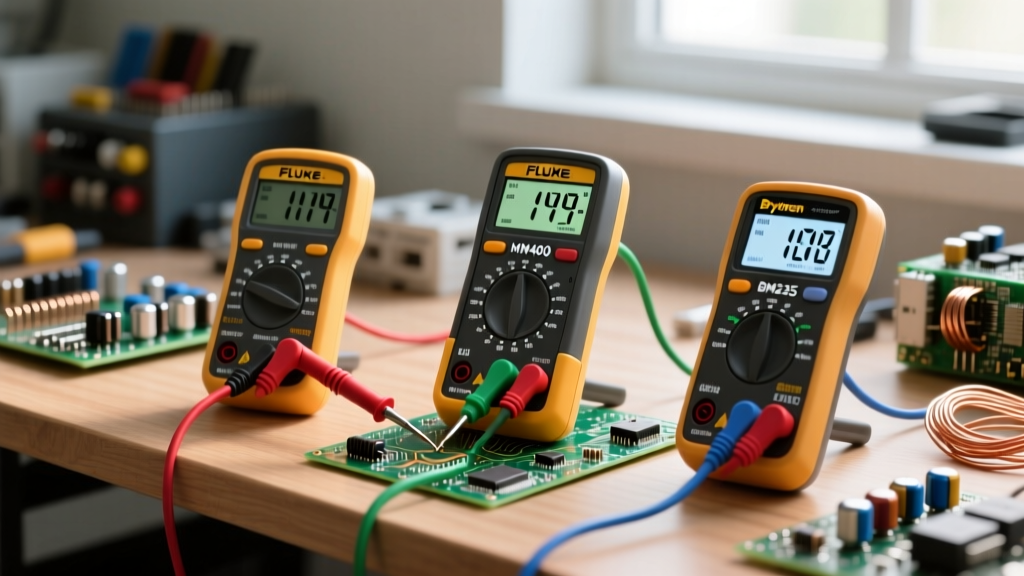
When most beginners and seasoned tradespeople search for a guide on multimeter how to use, they are typically met with abstract diagrams and generic theory. At ElectricalFlux, we take a radically different approach. The most effective way to master a digital multimeter (DMM) is to examine the specific features, limitations, and workflows of the industry's leading tools. By reviewing three distinct categories of multimeters—the industrial standard, the electrician's daily driver, and the electronics bench essential—we will teach you exactly how to use advanced measurement techniques in real-world scenarios.
The Anatomy of Measurement: Ports, Dials, and Safety Categories
Before diving into specific models, you must understand the universal anatomy of a DMM. Every meter features a display, a rotary dial, and input jacks. The COM (common) jack is your ground reference and always accepts the black probe. The VΩ jack is used for voltage, resistance, continuity, and diode testing. The mA and 10A jacks are strictly for current measurement.
Critically, you must understand CAT (Measurement Category) ratings. According to OSHA electrical safety guidelines, working on fixed installations like breaker panels requires a minimum of CAT III 600V or CAT IV 300V ratings to protect against transient voltage spikes. Never use a CAT II automotive meter on mains AC wiring.
Tool Review 1: Fluke 117 True RMS (The Industrial Standard)
Price: ~$210 | Counts: 6,000 | Rating: CAT III 600V
The Fluke 117 is the undisputed king of commercial electrician multimeters. Its standout feature isn't just its ruggedness; it is the integration of AutoVolt and LoZ (Low Impedance) modes. Understanding how to use LoZ is a masterclass in eliminating 'ghost voltages.'
How to Use LoZ to Eliminate Ghost Voltages
Ghost voltages occur when unenergized wires run parallel to live wires in a conduit, picking up a capacitive charge. A standard high-impedance DMM will read 40V to 90V on a dead wire, leading to dangerous misdiagnoses. The Fluke 117's LoZ mode places a low-impedance load across the probes, bleeding off this phantom capacitive charge.
Pro Workflow: When troubleshooting a suspected open neutral or a dead receptacle, always take your initial reading in standard V-AC mode. If you suspect ghosting, switch to LoZ. If the voltage drops to near zero, the circuit is genuinely de-energized.
Furthermore, the Fluke 117 features VoltAlert, a built-in non-contact voltage (NCV) sensor located at the top of the meter. While NCV is great for quick checks, never rely on it for lockout/tagout (LOTO) procedures; always verify with direct probe contact.
Tool Review 2: Klein Tools MM400 (The Electrician's Daily Driver)
Price: ~$55 | Counts: 4,000 | Rating: CAT III 600V
For residential electricians and advanced DIYers, the Klein Tools MM400 offers incredible utility without the $200 premium. It includes auto-ranging, a built-in thermocouple for temperature, and a remarkably loud continuity tester.
Mastering Continuity and the Audible Latch
Continuity testing is the most frequently used function on any DMM. It verifies if a complete path exists for current to flow. The MM400's continuity threshold is approximately 15Ω. However, the true skill in using continuity lies in 'proving out' your probes and understanding parallel paths.
When testing a switch or a fuse, you must isolate the component from the circuit. If you test a switch while it is still wired into a parallel lighting circuit, the meter will read continuity through the other light bulbs, giving you a false pass.
- Step 1: Turn off the breaker and verify zero voltage.
- Step 2: Disconnect the component from the circuit.
- Step 3: Touch the probes together to verify the MM400 beeps (proving the leads aren't internally broken).
- Step 4: Apply probes to the component. A beep indicates a closed circuit (good fuse/closed switch); silence indicates an open circuit (blown fuse/open switch).
Tool Review 3: Brymen BM235 (The Electronics Bench Essential)
Price: ~$115 | Counts: 10,000 | Rating: CAT III 600V / CAT IV 300V
While Fluke and Klein dominate the field, the Brymen BM235 is the secret weapon for electrical engineers, microcontroller hobbyists, and automotive diagnosticians. It offers a blazing-fast continuity latch and, crucially, a dedicated microamp (µA) range.
Measuring Parasitic Drain and IoT Sleep Currents
Standard multimeters bottom out at the milliamp (mA) range, usually resolving down to 0.1mA (100µA). But what if you are designing an ESP32 IoT node that needs to draw only 15µA in deep sleep? Or what if you are diagnosing a parasitic battery drain on a modern vehicle where the CAN bus draws 45mA, but a faulty module is drawing an extra 300µA?
The Brymen BM235 features a dedicated µA terminal and range, resolving down to 0.01µA.
Critical Warning: The µA port is typically protected by a highly sensitive, low-amperage fuse (often 315mA). If you accidentally leave your red probe in the µA port and attempt to measure voltage across a 12V car battery, you will instantly vaporize the internal fuse. Always double-check your probe placement before energizing the circuit.
Comparative Breakdown: Which DMM Fits Your Workflow?
| Model | Best Use Case | Key Feature | Current Ranges | Approx. Price |
|---|---|---|---|---|
| Fluke 117 | Commercial/Industrial Electrical | LoZ (Ghost Voltage Elimination) | mA, A (No µA) | $210 |
| Klein MM400 | Residential/HVAC/DIY | Thermocouple & Loud Beep | µA, mA, A | $55 |
| Brymen BM235 | Electronics/Automotive/IoT | 10k Count & Fast Continuity | µA, mA, A | $115 |
The Blown Fuse Catastrophe: A Masterclass in What NOT to Do
No guide on multimeter how to use is complete without addressing the most common, and potentially dangerous, user error: measuring voltage with the probes in the current jacks.
When you move the red probe to the '10A' jack, you are essentially placing a dead short (a piece of wire with near-zero resistance) across the meter's internal shunt. If you then touch the probes to a 120V AC outlet, you create a massive short circuit.
Cheap multimeters use standard glass fuses that will explode inside the casing, potentially causing an arc flash, severe burns, and destroying the meter. Premium meters like the Fluke 117 and Brymen BM235 use HRC (High Rupturing Capacity) ceramic fuses filled with sand. The sand absorbs the explosive energy and quenches the arc, saving your life and the tool. As highlighted in Fluke's official safety documentation, always verify your meter contains OEM-specified HRC fuses after a replacement.
Final Verdict: Matching the Meter to the Maker
Learning how to use a multimeter is not a one-size-fits-all endeavor. If your daily routine involves opening 480V 3-phase panels, the Fluke 117 is a non-negotiable investment for its LoZ capabilities and rugged safety margins. If you are wiring smart homes, installing thermostats, and doing weekend DIY, the Klein MM400 provides 90% of the functionality at a fraction of the cost. Finally, if you are soldering PCBs, programming microcontrollers, or chasing automotive parasitic draws, the Brymen BM235 will provide the precision data that the other two simply cannot capture.
Master your tool, respect the CAT ratings, and always verify your probe placement before you measure.