The standard nominal voltage in the US is 120V AC for standard branch circuits and 240V AC for split-phase heavy loads, operating at exactly 60 Hz. According to the ANSI C84.1 standard, the acceptable utilization tolerance is ±5% (114V to 126V), while the service entrance tolerance is ±10%. If you are plugging in a device, its internal power supply must tolerate this 114V–126V continuous range without tripping internal brownout protection or overheating.
Global Context: US vs. International Voltage Standards
While the US relies on a 120V/240V center-tapped split-phase system, most of the world utilizes a 230V single-phase system. Understanding these differences is critical when importing machinery, traveling, or designing mixed-voltage bench setups. Below is a comparison of the primary global standards to contextualize the US grid.
| Region | Nominal Voltage | Standard Tolerance | Frequency | Standard Plug Type |
|---|---|---|---|---|
| United States | 120V / 240V | ±5% (114V–126V) | 60 Hz | NEMA 1-15 / NEMA 5-15 |
| European Union | 230V | +10% / -6% (216V–253V) | 50 Hz | CEE 7/7 (Schuko) / Type E/F |
| United Kingdom | 230V | +10% / -6% (216V–253V) | 50 Hz | BS 1363 (Type G) |
| Australia | 230V | +10% / -6% (216V–253V) | 50 Hz | AS/NZS 3112 (Type I) |
Source: NEMA ANSI C84.1 Voltage Ratings and IEC 60038 standard voltages.
Conductor Color Mapping: NEC vs. IEC in Mixed Installations
When integrating imported equipment into a US facility, a common point of failure is mixing wiring color standards. The rule is absolute: The National Electrical Code (NEC / NFPA 70) governs all fixed building wiring in the US, while IEC 60446 governs the internal factory wiring of imported equipment.
| Function | US NEC Standard (Fixed Wiring) | IEC 60446 (Imported Equipment Internal) |
|---|---|---|
| Line (Hot/Phase) | Black (or Red/Blue for multi-phase) | Brown (L1), Black (L2), Grey (L3) |
| Neutral | White or Grey | Blue |
| Protective Earth (Ground) | Bare Copper or Green | Green with Yellow Stripe |
If you are wiring a 230V European CNC machine in a US shop, you must run standard US THHN conductors (Black, White, Green) in the conduit to the machine's disconnect switch. At the machine's internal terminal block, you transition to the manufacturer's IEC-colored internal wiring. For detailed NEC grounding and bonding requirements, refer to NFPA 70 (National Electrical Code) Article 250.
Device Tolerance: Transformers, Converters, and Motor Loads
When moving equipment across borders, you must match the device's internal architecture to the correct power conditioning hardware. Confusing a 'converter' with a 'transformer' is the fastest way to destroy sensitive electronics.
Switch-Mode Power Supplies (SMPS)
Modern laptops, phone chargers, and LED drivers use SMPS units rated for '100-240V, 50/60Hz'. These devices automatically rectify and chop the input voltage. What they must tolerate: They only need physical plug adaptation. No voltage transformation is required.
Resistive Heating Elements
Hair dryers, toasters, and space heaters are purely resistive. If you plug a US 120V heater into a 230V UK outlet, it will draw nearly four times its rated power (P = V²/R) and catch fire.
- Travel Converters: These are lightweight, solid-state TRIAC choppers that 'halve' the sine wave. They are strictly for simple heating elements and will instantly destroy electronic motors or digital displays.
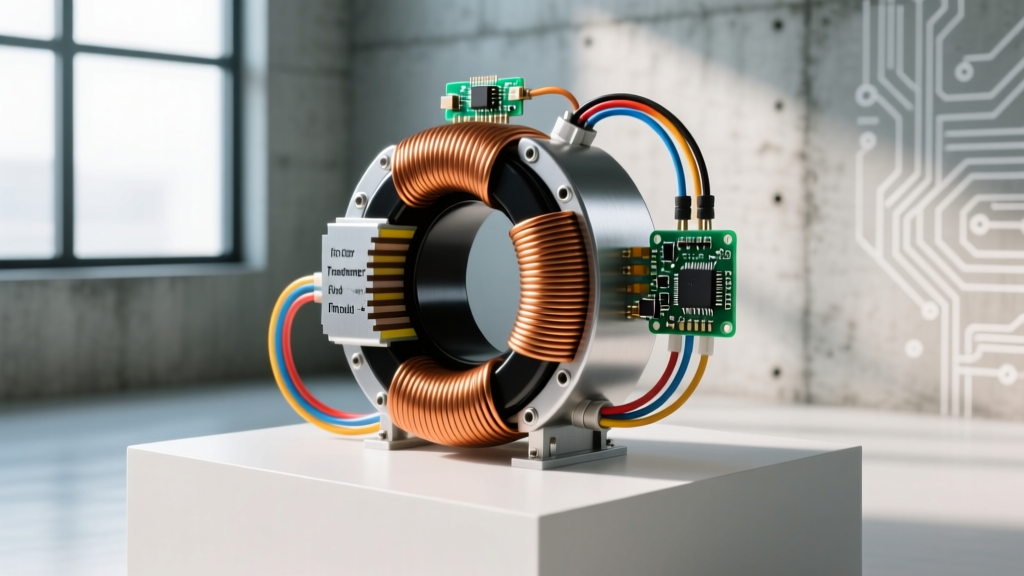
- Step-Down Transformers: These use heavy iron cores to magnetically induce a true 120V sine wave from a 230V source. They are safe for all electronics.
The Hidden Killer: Frequency Effects on Motor Loads
Voltage is only half the battle; frequency dictates motor speed. The synchronous speed of an AC induction motor is directly tied to grid frequency. According to Fluke's electrical engineering guidelines, frequency variations directly alter mechanical output.
Decision Tree: Selecting Your Power Interface
Use this decision matrix to select the exact hardware required for your specific load type when bridging US and international power systems.
| Device Architecture | Source Grid | Target Grid | Required Hardware | Concrete Part Pick |
|---|---|---|---|---|
| SMPS (100-240V label) | Any | Any | Passive Plug Adapter only | Ceptics EP-12 International Adapter |
| Resistive Heat (120V only) | US (120V) | EU/UK (230V) | Step-Up Transformer (2x Wattage) | BESTEK 500W Step-Up (Model MRJ500GU) |
| Electronics (230V only) | EU/UK (230V) | US (120V) | Step-Down Transformer (Iron Core) | BESTEK 300W Step-Down (Model MRJ301GU) |
| Induction Motor (50Hz) | EU (230V/50Hz) | US (120V/240V 60Hz) | Transformer + Variable Frequency Drive | Invertek Optidrive E3 VFD |
Default Recommendation for Industrial Installations
If you are permanently installing imported 230V/50Hz industrial machinery in a US facility, do not rely on off-the-shelf travel transformers. Default Pick: Specify a Hammond Manufacturing 59120-series isolation transformer (step-up 120V/240V to 230V) sized at exactly 125% of the equipment's Full Load Amps (FLA), paired with an Invertek Optidrive E3 VFD programmed to accept 60Hz input and synthesize a clean 50Hz output for the motor controllers. This ensures code compliance, protects against voltage sags, and prevents mechanical overspeed failures.