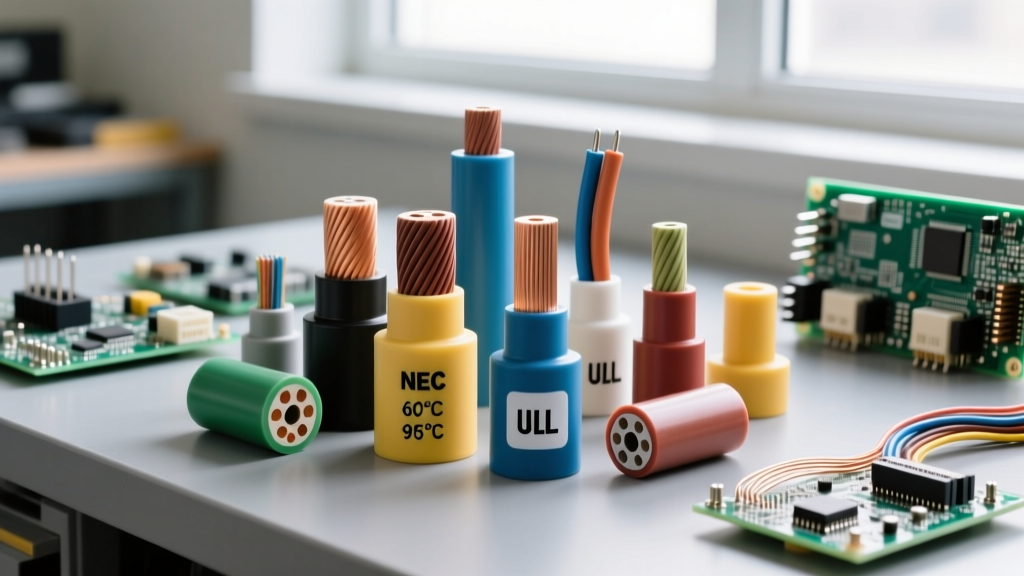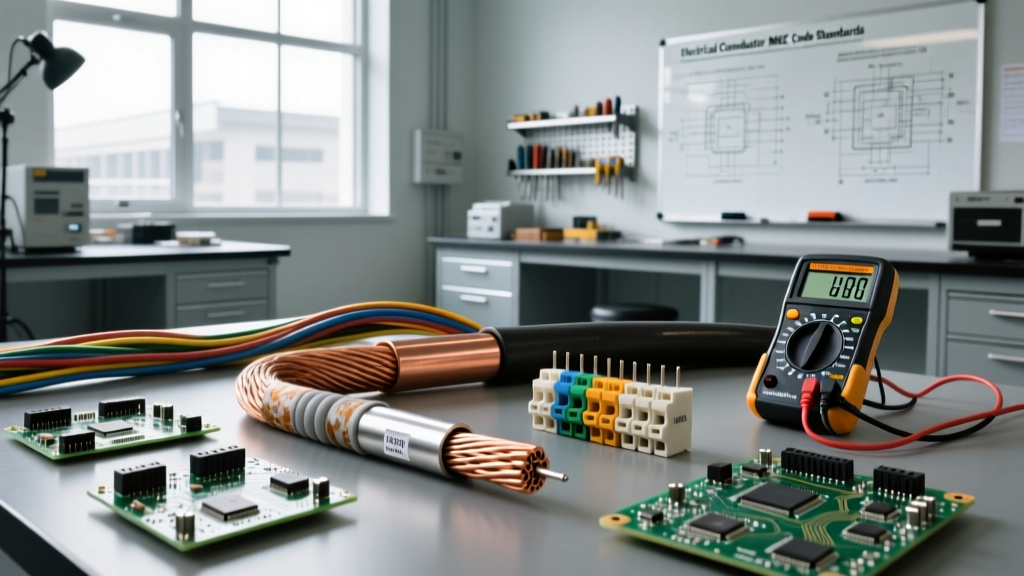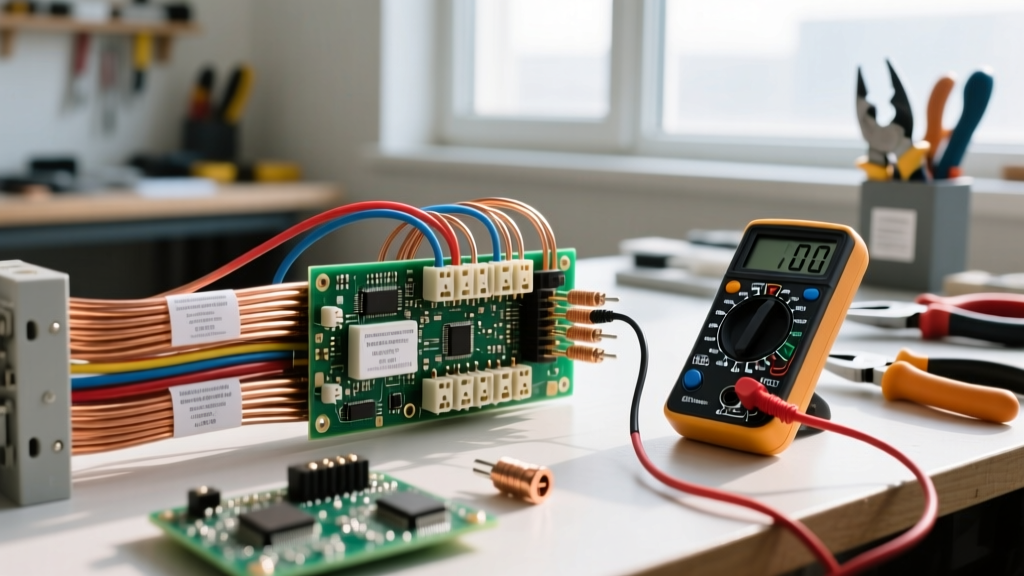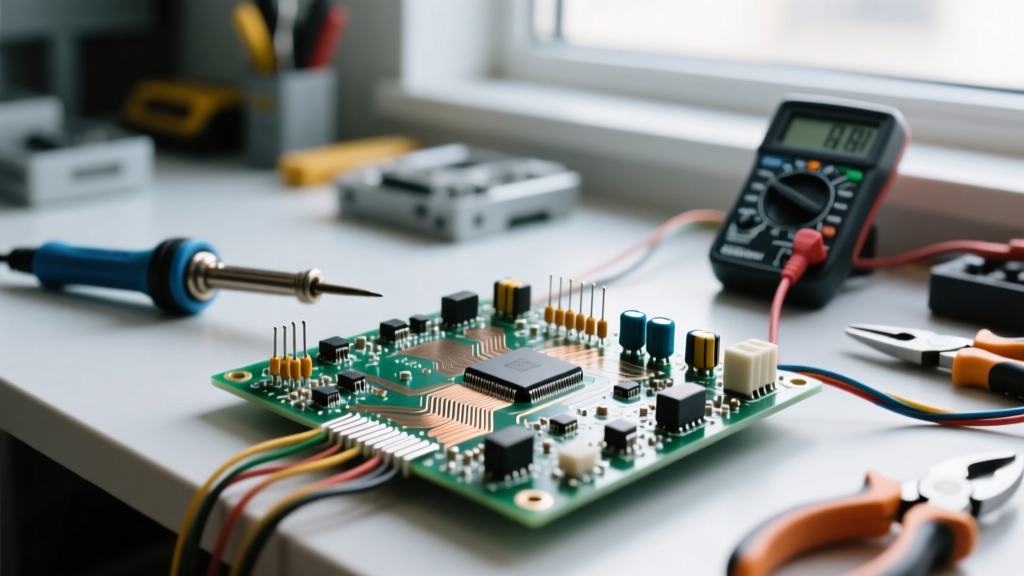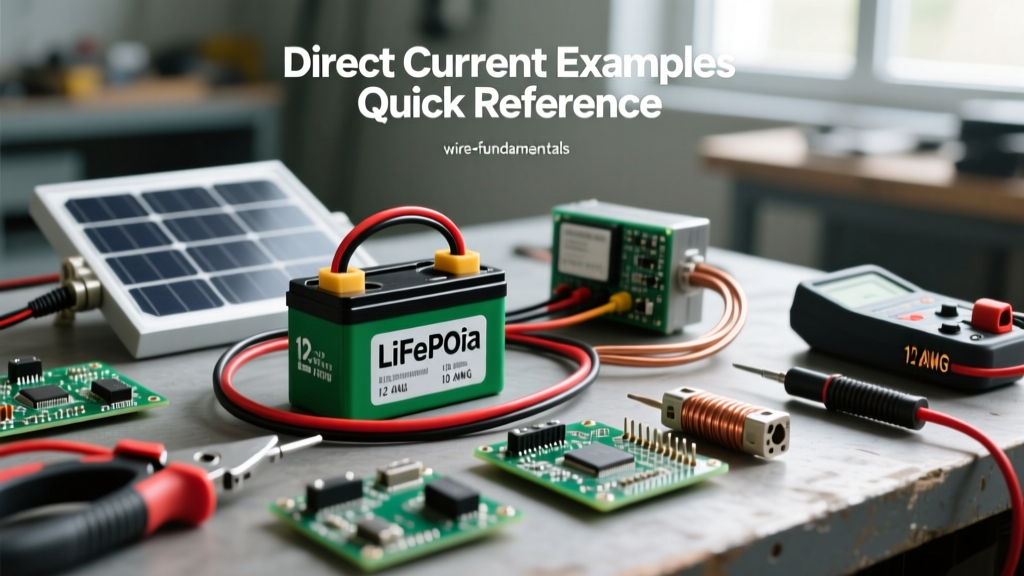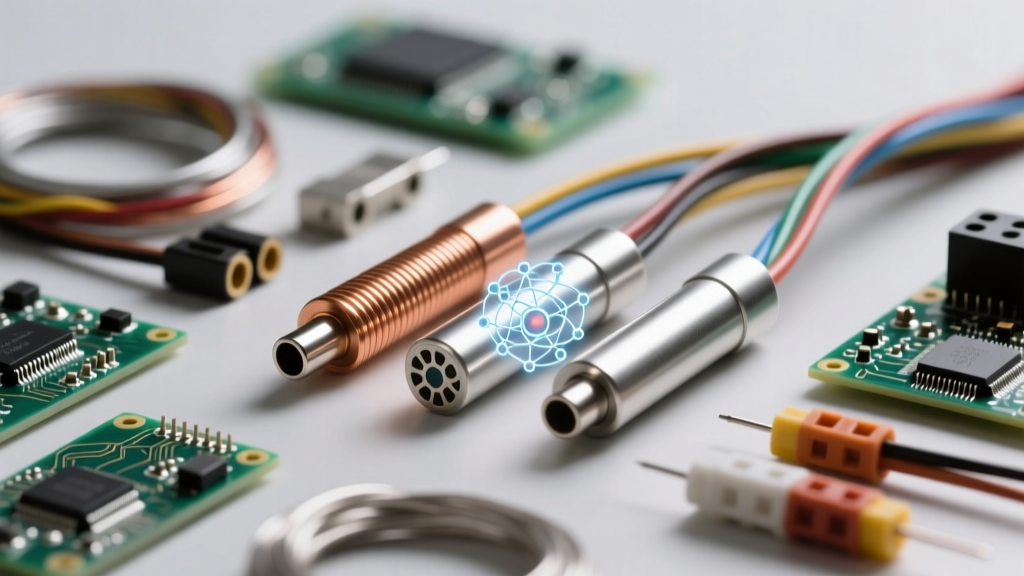

When you strip back the insulation of a standard Romex cable or solder a joint on a custom PCB, you are interacting with one of the most fundamental concepts in electrical engineering: the electric conductor. But what actually makes a material 'conductive'? Why do we universally accept copper for household wiring, yet use gold for audio connectors and aluminum for high-voltage transmission lines?
For DIYers, hobbyists, and apprentice electricians, understanding electric conductors goes far beyond memorizing a wire gauge chart. It requires a grasp of atomic structure, metallurgy, and high-frequency physics. This guide breaks down the science of electric conductors and provides actionable frameworks for selecting the right material for your next project.
The Atomic Secret: Why Some Materials Conduct Electricity
At the most basic level, an electric conductor is a material that permits the free flow of electrical charge (electrons). The secret lies in the atomic structure, specifically the valence electrons orbiting the outermost shell of the atom.
In insulators like rubber or glass, valence electrons are tightly bound to their parent atoms. It takes a massive amount of energy (high voltage) to rip them away, which is why insulators resist current flow. In conductive metals, however, the atomic lattice structure creates a 'sea of electrons.' These metals typically have only one, two, or three valence electrons that are loosely bound. When a voltage potential is applied across the material, these free electrons drift collectively from the negative terminal toward the positive terminal, creating an electrical current.
According to Georgia State University's HyperPhysics database, the ease with which these electrons drift is measured as resistivity (ρ), typically expressed in micro-ohm centimeters (µΩ·cm). The lower the resistivity, the better the conductor.
The Big Four: Ranking Common Electric Conductors
While the periodic table is full of metals, practical electrical engineering relies heavily on just four primary conductors. Below is a comparison of their baseline electrical and physical properties at room temperature (20°C).
| Material | Resistivity (µΩ·cm) | Relative Cost | Primary DIY/Pro Use Case |
|---|---|---|---|
| Silver | 1.59 | Extremely High | RF contacts, high-end audio switches, specialized pastes |
| Copper | 1.68 | Moderate | Standard branch wiring, PCB traces, magnet wire |
| Gold | 2.44 | Very High | Connector plating, IC bonding wires |
| Aluminum | 2.65 | Low | Service entrance cables, high-voltage transmission, heatsinks |
Silver: The Theoretical Champion
Silver is the most conductive element on Earth. However, its prohibitive cost and tendency to tarnish (forming silver sulfide, which is actually still somewhat conductive, unlike copper oxide) relegate it to niche applications. You will find silver in high-end audio relays, specialized RF shielding, and conductive epoxy used for DIY circuit repairs.
Gold: The Corrosion-Proof Plating
Gold is actually a worse conductor than both silver and copper. So why is it used on premium HDMI cables and audiophile jacks? Gold is highly noble, meaning it does not oxidize or corrode in normal atmospheric conditions. In low-voltage, low-current signal applications (like audio or data), even a micro-layer of copper oxide can introduce contact resistance and signal degradation. A thin flash of gold ensures a pristine, low-resistance mating surface.
Copper vs. Aluminum: The Wiring Debate
For 99% of residential DIY wiring and electronics projects, copper is the undisputed king. But understanding which copper you are using matters.
Copper Metallurgy: ETP vs. OFC
Standard electrical wire is made from ETP (Electrolytic Tough Pitch) copper, designated as C11000. It contains about 0.02% to 0.04% oxygen. This oxygen actually helps prevent impurities from embrittling the metal during the drawing process. However, in high-end audio or high-vacuum environments, that oxygen can cause 'hydrogen embrittlement' if the copper is exposed to reducing atmospheres at high temperatures. For these niche DIY builds, OFC (Oxygen-Free Copper), designated C10200, is used. For standard 120V/240V home wiring, ETP is perfectly adequate and significantly cheaper.
The Aluminum Controversy
Aluminum is lighter and cheaper than copper, but it has a darker history in residential wiring. During the 1960s and 70s, a spike in copper prices led builders to use solid aluminum branch wiring (15A and 20A circuits). This resulted in widespread house fires. Why?
- Thermal Expansion: Aluminum expands and contracts at a different rate than the brass screws on standard receptacles, leading to loose connections over time.
- Cold Creep: Aluminum flows away from pressure over time, loosening terminal screws.
- Oxidation: Aluminum oxide forms instantly when bare aluminum is exposed to air. Unlike copper oxide, aluminum oxide is a strict electrical insulator, causing high resistance and extreme heat at the termination point.
Today, modern aluminum wiring uses AA-8000 series alloys, which solve the creep issue. It is safely used for heavy feeder cables (like 2/0 AWG service entrance wire) where copper would be too heavy and expensive. However, if you are terminating aluminum wire in a DIY subpanel, you must use CO/ALR rated devices and apply an anti-oxidant compound like Noalox to prevent galvanic corrosion and oxidation.
Hidden Variables: Temperature and the Skin Effect
Beginners often assume a wire's resistance is a static number. In reality, resistance is highly dynamic.
The Temperature Coefficient
For almost all pure metal electric conductors, resistance increases as temperature rises. As the conductor heats up from I²R (Joule) losses, the metal atoms vibrate more violently. These vibrations scatter the drifting free electrons, increasing collisions and thus increasing resistance. This positive feedback loop is why undersized wires get progressively hotter until the insulation melts or a breaker trips.
High-Frequency Physics: The Skin Effect
If you are building RF circuits, Tesla coils, or high-frequency switching power supplies, DC resistance no longer tells the whole story. Alternating current (AC) creates a magnetic field that pushes electron flow toward the outer surface of the conductor. This is known as the skin effect.
As detailed in All About Circuits' AC theory textbooks, the 'skin depth' (the depth at which current density falls to 37% of its surface value) shrinks as frequency increases. At standard 60Hz mains power, the skin depth in copper is about 8.5mm—meaning standard solid house wire is fully utilized. But at 1 MHz (common in amateur radio and switching regulators), the skin depth drops to roughly 0.065mm. The center of a thick solid wire becomes electrically useless. This is why high-frequency DIY projects require specialized Litz wire (many individually insulated thin strands woven together) or hollow copper tubing to maximize surface area.
Practical Troubleshooting: Conductor Failure Modes
When an electrical circuit fails, the conductor is rarely the culprit unless it was misapplied. Here are the most common real-world failure modes to watch for:
- Galvanic Corrosion: When two dissimilar metals (like copper and aluminum) touch in the presence of an electrolyte (ambient humidity), a weak battery is formed. The more anodic metal (aluminum) will literally dissolve away. Never directly splice copper and aluminum without a specialized bi-metallic lug or approved antioxidant paste.
- Strand Fatigue: Solid core wire is rigid but brittle. If you use solid core wire in a DIY project that experiences vibration (like a drone, RC car, or moving robot arm), the copper will work-harden and snap. Always use finely stranded silicone wire for moving applications.
- Over-Torquing Terminals: Copper is relatively soft. If you over-tighten a terminal screw on a busbar or breaker, you can crush the wire, reducing its cross-sectional area at the point of connection and creating a localized hot spot.
Expert DIY Tip: When stripping stranded wire for a solder joint or screw terminal, never use a blade to slice the insulation off by pulling. You will almost certainly nick the outer copper strands. A nicked strand creates a stress riser that will eventually break under thermal cycling or vibration. Always use properly calibrated wire strippers that only score the insulation.
Summary
Mastering electric conductors means looking past the color of the insulation. By understanding the atomic behavior of valence electrons, the metallurgical differences between ETP copper and AA-8000 aluminum, and the high-frequency realities of the skin effect, you can design safer, more efficient, and longer-lasting electrical projects. Whether you are wiring a 200A service panel or soldering a 5V microcontroller, the right conductor choice is the foundation of reliable electronics.