
The Definitive Answer: Copper as a Conductor in Electrical Codes
When students, DIYers, and junior electricians ask, "is copper a conductor or insulator?" the basic physics answer is simple: copper is a highly efficient conductor. However, from the perspective of electrical codes, material science, and field safety, the question requires a much deeper analysis. In the context of the National Electrical Code (NEC) and international standards, copper is strictly classified and regulated as a conductor, but its application is entirely dependent on the dielectric boundaries (insulators) that surround it, or the specific fault-clearing roles it plays when left bare.
At an atomic level, copper possesses a single free electron in its outer valence shell, allowing electrical current to flow with minimal resistance. This property gives pure annealed copper a baseline conductivity rating of 100% under the International Annealed Copper Standard (IACS). Yet, electrical inspectors do not evaluate wire based on atomic theory; they evaluate it based on containment, temperature ratings, and environmental protection. Understanding how codes treat copper requires examining the intersection of material purity, insulation standards, and grounding protocols.
NEC Article 310: Insulated Copper Conductors
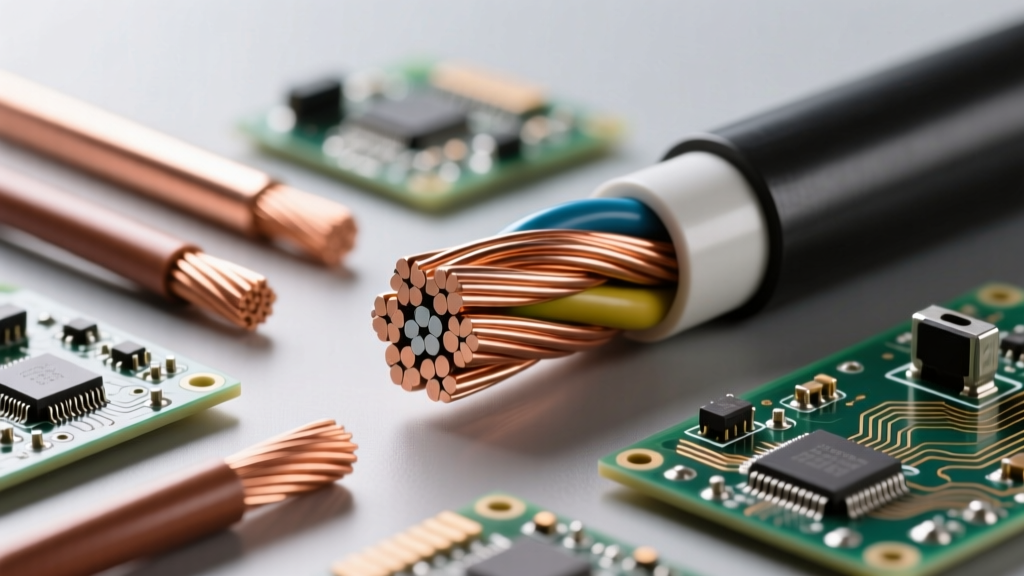
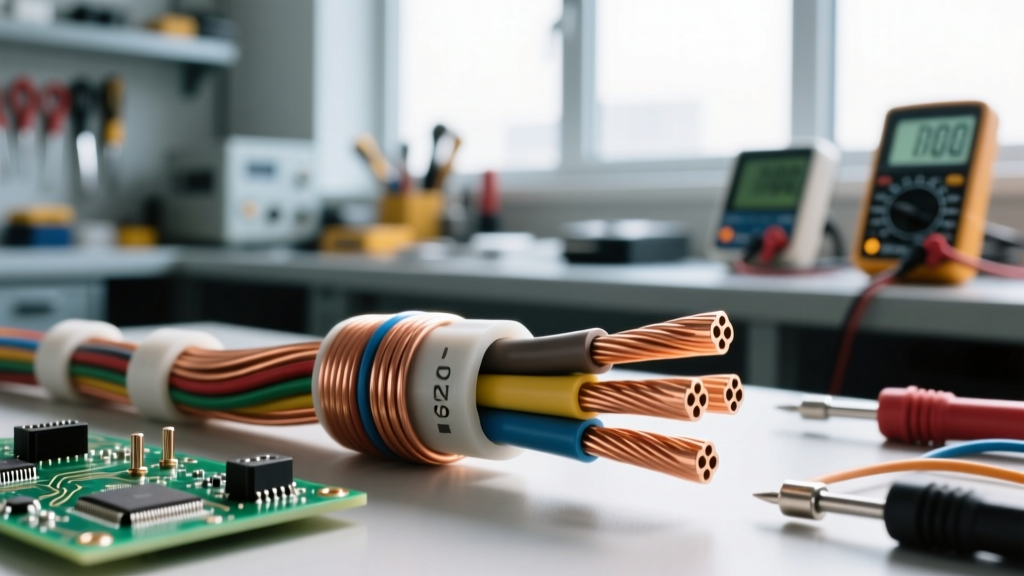
Under NFPA 70 (National Electrical Code), Article 310 governs conductors for general wiring. The NEC mandates that copper conductors carrying continuous load current must be separated from their environment by an approved insulating material. The copper itself remains the conductor, while the thermoplastic or thermoset jacket acts as the insulator.
Dielectric Boundaries and THHN/XHHW Ratings
In modern commercial and residential wiring, you will frequently encounter THHN (Thermoplastic High Heat-resistant Nylon-coated) or XHHW (Cross-linked Polyethylene High Heat-resistant Water-resistant) copper wire. The copper core conducts the current, while the PVC or XLPE insulation provides a dielectric barrier rated typically for 600 volts. If the dielectric strength of this insulation is exceeded—either through voltage spikes, physical abrasion, or thermal degradation—the insulator fails, leading to arc faults or ground faults. The code strictly prohibits the use of bare copper for general branch circuit wiring because the environment (conduit, junction boxes, framing) cannot be relied upon as an insulator.
When Bare Copper is Permitted: NEC Article 250
If copper is fundamentally a conductor, why does the NEC allow bare (uninsulated) copper wire in specific scenarios? The answer lies in NEC Article 250 (Grounding and Bonding).
Equipment Grounding Conductors (EGC)
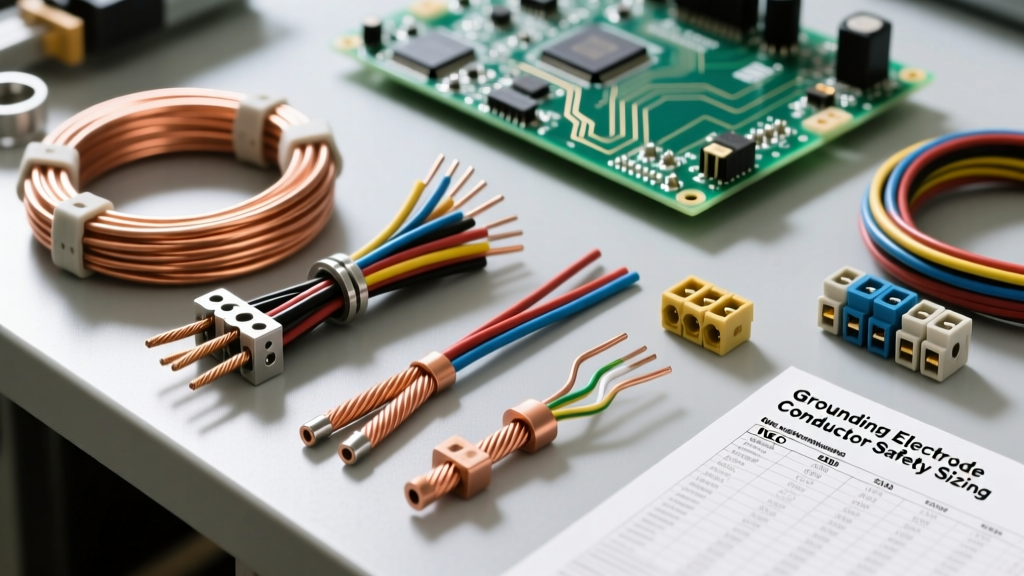
Bare copper is the standard material for Equipment Grounding Conductors (EGCs) and grounding electrode conductors (GECs). In these applications, the copper is not intended to carry continuous operational current. Instead, it serves as a low-impedance fault-clearing path. Because it only carries current during a fault condition (a short circuit), the NEC does not require the copper to be insulated. Leaving the copper bare actually provides a safety and economic advantage: it ensures that the grounding conductor automatically bonds to any grounded metal conduit or enclosure it touches along its run, enhancing the overall safety of the grounding system.
Inspector's Note: While bare copper is permitted for grounding, NEC 250.64(B) requires that exposed grounding electrode conductors be protected from physical damage. If a bare copper GEC is run in an area subject to severe physical damage, it must be protected by rigid metal conduit, intermediate metal conduit, rigid nonmetallic conduit, or electrical metallic tubing.
Material Standards: What Makes Copper Code-Compliant?
Not all copper is created equal. To be recognized as a compliant conductor by the NEC and UL (Underwriters Laboratories), the copper must meet stringent metallurgical standards. The most common standard for building wire is UNS C11000, also known as Electrolytic Tough Pitch (ETP) copper. ETP copper contains a minimum of 99.9% pure copper and a controlled amount of oxygen (typically 200-400 ppm) to prevent hydrogen embrittlement during manufacturing.
Below is a comparison of the primary ASTM standards governing copper conductors used in electrical installations:
| ASTM Standard | Material Description | Primary Application | Key Characteristic |
|---|---|---|---|
| ASTM B3 | Soft or Annealed Copper Wire | Solid branch circuit wiring (THHN) | High flexibility, 100% IACS conductivity |
| ASTM B8 | Concentric-Lay-Stranded Copper | Stranded building wire, service entrance | Superior mechanical flexibility for pulling |
| ASTM B33 | Tinned Soft or Annealed Copper | Marine, high-humidity, or corrosive environments | Tin coating prevents copper oxidation/sulfidation |
| ASTM B170 | Oxygen-Free Electrolytic (OFE) Copper | High-end audio, vacuum electronics | 99.99% pure, zero oxygen, prevents embrittlement |
For a comprehensive breakdown of these metallurgical requirements, the Copper Development Association (CDA) provides extensive documentation on how alloying elements and impurities affect the ampacity and thermal performance of electrical wiring.
The Fatal Misconception: Oxidation and the Accidental Insulator
While copper is definitively a conductor, a dangerous phenomenon occurs when it is exposed to certain environmental factors: oxidation and sulfidation. Unlike aluminum oxide, which is a highly effective and immediate insulator, copper oxide (CuO and Cu2O) is a semiconductor. However, in low-voltage DC circuits, high-frequency RF applications, or loose termination points, a thick layer of copper patina or verdigris can act as an accidental insulator.
NEC 110.14 and Termination Failures
This accidental insulation effect is a leading cause of high-resistance connections, which generate excessive heat and cause electrical fires. ASTM B3 and NEC 110.14 mandate that electrical connections be made using approved methods that prevent the loosening of wires and the ingress of corrosive elements. If a DIYer fails to torque a copper termination to the manufacturer's specifications, micro-arcing occurs, accelerating oxidation. The resulting copper oxide layer increases contact resistance, effectively turning the connection point into an insulator that traps thermal energy until the junction melts or ignites.
Summary Checklist for Inspectors and DIYers
To ensure your electrical projects comply with safety standards and accurately treat copper as the conductor it is, follow this field checklist:
- Verify the Jacket: Never assume bare copper can be used for hot or neutral conductors. Always use UL-listed insulated wire (THHN, XHHW, UF-B) for current-carrying conductors.
- Inspect Grounding Paths: Bare copper is excellent for EGCs and GECs, but ensure it is not subject to severe physical damage or corrosive soil conditions without proper protection.
- Check for Oxidation: If existing copper wire shows heavy blackening (copper oxide) or green crust (copper carbonate), cut the wire back to bright, shiny copper before making terminations.
- Use a Calibrated Torque Screwdriver: Prevent the formation of resistive copper oxide layers at termination points by tightening lugs and breakers to the exact inch-pound rating specified on the equipment label.
- Match the ASTM Standard: Ensure the wire spool is marked with the correct ASTM standard (e.g., B3 or B8) and UL listing mark to satisfy local AHJ (Authority Having Jurisdiction) inspections.
Conclusion
So, is copper a conductor or insulator? Fundamentally and legally, copper is a conductor. It is the lifeblood of the modern electrical grid, chosen for its unparalleled IACS conductivity and ductility. However, the safety of any electrical system relies on the strict separation of this conductor from its surroundings using engineered dielectric insulators, except in carefully defined fault-clearing applications governed by NEC Article 250. By respecting both the atomic properties of copper and the rigorous material standards set by ASTM and the NFPA, electricians can ensure safe, long-lasting, and code-compliant installations.