
The Short Answer: Is Copper an Insulator?
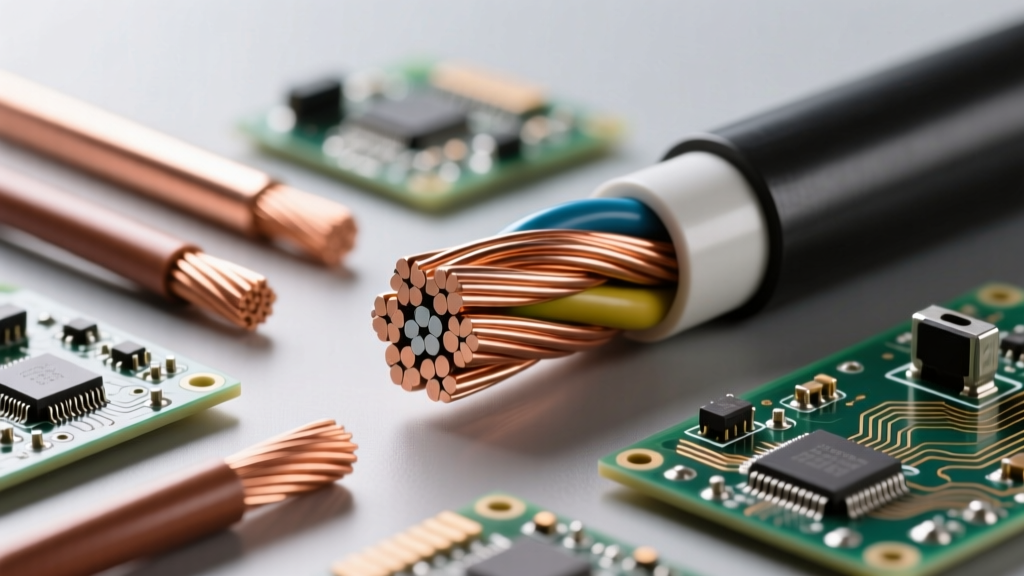
If you are asking is copper an insulator, the definitive answer is no. Copper is fundamentally a conductor—in fact, it is the second most conductive elemental metal on Earth at room temperature, surpassed only by silver. An insulator is a material that actively resists the flow of electrical current, whereas copper is prized specifically for its ability to allow electrons to flow with minimal resistance.
However, the question often arises among DIY electronics hobbyists, beginner electricians, and students due to a few real-world scenarios where copper wire appears to be insulated, or where its surface degrades and resists current. To master wire sizing and electrical fundamentals, you must understand not just what copper is, but why it behaves the way it does, and how its surface interactions can mimic insulating properties.
The Atomic Physics: Why Copper is a Premier Conductor
To understand why copper cannot be an insulator, we have to look at its atomic structure. Copper (Cu) has an atomic number of 29. Its electron configuration is [Ar] 3d10 4s1. The critical factor here is that single valence electron in the 4s orbital.
In solid copper, atoms arrange themselves into a face-centered cubic (FCC) crystal lattice. The outermost 4s electrons are very loosely bound to their parent nuclei. When copper atoms bond together to form a solid wire, these valence electrons detach from individual atoms and form what physicists call a 'sea of delocalized electrons'.
Information Gain: Because these free electrons are not tied to any specific atom, even a tiny applied voltage (electromotive force) causes them to drift collectively through the lattice. According to HyperPhysics at Georgia State University, copper's electrical resistivity is incredibly low at approximately 1.68 × 10⁻⁸ Ω·m at 20°C. True insulators, by contrast, have tightly bound electrons that require massive voltage to break free, often exhibiting resistivity in the range of 1012 Ω·m or higher.
Why the Confusion? Three Scenarios Where Copper *Seems* Insulated
If copper is such a phenomenal conductor, why do people search 'is copper an insulator'? The confusion almost always stems from three practical scenarios encountered in electrical work and electronics manufacturing.
1. Magnet Wire (Enamelled Copper)
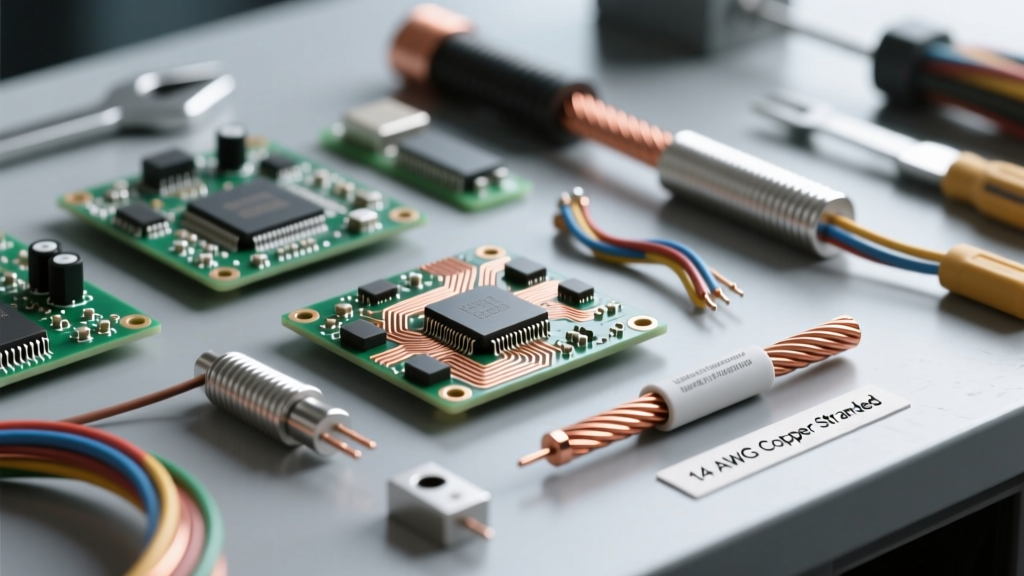
In motors, transformers, and inductors, you will frequently encounter 'magnet wire.' This is solid copper wire coated in a microscopically thin layer of polymer enamel (such as polyurethane, polyimide, or polyester). The copper core conducts the current, while the enamel coating acts as the insulator, allowing the wire to be wound tightly upon itself without causing short circuits. Beginners often scrape this wire, find copper underneath, and become confused about why the original wire didn't conduct electricity when touched with a multimeter probe.
2. Copper Oxide and Sulfide Tarnish
When bare copper is exposed to oxygen and moisture, it oxidizes, forming copper(I) oxide (Cu2O) and copper(II) oxide (CuO). Unlike aluminum oxide, which is a hard, highly insulating ceramic that severely disrupts connections, copper oxides are actually semiconductors. However, a heavy layer of black copper oxide or green copper carbonate (patina) introduces significant contact resistance. In low-voltage DC circuits or high-frequency RF applications, this tarnished layer can act like an insulator, blocking signal transfer or causing severe voltage drops.
3. Confusion with Non-Conductive Metals
Some metals and alloys are poor conductors. For example, bismuth and certain stainless steels have high resistivity. Furthermore, non-metallic materials like fiberglass or certain ceramics might share a similar reddish-brown hue when dyed or glazed, leading to visual misidentification by novices.
Material Showdown: Copper vs. True Insulators
To put copper's conductivity into perspective, here is a comparison of copper against standard insulating materials used in wire manufacturing. Data sourced from Britannica's guide on electrical resistivity and standard engineering tables.
| Material | Classification | Electrical Resistivity (Ω·m at 20°C) | Primary Electrical Use |
|---|---|---|---|
| Silver (Ag) | Conductor | 1.59 × 10⁻⁸ | High-end audio contacts, RF plating |
| Copper (Cu) | Conductor | 1.68 × 10⁻⁸ | Standard wiring, PCB traces, busbars |
| Aluminum (Al) | Conductor | 2.82 × 10⁻⁸ | Overhead transmission, heavy feeder wire |
| PVC (Polyvinyl Chloride) | Insulator | ~1.0 × 10¹² | Standard wire jacketing (THHN/Romex) |
| PTFE (Teflon) | Insulator | ~1.0 × 10¹⁴ | High-temp aerospace wiring, coaxial cables |
| Glass | Insulator | 1.0 × 10¹⁰ to 1014 | High-voltage utility insulators |
As the table illustrates, the gap in resistivity between copper and actual insulators is astronomical—often a difference of 20 orders of magnitude.
Real-World Wiring: Managing Copper's True Vulnerabilities
While copper is not an insulator, treating it as an invincible conductor will lead to electrical failures. According to the Copper Development Association, copper is highly reliable, but installers must manage its physical and chemical vulnerabilities.
Stripping Enamelled Copper Wire Without Damage
If you are working with enamelled magnet wire (e.g., MW 35-C grade), you must remove the insulating enamel to terminate the connection.
- Mechanical Scraping: Using a hobby knife or sandpaper. Danger: Nicking the copper reduces the cross-sectional area at that exact point. This creates a localized high-resistance 'hot spot' that can melt under high current.
- Thermal Stripping: Using a specialized thermal stripper that melts the enamel without touching the copper. This is the safest method for preserving wire integrity.
- Solder Dipping: Some direct-solderable polyurethane enamels melt away when exposed to the high heat of a soldering iron and molten solder flux, but polyimide (Kapton) enamels will not and must be mechanically removed.
Combating Oxidation in High-Current Connections
While copper oxide is a semiconductor, it is still vastly more resistive than pure copper. In high-current applications (like battery banks, solar inverters, or main service panels), a layer of oxide at a lug connection will generate heat via Joule heating (I2R losses).
Best Practice: Always use a wire brush to clean bare copper lugs before termination. For outdoor or high-humidity environments, apply an anti-oxidant joint compound (like Noalox) to the connection. While Noalox is primarily designed for aluminum-to-copper connections to prevent galvanic corrosion, it also seals bare copper against moisture, preventing the formation of resistive copper carbonates.
Final Verdict for DIYers and Engineers
Copper is definitively not an insulator. It is the global standard for electrical conductivity due to its optimal balance of low resistivity, high ductility, and thermal conductivity. If you are holding a piece of copper wire that is not conducting electricity, you are either dealing with an unstripped enamel coating, a severe internal fracture (an open circuit), or a heavy layer of surface corrosion acting as a resistive barrier. Understanding the distinction between the base metal and its surface treatments or oxides is a hallmark of true electrical expertise.