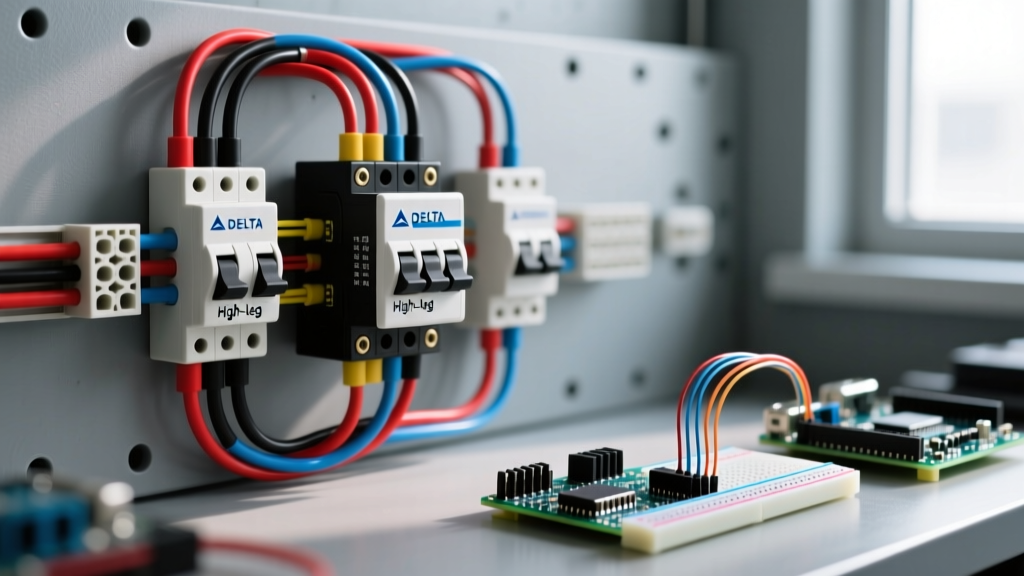
Generator wiring is the dedicated, code-compliant physical circuit that safely routes backup power from a portable or standby generator into a home's main or sub-panel while mechanically or electrically isolating it from the utility grid. This wiring fundamentally changes your home from a single-source passive load into a dual-source active system, requiring strict isolation to prevent backfeeding. The most dangerous and common confusion in this space is mistaking proper generator wiring for a 'suicide cord'—an illegal, lethal male-to-male extension cord plugged directly into a wall outlet, which bypasses all panel overcurrent protection and energizes dead utility lines.
The Core Theory: Isolation and Backfeed Prevention
When you introduce a generator to a home electrical system, you are creating a parallel power source. Under normal conditions, power flows from the utility transformer, through the meter, into the main breaker, and down to branch circuits. When the grid fails and you start a generator, that power must flow into the panel without ever traveling backward out to the utility lines.
Think of your home panel as a plumbing manifold. The utility is the city water main, and the generator is a private well pump. If both valves are open simultaneously, the well pump pushes water backward into the city main, contaminating the supply. In electrical terms, this 'contamination' is a 240V backfeed that travels to the utility transformer, steps up to thousands of volts, and can kill a lineman working on what they assume is a de-energized line. This is why the NFPA 70 National Electrical Code (NEC) strictly mandates that generator wiring must include a transfer mechanism that physically prevents the utility main breaker and the generator backfeed breaker from being closed at the same time.
Worked Numeric Example: Sizing the Generator Feeder
Let's size the wiring for a common mid-size portable generator setup: a 50-Amp, 120/240V generator producing roughly 12,500 running watts, located 75 feet from the main electrical panel.
- Inlet Box: We select a Reliance Controls PB50 (50A, 125/250V, NEMA 14-50R receptacle).
- Breaker Sizing: The feeder requires a 50A, 2-pole breaker in the main panel.
- Wire Sizing (Ampacity): According to NEC Table 310.16, a 50A circuit requires wire rated for at least 50A. Using the 75°C column (standard for modern breakers and terminals), 6 AWG copper THHN/THWN-2 is rated for 65A. Therefore, 6 AWG copper is our minimum size.
- Voltage Drop Calculation: While the NEC recommends keeping voltage drop under 3% for branch circuits and feeders, let's verify our 75-foot run. Using the formula: VD = (2 × K × I × D) / CM.
- K (copper resistivity) = 12.9
- I (current) = 50A
- D (distance) = 75 feet
- CM (circular mils for 6 AWG) = 26,240
Percentage Drop = (3.68 / 240) × 100 = 1.53%.
Because 1.53% is well under the 3% threshold, 6 AWG copper THHN is the correct, optimized choice for this 75-foot run. If the run exceeded 120 feet, we would need to step up to 4 AWG copper to maintain the voltage drop margin.
Where You Meet This in Practice
On the jobsite or in your garage, generator wiring manifests as three distinct physical components that bridge the gap between the generator's alternator and your home's bus bars:
- The Power Inlet Box: A weatherproof, exterior-mounted box containing a male receptacle (like a NEMA L14-30R or 14-50R). This is where you plug in your heavy-duty generator cord. It must be mounted within sight of the transfer switch or interlock to comply with NEC disconnect rules.
- The Transfer Mechanism: This is either a Manual Transfer Switch (MTS), an Automatic Transfer Switch (ATS), or a mechanical generator interlock kit mounted directly on your existing panel cover.
- The Generator Cord: A flexible, outdoor-rated SOOW cable. For a 30A system, this is a 10 AWG 4-conductor cord; for a 50A system, it is a 6 AWG 4-conductor cord. Never use standard indoor NM-B (Romex) for the exterior connection between the generator and the inlet box.
Decision Tree: Interlock vs. Manual Transfer vs. ATS
Choosing the right hardware depends on your generator type, budget, and how much automation you require. Use this decision matrix to select your wiring strategy:
| Scenario | Generator Type | Budget | Recommended Hardware |
|---|---|---|---|
| Occasional outages, want to use existing panel breakers, comfortable manually starting the generator. | Portable (up to 12.5kW) | < $150 | Generator Interlock Kit |
| Want dedicated, pre-wired emergency circuits separate from the main panel; renting or unable to modify main panel cover. | Portable (up to 10kW) | $300 - $600 | Manual Transfer Switch (MTS) |
| Frequent outages, travel often, require seamless power for medical equipment or sump pumps without manual intervention. | Standby (Air-cooled, 22kW+) | $2,000+ (Hardware only) | Automatic Transfer Switch (ATS) |
The Default Pick: For 80% of homeowners with a portable generator under 10kW, the concrete pick is a generator interlock kit matched to your specific panel brand. For example, if you have a Siemens or Murray load center, buy the Siemens ECSBPK01 (typically $30-$50). It is vastly cheaper than an MTS, installs in 20 minutes without rewiring branch circuits, and utilizes your panel's existing breakers for individual circuit overload protection. Pair it with a Reliance Controls PB30 30-Amp power inlet box and a 30A 2-pole breaker, and your wiring is complete.
FAQ: Grounding, Bonding, and Code Caveats
Do I need to drive a separate grounding rod for my portable generator?
Generally, no. According to the U.S. Department of Energy Backup Power Guide and NEC Article 250, if your portable generator is connected to your home's wiring system via a proper inlet box and transfer switch/interlock, it relies on the home's existing grounding electrode system (the ground rod or ufer ground at your main panel). You only need a separate ground rod if the generator is being used as a standalone, isolated power source (e.g., powering tools directly on a remote jobsite).
Can I wire a 30A inlet box to a 50A breaker to 'future-proof' my panel?
No. The breaker must protect the weakest link in the circuit. A 30A NEMA L14-30 inlet box has terminals and internal wiring rated for 30A. If you protect it with a 50A breaker, a 45A fault could melt the inlet box before the breaker trips. Always match the breaker to the inlet box rating, or use an inlet box rated higher than the breaker (e.g., a 50A inlet box protected by a 30A breaker is safe, though physically mismatched for the cord plug).
Does local code require a licensed electrician for generator wiring?
While DIYers can physically mount an inlet box and slide an interlock plate onto a panel cover, any work inside the main service panel involves removing the dead front cover, exposing the unmetered, always-live utility feed lugs. Many local Authorities Having Jurisdiction (AHJ) require a permit and a licensed electrician for any work involving the main service disconnect. Always check with your local building department before opening your main panel.