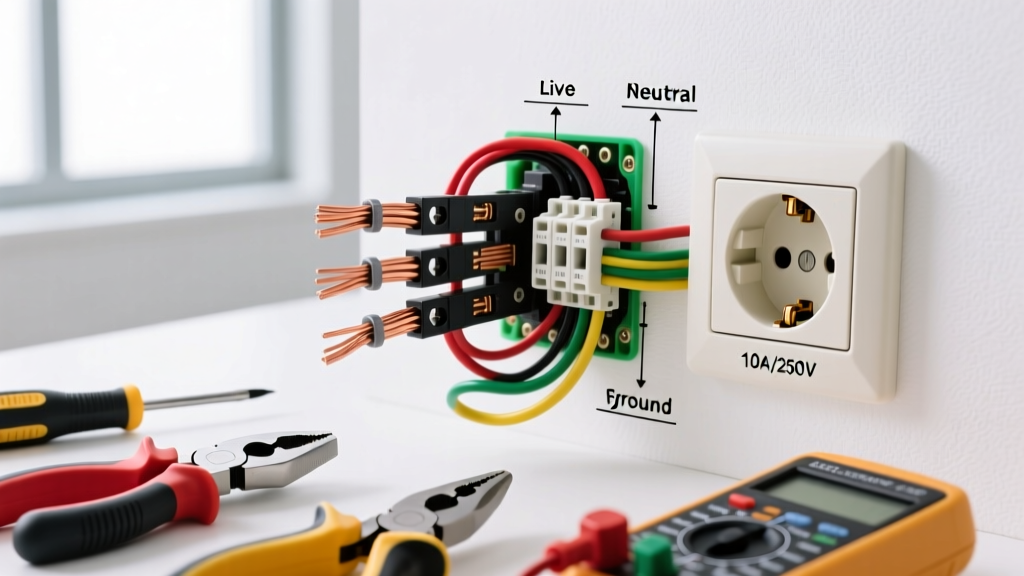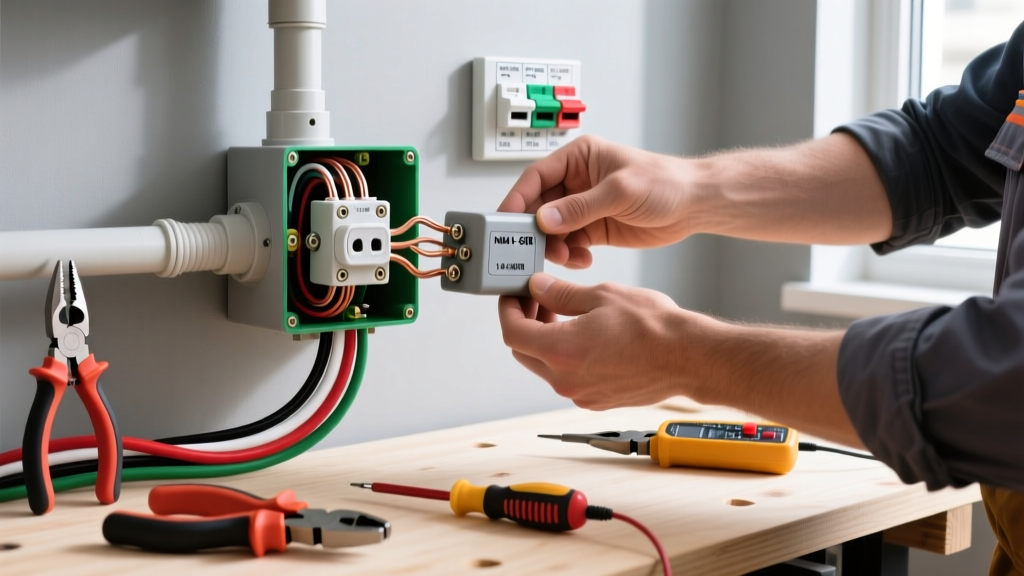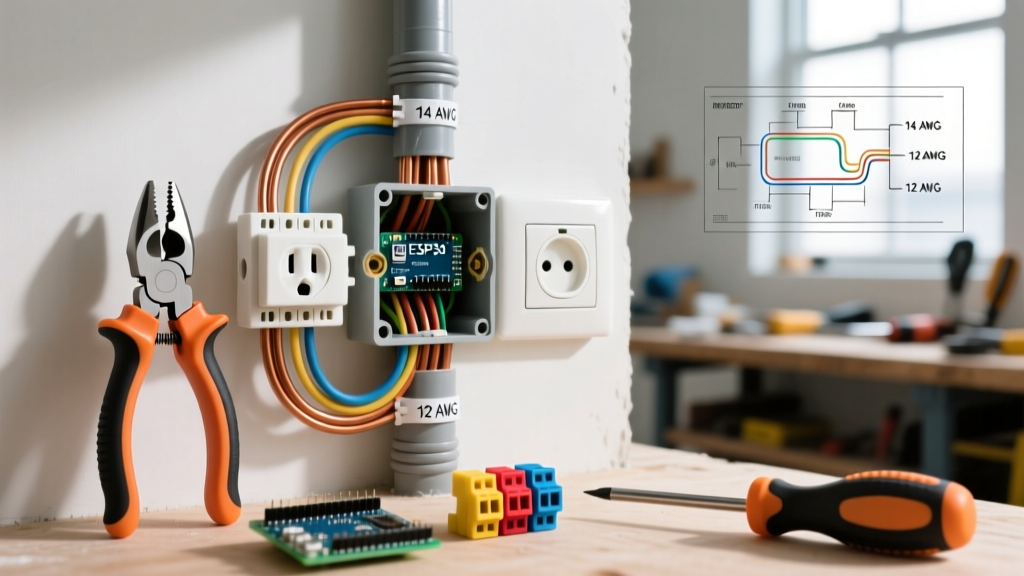

Why the Right Tools Matter for Receptacle Wiring
When installing electric outlet circuits in modern homes, the margin for error is virtually zero. A poorly terminated connection can lead to high-resistance arcing, melted yokes, and catastrophic electrical fires. While many DIYers focus heavily on the wiring diagram, the actual execution relies entirely on the quality and specificity of your tools and materials. As of 2026, with copper prices stabilizing and the National Electrical Code (NEC) enforcing stricter AFCI/GFCI and Tamper-Resistant (TR) mandates, using contractor-grade equipment is no longer optional—it is a baseline safety requirement.
This comprehensive guide breaks down the exact tools, wire specifications, and hardware you need for installing electric outlet receptacles safely, efficiently, and to code.
The Core Tool Arsenal: What You Actually Need
Forget the generic $15 multi-tool kits from the hardware store checkout aisle. Professional electrical work requires precision tools designed to prevent copper scoring and ensure torque accuracy.
Diagnostic and Safety Testing Gear
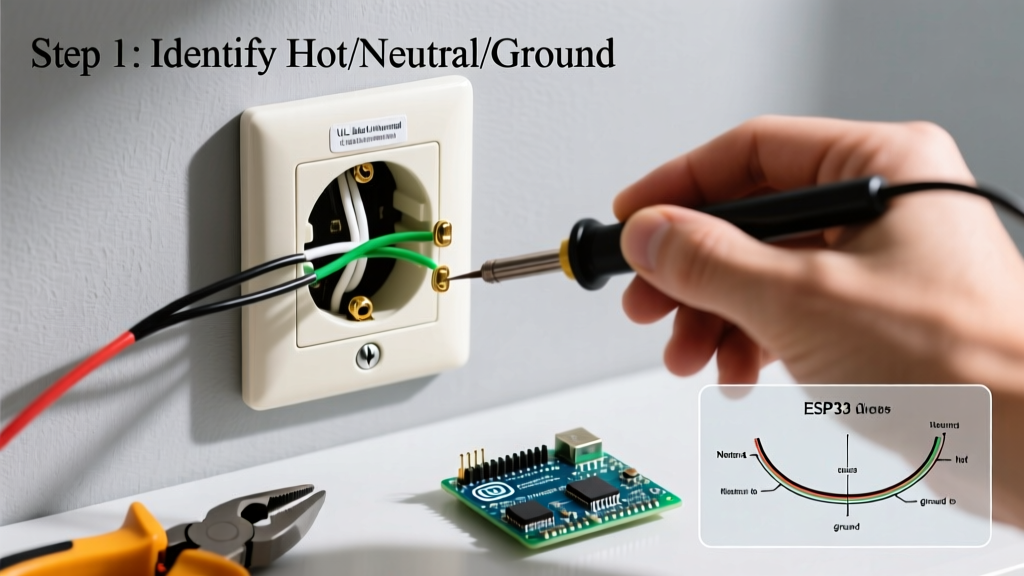
- Non-Contact Voltage Tester (NCVT): The Fluke 1AC-II VoltAlert (approx. $35) is the industry standard. Unlike budget testers that suffer from phantom voltage false-positives on shielded cables, the Fluke 1AC-II uses capacitive sensing to reliably detect live AC voltage from 90V to 1000V. Always test on a known live source before and after checking your target circuit.
- Digital Multimeter: For verifying neutral-to-ground bonds and checking exact line voltage, the Klein Tools MM400 (approx. $45) offers True-RMS accuracy and CAT III 600V safety ratings, which are essential for residential panel and outlet diagnostics.
Wire Stripping and Termination Tools
The most common cause of outlet failure is nicked wire insulation or scored copper caused by improper stripping. Scoring reduces the wire's cross-sectional area, creating a localized hot spot under load.
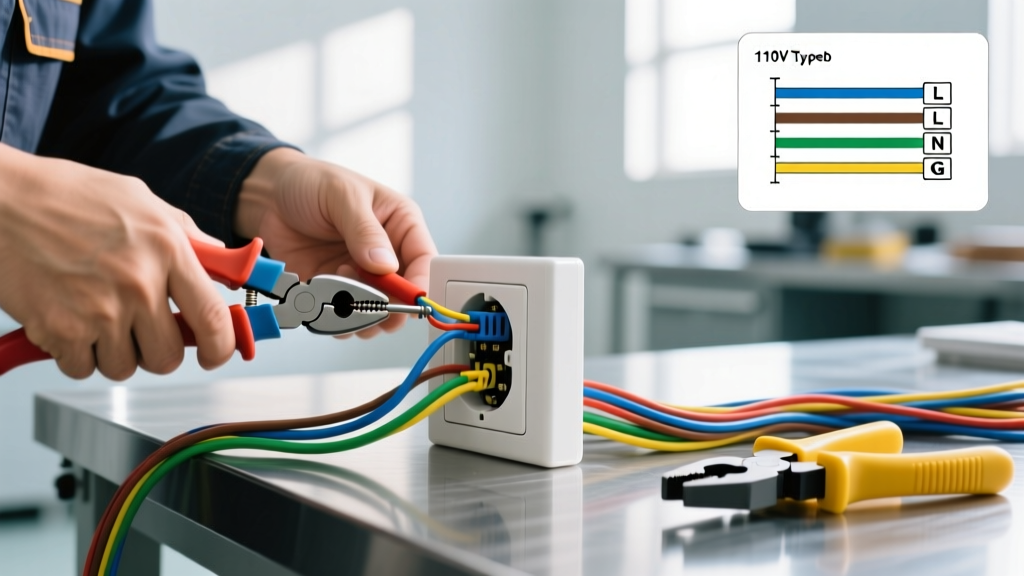
- Precision Wire Strippers: The Klein Tools 11057 (10-20 AWG, approx. $28) features shearing holes that cleanly slice the Romex jacket and insulation without touching the copper conductor.
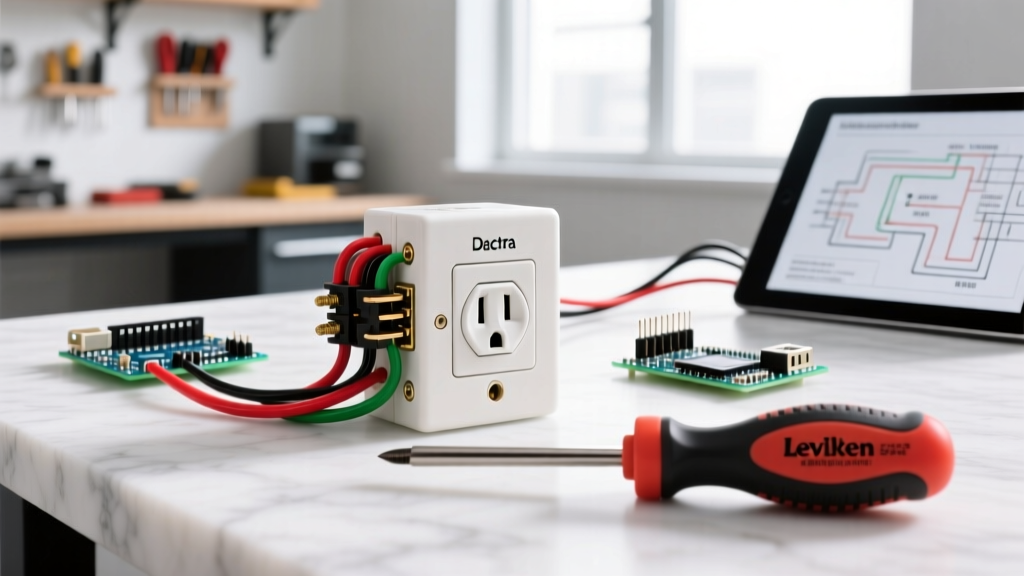
- Screwdrivers: The Klein Tools 32500 11-in-1 (approx. $22) includes the essential #2 Phillips and #2 Robertson (Square) tips. Square-drive screws are increasingly standard on commercial-grade receptacles because they resist cam-out when applying the 14 in-lb torque required for secure termination.
Pro-Tip: Never use a utility knife to strip the outer PVC jacket of NM-B cable. A single slip can score the ground wire or the hot insulation, violating NEC 300.14 and creating an immediate shock hazard.
Material Selection: Wire, Boxes, and Receptacles
Selecting the correct materials requires understanding the relationship between circuit amperage, wire gauge, and box fill volume. In 2026, most jurisdictions strictly enforce NEC Article 314.16 regarding box fill calculations to prevent wire crushing and insulation damage.
| Component | 15-Amp Circuit Standard | 20-Amp Circuit Standard |
|---|---|---|
| Wire Gauge (NM-B) | 14 AWG (White Jacket) | 12 AWG (Yellow Jacket) |
| Receptacle Rating | 15A Duplex TR | 20A Duplex TR (T-Slot) |
| Breaker Size | 15A Single Pole | 20A Single Pole |
| Min. Box Volume | 12 cu. in. (1 Gang) | 18 cu. in. (1 Gang Deep) |
| Approx. Wire Cost (250ft) | $95 - $110 | $135 - $155 |
Choosing the Right Electrical Box
For standard interior walls, the Carlon B618R (1-Gang, 18 cubic inches, approx. $1.20) is the most versatile choice. The 18 cu. in. volume easily accommodates three 12 AWG cables (hot, neutral, ground counts) plus the receptacle yoke, keeping you well within NEC box fill limits. For exterior or masonry walls, use a cast aluminum weatherproof box like the Taymac MX1000.
Receptacle Specifications: TR and WR
Under NEC Article 406.12, all 15A and 20A, 125V receptacles installed in dwelling units must be Tamper-Resistant (TR). According to the Electrical Safety Foundation International (ESFI), TR receptacles feature internal spring-loaded shutters that only open when equal pressure is applied to both slots simultaneously, preventing children from inserting foreign objects.
- Standard Interior: Leviton T5320-W (15A, 125V TR Duplex, approx. $3.50). Features a thermoplastic yoke that resists impact and high heat.
- Kitchen/Bathroom (GFCI): Leviton GFNT1-W (15A Self-Test GFCI, approx. $18.00). The 2023/2026 NEC requires GFCI protection in all wet locations and kitchen countertops.
- Exterior: Must be paired with an in-use weatherproof cover and utilize a Weather-Resistant (WR) rated receptacle, marked with 'WR' on the face, which uses UV-stabilized materials and nickel-plated brass contacts to prevent corrosion.
Consumables and Connectors: The Overlooked Essentials
The days of relying solely on twist-on wire nuts are fading in professional settings. While Ideal 341 Blue wire nuts (approx. $0.15 each) are still code-compliant and reliable when torqued correctly, push-in lever connectors have revolutionized junction and outlet wiring.
The Wago 221 Lever-Nut Advantage
The Wago 221-412 (2-conductor) and 221-413 (3-conductor) lever nuts (approx. $0.45 - $0.60 each) offer distinct advantages for installing electric outlet pigtails:
- Visual Verification: The transparent polycarbonate housing allows you to visually confirm the wire is stripped to the exact 11mm gauge mark and fully seated.
- Stranded and Solid Compatibility: Unlike standard wire nuts which struggle to grip a mix of 12 AWG solid and 18 AWG stranded (common when wiring smart switches or LED drivers), Wago 221s clamp both securely.
- Space Efficiency: Their compact profile leaves more room in the electrical box, reducing the physical stress on the wires when pushing the receptacle back into the gang box.
Common Installation Failure Modes and Tool-Related Fixes
Even with the right materials, poor technique leads to callbacks and hazards. Be aware of these common failure modes:
1. The 'Backstabbing' Hazard
Cheap, builder-grade ($1.20) receptacles often feature push-in 'backstab' terminals on the rear. These rely on a small internal brass spring clip to hold the wire. Under continuous 15A loads (like space heaters or window AC units), these clips loosen over time due to thermal expansion and contraction, leading to arcing. The Fix: Always buy spec-grade receptacles (like the Leviton T5320) and use the side-wire screw terminals, or wrap the wire clockwise around the screw so tightening the screw pulls the loop closed.
2. Over-Torquing Brass Screws
Using an impact driver or over-tightening with a standard screwdriver can strip the brass screw threads or crack the thermoplastic yoke. The NEC now references manufacturer torque specifications. A dedicated torque screwdriver set to 14 in-lb is the professional standard for 15A/20A receptacles.
3. Grounding Pigtails to Metal Boxes
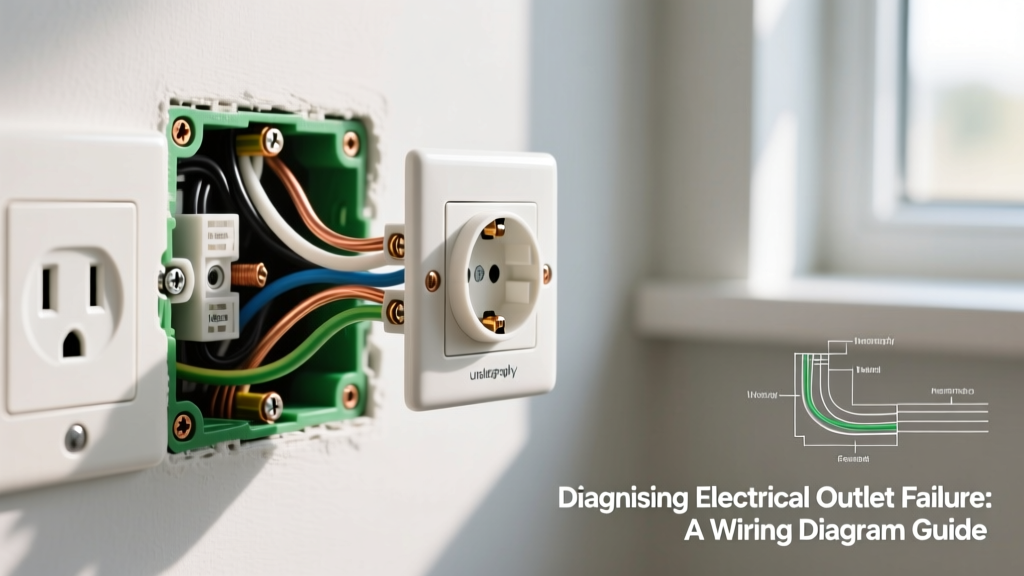
If you are installing an outlet in a metal gang box, NEC 250.148 requires the equipment grounding conductor to be bonded to the box itself. Use a Greenie grounding screw (like the Ideal 33-050) tapped into the back of the metal box, and pigtail the ground wire to both the box and the receptacle's green ground screw.
Final Safety Verification
Before energizing the circuit at the breaker panel, perform a visual inspection. Ensure no bare copper is exposed outside the terminal screws, verify the cable clamp inside the box is securing the NM-B jacket (not the individual wires), and confirm the drywall is cut cleanly around the box. For deeper code compliance insights, always consult the latest National Electrical Code (NEC) published by the NFPA. When installing electric outlet hardware, patience, precision tools, and strict adherence to code are your best defenses against electrical hazards.