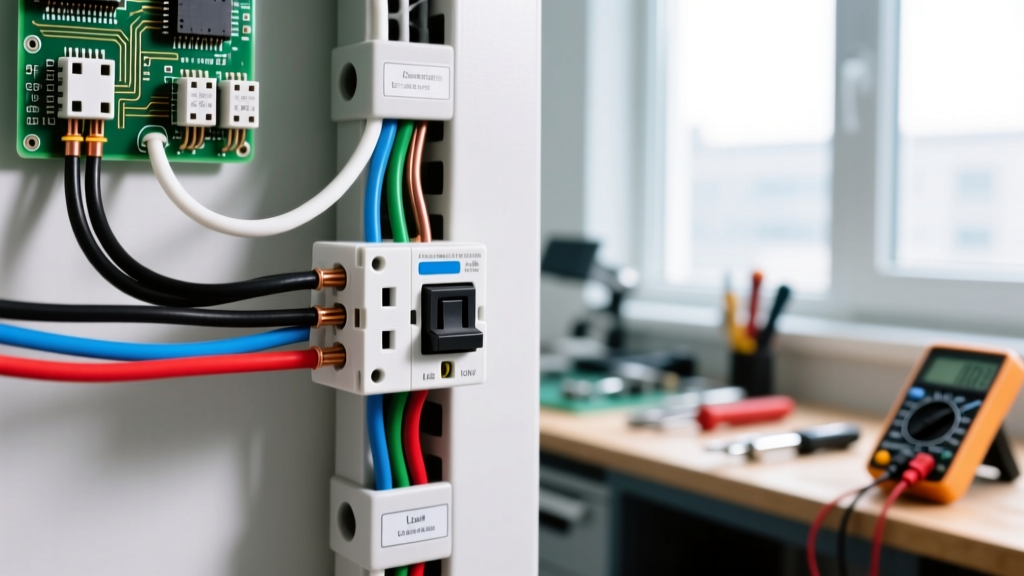
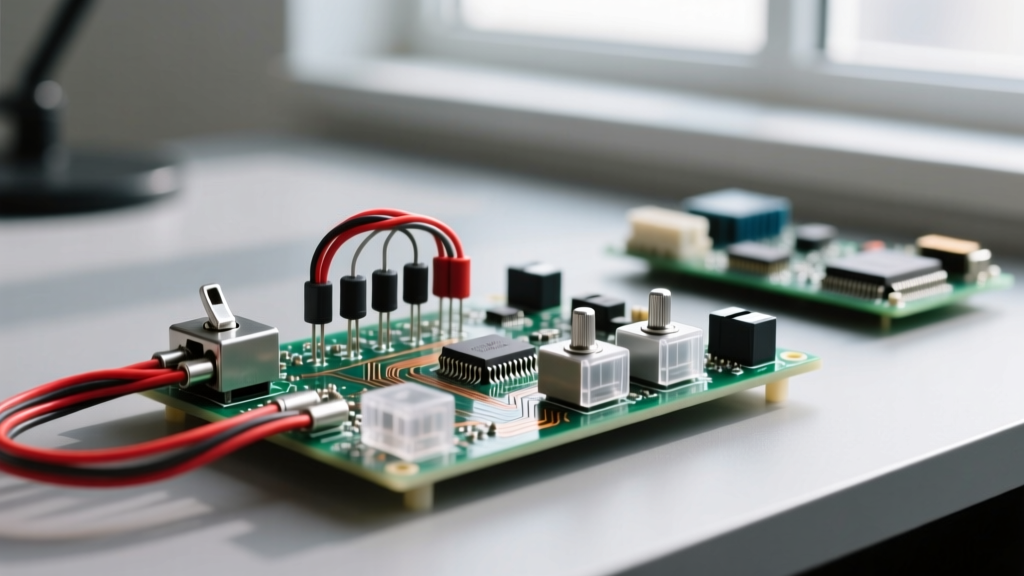
Solid wire consists of a single, continuous cylinder of conductive metal, while stranded wire bundles multiple thinner gauge wires together to form a single conductor of the same overall cross-sectional area. To answer what this physical difference changes in a real installation: the construction dictates the wire's flexibility, termination method, and high-frequency behavior, but it does not change its DC ampacity or baseline 60Hz AC current-carrying capacity for a given AWG size. Whether you are pulling THHN through EMT conduit or wiring a breadboard, understanding this distinction prevents terminated connections from failing under load.
The Core Differences: Solid vs. Stranded Wire
When you ask "is solid wire better than stranded," the answer depends entirely on the mechanical environment of the circuit. Think of solid wire like a single thick steel rod, and stranded wire like a braided steel cable of the same weight—the cable bends easily, but both hold the exact same static tensile load. In electrical terms, a 12 AWG solid wire and a 12 AWG stranded wire both contain the same volume of copper (6,530 circular mils), meaning their baseline resistance and thermal limits are virtually identical at standard power frequencies.
Below is a data-dense comparison of common building wire sizes. Notice how the DC resistance remains constant, but the physical diameter and flexibility shift based on the stranding.
| AWG Size | Construction | Nominal Overall Diameter (inches) | DC Resistance (Ω/1000ft at 20°C) | Relative Flexibility | Typical Cost Premium |
|---|---|---|---|---|---|
| 14 AWG | Solid (1 strand) | 0.064" | 2.525 Ω | Low (Rigid) | Baseline |
| 14 AWG | Stranded (19 strands) | 0.073" | 2.525 Ω | High (Pliable) | +15% to +25% |
| 10 AWG | Solid (1 strand) | 0.101" | 0.998 Ω | Low (Very Stiff) | Baseline |
| 10 AWG | Stranded (19 strands) | 0.116" | 0.998 Ω | High (Pliable) | +15% to +25% |
Where You Meet This in Practice
The choice between solid and stranded is rarely arbitrary; it is dictated by the physical demands of the installation environment and the termination hardware.
Residential Branch Circuits (NM-B / Romex)
In standard US residential wiring, non-metallic sheathed cable (NM-B, commonly known by the brand name Romex) almost exclusively uses solid copper wire. Solid wire holds its shape when bent, making it significantly easier to route into crowded device boxes and wrap around terminal screws. Furthermore, standard 15A and 20A receptacles feature "push-in" (backstab) terminals that are strictly engineered for solid wire.
Conduit Pulls and Panelboards (THHN/THWN-2)
When pulling individual conductors through EMT or PVC conduit, especially for larger feeder sizes (4 AWG and larger), stranded wire is the industry standard. The flexibility of stranded wire drastically reduces pull tension and prevents the wire from kinking around conduit sweeps. In commercial panelboards, stranded wire is preferred because it seats more evenly under the pressure plates of heavy-duty lugs, provided the strands are kept tight and undamaged.
Appliance Cords and Electronics
Any cable that experiences repeated movement—like a vacuum cleaner cord, a power tool pigtail, or robotic arm wiring—must use highly stranded (or tinsel) wire. Solid wire subjected to repeated flexing will work-harden, crack, and eventually snap, creating an internal arc fault. Conversely, in low-voltage electronics, solid wire is used for breadboard jumpers because it easily pierces the internal friction grips, while stranded wire is used for soldered point-to-point connections where flexibility prevents pad lift-off.
Worked Example: Voltage Drop and Conduit Fill in a 50-Foot Run
Let's look at a real-world scenario to see how the choice of wire construction impacts your installation math. You are wiring a 120V, 20A dedicated circuit for a workshop outlet. The one-way distance from the panel to the outlet is 50 feet (100 feet total loop length).
Step 1: Voltage Drop Calculation
Using 12 AWG copper wire, the resistance is approximately 1.588 Ω per 1,000 feet at 20°C.
- Total Loop Resistance: 100 ft × (1.588 Ω / 1000 ft) = 0.1588 Ω
- Voltage Drop (V = I × R): 20A × 0.1588 Ω = 3.176V
- Percentage Drop: (3.176V / 120V) × 100 = 2.64%
This 2.64% drop is well under the NEC recommended 3% limit for branch circuits. Note that this calculation is identical whether you use 12 AWG solid or 12 AWG stranded wire. The cross-sectional area of copper is the same, so the voltage drop is the same.
Step 2: Conduit Fill Divergence
Where the math diverges is in conduit fill. If you are pulling three conductors (Hot, Neutral, Ground) through 1/2-inch EMT conduit, you must consult NEC Chapter 9.
- Solid 12 AWG THHN: Cross-sectional area per wire is 0.0097 sq inches. Three wires = 0.0291 sq inches.
- Stranded 12 AWG THHN: Because of the air gaps between strands, the cross-sectional area per wire is slightly larger at 0.0117 sq inches. Three wires = 0.0351 sq inches.
While both easily fit within the 40% fill capacity of 1/2-inch EMT (0.120 sq inches), if you were pulling 12 conductors in a larger conduit run, choosing stranded wire could push you over the 40% fill limit, forcing you to upsize to a larger conduit diameter. Always check manufacturer conduit fill calculators using the specific stranding class of your wire.
Common Confusions and the "Skin Effect" Myth
When discussing wire types on forums or jobsites, several persistent myths confuse hobbyists and apprentices alike. Let's clarify what the physics actually dictate.
Never insert stranded wire into the push-in (backstab) terminals of standard residential 15A/20A receptacles or switches. These mechanisms rely on a small metal leaf biting into a rigid cylinder. Stranded wire will splay, resulting in a high-resistance connection that can arc, melt the plastic housing, and cause a fire. If you must terminate stranded wire to a standard receptacle, use a pigtail to transition to solid wire, or use a screw-terminal with a properly crimped ferrule.
Myth 1: Stranded wire carries more current than solid wire.
Fact: Ampacity tables, such as those found in NEC Article 310.16, do not differentiate between solid and stranded conductors for standard building wire sizes. A 10 AWG solid THHN wire and a 10 AWG stranded THHN wire both have an ampacity of 35A in the 75°C column. The thermal dissipation profile is virtually identical at these scales.
Myth 2: The "Skin Effect" makes stranded wire better for 60Hz AC mains.
Fact: The skin effect is a phenomenon where alternating current tends to flow near the outer surface of a conductor, effectively reducing the usable cross-sectional area. However, skin depth is inversely proportional to the square root of the frequency. At standard 60Hz mains frequency, the skin depth in copper is approximately 8.5 millimeters (0.33 inches).
Because standard building wire (even up to 4/0 AWG) has a diameter much smaller than 0.33 inches, the current distributes evenly across the entire cross-section. The skin effect only becomes a significant factor in high-frequency applications, such as RF transmission lines, Tesla coils, or the output cables of Variable Frequency Drives (VFDs) operating at high switching frequencies. For your home panel, skin effect is mathematically negligible.
Myth 3: Stranded wire doesn't need special termination hardware.
Fact: Stranded wire is highly susceptible to "cold creep" and strand fraying under screw terminals. When a screw clamps down on stranded wire, it can cut or displace individual strands, reducing the effective gauge at the termination point. In professional and industrial settings, stranded wire terminated under screws should be fitted with a crimped ferrule or a closed-end lug. This keeps the strands bundled and provides a solid surface for the screw to clamp against, ensuring a reliable, low-resistance bond that won't loosen over time due to thermal cycling.
Frequently Asked Questions
Can I mix solid and stranded wire in the same circuit?
Yes, you can splice them together using properly rated wire nuts (like Ideal Wing-Nuts) or push-in connectors (like Wago 221 series lever nuts, which are explicitly rated for both solid and stranded). Just ensure the connector is UL-listed for the specific combination of AWG sizes and stranding types you are joining.
Which is easier to solder?
Solid wire is generally easier to solder for beginners because it holds its shape and doesn't wick solder deep into the insulation via capillary action. However, stranded wire accepts solder more readily once properly tinned, making it ideal for PCB through-hole connections where mechanical flexibility is needed.