
Understanding the Korean Electrical Outlet: A Code Requirement Explainer
South Korea boasts one of the most advanced and reliable electrical grids in the world. However, for international electricians, expatriates tackling DIY home projects, or foreign contractors working on commercial builds, navigating the local electrical codes can be a complex endeavor. The governing standard is the Korean Electrotechnical Code (KEC), which has undergone significant modernization over the last decade to align closely with International Electrotechnical Commission (IEC) standards while retaining unique local safety mandates.
If you are planning an installation, upgrade, or inspection, understanding the technical and legal requirements surrounding the standard korean electrical outlet is critical. This guide breaks down the physical standards, wiring specifications, grounding mandates, and safety codes you must follow to ensure compliance and safety in 2026.
The Historical Shift: From 100V to 220V Standardization
To understand current Korean receptacle standards, one must look at the country's electrical history. Prior to the late 1990s, South Korea utilized a fragmented system: 100V/60Hz in older urban centers (like parts of Seoul) and 220V/60Hz in newer developments and rural areas. This resulted in a mix of ungrounded Type A (North American style) and Type C (European style) outlets.
Today, the national standard is universally 220V AC at 60Hz. The 100V infrastructure has been entirely decommissioned. Consequently, modern KEC regulations strictly forbid the installation of 100V or 110V receptacles in new residential and commercial builds, mandating a complete transition to the 220V Type F standard.
Physical Receptacle Standards: Type C vs. Type F
When discussing the physical architecture of a korean electrical outlet, two plug types are relevant, though only one is legally permissible for new installations.
Type C (CEE 7/16) - The Legacy Standard
Type C outlets feature two round pins and lack any grounding mechanism. While you will still find these in older Korean apartments (built before 2001) and in low-power lighting circuits, the KEC no longer permits Type C receptacles for general-purpose branch circuits in new construction due to the absence of a protective earth path.
Type F (CEE 7/3 'Schuko') - The Modern KEC Mandate
The Type F outlet, commonly known as the Schuko receptacle, is the undisputed standard for modern Korean electrical installations. It features two 4.8mm round pins for line and neutral, alongside two stainless steel grounding clips on the top and bottom edges of the recessed circular housing. According to the IEC World Plugs Guide, Type F provides a robust earth connection essential for modern high-draw appliances and metal-chassis electronics.
KEC Code Callout: Under current KEC regulations, all new residential and commercial receptacles rated at 16A or 20A must utilize grounded Type F receptacles. The use of ungrounded Type C outlets is strictly limited to specific, double-insulated (Class II) lighting fixtures and low-voltage control circuits.
Core KEC Wiring and Branch Circuit Rules
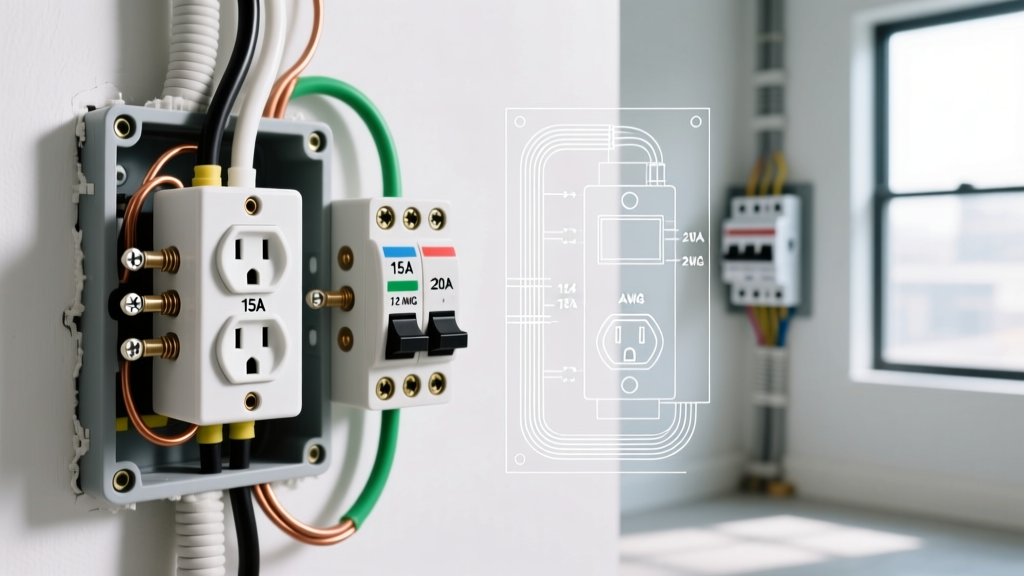
Wiring a korean electrical outlet requires adherence to metric wire sizing and specific circuit breaker matching. Unlike the American Wire Gauge (AWG) system used in North America, South Korea utilizes the metric cross-sectional area system (mm²).
- Standard Receptacle Circuits (16A): The minimum allowable conductor size for a standard 16A general-purpose receptacle circuit is 2.5 mm² copper. Using 1.5 mm² wire for wall receptacles is a direct code violation, even if the load is expected to be low.
- Heavy Appliance Circuits (20A - 30A): Dedicated circuits for high-draw appliances (such as induction cooktops, air conditioners, or commercial server racks) require 4.0 mm² or 6.0 mm² copper wire, paired with appropriately rated Miniature Circuit Breakers (MCBs) or Molded Case Circuit Breakers (MCCBs).
- Conduit and Raceway: In Korean concrete slab construction (the dominant residential building method), wires are typically pulled through rigid PVC or flexible non-metallic conduits embedded in the floor slab or ceiling. EMT (Electrical Metallic Tubing) is used in commercial exposed-wall applications but requires specific bonding jumpers at every coupling to maintain ground continuity.
Grounding (Jeopji) and EGC Requirements
Grounding, known locally as jeopji (접지), is heavily scrutinized by the Korea Electrical Safety Corporation (KESCO) during mandatory pre-occupancy inspections. A major point of failure for foreign contractors is assuming that metallic conduit or structural rebar can serve as an Equipment Grounding Conductor (EGC).
Under the KEC, a dedicated green or green/yellow insulated copper EGC must be pulled alongside the line and neutral conductors directly back to the distribution board's ground busbar. Relying on the metallic sheath of older BX cable or structural steel for grounding is strictly prohibited in modern residential builds. The earth resistance for a standard residential grounding electrode system must not exceed 100 ohms, while sensitive commercial or medical installations require a resistance of 10 ohms or less.
RCD Mandates for Wet and Hazardous Locations
What North American electricians call a GFCI (Ground Fault Circuit Interrupter), the KEC and IEC refer to as an RCD (Residual Current Device) or Earth Leakage Circuit Breaker (ELCB). The KEC mandates strict RCD protection to prevent fatal electrocution in high-risk zones.
Where RCDs are Mandatory:
- Bathroom Receptacles: Any korean electrical outlet installed within a bathroom must be protected by an RCD. Furthermore, outlets are generally prohibited within Zone 0 and Zone 1 (directly inside or immediately above bathtubs and shower stalls).
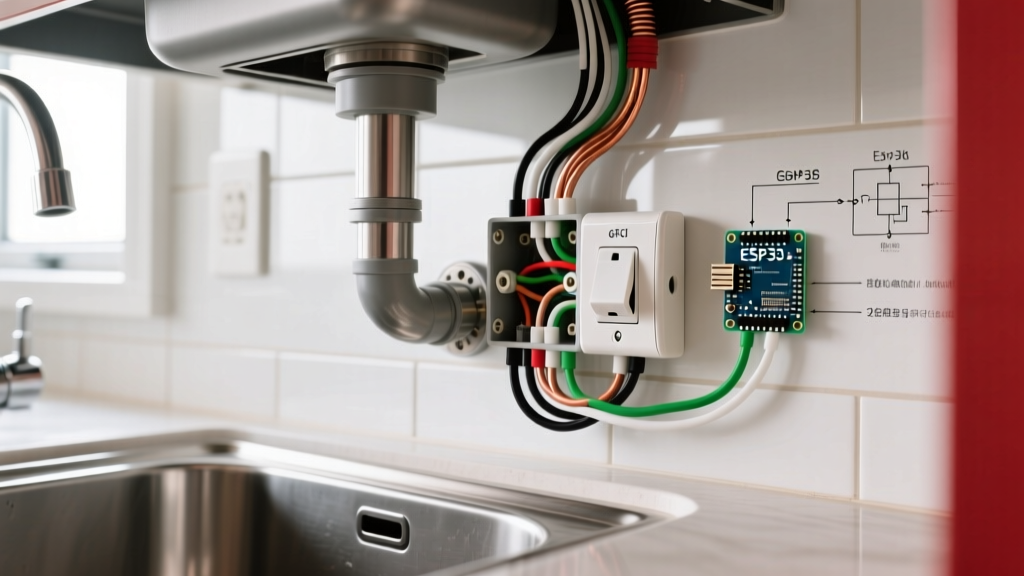
- Kitchen Wet Zones: Receptacles located within 1.5 meters of a kitchen sink require RCD protection.
- Outdoor and Balcony Outlets: All exterior receptacles, including those on apartment balconies (which are often exposed to driving rain and snow), must be RCD-protected and fitted with IP55 or higher weatherproof enclosures.
Technical Specifications: The KEC requires RCDs with a maximum residual operating current of 30mA and a tripping time of 0.1 seconds or less at the rated residual current. For whole-home protection, a 300mA fire-prevention RCD is often installed at the main service entrance, cascading down to 30mA branch-circuit RCDs.
KEC Receptacle Specifications Matrix
| Specification | Legacy Type C (Pre-2001) | Modern Type F (Current KEC) |
|---|---|---|
| Voltage / Frequency | 220V / 60Hz | 220V / 60Hz |
| Grounding Mechanism | None (Ungrounded) | Top/Bottom Earth Clips |
| Minimum Wire Size (16A) | 1.5 mm² (Historical) | 2.5 mm² (Mandatory) |
| Tamper-Resistant Shutters | Rare | Required in Dwellings |
| Smart/IoT Compatibility | Limited (No Neutral) | High (Neutral/Ground Present) |
Tamper-Resistant (TR) and Child Safety Mandates
In alignment with global safety trends, recent KEC revisions mandate that all 16A and 20A korean electrical outlets installed in residential dwellings, kindergartens, and pediatric medical facilities must feature integrated Tamper-Resistant (TR) shutters. These mechanical shutters require simultaneous, equal pressure on both the line and neutral slots to open, preventing children from inserting conductive objects into a single live terminal. When sourcing receptacles for a Korean residential project, ensure the product packaging explicitly indicates compliance with IEC 60884-1 TR standards.
Troubleshooting and Upgrading Older Korean Apartments
One of the most common challenges faced by DIYers and renovators in South Korea is dealing with the electrical infrastructure of older apartments (built between 1980 and 2005). These units often suffer from specific code violations by modern standards:
- Missing Ground Wires: Many older units feature 2-prong Type C outlets where the wall box is metal, but no actual ground wire connects back to the panel. Solution: You cannot simply swap to a Type F receptacle and bond it to an ungrounded metal box. You must fish a new 2.5 mm² green/yellow EGC wire through the PVC conduit back to the distribution panel.
- Overloaded Lighting Circuits: Older Korean homes often wired both lighting and wall receptacles on the same 1.5 mm² 10A breaker. Solution: Modern KEC requires the separation of lighting (1.5 mm²) and receptacle (2.5 mm²) circuits. A full panel upgrade and wire pull are necessary to bring the space up to code.
- Neutral-Line Reversal: Because the original Type C plugs were non-polarized (reversible), older wiring often features reversed polarity at the receptacle. While Type F plugs are also technically reversible, modern smart home IoT devices and sensitive PC power supplies require strict Line/Neutral orientation. Always test with a digital multimeter before connecting modern electronics.
The Rise of IoT and Smart Receptacles in Korea
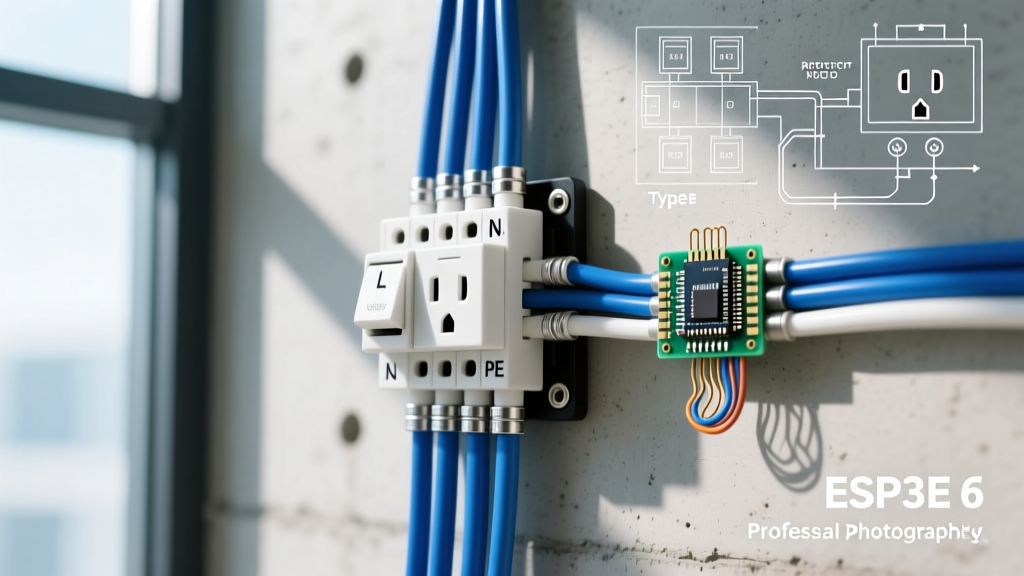
As of 2026, South Korea leads the globe in smart home integration. The modern korean electrical outlet ecosystem frequently includes Zigbee or Wi-Fi-enabled smart receptacles. Under the KEC, installing these smart outlets requires a dedicated neutral wire at the receptacle box (which is standard in Korea, unlike older US switch loops). Furthermore, smart outlets used for high-draw appliances like space heaters or washing machines must be rated for continuous 16A loads and feature internal thermal cutoff switches to prevent melting in the event of a loose terminal connection.
Final Thoughts on KEC Compliance
Working with electrical systems in South Korea requires a meticulous approach to metric wire sizing, strict adherence to dedicated EGC grounding, and the proper application of 30mA RCDs in wet locations. Whether you are upgrading a legacy 1990s apartment or wiring a new commercial space, respecting the KEC standards ensures your installation is not only legally compliant but fundamentally safe. Always consult with a licensed Korean electrician and verify your plans against the latest KESCO guidelines before energizing any new circuit.