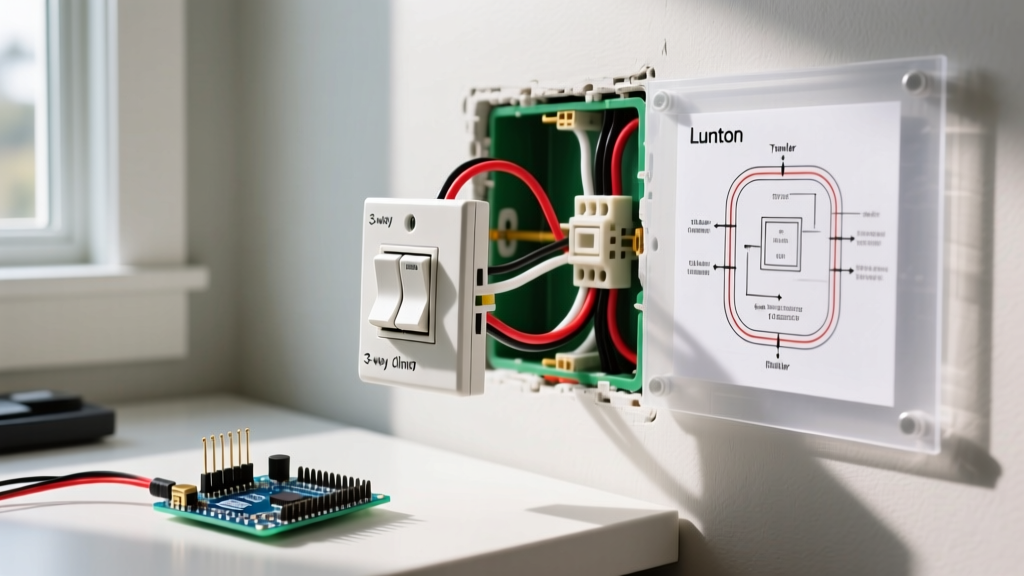
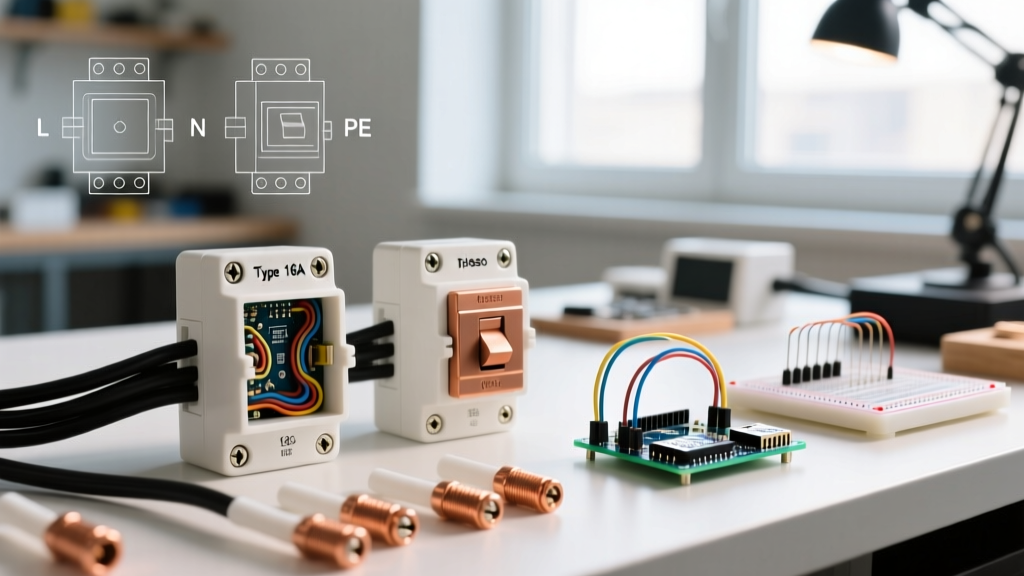
A circuit is GFCI-protected when it includes a Ground Fault Circuit Interrupter that continuously monitors the current balance between the hot (line) and neutral conductors. If the device detects an imbalance as small as 4 to 6 milliamps (mA)—indicating current is leaking to ground, potentially through a human body—it cuts the power in under 25 milliseconds. Standard thermal-magnetic breakers require 15,000 to 20,000 mA to trip, which is hundreds of times the lethal threshold.
The Core Hazard: Why Standard Breakers Won't Save You
To understand why GFCI protection is mandatory in wet or damp locations, you have to look at the physics of electric shock and the distinct roles of your wiring conductors. A standard 15A or 20A branch circuit breaker is designed solely to protect the wire from melting and starting a fire due to overcurrent or a dead short. It is entirely blind to the small current leaks that stop a human heart.
According to OSHA electrical safety standards, ventricular fibrillation (cardiac arrest) can occur at currents as low as 50mA (0.05A) across the chest. A Class A GFCI device trips at 4mA to 6mA, well below the threshold of muscular paralysis (the 'let-go' threshold, typically around 10-15mA).
Ground vs. Neutral vs. Bonding: Clearing the Confusion
A common bench and jobsite misconception is that a GFCI requires a ground wire to function. It does not. To understand why, we must separate three distinct concepts:
- Neutral (White/Gray): The normal, intended return path for current back to the transformer. The GFCI measures current flowing out on the Line and returning on the Neutral.
- Ground / Equipment Grounding Conductor (Bare/Green): A safety shield. It provides a low-impedance path back to the panel to allow massive fault current to flow, which forces the standard breaker to trip instantly during a dead short to a metal appliance chassis.
- Bonding: The physical, mechanical connection between the Neutral and Ground bus bars. This connection is made only once in a standard residential system: at the main service disconnect. Subpanels must keep neutral and ground strictly isolated.
Because a GFCI measures the differential between Line and Neutral, it will trip and save your life even if the Equipment Grounding Conductor (EGC) is missing or broken. However, without an EGC, a metal-cased appliance with an internal short will remain 'hot' until a person touches it and becomes the ground path, at which point the GFCI trips. This is why grounding is still required for new installations.
NEC-Style Guidance: Where GFCI-Protected Circuits Are Mandatory
The National Electrical Code (NEC) Article 210.8 has progressively expanded GFCI requirements over the last few decades. The table below outlines the primary locations where 125V and 250V receptacles must be GFCI-protected in residential dwellings. Note: Always consult your local AHJ, as regional amendments may expand these requirements.
| Location | Scope & Distance | Ampacity / Voltage | Common Exceptions |
|---|---|---|---|
| Kitchens | All receptacles serving countertop surfaces | 125V, 15A & 20A | None (all countertop outlets require protection) |
| Bathrooms | All receptacles within the bathroom space | 125V, 15A & 20A | None |
| Garages & Grade-Level Accessory Buildings | All receptacles up to 50A | 125V/250V, 15A to 50A | Receptacles dedicated to specific cord-and-plug equipment (e.g., a dedicated freezer outlet) if identified and not easily moved |
| Outdoors | All receptacles accessible at grade level | 125V/250V, 15A to 50A | De-icing equipment, dedicated snow-melt systems |
| Laundry & Utility Sinks | All receptacles in laundry areas; within 6 ft of utility sink edge | 125V, 15A & 20A | None for laundry; dedicated appliance outlets near sinks may have local AHJ variance |
Cost & Hardware Note: Upgrading a standard receptacle to a GFCI-protected one using a device like the Leviton SmartlockPro 20A Tamper-Resistant GFCI costs roughly $18 to $25 at retail. If you are protecting an entire run from the panel using a GFCI breaker (like an Eaton BR or CH 20A GFCI breaker), expect to pay $45 to $65, plus the cost of the pigtail neutral connection.
How to Verify a GFCI-Protected Receptacle (Tester Guide)
Verifying that a receptacle is actually GFCI-protected requires more than just looking for the 'TEST' and 'RESET' buttons on the faceplate. Receptacles can be wired incorrectly, or downstream devices can lose protection if the line and load terminals are reversed.
Step-by-Step Verification
- Visual Inspection: Check the faceplate. It should either have built-in TEST/RESET buttons, or be covered by a sticker reading 'GFCI Protected' (if protected by an upstream device or breaker).
- Plug-in Tester Check: Insert a standard 3-light plug-in circuit analyzer (e.g., Gardner Bender GFI-3511). Verify the lights indicate 'Correct' wiring (typically two yellow lights on, one off).
- The Trip Test: Press the black or red 'TEST' button on the plug-in tester. The receptacle should immediately click and cut power. If it's an upstream GFCI, the upstream device should trip.
- Reset and Verify: Press the RESET button on the GFCI faceplate. Power should restore. Re-test with a lamp or voltage tester to confirm.
Plug-In Tester Light Patterns (Decision Tree)
| Left Light | Center Light | Right Light | Condition | Action Required |
|---|---|---|---|---|
| OFF | ON | ON | Correct | Proceed to trip test |
| ON | OFF | ON | Open Ground | Safe for GFCI, but equipment ground is missing |
| OFF | OFF | ON | Open Neutral | Check neutral pigtail and wire nuts |
| ON | ON | OFF | Hot/Neutral Reversed | Swap Line and Neutral wires immediately |
When to Call a Licensed Electrician
While swapping a standard receptacle for a GFCI is a standard DIY task, certain panel and circuit configurations introduce hazards that require professional intervention.
- Multi-Wire Branch Circuits (MWBC): If your kitchen or bathroom is wired with an MWBC (two hot wires sharing a single neutral, typically on a 2-pole breaker), you cannot simply install a GFCI receptacle or a standard GFCI breaker without specific modifications. A standard GFCI breaker will see the shared neutral current as an imbalance and trip instantly. An electrician must either split the neutral at the receptacle boxes or install a specialized 2-pole GFCI breaker designed for MWBCs.
- 2-Prong to 3-Prong Retrofits at the Panel: If you are upgrading an entire ungrounded circuit by installing a GFCI breaker at the main panel to protect downstream 3-prong receptacles, the panel work involves removing the dead front cover and working near the exposed main service lugs. This is lethal territory. Hire a pro.
- Nuisance Tripping Diagnostics: If a newly installed GFCI trips immediately or randomly without a load, you may have a shared neutral on a downstream circuit, a pinched wire in a metal junction box leaking current to ground, or a failing appliance with high capacitive leakage. Tracing phantom ground faults requires an insulation resistance tester (Megger) and systematic circuit isolation.
For further reading on device specifications and internal trip mechanisms, refer to the Leviton GFCI technical documentation or consult the NFPA 70 National Electrical Code for the most current article 210.8 amendments in your jurisdiction.