
The Harsh Reality of Outdoor Electrical Environments
Outdoor electric wiring is subjected to extreme environmental stressors that indoor wiring never faces: UV radiation, temperature fluctuations from -20°F to 120°F, soil acidity, and constant moisture exposure. Using indoor-rated materials outside is not just a code violation; it is a severe fire and shock hazard. As of 2026, with copper prices stabilizing around $3.80 per pound and the 2023 National Electrical Code (NEC) fully adopted across most jurisdictions, selecting the right materials for exterior runs requires precise knowledge of NEC Articles 225 and 300.
This guide breaks down the exact cables, conduits, weatherproof enclosures, and specialized tools required to execute durable, code-compliant outdoor electric wiring projects, whether you are running a 20A receptacle for power tools or a 50A feeder for an EV charger.
Choosing the Right Cable: UF-B vs. THWN-2
The two most common conductors for outdoor branch circuits are Underground Feeder (UF-B) and individual THWN-2 wires pulled through conduit. Your choice dictates your burial depth, pulling difficulty, and overall material cost.
1. Southwire UF-B (Underground Feeder)
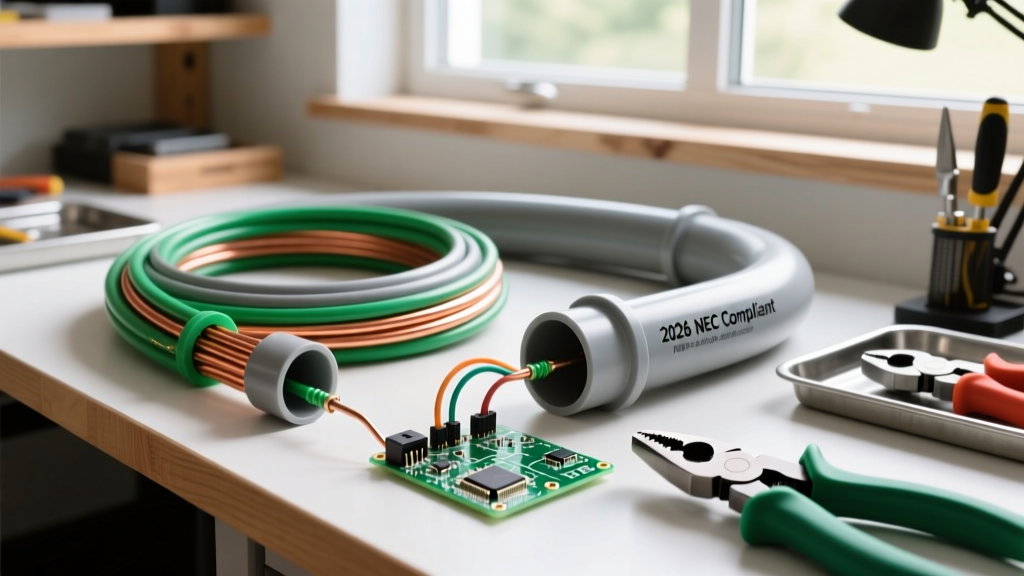
UF-B cable features a solid gray PVC jacket that encapsulates the conductors and ground wire. It is rated for direct burial without conduit. 2026 Pricing: Approximately $0.95 per foot for 12/2 UF-B.
- Pros: No conduit required for underground runs; faster to install in soft soil.
- Cons: Difficult to strip without nicking conductors; cannot be used above ground without physical protection (conduit); highly susceptible to UV degradation if left exposed to sunlight for more than 6 months.
2. THWN-2 in PVC Conduit
THWN-2 (Thermoplastic Heat and Water-resistant Nylon-coated) wires are pulled individually through a conduit raceway. 2026 Pricing: Roughly $0.28 per foot per conductor (requiring 3 wires for a 120V circuit, totaling $0.84/ft).
- Pros: Color-coded for easy identification; runs cooler in conduit; allows for future circuit upgrades by simply pulling new wires; superior heat dissipation.
- Cons: Requires continuous conduit from the indoor panel to the outdoor box; conduit joints must be perfectly sealed to prevent water ingress.
Material Comparison Matrix
| Feature | 12/2 UF-B Cable | 12 AWG THWN-2 (in PVC) | 12 AWG USE-2 |
|---|---|---|---|
| Direct Burial Allowed? | Yes | No | Yes (Service entrance only) |
| Above Grade Exposed? | No (Requires Conduit) | Yes (Inside Conduit) | No |
| Min. Burial Depth (120V GFCI) | 12 inches | 12 inches | N/A for branch circuits |
| UV Resistance | Moderate (Degrades over time) | N/A (Shielded by conduit) | High |
| Best Application | Shed subpanels, landscape lighting | Outdoor receptacles, EV chargers | Main service laterals |
Conduit and Fittings: Protecting Your Runs
When running outdoor electric wiring above grade or transitioning from underground to a receptacle, conduit is mandatory. However, not all PVC is created equal.
Schedule 40 vs. Schedule 80 PVC
Standard Schedule 40 PVC (e.g., Carlon 1/2-inch, ~$1.10 per 10ft stick) is perfectly acceptable for underground burial where it is protected by soil. However, NEC Article 300.50 mandates that where conduit emerges from the ground and is subject to physical damage (such as near a driveway, walkway, or weed-whacker zone), you must use Schedule 80 PVC.
Schedule 80 PVC (e.g., Carlon E943J) has a thicker wall and a smaller internal diameter. A 1/2-inch Schedule 80 conduit has a maximum fill capacity that is roughly 20% less than Schedule 40. Always calculate your conduit fill before purchasing.
Essential Fittings
- LB Conduit Bodies: Use these to make 90-degree turns where the conduit enters the exterior wall. Always use the neoprene gasket provided and seal the cover plate with outdoor-rated silicone.
- Expansion Fittings: In regions with extreme temperature swings, PVC expands and contracts significantly. Install a PVC expansion coupling (like the Carlon E945R) for every 10 feet of above-ground vertical conduit run to prevent the pipe from buckling or tearing out of the boxes.
Weatherproof Boxes and 'In-Use' Covers
Standard indoor junction boxes will fail outdoors within a single season due to condensation and rain ingress. For outdoor electric wiring, you must use enclosures rated for wet and damp locations.
Die-Cast Aluminum vs. Polycarbonate
While polycarbonate (plastic) boxes are cheaper and won't corrode, die-cast aluminum boxes (such as the Hubbell/Red Dot 1-Gang Die-Cast Box, ~$14.00) are vastly superior for high-draw applications like space heaters or EV chargers. Aluminum acts as a heatsink, drawing thermal energy away from the receptacle terminals and reducing the risk of thermal runaway.
Extra-Duty In-Use Covers
The NEC requires that outdoor receptacles in wet locations be covered whether the outlet is in use or not. You must install an 'Extra-Duty' in-use cover. The TayMac ML5000W (~$18.50) is an industry standard. It features a deep, hinged polycarbonate bubble that allows a standard 3-prong plug to remain connected while the cover is fully closed and latched, preventing water from wicking down the cord into the receptacle face.
Specialized Tools for Outdoor Installation
Beyond standard wire strippers and voltage testers, outdoor electric wiring requires specific tools to ensure physical durability and code compliance.
- Trenching Tools: For a standard 18-inch deep trench, a manual trenching spade (like the Bully Tools 12-Gauge Trenching Spade, $45) features a narrow 4-inch blade designed to cut through roots and minimize soil displacement. For runs over 50 feet, rent a walk-behind trencher (e.g., Ditch Witch C16X) for roughly $150/day.
- Fish Tapes: Pulling THWN-2 through long conduit runs requires a rigid tape. The Klein Tools 56334 50-Foot Steel Fish Tape ($45.00) provides the necessary stiffness to navigate conduit sweeps without kinking. Always use a wire-pulling lubricant (like Polywater J) to reduce friction and prevent insulation tearing.
- Torque Screwdriver: The 2023 NEC (110.14) strictly requires that electrical connections be torqued to the manufacturer's specifications. A standard screwdriver will often over-torque soft aluminum or brass terminal screws, stripping the threads. The Wiha 320P Torque Screwdriver ($120) allows you to set exact inch-pound ratings (typically 14-20 in-lbs for 12 AWG receptacle terminals).
Step-by-Step Workflow: 20A Outdoor Receptacle Run
Follow this sequence to ensure a compliant and lasting installation:
- Utility Locate: Call 811 at least 72 hours before digging to mark underground gas, water, and telecom lines. This is a legal requirement.
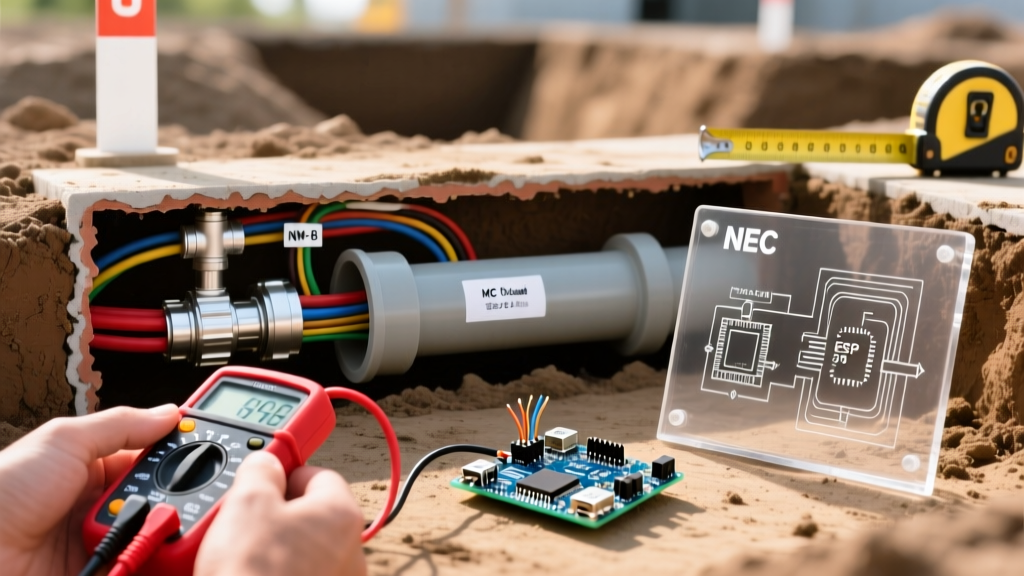
- Trenching: Dig the trench to the correct depth. According to NEC Table 300.5, a 120V, 20A GFCI-protected residential branch circuit in PVC conduit requires a minimum burial depth of 12 inches. If it is not GFCI protected, you must bury it 18 inches deep.
- Conduit Assembly: Dry-fit all PVC pieces first. Once aligned, prime and glue using Oatey Medium Body PVC cement. Allow 24 hours for the solvent weld to fully cure before pulling wires, as the fumes can degrade wire insulation if trapped.
- Pulling and Sealing: Pull the THWN-2 conductors. Critical Step: Seal the top of the underground conduit where it enters the LB fitting with duct seal putty. This prevents capillary action from drawing groundwater up into your wall cavity.
- Termination: Connect the wires to a WR (Weather Resistant) rated TR (Tamper Resistant) GFCI receptacle. Torque the terminal screws to the manufacturer's spec. Install the TayMac in-use cover.
Common Failure Modes and Troubleshooting
Failure Mode 1: Conduit Flooding and GFCI Nuisance Tripping
The Problem: Even with glued joints, underground conduit will eventually fill with water due to condensation and micro-leaks. If water reaches the GFCI receptacle, it will trip constantly.
The Fix: Conduit is not designed to be watertight; it is designed to protect wires from physical damage. The wire insulation (THWN-2) is rated for wet environments. The failure occurs when water reaches the termination points. Always drill a 1/8-inch weep hole at the absolute lowest point of your conduit run to allow trapped water to drain out, and ensure all above-ground boxes are sealed with silicone.
Failure Mode 2: UV Embrittlement of NM-B (Romex)
The Problem: A common beginner mistake is running standard yellow NM-B cable through a soffit or out an exterior wall to a porch light, leaving a few inches exposed to sunlight.
The Fix: NM-B jacket degrades and flakes off within months under UV exposure, exposing bare copper and creating a shock hazard. You must transition to THWN-2 inside a conduit nipple before the wire ever exits the exterior wall. For deeper insights on exterior transitions, refer to this comprehensive outdoor wiring guide by Family Handyman.
Final Considerations for 2026 and Beyond
As smart home technology and exterior EV charging become standard, the electrical load on exterior circuits is increasing. When planning your outdoor electric wiring, consider upsizing your conduit to 3/4-inch or even 1-inch PVC. The material cost difference is less than $15 per 100 feet, but it provides the physical space required to pull heavier gauge wires or add a dedicated neutral line for future 240V smart-home equipment without having to dig up your yard again. Always prioritize high-quality pulling tools and weather-rated enclosures to ensure your installation survives the elements for decades.