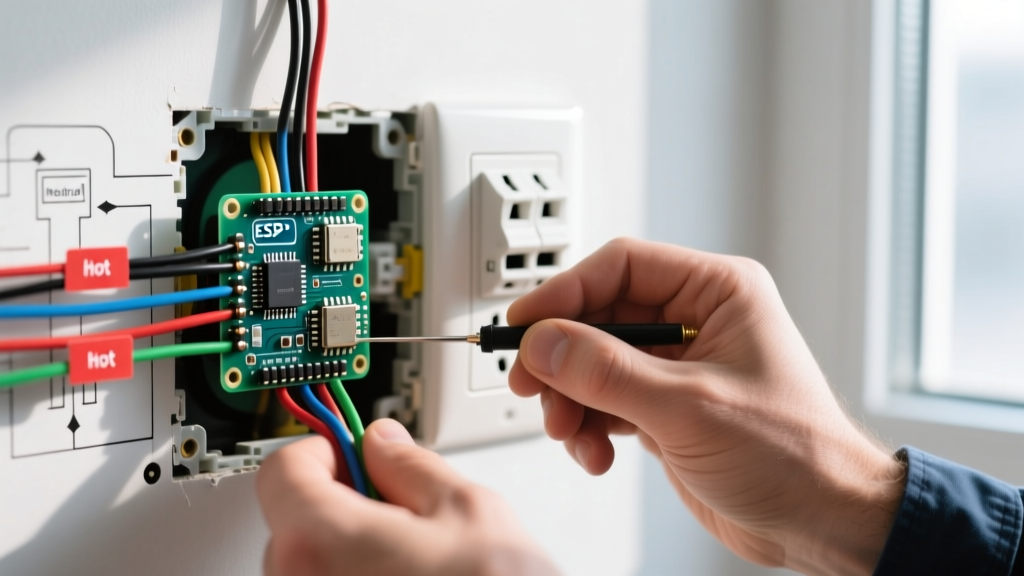

The Modern Reality of Home Electrical Diagnostics
When a circuit fails or a receptacle behaves erratically, guessing is not a strategy; it is a fire hazard. Troubleshooting electrical wiring in a residential setting requires a systematic approach to isolate faults, verify continuity, and ensure compliance with modern safety codes. As of 2026, the proliferation of non-linear loads—such as LED drivers, variable-frequency motors in HVAC systems, and smart home hubs—has fundamentally altered the electrical noise and harmonic distortion present on residential branch circuits. This means that legacy diagnostic methods often yield false readings. To effectively diagnose faults, homeowners and DIYers must upgrade their methodology and their tools.
Essential Diagnostic Arsenal: Tools and Pricing
Before pulling off a single faceplate, you need the right instrumentation. Standard $15 analog testers are insufficient for modern troubleshooting electrical wiring scenarios.
- True-RMS Digital Multimeter (DMM): The Fluke 117 True RMS Multimeter (approx. $190) is the industry standard. True-RMS is mandatory because it accurately measures the effective voltage of distorted sine waves caused by modern solid-state electronics. Standard averaging multimeters can read up to 20% low on circuits with heavy harmonic distortion.
- Dual-Range Non-Contact Voltage (NCV) Tester: The Klein Tools NCVT-3 (approx. $35) detects both standard line voltage (70–1000V AC) and low-voltage control circuits (12–1000V AC), making it indispensable for troubleshooting smart switches and doorbell wiring.
- Calibrated Torque Screwdriver: The Milwaukee 48-22-4500 (approx. $130). NEC 110.14(D) mandates that terminations be torqued to manufacturer specifications. Loose lugs are a leading cause of arc faults and thermal degradation at the panel.
- Circuit Tracer: The Amprobe AT-3500 (approx. $130) allows you to trace hidden wires through drywall and accurately identify which breaker controls a specific receptacle without repeatedly walking to the main panel.
The 3-Point Receptacle Voltage Matrix
When troubleshooting electrical wiring at a standard 120V, 15A or 20A duplex receptacle, measuring voltage between all three wire pairs reveals the exact nature of the fault. Use your True-RMS DMM to map your readings against this diagnostic matrix:
| Hot-to-Neutral (H-N) | Hot-to-Ground (H-G) | Neutral-to-Ground (N-G) | Diagnostic Conclusion & Root Cause |
|---|---|---|---|
| ~120V | ~120V | ~0V (or <2V) | Normal Circuit. Wiring is intact and properly bonded. |
| 0V | ~120V | ~120V | Open Neutral. The neutral wire is disconnected upstream. The ground is carrying the return path potential. |
| ~120V | 0V | 0V | Open Ground. The equipment grounding conductor is severed or unterminated. High shock risk. |
| ~120V | ~120V | ~120V | Hot-Neutral Reversal. The white and black wires are swapped at the termination point. |
| <110V | ~120V | >5V | Voltage Drop / Loose Neutral. High resistance in the neutral path due to a failing backstab connection or undersized wire. |
Step-by-Step Troubleshooting Electrical Wiring
Step 1: Isolate, De-energize, and Verify
Never begin physical inspection without confirming a zero-energy state. Turn off the breaker and use your NCV tester on the top, bottom, and sides of the receptacle. Follow up with the DMM set to AC Voltage to confirm 0V between Hot and Neutral, and Hot and Ground. According to the National Fire Protection Association (NFPA), failure to verify de-energization is a primary cause of DIY electrical injuries.
Step 2: Inspect for Thermal Damage and Backstab Failures
Once the faceplate is removed, look for discoloration or melted plastic around the terminal screws. A massive percentage of intermittent faults in homes built between 1980 and 2015 stem from 'backstabbed' push-in connections. Standard builder-grade receptacles (like the $1.25 Leviton 5320) use spring-loaded brass clips for backstabs. Under continuous 12A to 15A loads (like space heaters or window AC units), these connections undergo thermal cycling—expanding when hot and contracting when cool. Over 5 to 7 years, the spring tension fatigues, creating a high-resistance arc fault.
Expert Fix: Never use backstabs for troubleshooting or new installations. Strip 3/4 inch of insulation and loop the solid copper wire clockwise around the brass screw terminal. If you must use push-in wiring, upgrade to commercial-grade spec receptacles (e.g., Leviton 5362, approx. $3.50) which feature internal screw-clamp plates rather than fragile spring tabs.
Step 3: Trace Voltage Drop on Long Branch Circuits
If a receptacle at the end of a long run (e.g., a detached garage or a far-corner bedroom) reads 108V under load, you are experiencing excessive voltage drop. The NEC recommends a maximum 3% voltage drop for branch circuits. On a 120V circuit, 3% is 3.6V. If your voltage drops below 116.4V when a load is applied, the wire is undersized for the distance.
Real-World Scenario: Running a 100-foot circuit to a backyard workshop using 14 AWG NM-B (Romex) on a 15A breaker will result in a severe voltage drop when operating a 12A table saw, potentially burning out the motor windings. The solution is upsizing the conductors to 12 AWG or even 10 AWG copper to compensate for the resistance over distance, a principle thoroughly documented by Fluke Corporation's electrical engineering guidelines.
Edge Cases: Multi-Wire Branch Circuits (MWBC)
One of the most dangerous scenarios encountered when troubleshooting electrical wiring is the improperly maintained Multi-Wire Branch Circuit. An MWBC uses two hot wires (on opposite 120V phases) sharing a single neutral wire, commonly found in kitchens and bathrooms to save copper.
- The Hazard: If the handle-tie is missing and a DIYer disconnects the shared neutral while one hot leg is still energized, the 120V circuits effectively become a 240V series circuit. This will instantly send 240V into your 120V appliances, destroying microwave control boards and LED drivers.
- The Diagnostic Test: Turn off the suspected breaker. If a receptacle on the same circuit still has power, check the adjacent breaker. If both must be turned off to kill power to a single junction box, you have an MWBC. NEC 210.4(B) requires a simultaneous disconnect (handle-tie or double-pole breaker) for these circuits.
Ghost Voltages and Capacitive Coupling
When using a high-impedance DMM (like the Fluke 117), you may read 40V to 90V on a disconnected wire running parallel to a live wire in the same wall cavity. This is 'ghost voltage' caused by capacitive coupling. It cannot deliver meaningful current but causes immense confusion during troubleshooting. To eliminate ghost voltage, switch your DMM to a low-impedance (LoZ) mode, which places a resistive load on the circuit and bleeds off the phantom voltage to a true 0V reading.
Code Compliance and Safety Standards
Any troubleshooting that results in replacing or altering wiring must comply with the latest National Electrical Code (NEC). As of the 2023/2026 NEC cycles, Arc-Fault Circuit Interrupters (AFCI) are required in nearly all living spaces, while Ground-Fault Circuit Interrupters (GFCI) are mandated for any receptacle within 6 feet of a water source, including kitchens, bathrooms, garages, and outdoors. The U.S. Consumer Product Safety Commission (CPSC) strongly advises against bypassing tripped AFCI/GFCI breakers to 'fix' a nuisance trip; a trip usually indicates a genuine insulation breakdown or moisture intrusion that requires physical wire replacement.
Frequently Asked Questions
Why does my breaker trip immediately when I plug in a vacuum?
This indicates a hard short circuit or a severe ground fault. The vacuum's internal wiring may be compromised, or the receptacle itself has a melted internal busing causing the hot and ground to touch. Test the vacuum on a known-good GFCI circuit. If it trips the GFCI but not the breaker, the motor has a ground leakage fault. If it trips the main breaker instantly, there is a dead short.
Can I use a standard 15A receptacle on a 20A breaker?
Yes, NEC 210.21(B)(3) allows 15A duplex receptacles on a 20A branch circuit, provided there are two or more receptacles on the circuit (a duplex counts as two). However, you cannot plug a single 20A appliance into a 15A receptacle. If you are troubleshooting a tripped 20A breaker, ensure the downstream 15A receptacles are not being abused by high-draw portable heaters via illegal adapter prongs.
What causes a humming sound inside the electrical panel?
A faint 60Hz hum is normal due to alternating current magnetic fields. However, a loud buzzing, crackling, or sizzling sound indicates a loose bus bar connection, a failing breaker internal contact, or an arcing fault. This is an immediate emergency. Do not attempt to tighten panel lugs while the main service conductors are live; contact a licensed electrician to perform an infrared thermography scan and torque verification.