
The Short Answer: Scope of Work and Licensing
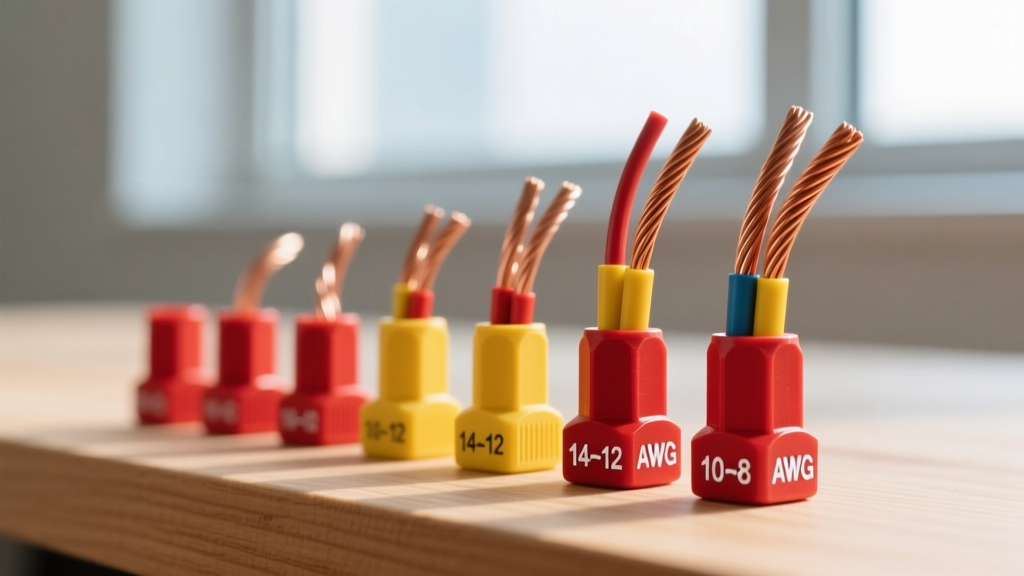
It is surprisingly common for homeowners undertaking a renovation or smart-home upgrade to ask, do electricians deal with wiring? The short answer is an absolute yes, but with a critical caveat regarding the type of wiring. Licensed electricians are the sole authorities on line-voltage wiring (120V to 240V+), which powers your outlets, lighting, HVAC systems, and heavy appliances. However, the confusion often arises when low-voltage wiring (Cat6 ethernet, security cameras, doorbells) enters the picture.
In 2026, the division of labor in the electrical trades is strictly governed by local building codes and the National Electrical Code (NEC). While a master electrician can legally pull low-voltage cables, most choose not to, as it falls outside their specialized scope and insurance coverage. Instead, line-voltage wiring requires a licensed professional to ensure compliance with NEC Article 210 (Branch Circuits) and Article 300 (Wiring Methods). Understanding this distinction is the first step in accurately estimating your project costs.
2026 Electrician Wiring Cost Matrix
When you hire a licensed electrical contractor, you are paying for three distinct elements: material procurement (copper, conduit, breakers), skilled labor (wire pulling, termination, load balancing), and liability coverage (permitting and insurance). Below is a realistic 2026 cost matrix for common residential wiring projects.
| Wiring Project | Wire Type & Gauge | Material Cost | Labor (Licensed Pro) | Estimated Total |
|---|---|---|---|---|
| New 20A Dedicated Circuit | 12/2 NM-B (Romex) | $45 - $85 | $250 - $450 | $295 - $535 |
| 50A EV Charger Line | 6/3 NM-B or THHN in Conduit | $180 - $350 | $800 - $1,600 | $980 - $1,950 |
| Kitchen Small-Appliance Circuits | 20A 12/2 NM-B (GFCI) | $120 - $200 | $600 - $1,100 | $720 - $1,300 |
| Whole-House Rewire (2,000 sq ft) | Copper 14/2, 12/2, 6/3 | $2,500 - $4,500 | $9,000 - $16,000 | $11,500 - $20,500 |
Hourly Rates vs. Flat-Rate Pricing Models
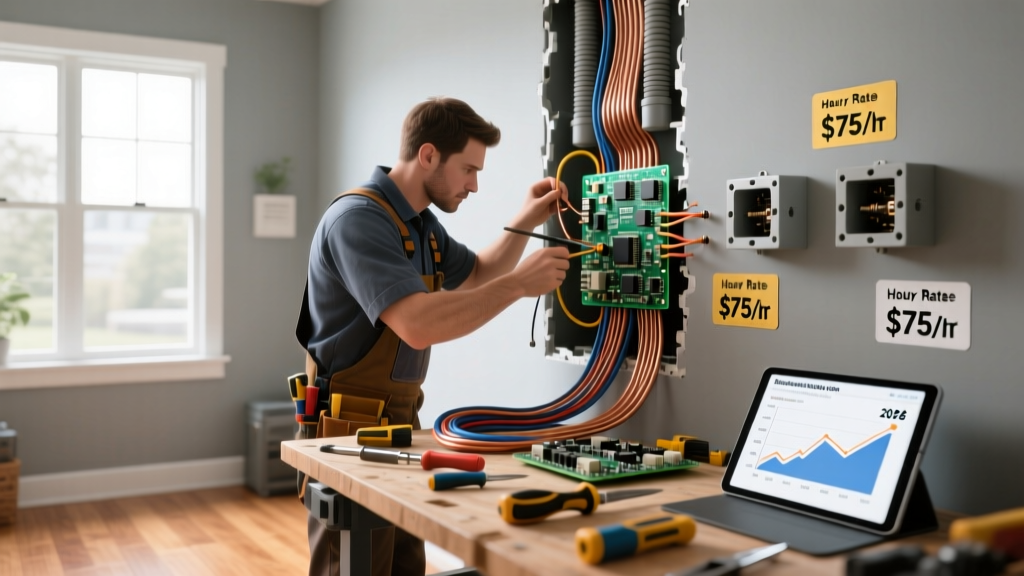
In 2026, the national average hourly rate for a licensed journeyman electrician ranges from $95 to $150 per hour, while master electricians or contractors operating in high-cost-of-living areas may charge $175 to $225 per hour. However, reputable electrical firms have largely shifted to flat-rate pricing. Flat-rate pricing protects you from the "time-and-materials" trap, where a difficult wire pull through a fire-blocked wall could double your labor costs. Always request a flat-rate quote that explicitly includes drywall patching or clearly states that drywall repair is excluded.
Where the Confusion Lies: Low-Voltage vs. Line-Voltage
To fully answer the question of whether electricians deal with wiring, we must address the low-voltage gray area. If you are running 14/2 copper to a new garbage disposal, that is strictly an electrician's domain. If you are running Cat6a shielded twisted pair to a new home office, you need a low-voltage cabling contractor.
Pro Tip: Never allow a general handyman to run line-voltage NM-B cable alongside low-voltage data cables in the same stud bay without maintaining the NEC-mandated 2-inch separation. Electromagnetic interference (EMI) from the 120V AC line will degrade your network speeds and cause data packet loss.
Some large electrical contracting firms employ both line-voltage and low-voltage technicians, offering a "whole-home wiring" package. This is highly recommended for new construction or gut renovations, as it ensures a single point of accountability for all in-wall infrastructure.
The Hidden Costs of the "Handyman Alternative"
Many homeowners ask if electricians deal with wiring because they are actively trying to avoid the cost of a licensed pro, opting instead for a general handyman or a DIY approach for "simple" wire runs. This is a false economy that frequently leads to catastrophic failure modes.
Real-World Failure Mode: The Shared Neutral Disaster
A common mistake made by unlicensed individuals is the improper use of Multi-Wire Branch Circuits (MWBC). An unlicensed worker might pull a single 12/3 NM-B cable to feed two separate 120V circuits, sharing the white neutral wire. If the breakers are not installed on adjacent slots with a handle tie (ensuring they are on opposite phases), the neutral wire will carry the sum of the current rather than the difference. This causes the neutral wire to overheat, melt the insulation, and ignite a fire inside the wall cavity—long before the 20A breaker ever trips.
According to the U.S. Consumer Product Safety Commission (CPSC), electrical wiring defects are responsible for tens of thousands of residential fires annually. When you hire a licensed electrician, their labor cost includes the use of specialized diagnostic tools, such as Megger insulation resistance testers and Fluke thermal imaging cameras, to verify that your wiring is safe, balanced, and code-compliant.
Permitting and Inspection: The Non-Negotiable Cost
When evaluating wiring costs, you must factor in municipal permitting. Any new circuit, panel upgrade, or structural rewiring requires a permit. In 2026, permit costs generally scale with the project valuation, typically ranging from $50 for a single circuit to $400+ for a whole-house rewire.
Licensed electricians pull these permits as part of their service. The local Authority Having Jurisdiction (AHJ) will send an inspector to verify:
- Box Fill Calculations: Ensuring junction boxes are not overcrowded with wires, which causes heat buildup.
- AFCI/GFCI Compliance: Verifying that bedrooms, kitchens, and bathrooms have the correct arc-fault and ground-fault protection per the latest NEC updates.
- Proper Grounding: Checking that grounding electrodes and equipment grounding conductors are properly bonded.
If an unlicensed handyman performs the work without a permit, and a fire occurs years later, your homeowner's insurance provider can legally deny your claim due to unpermitted, non-code-compliant modifications.
Cost-Benefit Framework: When to Hire the Pro
To synthesize the cost estimation data, use this decision framework to determine when you absolutely must hire a licensed electrician for your wiring project:
- The 120V/240V Threshold: If the wire carries standard household current or heavy appliance current, hire an electrician. The cost of a mistake is fatal.
- The Panel Proximity Rule: If the wiring requires opening the main service panel or adding a new breaker, hire an electrician. The bus bars inside a live panel carry lethal fault currents.
- The Concealed Space Factor: If the wire will be buried behind drywall, inside insulated walls, or under flooring, hire an electrician. You need the guarantee of proper stapling, nail-plate protection, and derating calculations that a professional provides.
Ultimately, electricians do deal with wiring—it is the very foundation of their trade. While the upfront cost of hiring a licensed professional in 2026 may seem steep compared to a handyman's hourly rate, you are investing in NEC compliance, fire prevention, and the long-term insurability of your home. Always demand a detailed, line-item quote that separates materials, labor, and permitting to ensure total transparency on your next electrical project.