
The True Cost of Updating Electrical Wiring in a House: A 2026 Safety Perspective
When homeowners research the cost of updating electrical wiring in a house, they are often met with vague estimates that fail to account for the critical safety variables inherent in modern electrical codes. In 2026, with copper prices fluctuating and the National Electrical Code (NEC) enforcing stricter arc-fault and ground-fault protections, a rewire is no longer just a cosmetic upgrade—it is a vital life-safety intervention. According to the National Fire Protection Association (NFPA), electrical failures or malfunctions remain a leading cause of home structure fires. Deferring this maintenance to save a few thousand dollars can result in catastrophic failure modes, from brittle insulation shedding inside walls to overloaded neutral bus bars.
From a safety best practices standpoint, budgeting for a rewire must include not just the raw materials, but the labor required to meet current NEC 2023/2026 standards, proper permitting, and the inevitable drywall remediation. This guide breaks down the exact costs, material specifications, and safety-critical decision frameworks you need to evaluate before hiring a contractor.
2026 Cost Breakdown: Whole-House vs. Partial Rewiring
The cost of updating electrical wiring in a house varies drastically based on the home's square footage, the accessibility of joist bays and attics, and the condition of the existing infrastructure. Below is a realistic 2026 pricing matrix based on national averages for licensed, insured electrical contractors.
| Project Scope | Average 2026 Cost | Cost Per Sq. Ft. | Safety & Code Implications |
|---|---|---|---|
| 1,200 Sq. Ft. Home (Full Rewire) | $7,500 - $11,000 | $6.25 - $9.15 | Requires full panel upgrade to 200A; AFCI/GFCI compliance. |
| 2,000 Sq. Ft. Home (Full Rewire) | $12,000 - $18,500 | $6.00 - $9.25 | Multi-stage permitting; dedicated appliance circuits required. |
| 2,500+ Sq. Ft. Home (Full Rewire) | $16,000 - $25,000+ | $6.40 - $10.00 | May require 400A service split; complex drywall access. |
| Single Room / Kitchen Remodel | $1,500 - $3,500 | N/A | Must tie into existing grounded panel; GFCI mandatory. |
| Panel Upgrade Only (100A to 200A) | $1,800 - $3,200 | N/A | Resolves overheating bus bar risks; enables modern loads. |
Safety-Critical Upgrades That Dictate Your Budget
If your home was built before 1985, the cost of updating electrical wiring in your house will likely involve remediating hazardous legacy materials. Cutting corners here is a severe fire risk.
1. Aluminum Wiring Remediation (1960s–1970s)
Single-strand aluminum branch wiring expands and contracts at a different rate than brass or copper terminals. Over decades, this thermal cycling causes connections at receptacles and switches to loosen, leading to micro-arcing and intense heat buildup. While some contractors offer "pigtailing" (using AlumiConn connectors or COPALUM crimps to transition aluminum to copper pigtails), the U.S. Consumer Product Safety Commission (CPSC) notes that complete replacement with copper wire is the only permanent, fail-safe remedy. Budget an additional 20% to 30% on top of standard copper rewiring costs if your home requires full aluminum extraction, as the wire is often brittle and difficult to pull through existing conduit or wall cavities.
2. Knob-and-Tube (K&T) Abatement
Found in homes built prior to 1940, K&T wiring lacks a ground wire and features cloth-rubber insulation that turns to dust when disturbed. Furthermore, K&T was designed to be air-cooled; modern homeowners who blow cellulose or fiberglass insulation over K&T wires trap the heat, creating a massive fire hazard. Rewiring a K&T home is highly invasive. Expect to pay between $10,000 and $18,000 for a standard two-story home, as electricians must fish wires through finished plaster walls or cut extensive access channels.
3. AFCI and GFCI Code Compliance
Modern NEC requirements mandate Arc-Fault Circuit Interrupters (AFCIs) in almost all living spaces (bedrooms, living rooms, hallways) to detect dangerous electrical arcs, and Ground-Fault Circuit Interrupters (GFCIs) in wet areas. Upgrading to a modern panel with Combination-Type AFCI breakers (such as the Eaton BR CAFI or Square D QO Homeline series) adds roughly $45 to $65 per breaker to your material costs. For a 20-circuit panel, this adds $900 to $1,300 in materials alone, but it is a non-negotiable safety requirement for passing inspection in 2026.
Safety Warning: Never accept a bid from an electrician who suggests replacing a blown fuse box with a standard breaker panel without upgrading the service entrance cables. Upgrading to a 200-Amp panel while retaining old, undersized #4 aluminum service entrance wires is a severe bottleneck that can cause the main feed to overheat and ignite inside the wall cavity.
Material Costs: What You Are Actually Paying For
Understanding the material costs helps you verify if a contractor's bid is legitimate or if they are using substandard components. In 2026, copper prices remain a significant factor in the cost of updating electrical wiring in a house.
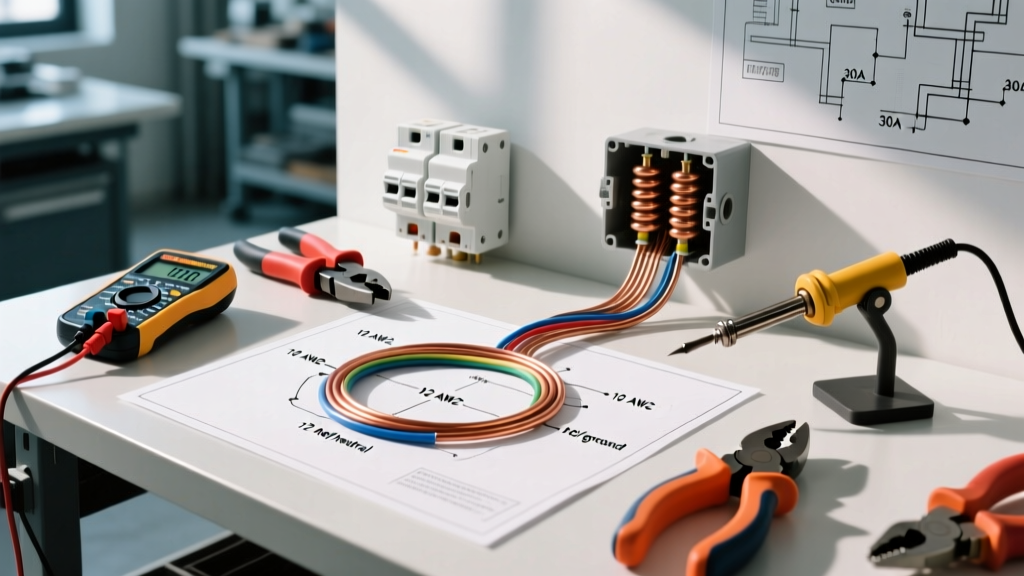
- 12/2 AWG NM-B (Romex SIMpull): Used for 20-Amp circuits (kitchens, bathrooms, laundry). A 250-foot coil costs between $135 and $160. A 2,000 sq. ft. home typically requires 1,500 to 2,500 feet of 12/2 wire.
- 14/2 AWG NM-B: Used for 15-Amp lighting and general receptacle circuits. A 250-foot coil costs between $105 and $125.
- THHN/THWN-2 in EMT Conduit: Required in unfinished basements, garages, and commercial-style workshops where NM-B cable is subject to physical damage. Expect conduit and stranded wire installations to cost 30% more in labor than standard stapled NM-B.
- Tamper-Resistant (TR) Receptacles: NEC requires TR receptacles in all new installations to prevent children from inserting foreign objects. Standard Leviton or Eaton TR duplex receptacles cost $2.50 to $4.00 each, a minor but vital safety expense.
The Hidden Cost: Drywall Access and Remediation
The most frequently overlooked expense in the cost of updating electrical wiring in a house is the drywall work. Unless your home is currently gutted to the studs, or you have an unfinished basement and an accessible attic that allows for complete "fishing" of wires, the electricians will need to cut access holes.
- The "Cut and Patch" Method: Electricians cut 4x4 inch holes at every switch, outlet, and junction point, as well as larger 12x12 inch holes at ceiling/wall intersections to drill through top plates. This minimizes destruction but requires a skilled finish carpenter or drywaller to patch dozens of small holes seamlessly.
- The "Slit and Tape" Method: A continuous 3-inch slit is cut along the baseboard or crown molding. Wires are fished behind the drywall, and the slit is taped and mudded. This is faster for the electrician but requires extensive painting afterward.
Budget an additional $2,500 to $6,000 for professional drywall repair, mudding, taping, and repainting after a whole-house rewire in a fully finished home. Attempting to DIY the drywall patching often results in visible seams and compromised fire-blocking ratings in the walls.
Permitting, Inspections, and Insurance Implications
Working without a permit to save 5% on the total project cost is a dangerous gamble. The Electrical Safety Foundation International (ESFI) strongly advocates for permitted work, as the municipal inspection process acts as an independent safety audit. An inspector will verify that wire gauges match breaker amperages, that grounding electrode systems are properly bonded to the water main and ground rods, and that junction boxes are accessible.
Furthermore, if an unpermitted electrical modification causes a fire, your homeowner's insurance provider may deny the claim, citing negligence and code violations. When evaluating the cost of updating electrical wiring in your house, always ensure the contractor's bid explicitly includes "pulling all necessary municipal permits and scheduling final inspections."
Frequently Asked Questions (FAQ)
Can I rewire my house one room at a time to spread out the cost?
Yes, but with caveats. You can prioritize high-risk areas like the kitchen, bathrooms, and laundry room. However, if your main panel is a legacy Federal Pacific Stab-Lok or Zinsco panel—both notorious for breakers failing to trip during overcurrent events—you must replace the entire panel first before adding new circuits. Partial rewiring also requires careful mapping to ensure you do not inadvertently overload existing legacy circuits that share neutrals.
Does a whole-house rewire increase my home's resale value?
While it may not dollar-for-dollar increase the appraised value like a kitchen remodel, a fully updated, permitted, and code-compliant electrical system removes a major red flag during the buyer's home inspection. Homes with active knob-and-tube or ungrounded aluminum wiring often face deal-breaking insurance hurdles; removing these barriers ensures the home is insurable and marketable.
Are smart panels worth the extra cost in 2026?
Smart panels (like the SPAN panel) cost between $3,500 and $5,000 just for the hardware, significantly more than a standard $800 Eaton or Square D load center. However, from a safety perspective, they offer real-time circuit-level monitoring, allowing you to instantly shut off specific circuits via an app during an emergency or integrate seamlessly with solar and battery backup systems to prevent grid-backfeed hazards.