
The Symptoms of an Undersized Range Circuit
When an electric range trips the breaker, emits a burning odor, or simply fails to heat properly, the root cause is often hidden inside the walls. Troubleshooting the wire size for electric range circuits requires a solid understanding of NEC ampacity rules, voltage drop calculations, and the evolution of grounding codes. As modern induction cooktops and dual-fuel ranges demand more power, older 40-amp circuits and undersized conductors are becoming dangerous bottlenecks in residential kitchens.
Nuisance Breaker Tripping vs. Thermal Overload
A breaker that trips immediately upon turning on the oven and burners simultaneously usually indicates a dead short or a severe ground fault. However, a breaker that trips after 10 to 15 minutes of heavy use is suffering from thermal overload. This happens when the continuous current draw exceeds the ampacity of the wire or the breaker rating. If your 50-amp range is wired with 8 AWG copper (rated for only 40 amps in standard NM-B cable), the wire will heat up. While the breaker is designed to protect the wire, the ambient heat inside the wall cavity and the panel can cause the breaker's bimetallic strip to warp and trip prematurely, even if the panel itself feels cool to the touch.
The Burning Smell: Insulation Degradation
If you notice a distinct, acrid "fishy" or melting plastic smell near the receptacle or the electrical panel, shut off the main breaker immediately. This is a hallmark sign of insulation degradation caused by excessive resistance and heat. Undersized wires act like heating elements when pushed beyond their ampacity. In older homes, you may find 10 AWG or 8 AWG wire improperly paired with a 50-amp breaker—a severe fire hazard that violates the fundamental principles of circuit protection. The heat softens the PVC insulation of NM-B (Romex) cable, eventually leading to arcing and short circuits.
Diagnosing the Correct Wire Size for Electric Range Loads
To troubleshoot effectively, you must first verify the manufacturer's kilowatt (kW) rating of the appliance and compare it against the existing circuit infrastructure. The National Electrical Code (NEC) Article 220.55 provides specific demand factors for electric ranges, but as a baseline for troubleshooting existing installations, matching the breaker, wire gauge, and appliance draw is critical.
| Range kW Rating | Max Amp Draw | Breaker Size | Min Copper AWG (NM-B) | Min Aluminum AWG |
|---|---|---|---|---|
| Under 8.75 kW | 40A | 40A | 8 AWG | 6 AWG |
| 8.75 - 12.0 kW | 50A | 50A | 6 AWG | 4 AWG |
| Over 12.0 kW (Pro/Induction) | 60A+ | 60A | 4 AWG | 3 AWG |
According to the NFPA 70 (National Electrical Code), standard 60-degree Celsius rated NM-B cable requires 6 AWG copper for a 50-amp circuit. If you open the receptacle box and find 8 AWG copper wire connected to a 50-amp NEMA 14-50R outlet, you have identified a critical code violation and the likely source of your thermal issues. The breaker must be swapped to 40A (if the range supports it), or the wire must be pulled and upgraded to 6 AWG.
Troubleshooting Long Runs: The Voltage Drop Trap
Sometimes the wire gauge is technically correct for the breaker, but the range still underperforms. Ovens take forever to preheat, and induction burners pulse erratically. This is the voltage drop trap. The NEC recommends that branch circuit voltage drop not exceed 3% for optimal efficiency. When a kitchen is located far from the main service panel—such as in a detached guest house, a sprawling ranch home, or a finished basement kitchenette—the resistance of the wire causes a significant loss of voltage before it reaches the appliance.
NEC Rule of Thumb: For a 240V circuit, a 3% voltage drop equates to a maximum loss of 7.2 volts. If your range receives less than 232V under load, performance degrades exponentially, as power output is proportional to the square of the voltage (P = V²/R).
Let's look at a real-world troubleshooting scenario. You have a 12kW range drawing 50 amps, located 110 feet from the panel. Using standard 6 AWG copper wire, the voltage drop can be calculated using the formula: VD = (2 x K x I x D) / CM, where K is 12.9 (copper), I is 50A, D is 110 feet, and CM (circular mils for 6 AWG) is 26,240. The resulting voltage drop is roughly 5.9 volts (2.4%), which is acceptable. However, if that same run is 150 feet, the drop exceeds 8 volts (3.3%), pushing past the recommended threshold. In this scenario, troubleshooting requires upsizing the wire to 4 AWG copper to compensate for the distance, even though a 50-amp breaker only strictly requires 6 AWG for ampacity. You can verify your specific run parameters using the Southwire Voltage Drop Calculator before pulling new SER (Service Entrance Round) cable.
3-Prong vs. 4-Prong: Grounding and Bonding Faults
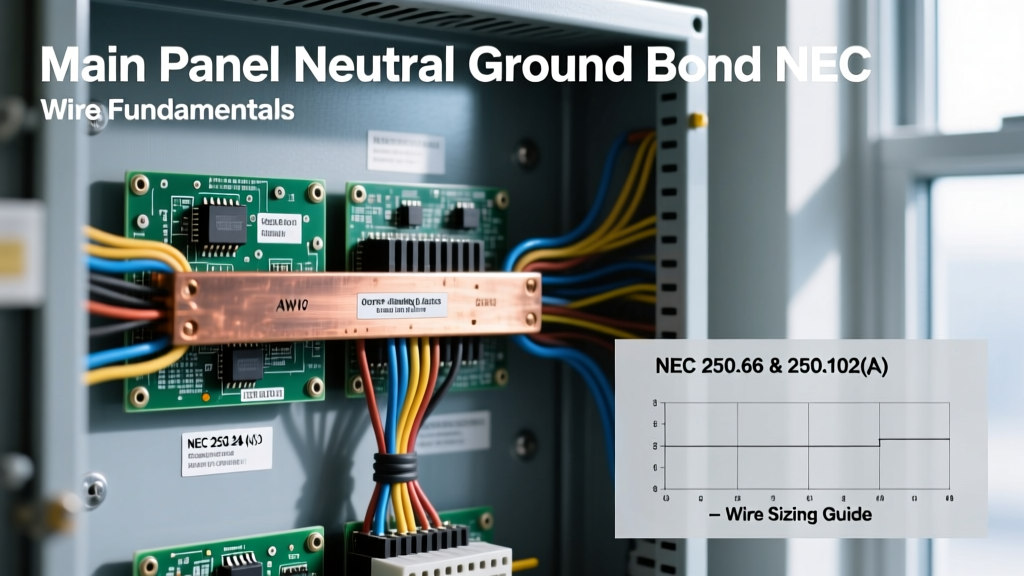
A highly specific and dangerous troubleshooting scenario involves the transition from 3-wire to 4-wire range receptacles. Prior to the 1996 NEC revision, electric ranges were permitted to use a 3-wire setup (two hots and a combined neutral/ground). The appliance chassis was bonded directly to the neutral wire via a metal strap on the back of the unit.
If you are troubleshooting a range that delivers a mild shock when the user touches the metal chassis or the oven door, you are likely dealing with a broken or high-resistance neutral in a 3-wire SE (Service Entrance) cable. When the neutral return path is compromised, the 120V control circuits (clocks, lights, timers) seek a path to ground through the user's body. Modern troubleshooting mandates the elimination of this hazard:
- Identify the Receptacle: A NEMA 10-50R is the older 3-prong style; a NEMA 14-50R is the modern 4-prong style with a dedicated ground.
- Check the Bonding Strap: If the home has a 4-wire receptacle and 14-50P cord, the bonding strap on the back of the range MUST be removed. Leaving it in place creates a parallel neutral path, causing the grounding wire to carry continuous current, which can overheat the ground wire and cause shock hazards.
- Upgrade the Feed: If the home only has a 3-wire feed, the safest troubleshooting step is to pull a new 6/3 NM-B or SER cable with a dedicated equipment grounding conductor to support a 4-prong NEMA 14-50R.
Step-by-Step Verification at the Panel and Receptacle
Before cutting drywall or pulling new wire, perform a systematic verification of the existing installation to rule out mechanical failures that mimic undersized wiring symptoms. Loose connections create high resistance, generating intense localized heat that can melt receptacle faces and trip breakers, even if the wire gauge is perfectly sized.
- Isolate Power: Turn off the main breaker to ensure the panel bus bars are de-energized before inspecting the branch circuit connections.
- Inspect the Lugs: Check the termination points at the 2-pole breaker and the neutral/ground bars. Look for dark scorch marks or melted plastic insulation.
- Verify Torque: The NEC now requires torque screwdrivers for terminal connections (110.14(D)). A 50-amp breaker lug typically requires 35 to 45 inch-pounds of torque. A loose lug will arc and overheat, fooling you into thinking the wire is undersized when the issue is simply mechanical.
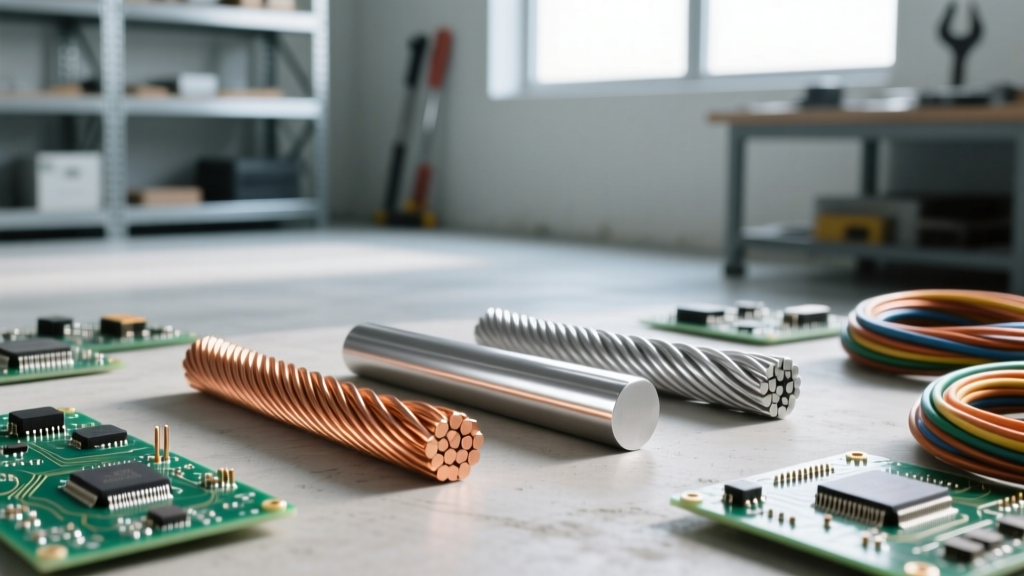
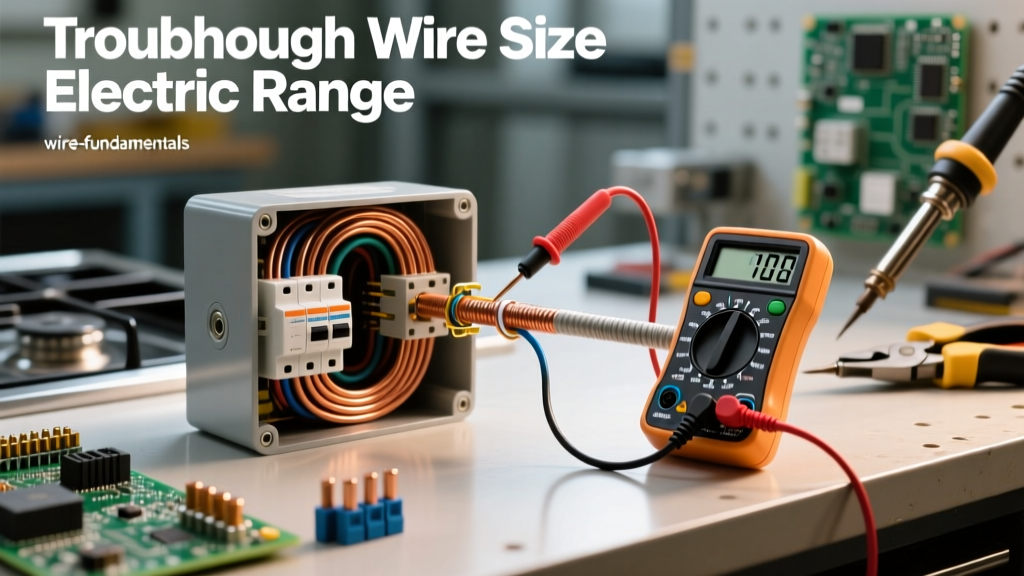
- Measure the Wire: Do not rely on visual estimation. Use a wire stripping gauge or digital calipers to measure the bare copper diameter. 6 AWG copper is approximately 4.11mm (0.162 inches) in diameter, while 8 AWG is 3.26mm (0.128 inches). Aluminum wire will be noticeably larger for the same ampacity and will have a dull, silver-gray core.
- Load Test: If the wiring passes visual and mechanical inspection, use a clamp-on ammeter on the hot conductors while the range is operating at maximum heat. If the draw exceeds the wire's ampacity but is within the appliance's spec, a circuit upgrade is mandatory.
Troubleshooting the wire size for electric range setups is not just about matching numbers on a chart; it requires a holistic evaluation of distance, termination integrity, and grounding evolution. When in doubt, or if your panel lacks the physical space for larger gauge conductors, consult a licensed electrician to ensure your kitchen remains the heart of the home, rather than a fire hazard. For further reading on residential wiring safety, Electrical 101 offers excellent visual guides on conductor sizing and ampacity derating.