
Beyond the Basics: Selecting the Right Conductive Material
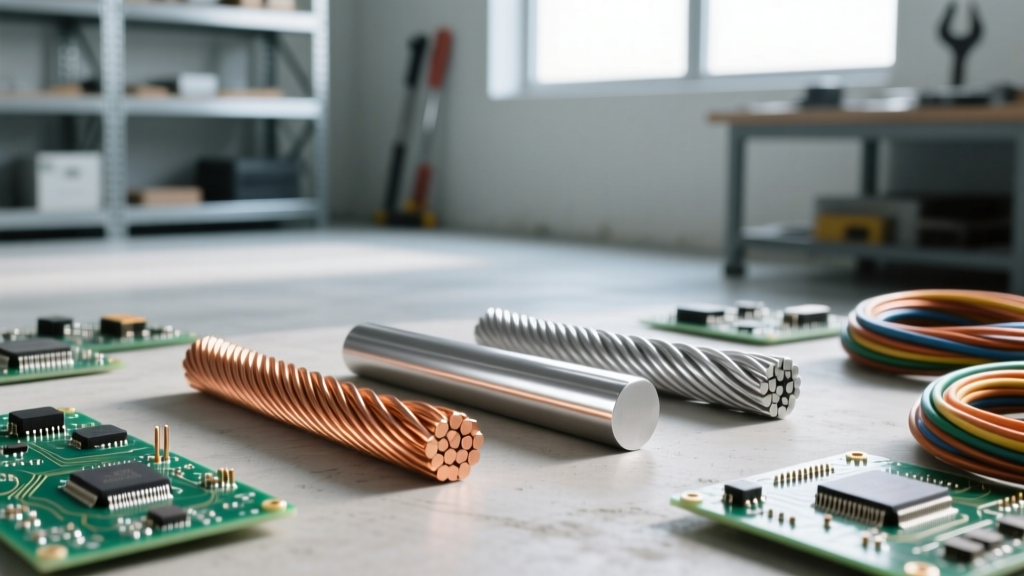
When designing a circuit, wiring a subpanel, or repairing a microcontroller, the choice of conductive material dictates the efficiency, safety, and longevity of your project. While most DIYers default to standard copper wire, the modern electrical landscape utilizes a wide array of metals and alloys. Understanding the specific metallurgical properties of these materials is crucial for preventing voltage drop, mitigating fire hazards, and ensuring signal integrity.
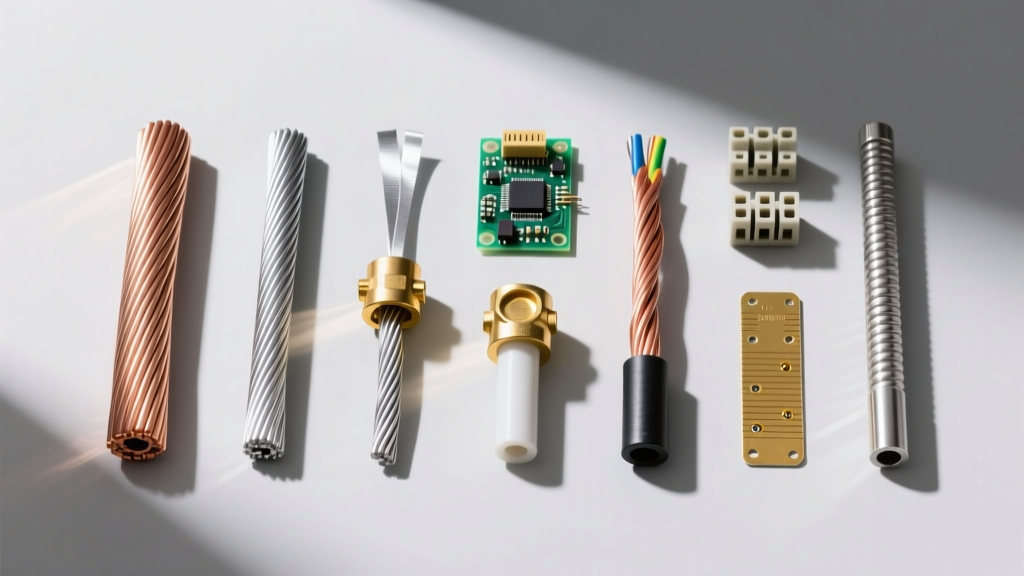
In this guide, we break down 8 practical ex of conductors (examples of conductors) used across residential, industrial, and electronics applications. We will explore their real-world use cases, specific failure modes, and the engineering principles that make them indispensable.
The Heavy Hitters: Bulk Power Transmission
1. Electrolytic Tough Pitch (ETP) Copper
ETP copper (UNS C11000) is the undisputed standard for electrical wiring. Purity levels typically exceed 99.9%, providing an International Annealed Copper Standard (IACS) conductivity rating of 100%. In real-world residential wiring, you will find ETP copper in THHN and NM-B (Romex) cables. Its high tensile strength and excellent ductility allow it to be pulled through tight conduit bends without snapping. However, bare copper is susceptible to oxidation in high-humidity environments, which can increase contact resistance over time at termination points.
2. Tinned Copper (The Marine Savior)
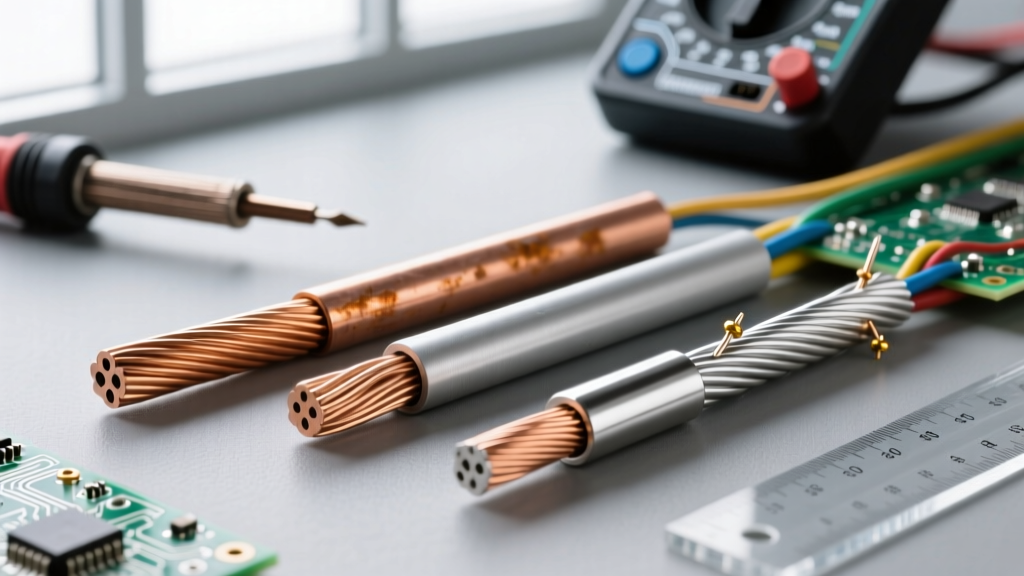
When bare copper is exposed to saltwater or high-sulfur environments, it rapidly develops cupric oxide, a poor conductor that causes severe voltage drop and heat buildup. Tinned copper solves this by coating the copper strands in a microscopic layer of tin. Meeting specifications like MIL-W-16878, tinned wire is mandatory in marine DC electrical systems and solar panel array wiring. The tin sacrificially oxidizes, protecting the highly conductive copper core beneath it.
3. AA-8000 Series Aluminum Alloy
Historically, pure aluminum caused residential fires due to 'creep' (thermal expansion and contraction that loosens terminations) and high oxidation rates. Modern utility and feeder wiring uses AA-8000 series aluminum alloys, which incorporate iron and other trace elements to eliminate creep. When installing a 200A residential service, using 4/0 AWG XHHW-2 aluminum is significantly lighter and cheaper than 2/0 AWG copper. However, the National Electrical Code (NEC) strictly requires the use of anti-oxidant paste (like Noalox) and calibrated torque screwdrivers to ensure proper lug compression, as aluminum is highly sensitive to over-torquing.
Precious Metals: Signal Integrity & Micro-Scale
4. Silver (The High-Frequency Champion)
According to data from the National Institute of Standards and Technology (NIST), silver possesses the lowest electrical resistivity of all metals (1.59 nΩ·m at 20°C). While too expensive for bulk wiring, silver is heavily utilized in RF (Radio Frequency) applications, high-end audio interconnects, and aerospace wiring. Because high-frequency AC signals travel primarily on the outer surface of a wire (the skin effect), silver-plated copper wire provides the conductivity benefits of silver without the massive cost of a solid silver core.
5. Gold (The Micro-Scale Protector)
Gold is actually a poorer conductor than both copper and silver. Its inclusion in electronics is strictly for its noble properties—it does not oxidize or corrode. In the real world, you will find gold as a microscopic flash plating on PCB edge connectors, microcontroller I2C/SPI pins, and high-reliability relay contacts. A 30-microinch gold plating over a nickel barrier ensures that low-voltage digital signals (like a 3.3V logic high from an ESP32) are not interrupted by surface corrosion.
Specialty Alloys: Heat & Extreme Environments
6. Nichrome (The Heat Generator)
While we usually want conductors to minimize resistance, Nichrome (typically 80% Nickel, 20% Chromium) leverages high resistance to generate heat. It forms a protective layer of chromium oxide when heated, preventing the wire from burning out in the presence of oxygen. Real-world applications include 3D printer hotends (like the E3D V6 heater block), industrial band heaters, and DIY foam cutters. It boasts a resistivity roughly 65 times higher than copper.
7. Tungsten (The Extreme Environment Survivor)
With the highest melting point of any pure metal at 3,422°C (6,192°F), tungsten is used where other conductors would instantly vaporize. Beyond its historical use in incandescent light bulb filaments, modern DIYers and engineers encounter tungsten in TIG welding electrodes (specifically 2% ceriated or lanthanated tungsten) and high-vacuum electrical feedthroughs where outgassing must be strictly minimized.
8. Copper-Clad Steel (CCS)
Copper-clad steel combines the high tensile strength of a steel core with the conductivity of a copper exterior. Available in 21% and 30% IACS conductivity grades, CCS is the standard for coaxial cable center conductors in CATV and telecommunications. It is also frequently used for ground rods and overhead ground wires on transmission towers, where the steel core provides the mechanical strength to withstand driving into rocky soil or spanning long distances, while the copper cladding ensures adequate fault-current dissipation.
Comparative Data: Real-World Conductor Selection
| Material | Resistivity (nΩ·m @ 20°C) | Relative Cost | Primary Real-World Application |
|---|---|---|---|
| Silver | 15.9 | $$$$$ | RF plating, aerospace, high-end audio |
| ETP Copper | 17.2 | $$$ | Branch circuits, PCB traces, busbars |
| Gold | 24.4 | $$$$$ | Microcontroller pins, edge connectors |
| Aluminum (AA-8000) | 28.2 | $ | Service entrance feeders, utility lines |
| Tungsten | 52.8 | $$$ | TIG electrodes, vacuum feedthroughs |
| Nichrome (80/20) | 1,120.0 | $$ | 3D printer heaters, industrial ovens |
Critical Failure Modes in Conductor Selection
Choosing the wrong conductor for a specific environment is a leading cause of electrical fires and equipment failure. Here are the most common real-world failure modes to avoid:
Galvanic Corrosion
When two dissimilar metals (like copper and aluminum) are in direct physical contact in the presence of an electrolyte (moisture), a galvanic cell is created. The more anodic metal (aluminum) will rapidly corrode away. The Association for Materials Protection and Performance (AMPP) heavily documents this phenomenon. In electrical panels, this is mitigated by using CO/ALR rated receptacles or applying specialized joint compounds that physically block moisture ingress.
Aluminum Creep and Thermal Cycling
If an aluminum wire is terminated using a lug designed exclusively for copper, the differing thermal expansion rates will cause the connection to loosen over hundreds of heating and cooling cycles. This loose connection increases resistance, generating localized heat that can melt the insulation. Always verify that lugs are rated 'AL9CU' or 'AL7CU' before terminating mixed-metal connections.
Pro-Tip for DIYers: When terminating aluminum feeder wires, never rely on 'feel' to tighten the lug. You must use a calibrated torque screwdriver set to the exact inch-pound specification printed on the breaker or lug label. Over-torquing aluminum causes it to cold-flow and deform, leading to the exact same loose-connection fire hazard as under-torquing.
Conclusion: Matching Material to Mission
Whether you are pulling 500 kcmil aluminum feeders for a new workshop, soldering gold-plated header pins to a custom PCB, or winding a Nichrome heating coil, understanding the fundamental properties of your conductive material is non-negotiable. By evaluating resistivity, environmental resistance, and mechanical strength, you can ensure your electrical projects remain safe, efficient, and reliable for decades.