
The Hidden Lethality of DC Electrical Systems
For decades, the standard electrical curriculum has heavily favored Alternating Current (AC). From residential wiring to industrial motor controls, AC is the default language of the electrical trade. However, the rapid global expansion of solar photovoltaic (PV) arrays, electric vehicle (EV) powertrains, and large-scale Battery Energy Storage Systems (BESS) has fundamentally shifted the landscape. Today, encountering a direct current is a daily reality for modern electricians, technicians, and DIY enthusiasts.
Direct Current (DC) behaves differently than AC in both physiological impact and physical arc dynamics. Treating a high-voltage DC circuit with the same safety protocols used for standard 120V/240V AC systems is a recipe for catastrophic failure, severe burns, or fatal electrocution. This comprehensive safety guide explores the unique hazards of DC electricity, proper component selection, and rigorous Lockout/Tagout (LOTO) procedures required to survive and thrive in the DC domain.
Physiological Impact: AC vs. DC Shock Thresholds
The human body reacts to electrical current in vastly different ways depending on whether the waveform alternates or flows in a single direction. According to OSHA Electrical Safety Guidelines, the frequency of AC (typically 50Hz or 60Hz) makes it particularly dangerous for inducing ventricular fibrillation at relatively low currents. However, DC presents its own severe, often misunderstood, physiological threats.
The 'Let-Go' Threshold and Muscle Tetanus
When a person grasps an energized AC conductor, the alternating waveform causes continuous muscle tetanus, effectively 'freezing' the victim to the circuit. The AC let-go threshold is remarkably low—often between 6 mA and 10 mA for an adult male.
Conversely, when a person contacts a direct current, the continuous unidirectional flow typically causes a single, massive, and violent muscle contraction. While the DC let-go threshold is higher (typically 30 mA to 40 mA), the resulting contraction is often forceful enough to throw the victim backward. This secondary trauma—falling from ladders, striking grounded metal enclosures, or dropping tools into live busbars—accounts for a significant percentage of DC-related injuries.
| Current Level (mA) | AC (60Hz) Effect | DC Effect |
|---|---|---|
| 1 - 5 mA | Slight tingling sensation | Slight warming sensation |
| 6 - 10 mA | Painful shock, loss of muscle control (Let-Go threshold) | Increased heating, mild muscle stiffness |
| 30 - 50 mA | Severe pain, respiratory paralysis, potential fibrillation | Violent muscle contraction, victim often thrown clear |
| 100+ mA | Ventricular fibrillation, cardiac arrest, severe burns | Severe internal burns, tissue necrosis, cardiac arrest |
The Physics of DC Arc Flashes
Perhaps the most critical difference between AC and DC lies in arc flash dynamics. In an AC system operating at 60Hz, the voltage and current waveforms cross the zero-point 120 times per second. This natural zero-crossing inherently helps to extinguish electrical arcs, provided the gap is wide enough and the voltage is insufficient to re-strike.
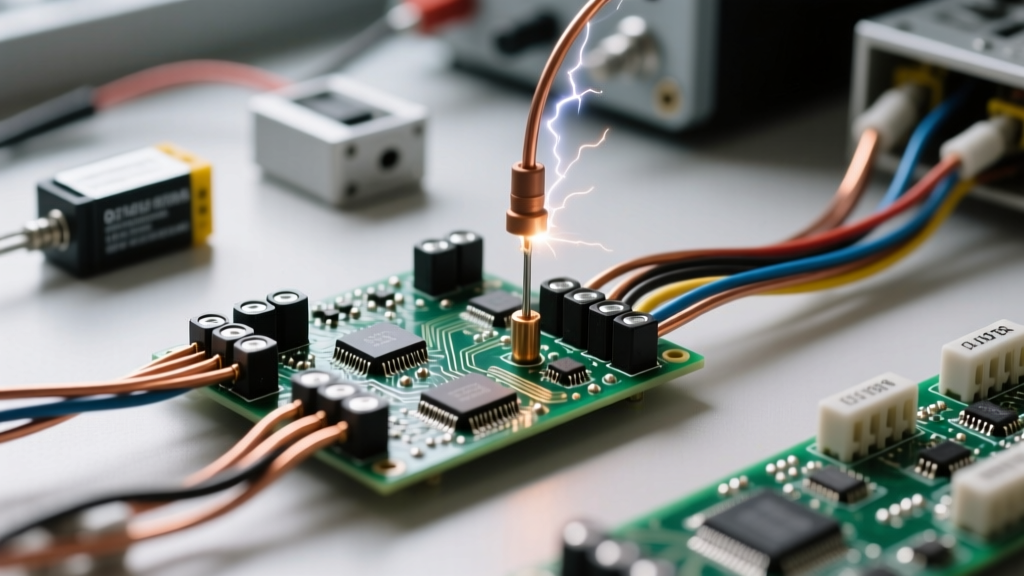
A direct current never crosses zero. Once a DC arc is established—whether by pulling a connector under load, dropping a wrench across busbars, or a component failing—it will sustain indefinitely until the physical gap is widened to a point where the voltage can no longer bridge it, or the circuit is interrupted by a specialized device. DC arcs burn significantly hotter and longer than equivalent AC arcs, often reaching temperatures exceeding 35,000°F (19,400°C).
Critical Warning: Never break a DC circuit under load using standard hand tools or non-rated disconnects. In high-voltage solar arrays (often 600V to 1000V DC), opening a standard switch under load will instantly draw a sustained plasma arc that will melt the switch housing, ignite surrounding materials, and cause severe third-degree burns to the operator's hands and face.
Research by the National Renewable Energy Laboratory (NREL) highlights that DC arc flashes in PV systems are particularly insidious because the fault current is limited by the solar irradiance and the panel's short-circuit current (Isc) rating. Unlike an AC utility grid that can deliver tens of thousands of amps of instantaneous fault current, a solar array might only deliver 10 to 20 amps during a DC arc fault. This low fault current is often insufficient to trip standard overcurrent protection devices quickly, allowing the arc to burn for minutes or even hours, leading to devastating structural fires.
Component Selection: The Danger of AC-Rated Hardware
One of the most frequent and fatal mistakes made by DIYers and inexperienced technicians is substituting AC-rated components in DC circuits. The internal architecture of AC and DC switches, contactors, and circuit breakers are fundamentally different.
Why AC Breakers Fail on DC Circuits
Standard thermal-magnetic AC circuit breakers rely heavily on the AC zero-crossing to extinguish the internal arc that forms when the contacts separate during a fault. They utilize relatively simple arc chutes. If you attempt to interrupt a 500V DC fault with an AC-rated breaker, the absence of a zero-crossing means the internal arc will not extinguish. The sustained plasma will rapidly melt the breaker's internal mechanisms, weld the contacts permanently closed, and vent superheated gases and molten metal out of the breaker panel.
Always use DC-Rated Breakers: Components like the Schneider Electric C60H-DC or Eaton B-Series DC breakers are specifically engineered with heavy-duty magnetic blowouts and extended arc chutes. These features create a magnetic field that physically 'blows' the DC arc into the arc chute, stretching and cooling the plasma until it is forced to extinguish.
Relays and Contactors
Similarly, AC-rated contactors will suffer from severe contact pitting and eventual welding when used to switch DC loads. For high-current DC applications, such as EV battery banks or winch controls, you must use contactors rated specifically for DC voltage (e.g., Albright or Gigavac contactors) which utilize specialized contact alloys and magnetic arc deflection.
Wire Sizing and Voltage Drop Considerations
While the skin effect in AC wiring forces current to travel along the outer edge of the conductor (necessitating specific stranding and derating at high frequencies), a direct current flows uniformly across the entire cross-sectional area of the wire. However, DC wire sizing is often governed by much stricter voltage drop limitations.
- AC Voltage Drop Limits: The National Electrical Code (NEC) generally recommends a maximum 3% to 5% voltage drop for AC branch circuits and feeders.
- DC Voltage Drop Limits: In low-voltage DC systems (12V, 24V, 48V), even a 1V drop represents a massive percentage of the total system voltage. In solar PV and battery banks, a 1% to 2% maximum voltage drop is the industry standard to ensure inverter efficiency and proper battery charging profiles.
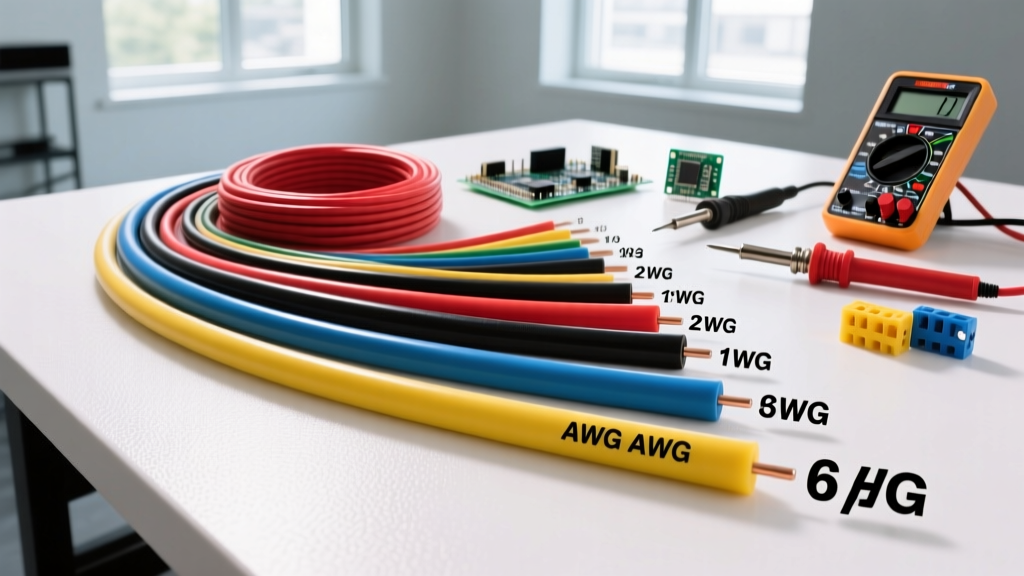
Consequently, DC wiring often requires conductors that are 2 to 4 AWG sizes larger than their AC counterparts for the same amperage and distance. Always utilize pure copper, fine-stranded welding cable or PV wire (like USE-2 or PV wire rated for sunlight resistance and 600V/1000V) for DC battery and solar interconnects.
Step-by-Step Lockout/Tagout (LOTO) for High-Voltage DC
De-energizing a DC system, particularly a solar PV array, is uniquely challenging. Unlike an AC utility grid where throwing the main breaker kills the power, solar panels are inherently 'live' whenever photons strike the silicon. You cannot simply 'turn off' the sun. Adhering to NFPA 70E Standard for Electrical Safety in the Workplace is non-negotiable.
- Preparation and Notification: Identify all DC and AC sources. Notify all affected personnel that a system shutdown is commencing.
- Shut Down the Inverter: Follow the manufacturer's exact sequence to gracefully shut down the inverter. This typically involves turning off the AC disconnect first, followed by the DC disconnect, allowing the inverter's internal capacitors to bleed off safely.
- Open DC Disconnects: Open all DC combiner box disconnects and main DC switches. Never pull DC fuses under load. If the circuit is still carrying current, pulling a fuse will draw a massive, sustained DC arc directly in your hand.
- Verify Zero Energy: Wait the manufacturer-specified time (usually 5 to 15 minutes) for internal capacitors to discharge. Use a CAT III or CAT IV multimeter rated for at least 1000V DC to test for voltage. Test the meter on a known live source first, test the target circuit, then test the known source again (Live-Dead-Live test).
- Apply Locks and Tags: Secure all disconnects with physical padlocks and personalized tags.
- Cover PV Arrays (If Necessary): If working directly on the panels or combiner boxes on the roof, the only way to achieve true zero-energy on the source side is to cover the panels with opaque, heavy-duty irradiance blankets specifically designed for solar maintenance.
Personal Protective Equipment (PPE) Requirements
Because DC arcs sustain longer, the incident energy (measured in cal/cm²) can accumulate to staggering levels. NREL PV Safety Best Practices dictate that an arc flash hazard analysis must be performed on any DC system exceeding 240V or operating at high amperages. Based on the calculated incident energy, technicians must don appropriately rated arc flash suits, voltage-rated gloves with leather protectors, and arc-rated face shields. Never assume that because a solar array's fault current is relatively low that the arc flash hazard is negligible; the sustained duration of a DC arc easily compensates for lower amperage, resulting in lethal thermal exposure.
Conclusion: Respecting the Unidirectional Flow
Working with DC electrical systems demands a paradigm shift from traditional AC methodologies. The lack of a zero-crossing, the violent nature of DC muscle contractions, and the unforgiving physics of sustained plasma arcs require rigorous training, specialized DC-rated components, and unyielding adherence to safety protocols. By understanding the unique characteristics of a direct current and respecting its hidden lethality, electrical professionals can safely harness the power of modern renewable and battery technologies without compromising their lives or livelihoods.