
The Hidden Dangers of Improper Conductor Selection
Every electrical system relies on the conductor in electric circuits to safely deliver power from the source to the load. However, treating wire selection as a simple matter of matching gauge to breaker size is a leading cause of residential and commercial electrical fires. When an undersized or improperly terminated conductor in electric wiring is subjected to continuous loads, it operates outside its safe thermal envelope. This results in thermal runaway, where the resistance of the metal increases with heat, generating even more heat in a destructive feedback loop.
Beyond simple overheating, improper selection leads to insulation degradation, severe voltage drop, and catastrophic arc faults. According to the National Fire Protection Association (NFPA), electrical distribution and lighting equipment is consistently among the top causes of structural fires. To prevent these hazards, installers and DIYers must understand the material science, environmental derating factors, and mechanical limits of the conductors they use.
Material Science: Copper vs. Aluminum Conductors
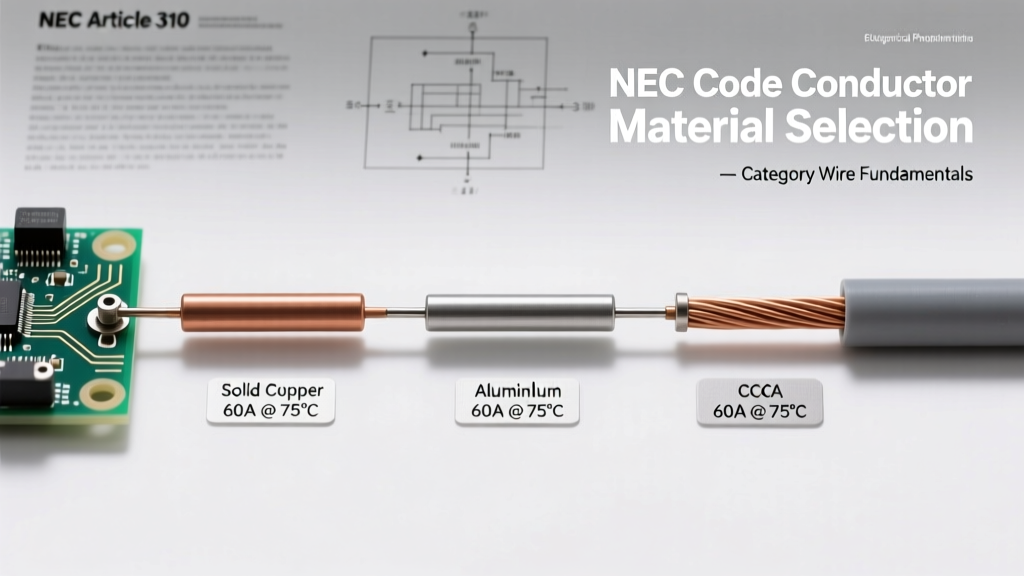
The debate between copper and aluminum is central to electrical safety. While copper remains the gold standard for branch circuits due to its high conductivity and tensile strength, aluminum is frequently used for service entrances and heavy feeders because of its weight and cost advantages. However, utilizing aluminum as a conductor in electric systems requires strict adherence to specific safety protocols.
The Cold Flow and Creep Hazard
Aluminum is softer than copper and exhibits a property known as cold flow or creep. Under continuous mechanical pressure from a terminal screw, aluminum will slowly deform and flow away from the point of contact. Over months or years, this reduces the contact area, increasing electrical resistance at the termination point. The resulting heat can melt the insulation or ignite surrounding combustibles. To mitigate this, the NEC mandates the use of AA-8000 series aluminum alloys, which are engineered to resist creep, and requires the use of CO/ALR or AL/CU rated lugs.
Galvanic Corrosion and Torque Specifications
When dissimilar metals meet in the presence of an electrolyte, even ambient humidity, galvanic corrosion occurs. Connecting a copper conductor directly to an aluminum lug without an approved anti-oxidant compound creates a high-resistance oxide layer. Furthermore, NEC Article 110.14(D) strictly requires the use of calibrated torque screwdrivers or wrenches for terminations. Guessing the tightness of a lug is a severe safety violation; under-torquing causes arcing, while over-torquing exacerbates cold flow in aluminum.
Ampacity Derating: The Conduit Crowding Hazard
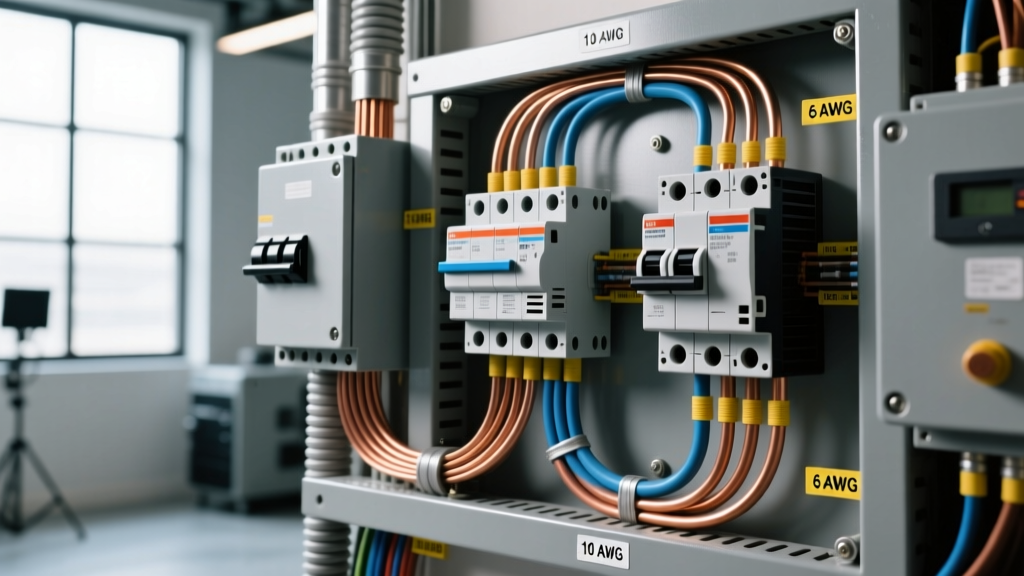
A common and dangerous misconception is that a wire's ampacity is a fixed number. In reality, the safe current-carrying capacity of a conductor in electric raceways is heavily dependent on its environment. When multiple current-carrying conductors are pulled into a single conduit, they generate mutual heating. The heat from adjacent wires prevents each individual wire from dissipating its own thermal load, leading to premature insulation failure.
The NEC Table 310.15(C)(1) provides strict adjustment factors that must be applied when bundling wires. Failing to derate your conductors is a guaranteed path to a hidden fire hazard inside your walls.
| Number of Current-Carrying Conductors in Raceway | Adjustment Factor (Percent of Base Ampacity) |
|---|---|
| 1-3 | 100% |
| 4-6 | 80% |
| 7-9 | 70% |
| 10-20 | 50% |
| 21-30 | 40% |
Real-World Example: If you pull four 12 AWG THHN copper conductors (base ampacity 30A at 90°C) through a single conduit, you must multiply 30A by 80%. The new allowable ampacity is 24A. Since standard breakers are sized at 20A for 12 AWG branch circuits, this specific scenario remains safe. However, if you pull eight conductors, the derating factor drops to 70% (21A), meaning a 20A breaker is now pushing the absolute thermal limit of the wire, requiring an upsized conductor.
Insulation Breakdown and Thermal Ratings
The bare metal is only half the equation; the insulation is what keeps the conductor in electric circuits from shorting to ground. Insulation materials have strict thermal and dielectric limits. Using a wire rated for dry locations in a wet environment, or exceeding its temperature rating, causes the polymer jacket to become brittle, crack, and expose live voltage.
- THHN/THWN-2: The most common building wire. Rated for 90°C in dry locations and 75°C in wet locations. The outer nylon jacket provides excellent abrasion resistance during conduit pulls but can degrade under continuous UV exposure.
- XHHW-2: Features cross-linked polyethylene (XLPE) insulation. It lacks the nylon jacket, making it slightly bulkier, but offers vastly superior moisture resistance and dielectric strength. It is rated 90°C in both wet and dry locations and is highly recommended for outdoor feeders and underground conduit.
Always reference the Copper Development Association guidelines for specific insulation compatibility, especially when routing wires near high-heat sources like HVAC flues or recessed lighting fixtures.
Mechanical Stress and Bending Radius Violations
Safety is not just about electrical properties; it is about physical installation. When a conductor in electric panels or junction boxes is bent too sharply, the mechanical stress can damage the internal crystalline structure of the metal or compromise the insulation jacket. NEC Article 300.34 dictates minimum bending radii for conductors based on their overall diameter. For example, a 4/0 AWG cable cannot be bent as tightly as a 14 AWG wire. Forcing a stiff conductor into a shallow box creates immense pressure on the wire nuts or terminal lugs, which can lead to mechanical failure and subsequent arcing over time.
Pre-Energization Safety Checklist
Before closing the breaker panel and energizing the circuit, run through this critical safety verification framework:
- Verify Conductor Material and Alloy: Ensure aluminum wires are marked AA-8000 series and that all lugs are rated for the specific metal.
- Check Ambient Temperature Derating: If the wire runs through an attic that reaches 130°F in the summer, apply the NEC Table 310.15(B)(1) temperature correction factors. A 90°C wire in a 130°F attic must be derated to 82% of its base ampacity.
- Apply Bundling Derating: Count the current-carrying conductors in the conduit and apply the appropriate adjustment factor. Remember that grounded neutral conductors carrying unbalanced current count toward this total.
- Torque All Terminations: Use a calibrated torque screwdriver set to the exact inch-pound value stamped on the breaker or lug. Do not rely on hand-tight estimates.
- Inspect Insulation Integrity: Look for micro-tears or scraped nylon jackets caused by pulling wires through conduit with damaged edges. Wrap any minor abrasions with high-quality electrical tape or, preferably, replace the pull.
Pro Tip: Never use standard vinyl electrical tape as a permanent fix for damaged wire insulation inside a panel. If the dielectric strength of the primary conductor insulation is compromised, the wire must be replaced or repaired using heat-shrink tubing with an adhesive lining that matches the original voltage rating.
For comprehensive standards on wire manufacturing and safety testing, consult the technical documentation provided by the National Electrical Manufacturers Association (NEMA). Understanding the physics and code requirements behind the conductor in electric systems is the ultimate defense against catastrophic electrical failures.