
The Legacy of the Old Soldering Iron Copper Tip
If you have spent any time in older electronics repair shops, inherited a vintage toolkit, or browsed estate sales, you have likely encountered the classic heavy, transformer-based soldering iron. Many of these vintage tools, as well as cheap modern hardware-store irons, feature a pure, bare copper tip. In the early days of electronics manufacturing, an old soldering iron copper tip was the gold standard due to copper's exceptional thermal conductivity (approximately 398 W/m·K). It transferred heat from the nichrome heating element directly into the solder joint with minimal thermal resistance.
However, as we navigate the electronics landscape of 2026, bare copper tips present significant challenges. Modern soldering environments, particularly those transitioning to or currently using lead-free alloys, are highly hostile to exposed copper. This comprehensive guide explores the metallurgy behind copper tip degradation, provides a masterclass in restoring pitted vintage tips, and offers a definitive buying guide for when it is time to retire your old iron in favor of modern temperature-controlled stations.
The Metallurgy of Dissolution: Why Bare Copper Fails
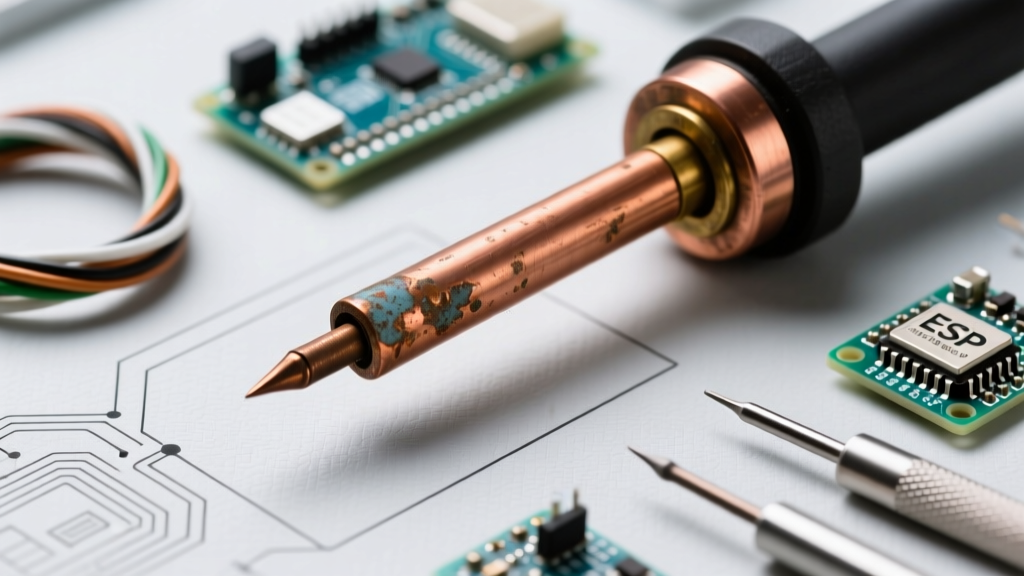
To understand why your vintage copper tip is cratering and pitting, you must understand leaching or dissolution. When molten tin comes into contact with bare copper, the tin aggressively dissolves the copper into the solder pool.
- Leaded Solder (Sn63Pb37): At a standard operating temperature of 350°C (662°F), bare copper dissolves at a rate of roughly 1 to 2 microns per second. While manageable for occasional hobbyist use, daily use will pit the tip within weeks.
- Lead-Free Solder (SAC305): The higher tin content and required higher operating temperatures (up to 400°C) accelerate copper dissolution exponentially. According to high-reliability soldering research documented by the NASA Electronic Parts and Packaging (NEPP) program, lead-free alloys can erode bare copper tip faces in a matter of minutes, rendering them useless for precision PCB work.
Expert Insight: Modern professional tips are not bare copper. They feature a solid copper core for heat transfer, electroplated with a protective layer of iron (typically 50 to 100 microns thick) to resist tin dissolution, followed by a chromium layer to prevent solder from creeping up the shaft. If you are using a truly bare copper tip in 2026, you are fighting a losing battle against chemistry.
Step-by-Step Restoration: Saving Your Vintage Copper Tip
If you are determined to keep your vintage Weller SP40, Ungar, or generic bare-copper iron operational for heavy-duty through-hole work or plumbing, you must physically reshape and re-tin the tip. Note: Never use this filing method on modern iron-plated tips, as you will destroy the protective plating.
Tools Required
- Nicholson 6-inch fine bastard mill file
- 400-grit and 800-grit wet/dry sandpaper
- Kester 186 RMA (Rosin Mildly Activated) liquid flux
- High-quality 63/37 rosin-core solder wire (0.031" diameter)
- Brass wire sponge (never use steel wool, which embeds iron particles)
The Restoration Process
- Cold Assessment and Filing: Ensure the iron is completely cold and unplugged. Inspect the tip for black oxidation and pitting (craters). Use the fine bastard file to gently file the working faces of the tip until you reach bright, clean copper. Maintain the original geometric angle of the tip.
- Sanding and Polishing: Wrap 400-grit sandpaper around a flat block and sand the filed faces to remove deep file grooves. Finish with 800-grit for a smooth surface. A smoother surface reduces the surface area exposed to molten solder, slightly slowing future dissolution.
- Pre-Fluxing (Crucial Step): Before applying heat, paint the freshly exposed copper faces with Kester 186 liquid flux. This prevents immediate flash-oxidation the second the iron heats up.
- Controlled Heating: Plug in the iron. As it reaches melting temperature (around 183°C for 63/37 solder), do not let it sit idle.
- Aggressive Tinning: The moment the flux begins to bubble and activate, aggressively feed your 63/37 rosin-core solder onto the tip. You want to completely encapsulate the working faces in a thick layer of solder before the iron reaches its maximum operating temperature.
- Wipe and Maintain: Wipe the tip gently on a damp cellulose sponge or brass wool. Re-apply a thick coat of fresh solder before turning the iron off. This sacrificial layer of solder will oxidize instead of the copper during the next heat cycle.
Product Comparison: Vintage Copper vs. Modern Tech
Is it worth maintaining an old soldering iron copper tip, or should you upgrade? The following matrix compares the vintage experience against modern benchmarks.
| Feature | Vintage Bare Copper (e.g., Weller SP40) | Modern Iron-Plated (e.g., Hakko FX-888D) | Smart Ceramic (e.g., Pinecil V2) |
|---|---|---|---|
| Core Material | Pure Copper | Copper core, Iron-plated | Ceramic heater, Iron-plated |
| Thermal Recovery | Poor (Relies on massive thermal mass) | Good (Analog PID control) | Exceptional (RISC-V PID, 2°C/sec) |
| Tip Lifespan | Weeks/Months (Requires filing) | Years (If properly maintained) | Years (Highly efficient) |
| Lead-Free Ready | No (Rapid destruction) | Yes | Yes (Up to 450°C capable) |
| 2026 Street Price | $15 - $30 (Hardware store) | $110 - $125 | $26 - $35 |
2026 Buying Guide: When to Retire the Old Copper Iron
While there is a certain romance to maintaining vintage tools, the IPC J-STD-001 standards for soldered electrical and electronic assemblies demand precise temperature control and reliable wetting that old, pitted copper tips simply cannot provide. If you are soldering modern SMD components, working with multi-layer PCBs, or using lead-free solder, it is time to upgrade.
Best Budget Upgrade: Pinecil V2 ($26 - $35)
If you are currently using a $20 bare copper wall-wart iron, the Pinecil V2 is a revelation. Powered by a RISC-V chip and capable of running off USB-C PD (up to 65W) or DC barrel jacks (up to 90W), it heats up in under 10 seconds. The iron-plated tips cost less than $3 each and will outlast a bare copper tip by a factor of fifty. It is the undisputed king of budget soldering in 2026.
Best Professional Bench Station: Hakko FX-888D ($110 - $125)
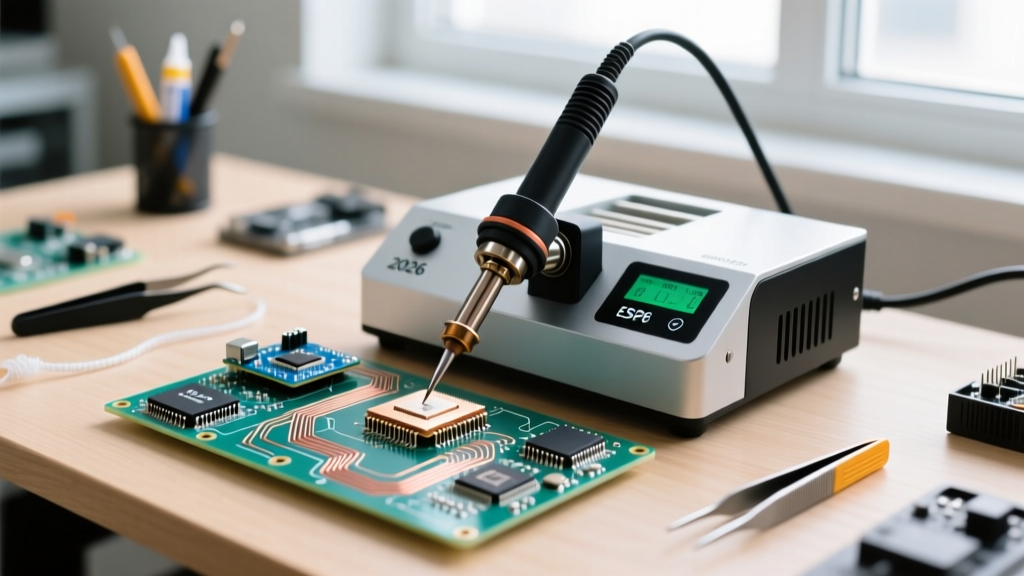
For continuous bench work, the Hakko FX-888D remains an industry staple. Its 70W ceramic heater and robust iron-plated T18 tips provide the thermal mass needed for large ground planes without the constant filing required by old copper tips. Hakko's official tip maintenance guidelines emphasize that simply leaving a blob of solder on the tip before powering down will extend the life of their iron-plated tips for years, a stark contrast to the high-maintenance nature of bare copper.
Best High-End Precision: JBC CD-2BQE ($450+)
If you are doing micro-soldering, 0201 components, or heavy multi-layer RF board repair, JBC's cartridge-style tips integrate the heater and tip into a single unit. The thermal response is instantaneous, eliminating the thermal lag inherent in older copper-core designs.
Frequently Asked Questions
Can I use lead-free solder on my old bare copper tip?
Technically yes, but practically no. The high tin content (96.5%) and higher melting point (217°C+) of SAC305 lead-free solder will dissolve a bare copper tip at an alarming rate, often creating deep craters in a single soldering session. Stick to 63/37 leaded solder if you must use bare copper.
Why does my copper tip turn black and refuse to melt solder?
This is flash oxidation. When bare copper is heated in the presence of oxygen without a protective layer of flux or solder, it forms copper oxide (CuO), which solder will not wet. You must cool the iron, mechanically remove the black oxide with fine sandpaper, flux immediately, and re-tin.
Are modern 'copper' tips actually bare copper?
No. When modern manufacturers advertise a 'copper core' tip, they are referring to the internal heat-transfer mechanism. The exterior working surface is always electroplated with iron to prevent the exact dissolution issues that plague vintage bare copper tips.