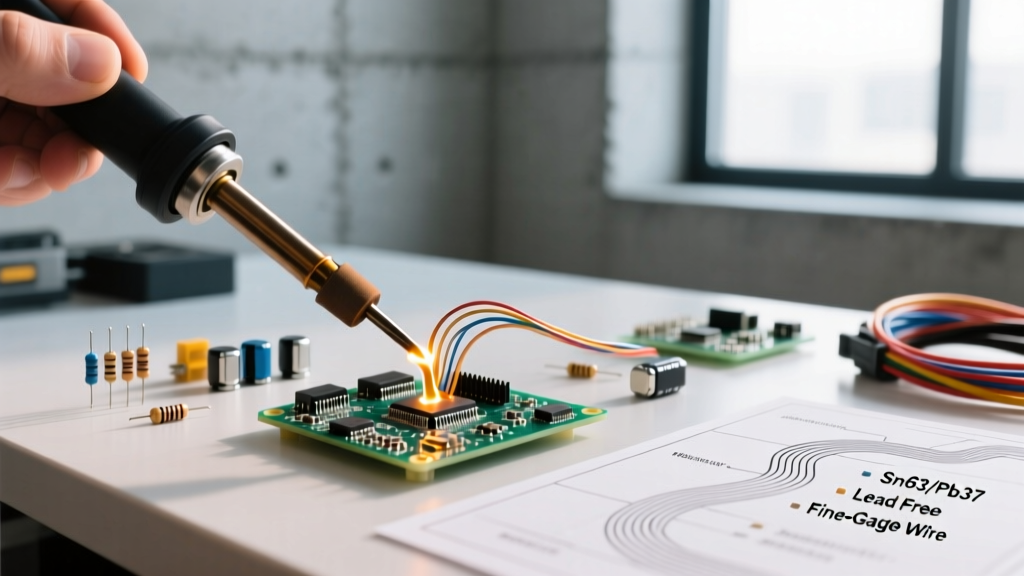

The Divide: Hobbyist vs. Soldering Gear Profession Standards
Transitioning from weekend DIY projects to full-time electronics manufacturing or high-level repair requires a fundamental shift in how you view your tools. In the soldering gear profession, downtime, cold joints, and thermal damage to sensitive multi-layer PCBs are not just annoyances; they are critical failures that cost thousands of dollars and compromise safety. To understand what separates entry-level setups from true professional workbenches in 2026, we convened a panel of industry veterans. This expert roundup dissects the exact equipment, metallurgical considerations, and safety protocols required to meet stringent industry standards like IPC J-STD-001 for Class 3 aerospace and medical assemblies.
Meet the Expert Panel
- Sarah Jenkins, IPC J-STD-001 Certified Specialist: Focuses on high-reliability aerospace wiring and BGA rework. She demands absolute thermal precision and compliance with NASA-STD-8739.3 workmanship requirements.
- Marcus Vance, Production Line Manager: Oversees a high-volume consumer electronics repair facility. His priorities are ergonomics, tip longevity, and total cost of ownership (TCO) over a 5-year lifecycle.
- Dr. Aris Thorne, Occupational Health & Safety Consultant: Specializes in industrial hygiene, specifically focusing on particulate and VOC extraction in micro-soldering environments, referencing OSHA Lead Standards and rosin fume mitigation.
Core Soldering Stations: Thermal Mass and Recovery
The heart of any professional bench is the soldering station. Hobbyist stations rely on thick, high-mass tips to store heat, which leads to sluggish recovery when touching large ground planes. Professional stations utilize advanced cartridge systems or induction heating to deliver heat directly to the joint.
| Station Model | Heating Technology | Max Power Output | Thermal Recovery Speed | 2026 Est. Price |
|---|---|---|---|---|
| JBC CD-2BQF | Cartridge (T245 Handle) | 130W Peak | Instant (2s to 350°C) | $580 |
| Metcal MX-5200 | SmartHeat Induction | 80W Continuous | Infinite Thermal Mass Response | $850 |
| Hakko FX-951 | Ceramic Heater (T18) | 70W Peak | Moderate (8s to 350°C) | $280 |
| Pace ADS200 | Cartridge (TD-200) | 120W Peak | Fast (3s to 350°C) | $450 |
Expert Insight: JBC vs. Metcal for Heavy Ground Planes
"When soldering 14-layer PCBs with massive copper pours, a standard ceramic heater will stall, causing the operator to dwell on the joint and risk delamination," explains Sarah Jenkins. "The JBC CD-2BQF with the T245 handle is my benchmark. The heater is integrated directly into the tip cartridge, reducing the thermal distance to near zero. However, for operators who forget to calibrate or who swap between leaded and lead-free profiles constantly, the Metcal MX-5200 is unmatched. Its Curie-point induction technology physically prevents the tip from exceeding the set temperature, making it impossible to overheat a component, which is a massive advantage in medical device manufacturing."
Marcus Vance adds a practical TCO perspective: "JBC tips are incredibly fast, but they are consumable cartridges that cost $45 to $60 each. In a high-volume shop running 8 hours a day, tip costs add up. The Hakko FX-951 uses T18 tips that cost around $8. For general through-hole and light SMD work where extreme thermal recovery isn't needed, the Hakko remains the undisputed workhorse of the industry."
Fume Extraction: Protecting Your Lungs and Your Livelihood
A defining characteristic of a professional setup is source-capture fume extraction. Soldering flux, particularly rosin-based (colophony), releases volatile organic compounds (VOCs) and fine particulate matter that are known respiratory sensitizers and occupational asthma triggers.
"A small desktop fan with a carbon filter is entirely insufficient for professional use. It merely blows the sub-micron particulates around the room. True professional extraction requires a HEPA and activated carbon multi-stage filtration system with a capture velocity of at least 100 feet per minute at the nozzle."
— Dr. Aris Thorne, Occupational Health Consultant
Recommended Extraction Units for 2026
- Metcal BVX-200 (Approx. $650): A dual-arm, brushless motor extraction unit featuring a 3-stage filter (pre-filter, HEPA, and deep-bed gas filter). It includes an automatic shut-off when the filter is saturated, ensuring compliance with workplace safety audits.
- Bofa Print Pro 3 (Approx. $1,200): The gold standard for high-volume rework stations. It features an independent filter block system and optical filter monitoring, providing data logs for corporate safety compliance.
- Hakko FA-400 (Approx. $150): Expert Verdict: Avoid for professional use. This is strictly a hobbyist smoke absorber. It lacks the static pressure required to pull heavy rosin smoke through a true HEPA matrix.
Precision Rework and Micro-Soldering
As component sizes shrink to 0201 and 01005 imperial packages, and BGA pitch decreases below 0.4mm, visual and thermal precision become mandatory.
Hot Air Rework Stations
For BGA reflow and shield removal, controlled airflow and precise temperature profiling are critical. The Quick 861DW ($260) remains a dominant force in 2026 due to its dual-channel memory, brushless pump, and highly stable PID temperature control. For top-tier aerospace rework, the JBC JTSE hot air station ($800+) offers integrated nitrogen compatibility, which prevents oxidation on exposed pads during prolonged heating cycles.
Optics and Microscopy
You cannot solder what you cannot see. Experts unanimously recommend abandoning single-lens digital microscopes in favor of optical trinocular microscopes. The AmScope SE400-Z ($450) with a 0.5x Barlow lens and a 144-LED ring light provides the 10x to 45x continuous zoom and 3D depth perception required to inspect solder fillet wetting angles and identify micro-bridges under BGA packages.
Consumables: The Hidden Variables in IPC Compliance
Even a $1,000 soldering station will produce Class 1 results if paired with degraded consumables. Professional environments strictly control their solder alloys and flux chemistry.
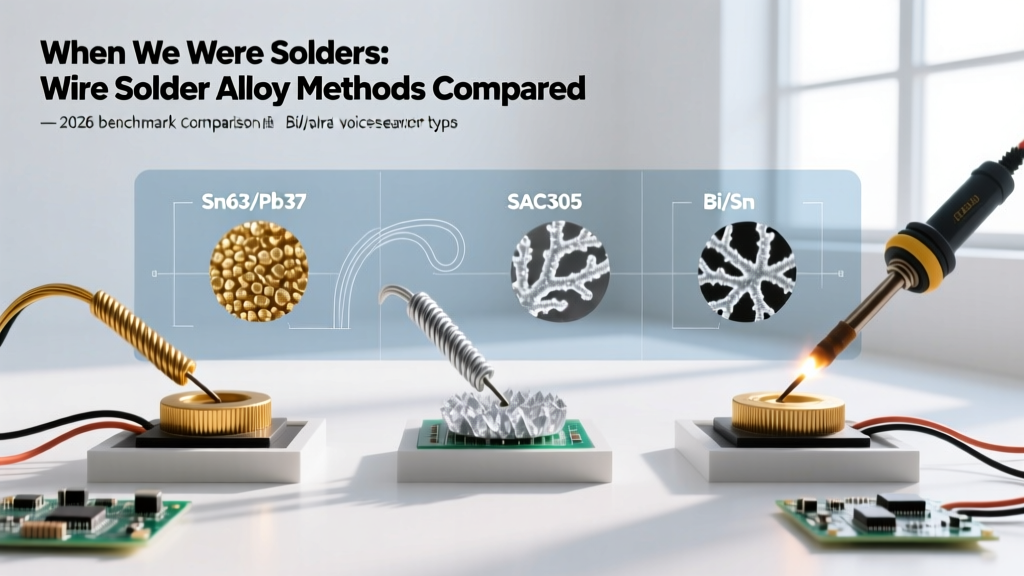
- Wire Solder: For RoHS-compliant commercial work, Kester 275 (SAC305 with a halide-free no-clean flux core) is the industry standard. For high-reliability, non-RoHS aerospace applications, Kester 245 (Sn63/Pb37 eutectic) is preferred for its sharp melting point and superior wetting characteristics.
- Tacky Flux: Amtech NC-559-V2-TF ($45 for a 10cc syringe) is heavily favored for BGA reballing and drag soldering QFP chips. Its Type 4 powder size ensures it doesn't leave conductive residues that could cause electrochemical migration (ECM) in humid environments.
- Wicking and Cleaning: Chemtronics Soder-Wick (Rosin or No-Clean) paired with 99.9% isopropyl alcohol (IPA) and lint-free Kimwipes. Never use standard hardware store rubbing alcohol, as the 30% water content will cause flux activation failures and hidden corrosion.
Phased Purchasing Guide for 2026
Building a professional lab is capital intensive. Here is how experts recommend phasing your investments:
- Phase 1: The Core ($800 - $1,000): Invest heavily in your primary iron (JBC CD-2BQF or Hakko FX-951), a high-quality optical microscope (AmScope), and a proper source-capture fume extractor (Metcal BVX-200). Do not compromise on extraction.
- Phase 2: Hand Tools & Ergonomics ($300): Upgrade to anti-magnetic, anti-acid stainless steel tweezers (Rubis or Wiha). Purchase an ergonomic silicone soldering mat and a high-CRI bench lamp to reduce eye strain during 8-hour shifts.
- Phase 3: Advanced Rework ($600+): Add a precision hot air station (Quick 861DW), pre-heaters for multi-layer PCB delamination prevention, and specialized micro-soldering tips (JBC C115 series).
Frequently Asked Questions
Is lead-free solder mandatory for professional electronics repair?
Not universally. While commercial manufacturing in the EU and North America must comply with RoHS directives (mandating lead-free alloys like SAC305), the repair and aftermarket sector often has exemptions. Furthermore, aerospace, military, and medical life-support systems frequently mandate Sn63/Pb37 (leaded) eutectic solder due to its resistance to tin whisker growth and superior mechanical shock reliability.
How often should professional soldering tips be replaced?
In a professional environment, tips are replaced based on performance degradation, not a strict timeline. If a tip exhibits pitting, black oxidation that won't wipe off with a damp brass sponge, or a loss of wetting ability, it must be replaced immediately. Using a burnt tip increases dwell time, which risks lifting PCB pads.
What is the difference between IPC Class 2 and Class 3 soldering?
IPC Class 2 is standard for general consumer electronics where extended life is expected but not critical (e.g., laptops, TVs). Class 3 is reserved for high-performance, life-critical equipment (e.g., pacemakers, flight controls) where downtime is unacceptable. Class 3 requires much stricter visual inspection criteria, specific wire wrap terminations, and rigorous operator certification.