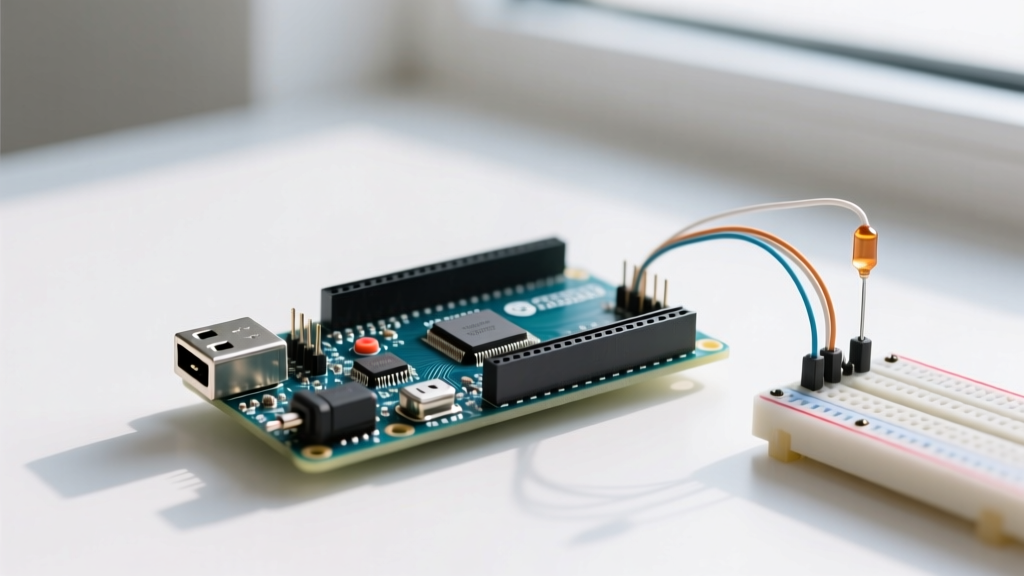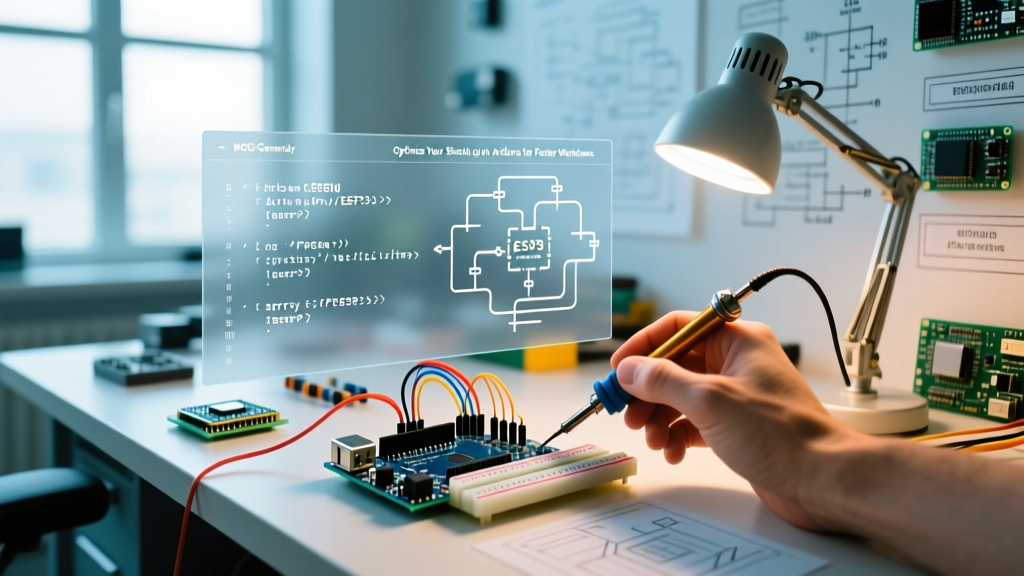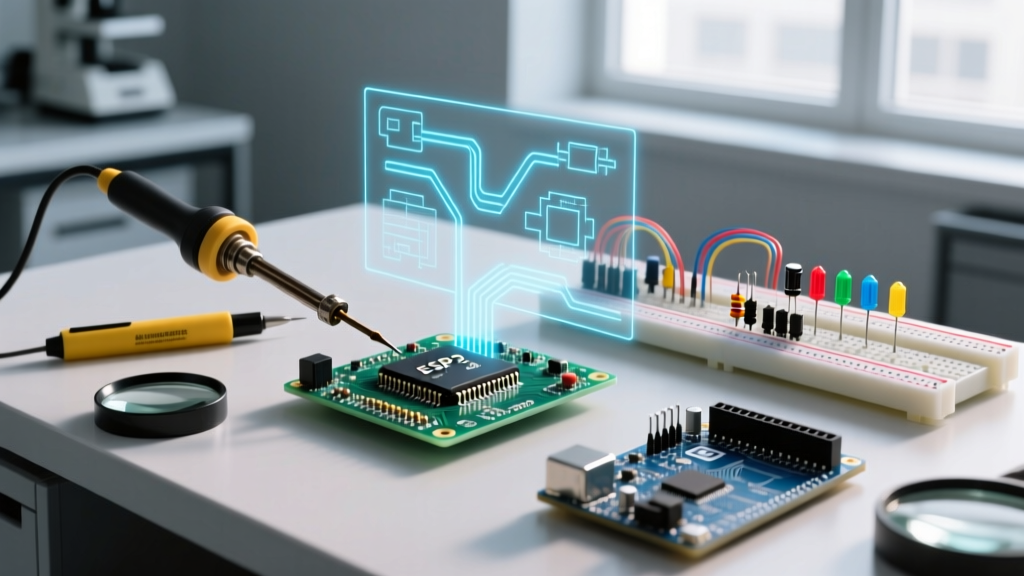

The 8-Bit Ceiling: Why Migrate Your Arduino Dev Board?
The transition from legacy 8-bit microcontrollers to modern 32-bit architectures is the most significant hardware shift in the maker ecosystem over the last decade. For years, the ATmega328P-based boards were the undisputed standard for prototyping. However, as edge computing, TinyML (machine learning on microcontrollers), and native wireless protocols become standard requirements in 2026, clinging to legacy hardware creates severe project bottlenecks. Upgrading your Arduino dev board is no longer just about getting more speed; it is about accessing hardware cryptographic accelerators, native USB HID capabilities, and floating-point units (FPUs) that make complex math viable at the edge.
This comprehensive migration guide details exactly when to abandon legacy 8-bit boards, how to navigate the treacherous 5V-to-3.3V logic chasm, and the specific software refactoring required to port your legacy sketches to modern 32-bit silicon.
Diagnostic Checklist: Signs You Need an Upgrade
Before ripping up your breadboard, evaluate your current project against these specific technical thresholds. If you hit two or more of these limits, it is time to migrate your Arduino dev board to a modern alternative.
- SRAM Exhaustion: Your sketch consistently crashes or behaves erratically when dynamic memory usage exceeds 1.6 KB of the ATmega328P's 2 KB SRAM limit.
- Floating-Point Bottlenecks: You are performing complex math (PID controllers, Kalman filters, or FFTs). On 8-bit AVR chips without a hardware FPU, a single 32-bit float multiplication takes roughly 100 clock cycles, causing severe timing jitter.
- Brittle Wireless Bridges: You are relying on external ESP-01 modules communicating via AT commands over a hardware serial port, resulting in dropped packets and watchdog resets.
- ADC Resolution Limits: Your sensor readings are too noisy because the 10-bit ADC (1024 steps) lacks the granularity required for precision analog measurement.
- Native USB Requirements: Your project requires the microcontroller to act as a native USB HID device (keyboard/mouse) or MIDI controller without relying on a secondary 16U2 bridge chip.
The 2026 Hardware Migration Matrix
Choosing the right replacement depends entirely on your project's power envelope and processing needs. Below is a comparison of the current ecosystem leaders.
| Board Model | Core Architecture | SRAM | Clock Speed | 2026 Price | Best Use Case |
|---|---|---|---|---|---|
| Uno R3 (Legacy) | ATmega328P (8-bit AVR) | 2 KB | 16 MHz | $27.00 | Basic education, simple 5V I/O |
| Uno R4 WiFi | Renesas RA4M1 + ESP32-S3 | 32 KB | 48 MHz | $27.50 | IoT dashboards, LED matrices |
| Nano ESP32 | ESP32-S3 (Dual-core Xtensa) | 512 KB | 240 MHz | $21.00 | TinyML, audio processing, Wi-Fi/BLE |
| Portenta H7 | STM32H747 (Dual-core ARM M7/M4) | 1 MB | 480 MHz | $115.00 | Industrial vision, high-speed robotics |
Hardware Migration: Navigating the 5V to 3.3V Chasm
The most catastrophic failure point when upgrading an Arduino dev board is ignoring the logic level shift. Legacy boards operate at 5V. Modern powerhouses like the Uno R4 WiFi (Renesas RA4M1) and the Nano ESP32 operate strictly at 3.3V. Feeding a 5V signal directly into a 3.3V GPIO pin will cause immediate latch-up, degrading the silicon over time or instantly frying the microcontroller.
Handling Digital and PWM Signals
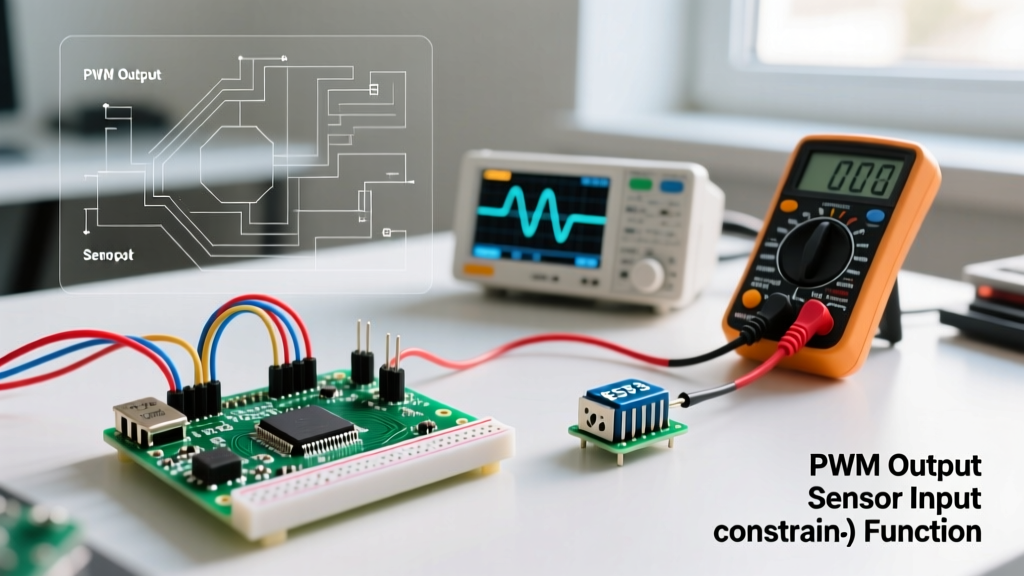
If your legacy project uses 5V sensors (like older HC-SR04 ultrasonic modules or 5V relays), you must implement bidirectional logic level shifting. The Texas Instruments TXS0108E is the industry standard for this migration. It features auto-direction sensing and supports data rates up to 50 Mbps, ensuring your high-speed PWM or software-serial lines do not suffer from propagation delay.
Recalculating I2C Pull-Up Resistors
I2C buses are particularly sensitive to voltage migrations. On a 5V legacy board, a 4.7kΩ pull-up resistor is standard. When migrating to a 3.3V board, the lower voltage differential means the signal rise time will increase, potentially causing I2C timeouts at higher bus speeds (Fast Mode at 400kHz). To maintain sharp signal edges on a 3.3V bus, you must decrease the pull-up resistance to 2.2kΩ or even 1.5kΩ, depending on the bus capacitance.
Power Delivery and USB-C Migration
Modern boards have largely abandoned the barrel jack and micro-USB standards in favor of USB-C. However, this introduces a new layer of complexity regarding power delivery (PD) and current sourcing.
Legacy boards could source up to 500mA from a standard USB-A port, with the onboard linear regulator (often an NCP1117) dissipating the excess voltage as heat. Modern 3.3V boards utilize highly efficient switching buck converters. While this means they run cooler, the onboard 5V output pins (often labeled VUSB or 5V) are typically tied directly to the USB-C VBUS line. If you plug the board into a high-impedance USB hub or a poorly regulated wall charger, back-feeding 5V peripherals can cause brownouts that reset the ESP32-S3 during Wi-Fi transmission spikes, which can draw upwards of 350mA instantaneously.
Software Porting: Refactoring Legacy Sketches
Hardware is only half the battle. The Arduino IDE abstracts much of the C++ code, but hardware-specific optimizations in legacy sketches will break immediately on ARM or Xtensa architectures.
Eliminating Direct Register Manipulation
In the 8-bit era, makers frequently bypassed the digitalWrite() function to achieve faster pin toggling by writing directly to the AVR port registers (e.g., PORTD |= (1 << 2);). Because the Renesas RA4M1 and ESP32-S3 utilize entirely different memory maps and CMSIS (Cortex Microcontroller Software Interface Standard) abstractions, these direct register calls will either fail to compile or, worse, write to the wrong memory address and cause a hard fault. You must refactor these sections to use the standard Arduino API or hardware-specific HAL (Hardware Abstraction Layer) libraries.
Memory Management and the String Class
On an ATmega328P, using the String object causes severe heap fragmentation, quickly leading to out-of-memory crashes. While modern 32-bit boards have vastly more SRAM (32KB to 512KB), relying on the String class for heavy JSON parsing or MQTT payload construction is still poor practice. Migrate your string handling to standard C-style character arrays (char[]) or utilize std::string with pre-allocated memory buffers to ensure deterministic memory usage in long-running IoT deployments.
Real-World Edge Cases & Failure Modes
Expert Warning: The ADC Resolution Trap
When migrating from an Uno R3 to a Nano ESP32 or Portenta H7, your analog readings will change drastically. The legacy ATmega328P features a 10-bit ADC (returning values from 0 to 1023). The ESP32-S3 features a 12-bit ADC (0 to 4095), and the Portenta H7 features a 16-bit ADC. If your legacy code usesmap(val, 0, 1023, 0, 100)to calculate a percentage, your new board will max out at 25% when the sensor reaches full scale. Always useanalogReadResolution(10)in yoursetup()function to force the 32-bit board to emulate legacy 10-bit behavior, or refactor your math to accommodate the higher bit-depth.
Interrupt Vector Mapping
The attachInterrupt() function remains consistent across the Arduino ecosystem, but the physical pins that support hardware interrupts change between architectures. On the Uno R3, only pins 2 and 3 support external interrupts. On the Uno R4 WiFi, almost all digital pins support interrupts, but the underlying NVIC (Nested Vectored Interrupt Controller) handles priority differently. If your legacy sketch relies on interrupts firing in a strict chronological order without software debouncing, the faster execution speed of the 48MHz RA4M1 may cause double-triggering on mechanical switches that the 16MHz ATmega328P naturally filtered out.
Expert Decision Framework
Migrating your Arduino dev board should be a calculated engineering decision, not just a pursuit of higher specifications. If your project is a simple, battery-powered environmental logger that wakes up every hour to transmit a single integer via LoRa, the 8-bit AVR architecture remains highly relevant due to its ultra-low deep sleep current (often below 1µA without external circuitry).
However, if your 2026 roadmap includes local sensor fusion, wireless OTA (Over-The-Air) updates, or driving high-density LED matrices, the migration to a 32-bit architecture like the ESP32-S3 or the Renesas RA4M1 is mandatory. By carefully managing the 5V-to-3.3V logic translation, recalculating your I2C pull-ups, and refactoring hardware-specific register calls, you can successfully port your legacy prototypes into robust, production-ready edge devices.
For detailed pinout mappings and peripheral configurations specific to the new generation of boards, always consult the official Arduino hardware cheat sheets before finalizing your PCB layout or breadboard wiring.