
Defining the Silicon: Beyond the Blue Board
If your entry into embedded systems started with the search query "what is a arduino microcontroller", you likely began your journey with an Arduino Uno R3. However, from an engineering perspective, "Arduino" is not a microcontroller itself; it is an ecosystem and a hardware abstraction layer. The actual microcontroller unit (MCU) on a standard Uno R3 is the Microchip ATmega328P-PU, an 8-bit AVR architecture chip clocked at 16 MHz. On newer boards like the Zero, the MCU is a 32-bit ARM Cortex-M0+ (SAMD21). Understanding this distinction is the critical first step in platform migration.
As your projects evolve from blinking LEDs to reading high-frequency IMU sensors, driving large TFT displays, or implementing edge machine learning, the hardware abstraction that made Arduino accessible becomes a bottleneck. Migrating away from the baseline Arduino ecosystem requires a deep understanding of what you are leaving behind and the specific architectural advantages of modern alternatives.
The ATmega328P Bottleneck: Signs You Need to Migrate
The ATmega328P is a marvel of 2009-era engineering, but its limitations are rigid. The most common failure mode for advanced makers is hitting the 2KB SRAM wall. To put this in perspective, a standard 128x64 pixel OLED display requires a 1024-byte framebuffer. Rendering that single display instantly consumes 50% of your available memory, leaving virtually no room for complex string manipulation, network buffers, or sensor fusion algorithms.
Engineering Insight: Technical debt in embedded systems rarely comes from bad code; it comes from outgrowing your silicon. Attempting to optimize memory on an 8-bit AVR using bitwise hacks is a poor investment of time compared to migrating to a 32-bit architecture with native DMA (Direct Memory Access).
Furthermore, the ATmega328P lacks DMA. When you use the Wire.h library to read data from an I2C sensor, the CPU halts all other operations to bit-bang or wait for hardware interrupts. If you are polling an MPU6050 at 1kHz while updating a WS2812B LED strip, the blocking I2C calls will cause visible LED flickering and missed sensor samples.
2026 Migration Target Matrix
When planning your migration, you must match your project's specific bottleneck to the correct architecture. Below is a technical comparison of the baseline Arduino Uno R3 against the three most common migration targets in 2026.
| Feature | Arduino Uno R3 (ATmega328P) | Raspberry Pi Pico (RP2040) | ESP32-S3 (WROOM-1) | STM32F411 (Black Pill) |
|---|---|---|---|---|
| Architecture | 8-bit AVR | 32-bit Dual ARM Cortex-M0+ | 32-bit Dual Xtensa LX7 | 32-bit ARM Cortex-M4F |
| Clock Speed | 16 MHz | 133 MHz (Overclockable) | 240 MHz | 100 MHz |
| SRAM | 2 KB | 264 KB | 512 KB (+ 8MB PSRAM) | 128 KB |
| Flash | 32 KB | 2 MB (External) | 8 MB (External) | 512 KB (Internal) |
| DMA Support | No | Yes (12 Channels) | Yes (GDMA) | Yes (16 Streams) |
| Typical Cost (2026) | $3.00 (Clone) / $15.00 (R4) | $4.00 | $5.50 | $4.50 |
Three Primary Migration Paths
Path 1: ESP32-S3 for IoT and Edge AI
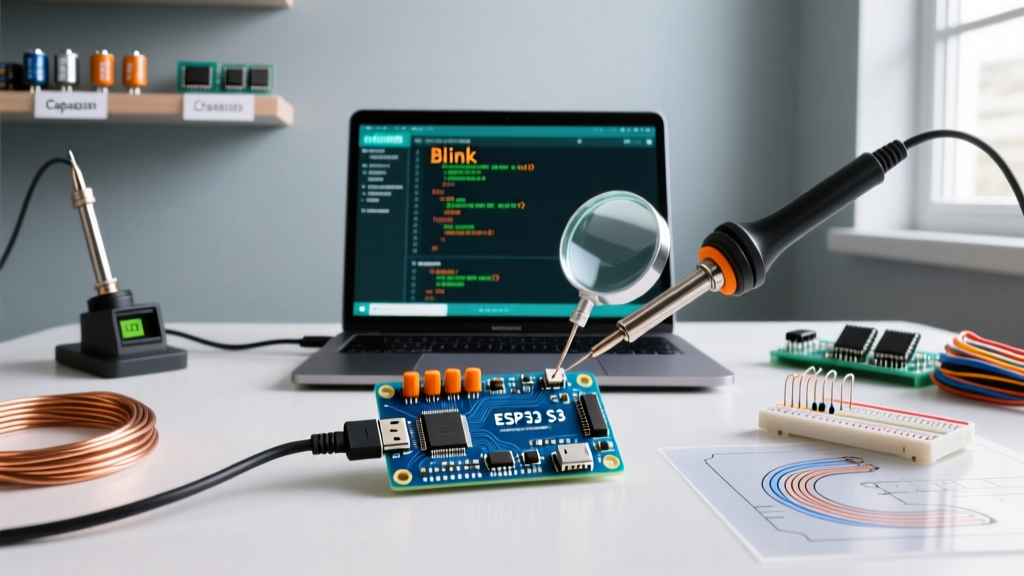
If your project requires Wi-Fi, Bluetooth LE, or vector processing for TinyML, the ESP32-S3 is the definitive upgrade. Unlike the original ESP32, the S3 variant includes vector instructions in its Xtensa cores, accelerating neural network inference by up to 3x. According to the official Espressif documentation, the S3 can handle camera interfaces (DVP) natively, making it the ultimate choice for computer vision tasks that would instantly crash an ATmega328P.
Path 2: RP2040 for Deterministic I/O and Cost
If your bottleneck is timing—such as generating precise RF signals, driving high-density LED matrices, or reading rotary encoders without missing steps—the Raspberry Pi Pico's Programmable I/O (PIO) state machines are unmatched. The RP2040 features 8 independent PIO state machines that offload timing-critical tasks from the main CPU. You can write a custom I2C or VGA driver in PIO assembly that runs deterministically, entirely independent of the main C/C++ code execution.
Path 3: STM32F4 for Industrial RTOS
For projects migrating toward commercial, industrial, or automotive applications where FreeRTOS certification, CAN bus integration, and hardware floating-point units (FPU) are required, the STM32F411 (often found on the "Black Pill" board) is the standard. It bridges the gap between hobbyist pricing and enterprise-grade reliability, offering internal flash execution and robust peripheral matrices.
The 3.3V vs 5V Hardware Trap
The most catastrophic failure mode during platform migration is ignoring logic levels. The ATmega328P operates at 5V and is highly tolerant of overvoltage. The RP2040, ESP32-S3, and STM32 are strictly 3.3V logic devices. Feeding a 5V signal from a legacy sensor (like an HC-SR04 ultrasonic module or a 5V GPS breakout) directly into an ESP32-S3 GPIO pin will permanently latch up the silicon and destroy the MCU.
Hardware Mitigation:
- For 1-2 lines: Use a simple resistor voltage divider (e.g., 10kΩ and 22kΩ) to drop 5V to ~3.4V.
- For I2C buses: Use a bidirectional logic level shifter based on the BSS138 MOSFET. Do not use standard diodes or unidirectional shifters, as I2C requires bidirectional open-drain communication.
- For high-speed SPI/UART: Use a dedicated IC like the TI SN74LVC8T245 or TXS0108E to prevent signal degradation and timing skew at baud rates above 115200.
Software Porting: Escaping the Arduino IDE
The Arduino IDE is designed for rapid prototyping, hiding the underlying main() function, linker scripts, and build flags. To properly utilize 32-bit architectures, you must migrate your toolchain. The industry standard in 2026 is PlatformIO, an extension for VS Code that provides granular control over your build environment.
When porting your code, you must eliminate blocking functions. The delay() function is a migration killer. On an ESP32 running FreeRTOS, you must replace delay(1000) with vTaskDelay(pdMS_TO_TICKS(1000)) to yield the CPU to the RTOS scheduler and prevent the watchdog timer from resetting the board. Similarly, relying on the Arduino Wire.h library is discouraged on STM32; instead, utilize the hardware-specific HAL (Hardware Abstraction Layer) or ESP-IDF's i2c_master.h to configure DMA-driven I2C transfers.
Your 5-Step Migration Protocol
- Audit Peripheral Dependencies: List every sensor and actuator. Identify which ones require 5V logic and order the appropriate BSS138 level shifters before powering up the new board.
- Establish the PlatformIO Environment: Create a new
platformio.inifile. Define your board (e.g.,board = esp32-s3-devkitc-1) and framework (e.g.,framework = espidforarduinofor transitional porting). - Abstract the Hardware Layer: Before migrating the main logic, write wrapper functions for your I2C and SPI calls. If you abstract
readSensor()in a separate C++ class, you only have to rewrite the I2C implementation once when switching from AVR to ARM. - Implement Non-Blocking Timers: Replace all
delay()calls with hardware timer interrupts or RTOS task delays. Verify timing using a logic analyzer. - Profile Memory Usage: Use the ESP-IDF
heap_caps_get_free_size()or STM32 equivalent to monitor SRAM usage dynamically during runtime, ensuring no memory leaks exist in your new 32-bit environment.
Migrating away from the baseline Arduino Uno architecture is a rite of passage for embedded engineers. By respecting logic levels, embracing RTOS paradigms, and selecting the correct 32-bit architecture for your specific bottleneck, you transition from a hobbyist assembling modules to an engineer designing robust, scalable embedded systems.