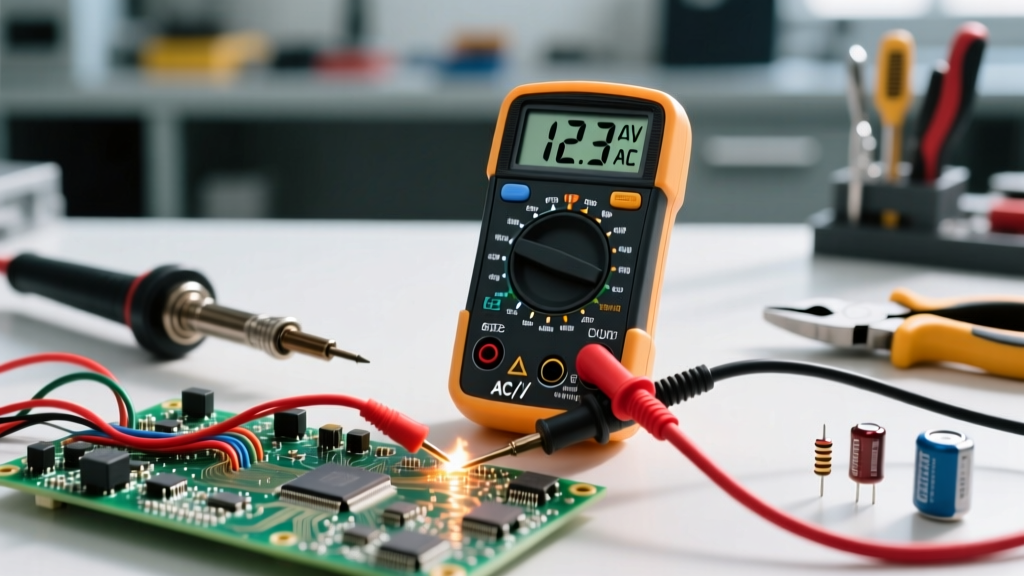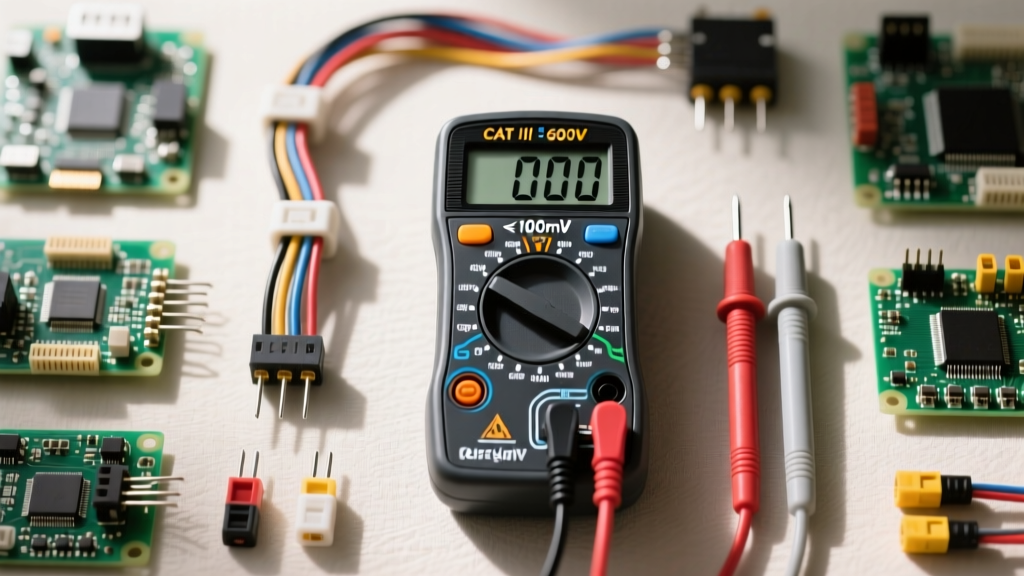

Walking into the world of test equipment can feel like stepping into a labyrinth of conflicting specifications. From 6,000-count displays to True RMS, CAT IV ratings, and Bluetooth logging, the feature lists on modern digital multimeters (DMMs) are overwhelming. However, the most critical mistake both hobbyists and professional electricians make is buying based on a spec sheet rather than their actual workflow. Before you drop $300 on a flagship Fluke or gamble $15 on an unbranded import, you must define exactly how you use a multimeter in your daily environment. This buying guide strips away the marketing fluff and focuses on the hidden specifications, safety realities, and failure modes that actually matter when you are probing live circuits.
The "Use-Case First" Approach to Multimeter Shopping
A multimeter designed for troubleshooting industrial motor controls is fundamentally different from one designed for debugging a 3.3V microcontroller on a workbench. The former requires robust transient protection and low-impedance modes to filter out ghost voltages, while the latter requires ultra-low burden voltage and high-resolution current ranges. By categorizing your primary use case, you can immediately eliminate 80% of the market and focus on tools that solve your specific problems. Are you pulling wire in residential panels? Are you diagnosing CAN bus networks in automotive applications? Or are you measuring quiescent current draw on battery-powered IoT devices? Your answer dictates the hardware you need.
Decoding Safety: Why CAT Ratings Dictate Where You Use a Multimeter
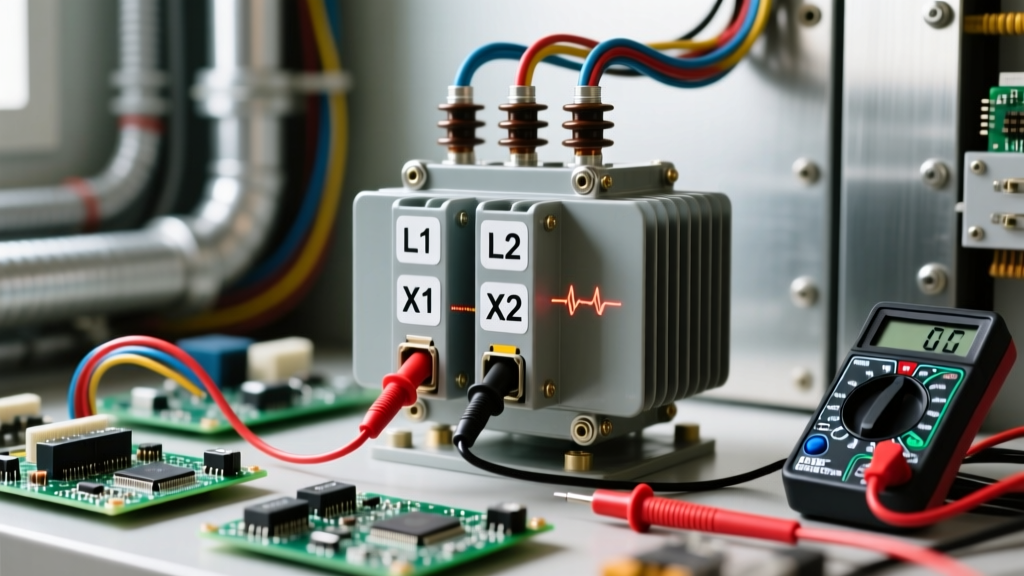
If your use case involves anything beyond low-voltage DC electronics, safety ratings are non-negotiable. The International Electrotechnical Commission (IEC) 61010-1 standard defines Measurement Categories (CAT II, CAT III, CAT IV). These ratings do not merely describe the maximum steady-state voltage the meter can handle; they define the meter's ability to survive transient voltage spikes (impulses) that occur when inductive loads switch or lightning strikes nearby power lines.
According to Fluke's safety guidelines on measurement categories, a CAT III 600V meter is tested to withstand an 8,000V transient impulse, whereas a CAT II 1000V meter is only tested for a 6,000V impulse. If you use a multimeter to troubleshoot outdoor utility feeds or heavy industrial switchgear, a CAT IV rating is mandatory. Cheap meters often use varistors that fail short-circuit, potentially causing the meter to explode in your hands during a transient event. Always look for independent certification marks (like UL, CSA, or TÜV) rather than a simple "CE" stamp, which can be self-certified by overseas manufacturers.
The HRC Fuse Factor: A Hidden Cost of Cheap DMMs
One of the most dangerous failure modes in budget multimeters occurs when a user accidentally attempts to measure voltage while the probes are plugged into the current (Amps) jacks. In a quality DMM, High Rupturing Capacity (HRC) ceramic fuses are filled with sand to quench the internal arc, safely containing the explosive energy. Budget meters often use standard glass fuses. When subjected to a 240V or 480V fault, a glass fuse will vaporize, ionizing the air inside the meter and creating a conductive plasma path that results in a catastrophic arc flash. If your workflow involves frequent current measurements in energized panels, HRC fuses are a life-saving requirement. The OSHA electrical safety standards heavily emphasize using properly rated PPE and test equipment to mitigate arc flash hazards.
Application Matrix: Matching the DMM to Your Workflow
To help you align your budget with your specific needs, we have mapped common user profiles to proven multimeter models based on real-world field performance and bench testing.
| Primary Use Case | Recommended Model | Critical Feature | Approx. Price |
|---|---|---|---|
| HVAC & Residential Electrical | Fluke 117 | VoltAlert (NCV) & LoZ Mode | $200 |
| Electronics & PCB Debugging | Brymen BM235 | High Resolution & Low Burden Voltage | $115 |
| Automotive Diagnostics | Innova 5610 | RPM / Duty Cycle / Temp Probes | $150 |
| Home DIY & Basic Wiring | Klein Tools MM400 | Rugged Drop-Proof Housing | $45 |
Hidden Specs That Ruin Measurements: Burden Voltage and Ghost Voltages
When evaluating how you use a multimeter for sensitive electronics, two hidden specifications will make or break your troubleshooting experience: Burden Voltage and Input Impedance.
Burden Voltage and the Microcontroller Brown-Out
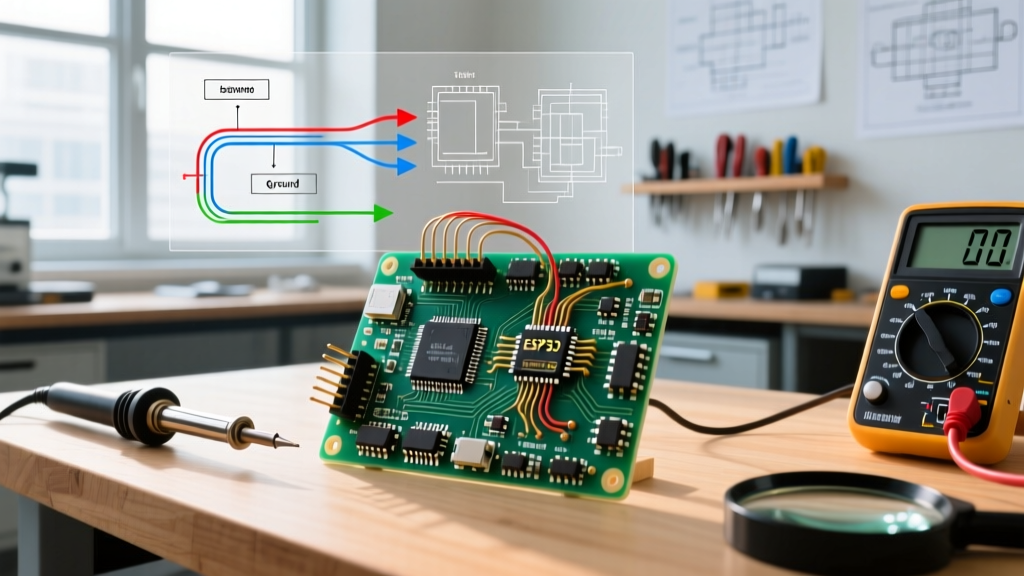
When you measure current, the multimeter inserts an internal shunt resistor into the circuit. The voltage dropped across this resistor is called "burden voltage." Budget meters often have a high burden voltage on the milliamp (mA) and microamp (µA) ranges—sometimes dropping over 1V. If you are measuring the sleep current of an ESP32 or an Arduino running on a 3.3V rail, a 1V drop from your meter leaves only 2.3V for the circuit. This triggers a brown-out reset, causing the microcontroller to crash and reboot endlessly. You will read erratic current spikes and assume your code is flawed, when in reality, your multimeter is starving your circuit. For embedded systems engineers, a meter with a dedicated low-burden current range (like the Brymen BM235 or a specialized tool like the Nordic Power Profiler Kit) is essential.
Input Impedance and Ghost Voltages
Standard DMMs feature a 10 MΩ input impedance. While excellent for most tasks, this high impedance makes the meter act like an antenna in environments with long, parallel cable runs (such as commercial conduit). A de-energized wire running next to a live 120V wire will capacitively couple a "ghost voltage" of 40V to 90V. A standard 10 MΩ meter will display this phantom voltage, leading electricians to believe a circuit is live when it is actually safe to touch. Meters equipped with a LoZ (Low Impedance) mode temporarily drop the input resistance to roughly 3 kΩ, bleeding off the capacitive ghost charge and revealing the true 0V state. If you pull wire in commercial buildings, LoZ is not optional; it is a massive time-saver.
Feature Overkill: What You Can Skip
Manufacturers love to pad spec sheets to justify premium pricing. Depending on how you use a multimeter, you can safely ignore the following features:
- Bluetooth Data Logging: Unless you are performing long-term thermal or voltage sag audits for industrial compliance reports, Bluetooth connectivity is a gimmick that drains the meter's battery and adds $50 to the price tag.
- 4-20mA Loop Testing: Essential for industrial process control technicians, but completely useless for automotive, residential, or PCB-level hobbyists.
- 60,000 Count Displays: While a 60,000-count meter offers more resolution, the analog-to-digital converter (ADC) noise floor and thermal drift in handheld environments rarely allow for stable readings at the 5th decimal place. A quality 6,000-count meter with a fast continuity beep is far more practical for daily use.
When a DMM is the Wrong Tool for the Job
Knowing the limitations of your gear is a hallmark of expertise. A multimeter is fundamentally a slow-sampling DC/low-frequency AC instrument. As detailed in the All About Circuits guide on electrical measurement, DMMs average out voltage over time. If you are attempting to debug PWM motor control signals, I2C/SPI communication buses, or switching power supply ripple, a multimeter will only give you a meaningless average voltage. In these scenarios, you must graduate from a DMM to a Digital Storage Oscilloscope (DSO) or a dedicated logic analyzer. Trying to force a multimeter to diagnose high-frequency transient failures is a waste of time and often leads to misdiagnosed components.
Final Verdict: Investing in Your Daily Driver
Your multimeter is the single most frequently used tool in your arsenal, second only to your wire strippers. Do not compromise on the continuity beep speed—when you are testing 50-pin ribbon cables or tracing grounds in a cramped chassis, a 200ms delay in the audible beep will cost you hours of cumulative frustration over a year. Buy the meter that aligns with your specific safety requirements and measurement environment, replace the batteries proactively to prevent internal corrosion, and store it in a protective holster. Match the tool to the task, and it will serve you reliably for decades.
Expert Calibration Tip: Even top-tier Fluke and Keysight meters drift over time due to thermal stress and component aging. If you use a multimeter for billing-based diagnostics or safety-critical HVAC commissioning, send it to an ISO 17025 accredited lab for calibration every 12 to 24 months to ensure your readings remain legally and technically defensible.