
Bridging the Gap: From Tarkov Hideouts to Real-World Workbenches
For millions of players, the endless grind for electronic components Tarkov hideouts require is a core part of the survival experience. Upgrading your workbench, intelligence center, or medstation means scouring the map for capacitors, transistors, military circuit boards, and phase control relays. But what happens when you take these virtual loot items and map them to their real-world counterparts?
As of 2026, the DIY electronics and robotics communities have seen a massive surge in hobbyists building rugged, field-repairable gear inspired by tactical survival aesthetics. Whether you are building an off-grid solar charge controller, a rugged FPV drone, or a heavy-duty automated rover, the exact components you scavenge in-game are foundational to high-reliability real-world engineering. This guide breaks down the real-world equivalents of Tarkov’s most sought-after electronic loot, complete with specific model numbers, 2026 pricing, and actionable DIY integration steps.
The Scavenger’s Matrix: In-Game Loot vs. Real-World Equivalents
Before we start soldering, let us map the virtual items to their physical, purchasable counterparts. The table below outlines what you should actually be buying for a high-reliability DIY kit.
| In-Game Item | Real-World Equivalent (Spec/Model) | Avg Cost (2026) | Primary DIY Application |
|---|---|---|---|
| Capacitors | Nichicon UHW Series (Low-ESR Electrolytic) | $0.85 - $1.50 | Switching power supply filtering, motor snubbers |
| Transistors | IRF3205 N-Channel MOSFET / TIP120 Darlington | $1.10 - $2.50 | High-current DC switching, PWM motor control |
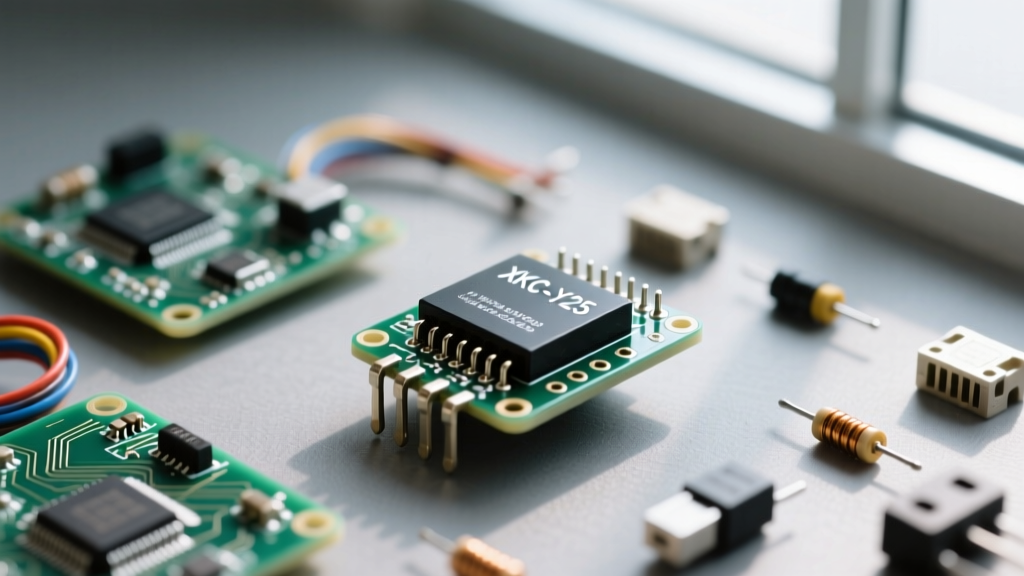
| Military Circuit Boards | MIL-PRF-31032 Compliant Polyimide/FR4 (Class 3) | $45.00+ (per batch) | Rugged drone flight controllers, field sensors |
| Phase Control Relays | Crydom D2425 Solid State Relay (SSR) | $42.00 - $55.00 | AC motor speed control, heavy resistive heating |
| Military Cables | MIL-W-16878/4 (PTFE Insulated, Silver-Plated) | $1.20 - $2.00 / ft | High-temp wiring, aerospace/automotive harnesses |
1. Capacitors & Transistors: Building a Rugged DC-DC Buck Converter
In-game, Capacitors and Transistors are generic junk items found in drawers and toolboxes. In reality, selecting the right capacitor and transistor is the difference between a DIY power supply that lasts a decade and one that catches fire on its first test.
Selecting the Right Capacitors (Low ESR is King)
If you are building a buck converter or a switching power supply for a field radio, standard electrolytic capacitors will fail rapidly due to high ripple current. You need Low-ESR (Equivalent Series Resistance) capacitors. The Nichicon UHW1E102MPD (1000µF, 25V) is a stellar choice. Rated for 105°C, it can handle the thermal stress of enclosed DIY projects.
Scavenger’s Tip: If you are salvaging capacitors from old e-waste (the real-life equivalent of a Tarkov flea market run), always test them with an LCR meter. Electrolytic fluid dries out over time, increasing ESR and leading to catastrophic thermal runaway when subjected to high-frequency switching.
Choosing the Right Transistor: MOSFET vs. BJT
The in-game Transistor item usually implies a basic switching component. For modern DIY projects handling more than 2 Amps, abandon the classic 2N2222 BJT and reach for an IRF3205 N-Channel MOSFET. Capable of handling up to 110A continuous drain current and featuring a very low RDS(on) of 8 milliohms, it minimizes heat generation.
Failure Mode Alert: The IRF3205 requires a gate-source voltage (Vgs) of at least 8V to fully turn on. If you drive it directly from a 3.3V microcontroller (like an ESP32), it will operate in its linear (high-resistance) region, overheat, and destroy itself in seconds. Always use a dedicated MOSFET gate driver IC (like the TC4420) or a logic-level MOSFET (like the IRLZ44N) when interfacing with modern microcontrollers.
2. Military Circuit Boards: Designing for the MIL-SPEC Standard
The Military Circuit Board is a high-tier hideout item. In the real world, military-grade PCBs are governed by strict standards, specifically IPC standards and MIL-PRF-31032. If you are designing a custom flight controller for a heavy-lift agricultural drone or a rover meant to operate in extreme environments, standard hobbyist PCBs will not survive the vibration and thermal cycling.
FR-4 vs. Polyimide: Material Selection
Standard FR-4 fiberglass boards have a Glass Transition Temperature (Tg) of around 130°C to 140°C. If your DIY project involves high-power RF transmission or operates in an engine bay, the board can delaminate. For true "military" ruggedness, order your custom boards using Polyimide (Kapton) substrates, which boast a Tg exceeding 250°C and offer superior flexibility and vibration resistance.
Furthermore, specify IPC-6012 Class 3 manufacturing when ordering from your fab house. Class 3 mandates stricter tolerances for plated through-holes (PTH) and copper plating thickness, ensuring that thermal expansion does not snap the internal vias during extreme temperature swings.
3. Phase Control Relays: Mastering High-Voltage AC Switching
The Phase Control Relay is essential for upgrading the Tarkov intelligence center. In real-world electrical engineering, phase control refers to a specific method of managing alternating current (AC). While standard Solid State Relays (SSRs) use "zero-crossing" detection to switch power cleanly and reduce electromagnetic interference (EMI), Phase-Angle Control Relays switch the AC waveform mid-cycle.
DIY Application: AC Motor Speed Control and Dimming
If you are building an automated DIY greenhouse ventilation system and need to control the speed of an AC induction fan, or if you are building a high-wattage kiln for ceramics, you need phase control. A module built around a Crydom D2425 (25A, 24-280VAC) paired with a phase-angle firing circuit allows you to "chop" the AC sine wave, delivering variable RMS voltage to the load.
- Zero-Crossing SSR: Use for simple ON/OFF switching of heaters or compressors. Prevents massive inrush currents and EMI spikes.
- Phase-Angle SSR: Use for proportional control (dimming, motor speed). Requires heavy heatsinking and an EMI filter on the AC input line due to the harsh harmonic distortion caused by chopping the waveform.
4. Military Cables: The Unsung Hero of Field Wiring
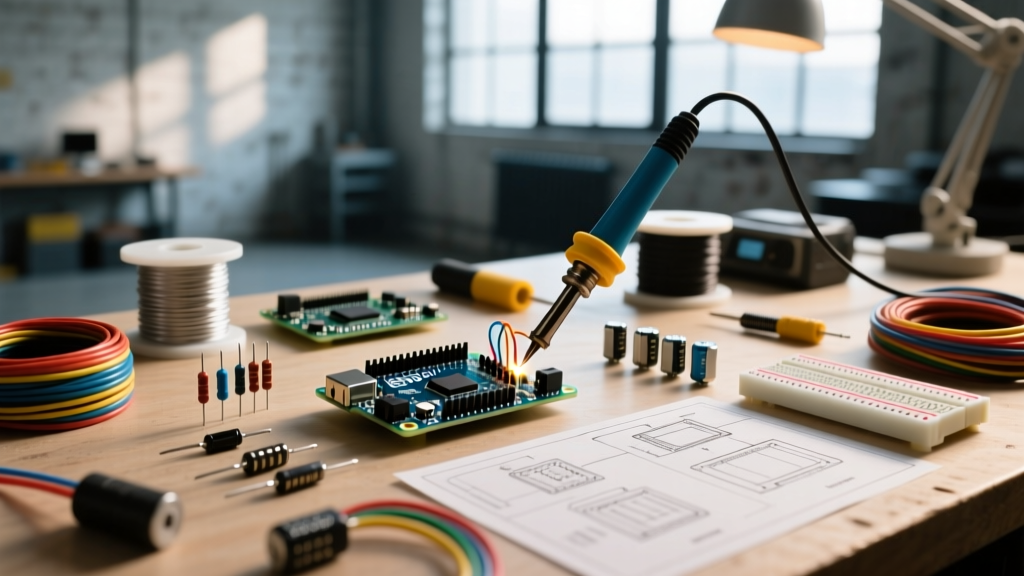
Nothing ruins a rugged DIY build faster than melting wire insulation with a soldering iron. The in-game Military Cable translates to MIL-W-16878/4 specification wire in the real world. This wire features silver-plated copper strands insulated with PTFE (Polytetrafluoroethylene, commonly known as Teflon).
Unlike standard PVC-insulated hook-up wire, which melts and shrinks back when touched by a 350°C soldering iron tip, PTFE insulation is virtually impervious to soldering temperatures. This allows you to solder in incredibly tight spaces—such as dense connector backshells or multi-rotor drone arms—without worrying about short circuits caused by melted insulation. At roughly $1.50 per foot in 2026, it is an expensive but necessary investment for mission-critical harnesses.
Building Your Real-World Hideout Workbench
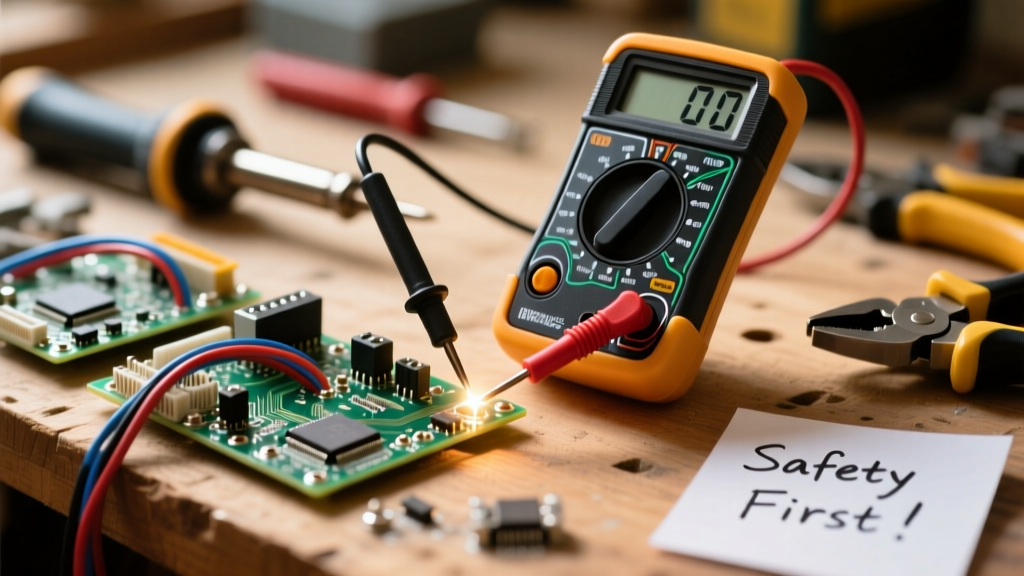
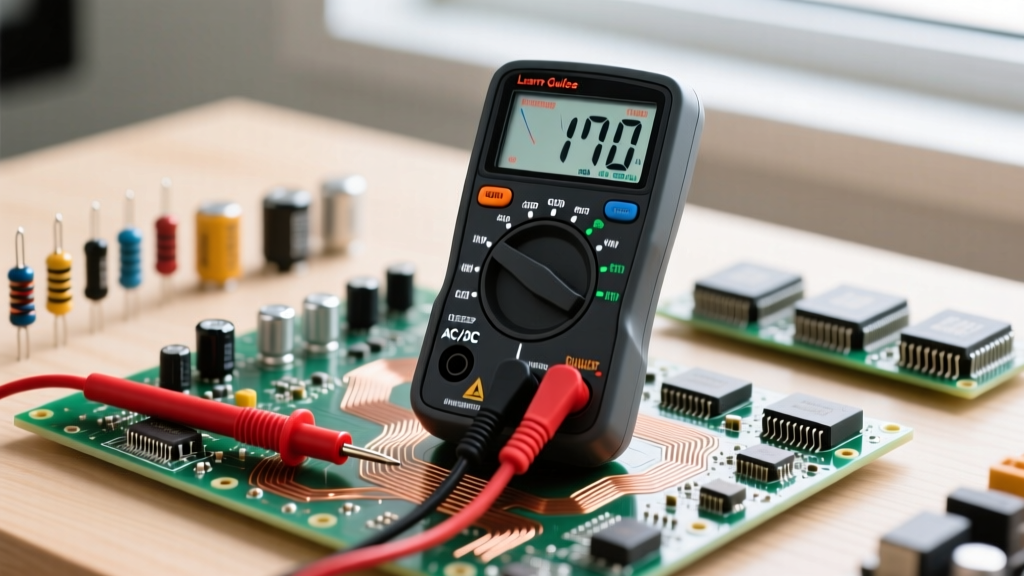
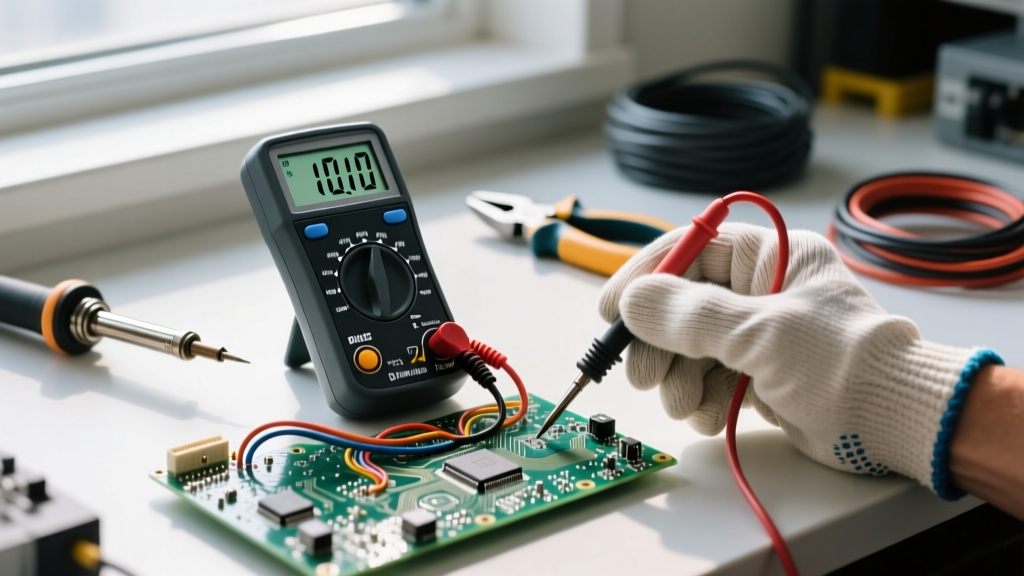
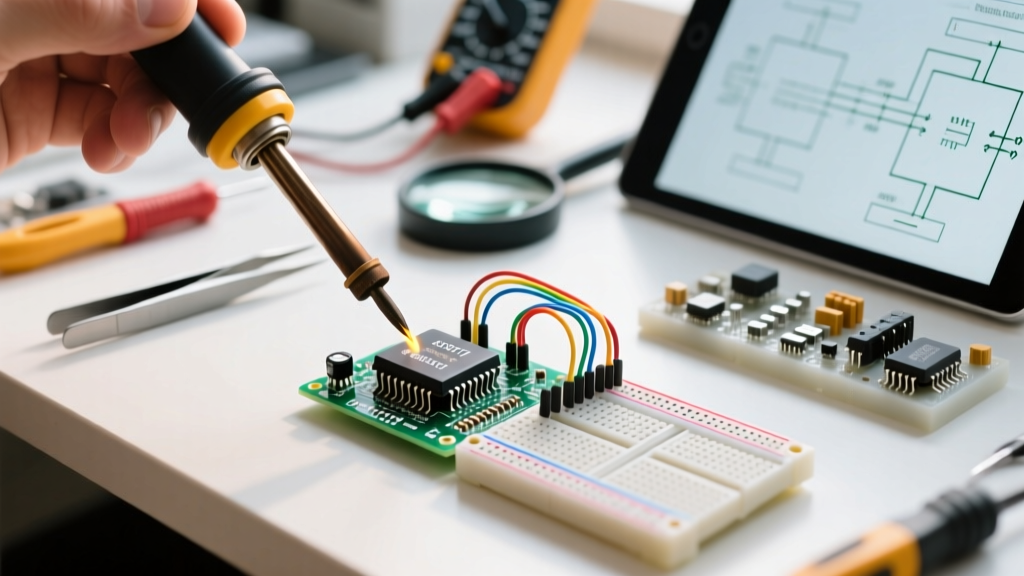
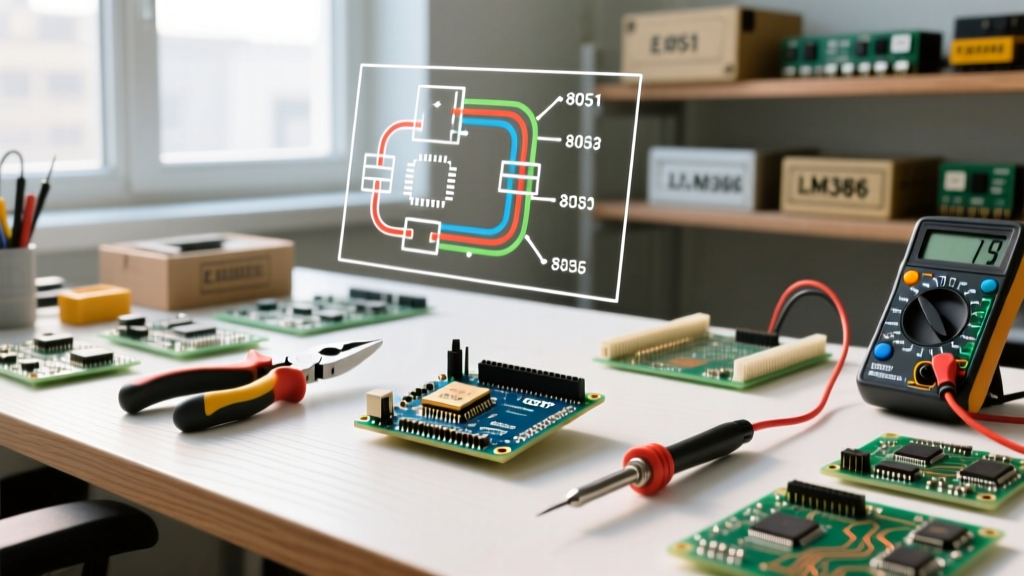
To properly test, salvage, and integrate these components, your workbench needs the right diagnostic tools. Relying on a basic $15 multimeter will not cut it when diagnosing high-frequency failures.
Essential Testing Gear
- Peak Atlas LCR45 LCR Meter (~$135): Essential for testing scavenged capacitors. It automatically identifies the component type and measures capacitance, inductance, and crucially, ESR.
- Hakko FX-888D Soldering Station (~$115): The industry standard for DIYers. Its rapid thermal recovery ensures clean joints on heavy ground planes found in MIL-SPEC boards.
- Rigol DS1054Z Oscilloscope (~$350): Mandatory if you are building phase-control circuits or debugging PWM signals driving your MOSFETs. Understanding signal integrity is a core concept covered in foundational MIT OpenCourseWare circuits classes.
Final Thoughts: Surviving the Real-World Raid
The electronic components Tarkov players obsess over are not just arbitrary game mechanics; they represent the foundational building blocks of modern, ruggedized electrical engineering. By understanding the real-world specifications behind capacitors, MIL-SPEC PCBs, and phase-control relays, you elevate your DIY projects from fragile prototypes to field-ready survival gear. Whether you are wiring an off-grid solar array or building a heavy-duty robotic rover, source your parts with the same meticulous care you would use when looting a high-tier military base, and your builds will survive the harshest environments.