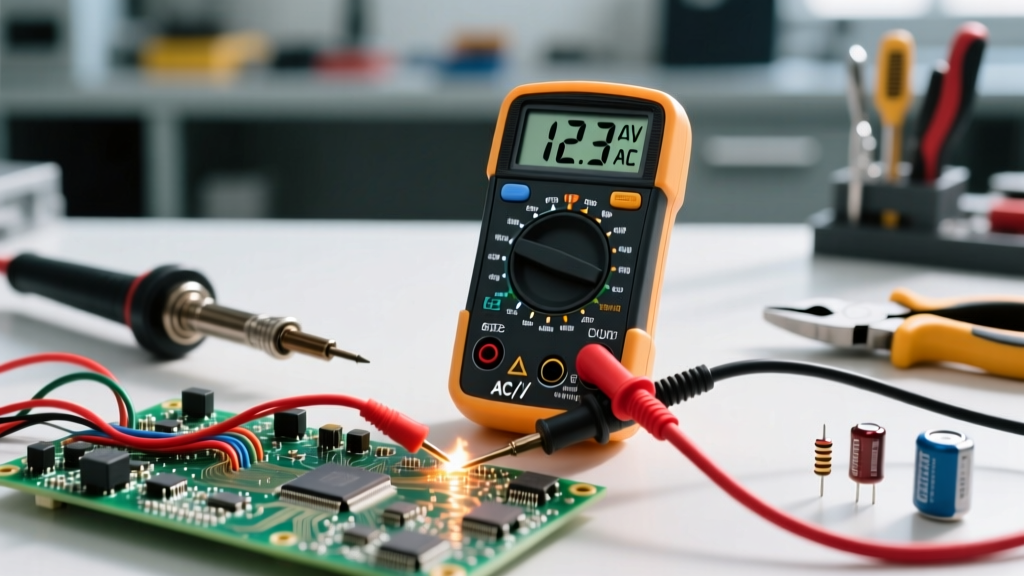

The Reality of Voltage Testing: Why Your Tool Choice Matters
Whether you are troubleshooting a dead outlet, diagnosing an automotive electrical fault, or designing a custom PCB, knowing how to check for voltage using a multimeter is the most fundamental skill in electronics and electrical work. However, the process is only as reliable as the digital multimeter (DMM) in your hand. A cheap, uncertified meter might give you a false sense of security, while a high-end True-RMS meter can reveal hidden power quality issues that destroy sensitive microcontrollers.
In this comprehensive guide, we will walk through the exact methodology for testing both AC and DC voltage. More importantly, we will review three of the most trusted multimeters on the market in 2026, breaking down which tool actually deserves a spot in your toolkit based on your specific voltage-testing needs.
Step-by-Step: How to Check for Voltage Using a Multimeter
Before we evaluate the hardware, we must establish the correct testing methodology. Voltage is the electrical potential difference between two points. To measure it, your multimeter must be placed in parallel with the circuit or component you are testing.
Testing AC Voltage (Mains, Outlets, and HVAC)
Alternating Current (AC) voltage is what powers your home and heavy machinery. Because AC polarity constantly reverses, probe orientation does not matter.
- Probe Placement: Insert the black probe into the COM (Common) jack and the red probe into the V/Ω (Volts/Ohms) jack.
- Dial Selection: Turn the dial to the AC Voltage setting, typically denoted by a V with a wavy line (~) next to it.
- Range Selection: If your meter is manual-ranging, select a range higher than the expected voltage (e.g., select 200V when testing a 120V US outlet). Auto-ranging meters will handle this automatically.
- Measurement: Insert the probes into the hot and neutral slots of an outlet, or touch them across the terminals of a contactor. Read the display.
Testing DC Voltage (Batteries, Microcontrollers, and Automotive)
Direct Current (DC) flows in one direction. Polarity matters here; reversing the probes won't damage a modern digital meter, but it will yield a negative reading.
- Probe Placement: Black to COM, Red to V/Ω.
- Dial Selection: Turn the dial to DC Voltage, denoted by a V with a straight line (⎓) and a dashed line beneath it.
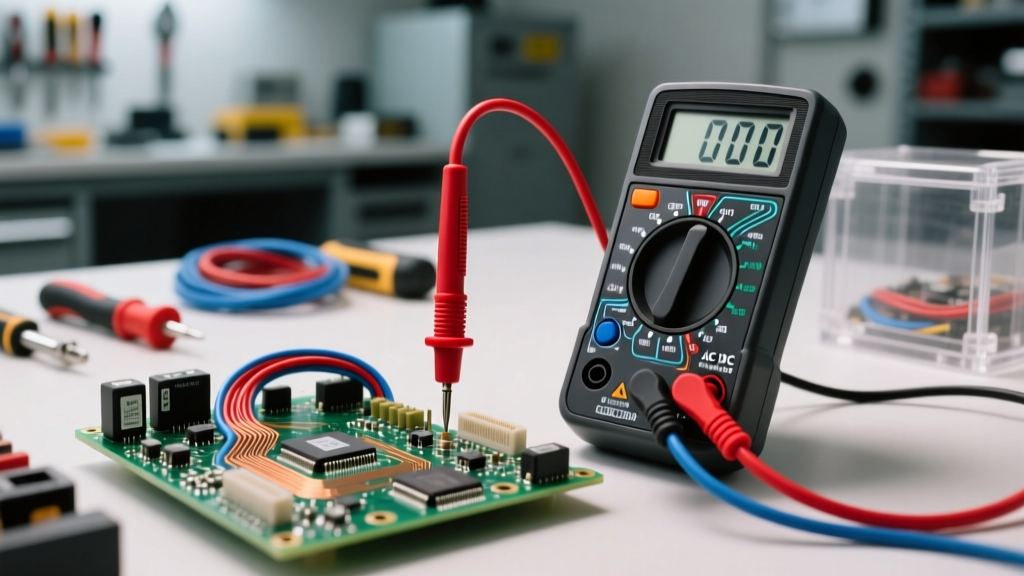
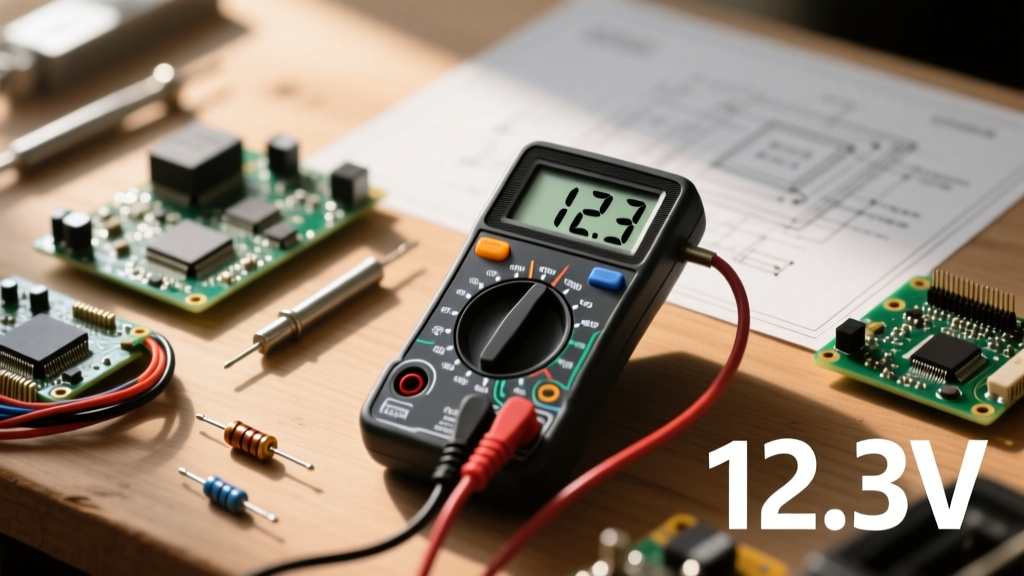
- Measurement: Touch the red probe to the positive (+) terminal and the black probe to the negative (-) terminal. As noted by the educational experts at All About Circuits, if you see a negative sign on the display, simply swap your probes to confirm the circuit's true polarity.
Multimeter Reviews: Which DMM Should You Buy for Voltage Checks?
Not all voltage checks are created equal. Testing a 5V Arduino logic pin requires different specifications than testing a 480V industrial motor. Here is our breakdown of the best tools for the job.
Fluke 117 True-RMS Digital Multimeter (Best for Electricians & HVAC)
Price: ~$215 | CAT Rating: CAT III 600V
The Fluke 117 is the undisputed king of commercial and residential electrical troubleshooting. Its standout feature for voltage checking is VoltAlert™, a built-in non-contact voltage detector that allows you to verify the presence of AC voltage before you even expose bare wire. Furthermore, the Fluke 117 features a LoZ (Low Impedance) mode. When testing long cable runs, capacitive coupling can create 'ghost voltages'—phantom readings of 40V to 60V on wires that are actually dead. The LoZ mode bleeds off this phantom energy, giving you a definitive 0.0V reading and preventing costly misdiagnoses.
Klein Tools MM400 Auto-Ranging Multimeter (Best for DIY & Homeowners)
Price: ~$55 | CAT Rating: CAT III 600V
If you are a homeowner looking to check for voltage using a multimeter to diagnose a tripped breaker or wire a smart thermostat, the Klein MM400 is the ultimate budget-friendly workhorse. It survives drops from up to 1 meter and features a robust auto-ranging function that removes the guesswork from dial selection. While it lacks the LoZ mode found on premium models, its CAT III 600V safety rating and clear, backlit LCD make it vastly superior to the unbranded $15 meters found in big-box store checkout aisles, which often lack basic internal blast shields.
Brymen BM235 (Best for Electronics Hobbyists & Engineers)
Price: ~$120 | CAT Rating: CAT III 600V / CAT IV 300V
Heavily endorsed by the electrical engineering community, the Brymen BM235 offers Fluke-level build quality at a mid-tier price point. For electronics hobbyists checking DC voltage on custom PCBs, the BM235's input protection and incredibly fast continuity/diode testing are invaluable. It also includes a LoZ mode to eliminate ghost voltages and boasts an impressive 6000-count display, providing the granular resolution needed when checking if a microcontroller's 3.3V rail is sagging under load.
Comparative Breakdown: Voltage Testing Features
| Multimeter Model | Primary Use Case | CAT Rating | LoZ Mode (Ghost Voltage) | Auto-Range | Approx. Price |
|---|---|---|---|---|---|
| Fluke 117 | Pro Electrician / HVAC | CAT III 600V | Yes | Yes | $215 |
| Klein MM400 | DIY / Homeowner | CAT III 600V | No | Yes | $55 |
| Brymen BM235 | Electronics / PCB Design | CAT III 600V / CAT IV 300V | Yes | Yes | $120 |
Common Failure Modes and Safety Pitfalls When Measuring Voltage
Understanding how to check for voltage using a multimeter is only half the battle; understanding how meters fail is what keeps you alive. According to Fluke's safety documentation, using a meter with an inadequate Category (CAT) rating in a high-energy environment can result in an arc flash explosion inside the meter itself.
The 'Amps Jack' Catastrophe
The most common way users destroy their multimeters (and potentially injure themselves) is by leaving the red probe in the Amps (A) jack while attempting to measure voltage in parallel. The Amps jack contains a very low-resistance shunt. When you place this across a voltage source, you create a dead short. If the meter's internal fuse is not a high-breaking-capacity (HBC) ceramic fuse, the meter will explode. Always verify your probe placement before touching the circuit.
Ignoring CAT Ratings for Mains Work
As outlined by OSHA electrical safety standards, transient voltage spikes on a mains line can reach thousands of volts for a fraction of a second. A CAT II rated meter is safe for household appliances but should never be used on the main service panel or outdoor utility lines. Always use a minimum of CAT III for branch circuits and CAT IV for primary supply levels.
Final Verdict: Matching the Meter to the Job
Mastering how to check for voltage using a multimeter requires both technique and the right hardware. If your work involves opening main service panels, troubleshooting industrial contactors, or dealing with long wire runs where ghost voltages are prevalent, the Fluke 117 is a non-negotiable investment for its LoZ mode and VoltAlert safety features.
For the weekend warrior wiring smart home devices or checking automotive batteries, the Klein MM400 provides the perfect balance of safety, durability, and affordability. Finally, if you spend your time at a workbench probing breadboards and debugging 5V logic levels, the Brymen BM235 offers the precision and input protection your sensitive electronics demand. Choose the tool that matches your environment, respect the safety categories, and always test your meter on a known live source before trusting a 'dead' reading.