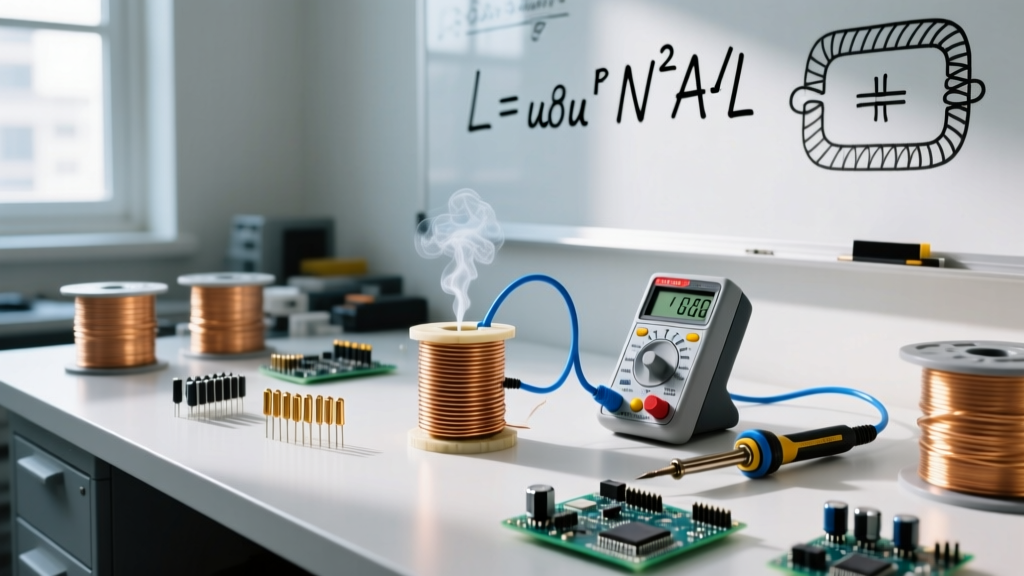
Electrical technology is the applied science of generating, distributing, and controlling electrical power to perform useful work in real-world systems. While theoretical physics defines the behavior of the electron, electrical technology dictates how we safely harness those electrons to spin a 50-horsepower industrial motor, balance a LiFePO4 battery bank, or route 120V through a residential GFCI outlet without tripping the breaker.
In a real circuit or installation, electrical technology changes raw, uncontrolled electromagnetic potential into precisely metered, thermally managed, and code-compliant work. It bridges the gap between abstract circuit theory and the physical realities of copper wire, terminal torque, and ambient temperature derating.
The Core Pillars and Common Confusions
To understand the scope of the field, you have to separate power from data. A frequent mistake among beginners is confusing electrical technology with electronics or electrical engineering. While they overlap, their day-to-day applications are distinctly different.
| Discipline | Primary Focus | Typical Voltage Range | Core Components |
|---|---|---|---|
| Electrical Engineering | Abstract theory, grid-scale design, advanced mathematics | kV to MV (Transmission) | Generators, substations, complex algorithms |
| Electrical Technology | Applied installation, troubleshooting, code compliance | 12V to 600V (Utilization) | Breakers, contactors, THHN wire, conduit |
| Electronics | Signal processing, computation, low-power logic | mV to 48V (DC Logic) | Microcontrollers, MOSFETs, capacitors, op-amps |
For comprehensive safety and installation standards in the United States, the National Fire Protection Association (NFPA) publishes the National Electrical Code (NEC), which serves as the benchmark for electrical technology professionals. Globally, the International Electrotechnical Commission (IEC) provides the equivalent foundational standards.
Where You Meet This in Practice
Electrical technology is not just a classroom concept; it governs the physical constraints of every project on your workbench or jobsite. Here is how it manifests across three common domains:
Residential and Commercial Wiring
When you wire a 120V/240V split-phase residential panel, you are applying electrical technology. You must calculate continuous vs. non-continuous loads, select the correct NM-B or THHN wire gauge based on the 60°C or 75°C ampacity columns, and ensure proper equipotential bonding to clear ground faults. It is the physical execution of Kirchhoff's laws scaled up to 200 amps.
Embedded Systems and Microcontrollers
If you are building an IoT sensor with an ESP32-WROOM-32, electrical technology dictates how you interface a 3.3V logic GPIO pin with a 12V relay coil. You must design a flyback diode circuit to suppress inductive kickback, calculate the base resistor for a 2N2222 NPN transistor to ensure it reaches saturation, and manage the milliamp-level current draw to prevent brownouts on the development board's linear regulator.
Renewable Energy and Storage
Designing an off-grid solar array requires understanding series vs. parallel strings. Wiring four 100W panels in series yields a high-voltage, low-current output ideal for an MPPT charge controller, minimizing voltage drop over long wire runs. Wiring them in parallel keeps the voltage at 12V but drastically increases the current, requiring massive 2/0 AWG battery cables to handle the amperage safely without melting the terminal lugs.
Worked Example: Sizing a 240V Baseboard Heater Circuit
Let's look at a practical application of electrical technology principles—combining Ohm's law, NEC ampacity rules, and voltage drop calculations—to size a branch circuit for a 2000W, 240V electric baseboard heater located 60 feet from the main panel.
Step 1: Calculate the Base Current
Using the power formula I = P / V:
- I = 2000W / 240V = 8.33 Amps
Step 2: Apply the Continuous Load Rule
A baseboard heater is considered a continuous load (expected to run for 3 hours or more). NEC Article 210.20 requires the branch circuit rating to be at least 125% of the continuous load.
- 8.33A × 1.25 = 10.41 Amps
This means we need a breaker rated for at least 10.41A. A standard 15A breaker is the minimum acceptable size.
Step 3: Select the Wire Gauge
Looking at the 90°C column for copper THHN, 14 AWG is rated for 25A. However, NEC 240.4(D) strictly limits 14 AWG copper to a maximum 15A overcurrent device. While 14 AWG on a 15A breaker is technically legal here, best practice in electrical technology dictates stepping up to 12 AWG THHN (rated 30A at 90°C, capped at 20A for the breaker) to provide a thermal buffer and reduce voltage drop.
Step 4: Verify Voltage Drop
We use the single-phase voltage drop formula: VD = (2 × K × I × L) / CM
- K (Copper resistivity) = 12.9 ohms-cmil/ft
- I (Current) = 8.33A
- L (One-way length) = 60 ft
- CM (Circular mils for 12 AWG) = 6,530
VD = (2 × 12.9 × 8.33 × 60) / 6530 = 1.97 Volts
A 1.97V drop on a 240V system is roughly 0.82%, well below the NEC recommended maximum of 3% for branch circuits. The design is electrically sound, thermally safe, and code-compliant.
Frequently Asked Questions
What is the difference between electrical technology and electrical engineering?
Electrical engineering is heavily theoretical, focusing on advanced calculus, electromagnetic field theory, and the macro-design of power grids or microchip architectures. Electrical technology is the applied, hands-on discipline. Technologists and electricians take the engineer's designs and figure out how to physically route the conduit, terminate the lugs to the correct torque, program the VFD (Variable Frequency Drive), and troubleshoot a ground fault using a megohmmeter. Engineering designs the system; technology builds and maintains it.
How does electrical technology apply to smart home automation?
Smart home automation sits exactly at the intersection of electrical technology and electronics. When you install a smart dimmer switch, you are dealing with line-voltage AC wiring (electrical technology) while simultaneously managing the low-voltage RF or WiFi communication protocols (electronics). Understanding electrical technology ensures you correctly identify the line and load wires, provide a neutral return path if the smart switch requires it, and ensure the total wattage of the connected LED bulbs does not exceed the dimmer's solid-state triac heat dissipation limits.
What math do you need to understand basic electrical technology?
You do not need differential equations to be proficient in electrical technology. The foundational math relies heavily on algebra and trigonometry. You must master Ohm's Law (V = IR), Watt's Law (P = VI), and basic right-angle trigonometry to calculate power factor and impedance in AC circuits containing inductors and capacitors. For physical installations, you need practical geometry to calculate conduit bend offsets and pull-box sizing, and basic arithmetic to apply NEC derating factors when bundling multiple current-carrying conductors in a single raceway.