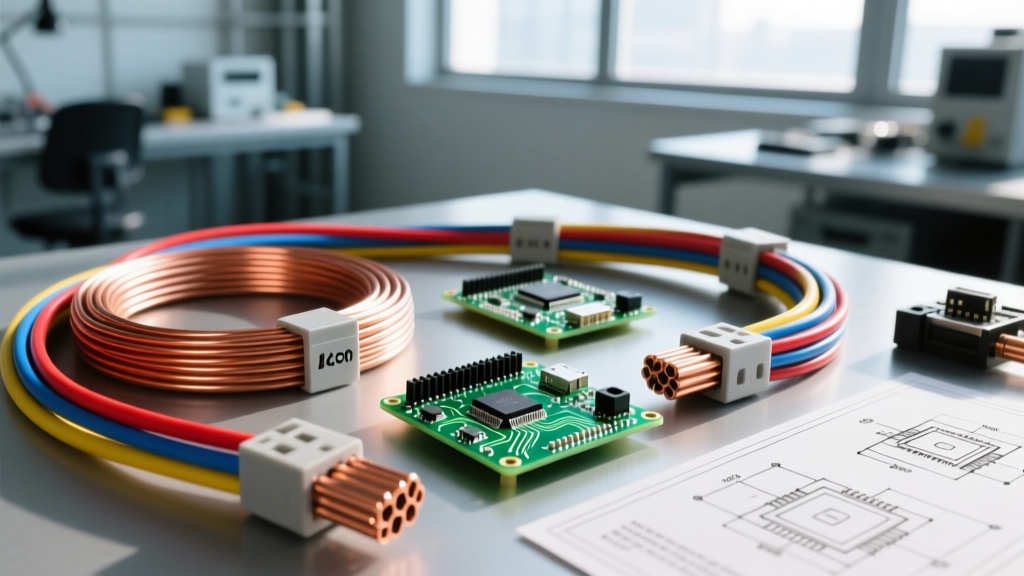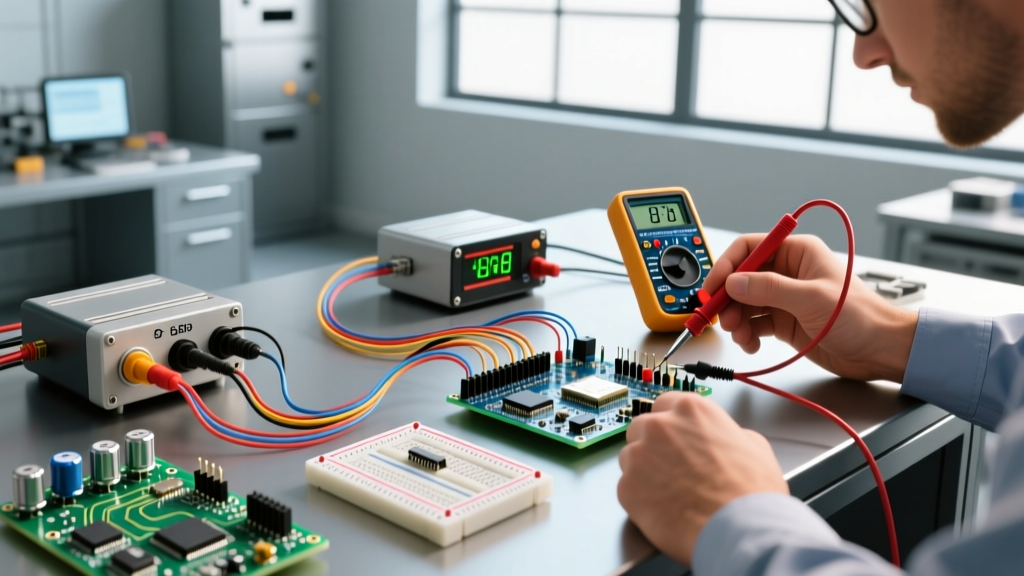

Voltage is the electrical potential difference between two points that acts as the pressure pushing electrons through a conductive path. If you are wondering what volts in electricity actually dictate on a jobsite or workbench, the short answer is that voltage determines your insulation requirements, your shock hazard threshold, and the physical wire size needed to deliver a specific amount of power. The most common mistake hobbyists and junior techs make is confusing voltage (the push) with current/amps (the flow) or watts (the total work done). You can have 10,000 volts of static electricity with virtually zero amps, which will shock you but won't power a toaster. Conversely, a 12V car battery can deliver 800 amps, which will weld a wrench to the terminal and start a fire.
What Voltage Actually Changes in a Real Circuit
When you change the voltage of a system, you are fundamentally altering the physics of how energy is delivered and contained. According to All About Circuits, Ohm's Law (V = I × R) dictates that for a fixed resistance, increasing voltage increases current. But in power systems, we usually hold power (Watts) constant. Since Power = Volts × Amps, raising the voltage allows you to drop the current for the same wattage.
Here is exactly what shifts when you select a higher or lower voltage for a project:
- Conductor Sizing: Lower current (from higher voltage) means you can use thinner, cheaper copper wire.
- Insulation Breakdown: Higher voltage requires thicker insulation. Standard 300V-rated THHN wire is fine for 120V/240V mains, but a 600V solar string requires specialized PV wire with thicker jackets to prevent arc tracking.
- Safety Thresholds: The NEC and IEC draw a hard line in the sand regarding human safety. Extra-Low Voltage (ELV) threshold: ≤50V AC or ≤120V DC. Stay below this, and the shock hazard is minimal. Cross it, and you must implement strict lock-out/tag-out, physical barriers, and GFCI/AFCI protection.
Worked Numeric Example: 12V vs 48V in a 2,000W Solar Setup
Let's look at a real-world scenario where choosing the wrong voltage costs you hundreds of dollars in copper and creates a fire hazard. Suppose you are building an off-grid cabin and need to run a 2,000W inverter to power a microwave and some lights.
Scenario A: 12V DC System
- Target Power: 2,000W
- System Voltage: 12V (nominal, but let's use 11.5V under load for realistic math)
- Current (I = P / V): 2,000W / 11.5V = 173.9 Amps
- Wire Required: To safely carry ~175A continuously without excessive voltage drop, you need 2/0 AWG copper wire. This cable is as thick as your thumb, incredibly stiff, and costs roughly $3.50 per foot.
- Fusing: Requires a massive 200A Class T fuse and heavy-duty terminal lugs that are difficult to crimp without a hydraulic tool.
Scenario B: 48V DC System
- Target Power: 2,000W
- System Voltage: 48V (nominal, ~46V under load)
- Current (I = P / V): 2,000W / 46V = 43.4 Amps
- Wire Required: To carry ~45A, standard ampacity charts show that 8 AWG copper wire (rated 50A at 75°C) is perfectly adequate. This wire is flexible, easy to strip with standard hand tools, and costs about $0.60 per foot.
- Fusing: A standard 60A ANL fuse and basic hand-crimped lugs.
The Verdict: By quadrupling the voltage from 12V to 48V, you reduced the current by 75%, dropped your wire gauge from 2/0 AWG to 8 AWG, and saved roughly $150 in copper alone for a 20-foot run—not to mention the labor saved by not wrestling with 2/0 AWG cable in tight conduit.
Where You Meet Specific Voltages in Practice
You will encounter specific voltage bands repeatedly in electrical and electronics work. Knowing the standard nominal values and their acceptable measured ranges prevents unnecessary troubleshooting.
| Application | Nominal Voltage | Acceptable Measured Range | Common Wire / Connector |
|---|---|---|---|
| North American Mains (Outlets) | 120V AC | 114V - 126V AC | 14 or 12 AWG NM-B (Romex) |
| NA Mains (Dryers/EV Chargers) | 240V AC | 228V - 252V AC | 10 to 6 AWG NM-B or THHN |
| Automotive / Marine DC | 12V DC | 11.8V (resting) to 14.4V (charging) | Stranded copper, Anderson SB plugs |
| Modern Solar / Telecom DC | 48V DC | 44V to 58.4V (absorption) | 4 to 2/0 AWG stranded, M8 lugs |
| Microcontroller Logic (ESP32) | 3.3V DC | 3.1V to 3.45V | 22-26 AWG solid core, Dupont |
Decision Tree: Picking Your DC System Voltage
When designing a DC power system (solar, battery backup, or camper van), do not guess the voltage. Use this decision path to lock in your architecture, wire size, and exact component picks.
| Total Continuous Load (Watts) | If-Then Decision | Recommended Wire (Battery to Inverter) | Concrete Component Pick |
|---|---|---|---|
| Under 600W | IF load < 600W, THEN choose 12V. (Standard auto/RV parts are cheap and abundant). | 4 AWG Stranded Copper | Renogy 12V 2000W Pure Sine Inverter + 150A Class T Fuse |
| 600W to 1,500W | IF load is 600-1500W, THEN choose 24V. (Balances wire savings with 24V appliance availability). | 2 AWG Stranded Copper | Victron Energy 24V 1500W Inverter + 125A ANL Fuse |
| Over 1,500W | IF load > 1500W, THEN choose 48V. (Mandatory for high power to prevent thermal runaway in wires). | 1/0 AWG Stranded Copper (for up to 3000W) | Victron MultiPlus 48/3000 Inverter/Charger + JK BMS 48V 200A |
Default Recommendation: If you are building a new whole-home off-grid system or a large workshop battery backup in 2026, default to 48V. The price parity of 48V LiFePO4 server-rack batteries (like the SOK or EG4 48V 100Ah models, typically around $1,200) has made 12V and 24V obsolete for anything larger than a camper van.
Frequently Asked Questions About Volts
What is the difference between nominal voltage and actual voltage?
'Nominal' is just the name tag. A 12V lead-acid battery actually sits at 12.6V when fully charged and drops to 10.5V when dead. A 120V AC wall outlet might measure 118V or 124V depending on your distance from the utility transformer and the current grid load. Always design your wire sizing and component tolerances around the actual measured extremes, not the nominal label.
Why do high-voltage transmission lines use hundreds of thousands of volts?
It comes back to P = V × I and I²R heating losses. Power lines transmit gigawatts of power over hundreds of miles. If they used 120V, the current would be so astronomically high that the copper wires would need to be the size of redwood trees to prevent melting from resistive heating. By stepping the voltage up to 345,000V using transformers, the current drops to a manageable level, allowing them to use relatively thin aluminum conductors. According to Fluke's electrical fundamentals guide, understanding this relationship is the bedrock of all power distribution.
Does a higher voltage always mean more shock danger?
Not strictly. Voltage is the ability to push current through your skin's resistance, but it's the current (amps) that stops your heart. However, because human skin has a relatively fixed resistance (roughly 1,000 to 100,000 ohms depending on moisture), higher voltage will mathematically force more lethal current through your body. This is why 12V DC is safe to touch with bare hands, but 240V AC can be fatal.