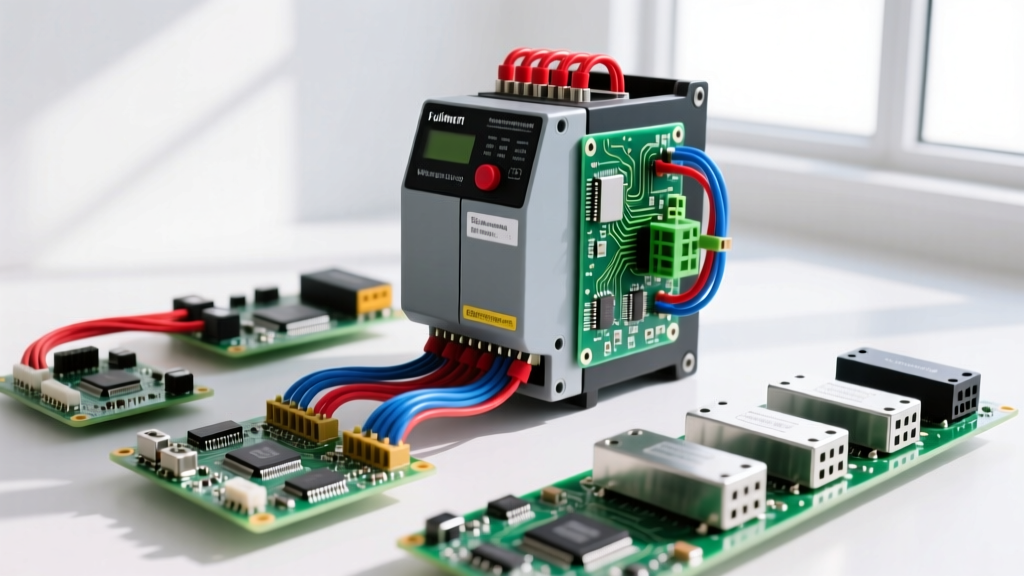
The standard residential voltage in the USA is 120V for general-purpose outlets and 240V for heavy appliances, operating at a frequency of 60Hz. Commercial and industrial facilities typically utilize 208V, 277V, or 480V three-phase systems. However, nominal voltage is only the baseline; real-world electrical design requires strict adherence to utilization tolerances, frequency constraints, and regional wiring codes.
Regional Voltage Profiles: USA vs. Global Standards
To understand the US grid in context, we must look beyond a single-country view. The US relies on a split-phase 120/240V architecture for homes, whereas most of the world uses a single-phase 230V standard. Below is the comparative specification sheet detailing nominal voltages, acceptable tolerances, and physical plug interfaces.
| Region | Nominal Voltage | Standard Tolerance (Utilization) | Frequency | Standard Plug Type |
|---|---|---|---|---|
| USA (Residential) | 120V / 240V (Split-Phase) | 114V–126V / 228V–252V | 60Hz | NEMA 1-15, 5-15, 14-50 |
| USA (Commercial) | 208V / 480V (3-Phase) | 197V–218V / 456V–504V | 60Hz | NEMA L-series, Hardwired |
| European Union | 230V (Single-Phase) | 216V–253V (+6% / -10%) | 50Hz | CEE 7 (Schuko / Type F) |
| United Kingdom | 230V (Single-Phase) | 216V–253V (+6% / -10%) | 50Hz | BS 1363 (Type G) |
In the US, the governing document for these tolerances is NEMA ANSI C84.1. Utilities are required to deliver voltage within Range A (±5% for 120V), while equipment manufacturers must design devices to operate satisfactorily within this exact same band.
Imported Equipment: Transformers, Converters, and the 60Hz Factor
When travelers or facility managers bring 230V/50Hz equipment into the US, the physical plug is the least of their worries. The critical question is what the device's internal architecture can tolerate.
First, distinguish between a converter and a transformer. A travel converter uses solid-state switching to chop the 120V sine wave, artificially creating peaks that mimic 240V. This is acceptable only for simple resistive loads like hair dryers or heating elements. It will instantly destroy the switch-mode power supply (SMPS) of a laptop or the control board of a European espresso machine. For electronics, you must use a heavy, copper-wound step-up/step-down isolation transformer.
Equipment Import Decision Tree
Use this decision matrix to determine the exact hardware required when operating foreign equipment on the US 120V/60Hz grid.
| Equipment Type | Power Supply Architecture | Required Action | Concrete Hardware Pick |
|---|---|---|---|
| Laptops, Phone Chargers, LED Drivers | Universal SMPS (100-240V, 50/60Hz) | Swap the IEC C13/C14 cable or use a passive plug adapter. | Standard IEC 3-prong C13 power cord (NEMA 5-15P to IEC C13). |
| Resistive Heaters, Toasters, Kettles | 230V Resistive Element | Use a step-up transformer rated for 1.5x the wattage. | Rockstone Power 5000W Heavy Duty Step-Up Transformer. |
| European Electronics/Audio (No Motors) | 230V Fixed SMPS or Linear | Use a pure sine-wave isolation step-up transformer. | LiteFuze LT-3000 3000W Toroidal Step-Up Transformer. |
| Industrial Motors, Pumps, Compressors | 400V 50Hz 3-Phase Induction | Step-down transformer + Variable Frequency Drive (VFD) to synthesize 50Hz. | Yaskawa GA800 VFD (programmed for 50Hz output) fed by a 480V to 400V transformer. |
Conductor Color Mapping: NEC Standards for US Installations
If you are wiring a subpanel, connecting a NEMA 14-50 receptacle for an EV charger, or tracing circuits in a commercial facility, you must follow the color codes mandated by the National Electrical Code (NFPA 70 / NEC). Unlike the IEC 60446 standard used in Europe (which uses Brown/Black/Gray for phases), the US relies on a distinctly different palette.
| System Architecture | Phase A (L1) | Phase B (L2) | Phase C (L3) | Neutral (N) | Ground (PE) |
|---|---|---|---|---|---|
| 120/240V Single-Phase (Residential) | Black | Red | N/A | White or Gray | Green, Green/Yellow, or Bare |
| 120/208V 3-Phase Wye (Commercial) | Black | Red | Blue | White or Gray | Green, Green/Yellow, or Bare |
| 277/480V 3-Phase Wye (Industrial) | Brown | Orange | Yellow | White or Gray | Green, Green/Yellow, or Bare |
| 240V 3-Phase High-Leg Delta | Black | Orange (High Leg) | Blue | White or Gray | Green, Green/Yellow, or Bare |
Governing Mixed Installations and Final Equipment Selection
When designing a mixed installation—such as integrating German-manufactured 400V packaging machinery into a US 480V plant—which standard governs? The rule is absolute: The local Authority Having Jurisdiction (AHJ) and the NEC govern the physical wiring methods, while UL/ETL listing requirements govern the equipment safety.
You cannot run European H07VNF flexible cable in US cable trays; you must use NEC-approved THHN/THWN-2 or XHHW-2 conductors in approved raceways. Furthermore, the imported machine's control panel must either be UL508A listed or accepted via a special inspection (field evaluation) by the local AHJ.
The Default Recommendation for US Power Integration
Stop relying on open-ended 'it depends' advice for power compatibility. Follow this default engineering path:
- For Consumer/IT Electronics: Only procure equipment with universal 100-240V, 50/60Hz Switch-Mode Power Supplies. Eliminate adapters entirely by sourcing region-specific IEC C13/C14 power cords.
- For Fixed Industrial Imports (400V 50Hz to US 480V 60Hz): Do not attempt to rewind motors or use static converters. Specify a Hammond Manufacturing HPS-G series UL-listed step-down isolation transformer (480V Delta primary to 400V Wye secondary) sized at 1.5x the total kVA of the machine. For any motorized components within that machine, install a localized VFD (like the Yaskawa GA800) to synthesize the required 50Hz frequency, completely isolating the mechanical drivetrain from the US 60Hz grid.
By matching the ANSI C84.1 utilization ranges and respecting the physical realities of 60Hz induction, you ensure both code compliance and long-term equipment survivability on the US grid.