The Lethal Consequence of Swapping Neutral and Ground
If you ask a novice builder what the white wire and the bare copper wire do, they will often say both 'complete the circuit.' This fundamental misunderstanding of what is the difference between neutral and ground is responsible for a significant percentage of residential electrical shocks and fires.
The neutral wire carries return current during normal operation. The ground wire (Equipment Grounding Conductor, or EGC) carries current only during a fault. If you swap them at a receptacle—connecting the appliance's neutral terminal to the bare ground wire and the ground terminal to the white neutral wire—the appliance will turn on and appear to work normally. However, the metal chassis of the appliance is now tied to the current-carrying neutral path. If that neutral wire breaks anywhere upstream, the full 120V line voltage will backfeed through the appliance and energize the metal chassis. Touching the appliance while grounded (e.g., standing on a concrete floor or touching a plumbing pipe) completes the circuit through your body, resulting in a potentially lethal shock.
Furthermore, running normal load current on a bare copper ground wire violates the core safety design of the electrical system. Ground wires are not sized or routed to handle continuous thermal loads; they are sized solely to handle massive, momentary fault currents long enough to trip a breaker. Using ground as a neutral creates a hidden fire hazard inside your walls.
Neutral vs. Ground vs. Bond: The Core Distinctions
To wire safely, you must separate three concepts that are often conflated: the grounded conductor (neutral), the equipment grounding conductor (ground), and the bonding jumper.
1. The Neutral (Grounded Conductor)
In a standard 120V/240V North American split-phase system, the neutral is the white (or gray) wire. It is a current-carrying conductor. Its job is to provide the return path for the 120V load back to the transformer. Because it carries current, it will always have a slight voltage drop across its length due to wire resistance. For example, a 15A load on 100 feet of 14 AWG copper will exhibit roughly 0.77V of drop on the neutral.
2. The Ground (Equipment Grounding Conductor / EGC)
The ground is the bare copper or green-insulated wire. It is a non-current-carrying conductor under normal conditions. Its sole purpose is to provide a low-impedance fault path back to the panel to ensure that if a hot wire touches a metal appliance chassis, the resulting massive current spike instantly trips the breaker. Think of it like an overflow pan under a water heater: it should never see water during normal operation, but if the tank leaks, it safely routes the water to the drain.
3. The Bond (Main Bonding Jumper)
Bonding is the physical, intentional connection between the neutral bus bar and the ground bus bar (or the panel enclosure itself). According to NFPA 70 (National Electrical Code) guidelines, this bond must occur at exactly one location: the main service disconnect (usually your main breaker panel). This single bond ensures that a ground fault has a complete, low-impedance loop back to the source, allowing the breaker to trip. If you bond neutral and ground at a subpanel, normal neutral return current will split and travel back on both the neutral wire and the ground wire, energizing all grounded metal surfaces in that sub-circuit.
How to Verify Neutral and Ground with a Multimeter
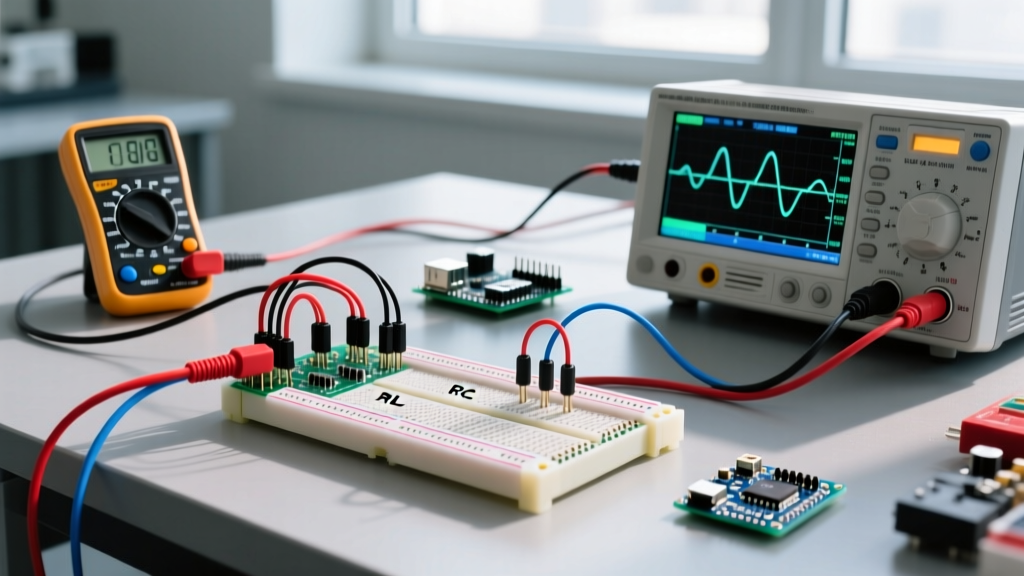
Before touching any wires, you must verify the integrity of the neutral and ground paths. A simple plug-in receptacle tester (like a Klein RT250) will tell you if wires are swapped, but it cannot tell you if the neutral is degraded or if there is a high-resistance fault path. For that, you need a true-RMS digital multimeter, such as a Fluke 117.
Measuring the voltage between Neutral and Ground (N-G) is the fastest way to diagnose a failing neutral, an overloaded circuit, or a shared-neutral (multi-wire branch circuit) miswire. A healthy circuit under load should show less than 2.0V between neutral and ground.
Numbered Testing Steps (De-energize and verify dead before removing any cover plates):
- Test Line to Neutral (L-N): Insert probes into the hot (short slot) and neutral (long slot). You should read between 114V and 126V (nominal 120V).
- Test Line to Ground (L-G): Insert probes into the hot slot and the ground hole (U-shape). You should read the same voltage as L-N (114V-126V). If L-G is significantly lower than L-N, you have a high-resistance ground path.
- Test Neutral to Ground (N-G): Insert probes into the neutral slot and the ground hole. With no load on the circuit, this should read 0.0V to 0.5V. Turn on a heavy load (like a hairdryer or space heater) on that circuit and measure again. If the N-G voltage jumps above 2.0V, your neutral wire is undersized, loose at a termination, or you have a loose connection at the panel bus bar.
Decision Tree: Fix It Yourself or Call an Electrician?
When you discover a neutral/ground anomaly, your next step depends on where the fault is located. Use this decision matrix to determine the correct, safe action.
| Symptom / Measurement | Root Cause | Action Required | Who Executes |
|---|---|---|---|
| Receptacle tester shows 'Open Ground' or 'Hot/Ground Reverse' | Missing EGC wire or swapped wires at the receptacle terminals. | Replace receptacle, ensure bare copper is terminated to the green screw. Buy a new 15A/20A tamper-resistant receptacle (e.g., Leviton T5252). | Competent DIYer |
| N-G Voltage reads > 2.0V under load | Loose neutral termination at the receptacle, a daisy-chained wire nut, or a loose neutral bus bar screw in the panel. | Tighten all downstream neutral terminations to manufacturer torque specs. If issue persists, panel inspection is required. | DIYer (branch circuit) / Electrician (panel) |
| Subpanel shows voltage on the ground bus bar | Neutral and ground are improperly bonded at the subpanel, or the neutral feeder is undersized/loose. | Remove the green bonding screw or strap in the subpanel. Verify 4-wire feeder (2 hots, 1 neutral, 1 ground) is present. | Licensed Electrician |
| L-G voltage reads 0V, but L-N reads 120V | Completely severed ground wire, or bootleg ground (ground jumpered to neutral at the receptacle). | Pull new cable or install a GFCI receptacle labeled 'No Equipment Ground' as a temporary safety mitigation (NEC 406.4(D)(2)). | Licensed Electrician (for rewiring) |
NEC Guidance and the Main Panel Bond
The rules governing grounding and bonding are dense, but they all stem from a single physics principle: fault current must have a dedicated, low-impedance path back to the source to trip the overcurrent device. All About Circuits provides an excellent breakdown of why earth ground alone is insufficient to trip a breaker; the dirt is a poor conductor compared to copper wire.
Under NEC-style guidance (specifically Article 250.24 and 250.142), the grounded conductor (neutral) and the equipment grounding conductor (ground) must be kept strictly separated everywhere downstream of the main service disconnect. The only place they are allowed to touch is at the main bonding jumper inside the main panel. Furthermore, you are never permitted to use a ground wire as a substitute for a neutral wire to complete a 120V circuit, nor can you use a neutral wire to ground an appliance chassis downstream of the main panel.
This article provides NEC-style guidance for educational and troubleshooting purposes. The National Electrical Code is a living document updated every three years, and local municipalities frequently amend it. Your local Authority Having Jurisdiction (AHJ) or electrical inspector always has the final legal authority on code compliance. Any work involving the main service panel, service entrance conductors, or meter base carries extreme arc-flash and electrocution risks and must be performed by a licensed, insured electrician.
Understanding what is the difference between neutral and ground is not just about passing an inspection; it is about ensuring that when a wire inevitably frays or a terminal inevitably loosens years from now, the safety system operates exactly as designed to protect human life.