An isolation transformer is a dual-winding transformer that transfers AC power to a load while maintaining a strict galvanic separation between the primary source and the secondary output. In a real circuit, it changes the reference to earth ground, meaning a single fault to ground no longer completes a lethal circuit through a human body or creates a 60Hz ground loop. The most dangerous confusion in this space is mistaking an autotransformer (like a standard Variac) for an isolation transformer; autotransformers share a single winding and offer zero galvanic isolation, leaving you fully exposed to mains shock hazards.
The Physics of Galvanic Separation (And the Shock Math)
To understand isolation transformer use, you have to look at how standard mains power is wired. In a typical North American 120V AC branch circuit, the neutral wire is bonded to earth ground at the service panel. If you touch the 'hot' wire while standing on a grounded surface, your body completes the circuit back to the panel's ground bond.
Assume a worst-case bench scenario: your hands are slightly sweaty, reducing your skin resistance to roughly 1,000 ohms. You accidentally touch a live 120V AC chassis that is referenced to earth ground. By Ohm's Law (I = V/R), the current through your body is 120V / 1,000Ω = 120mA. According to CDC NIOSH electrical safety guidelines, AC currents above 50mA can induce fatal ventricular fibrillation.
Now, place a 1:1 isolation transformer between the wall and the chassis. The secondary winding has no physical or galvanic path to earth ground. When you touch the live chassis, there is no return path to complete the circuit. The current drops to effectively 0mA (minus a negligible microamp capacitive leakage). The shock hazard is eliminated.
This principle relies on magnetic coupling rather than electrical coupling. The primary winding creates an alternating magnetic field in the transformer's iron core, which induces a voltage in the secondary winding. Because the two windings are physically separated and insulated from each other, direct current cannot flow between them. For a deeper look at the magnetic flux mechanics, All About Circuits' chapter on practical transformers provides excellent schematic breakdowns.
Where You Meet Isolation Transformers in Practice
You will typically deploy galvanic separation in three distinct environments, each solving a different physical problem:
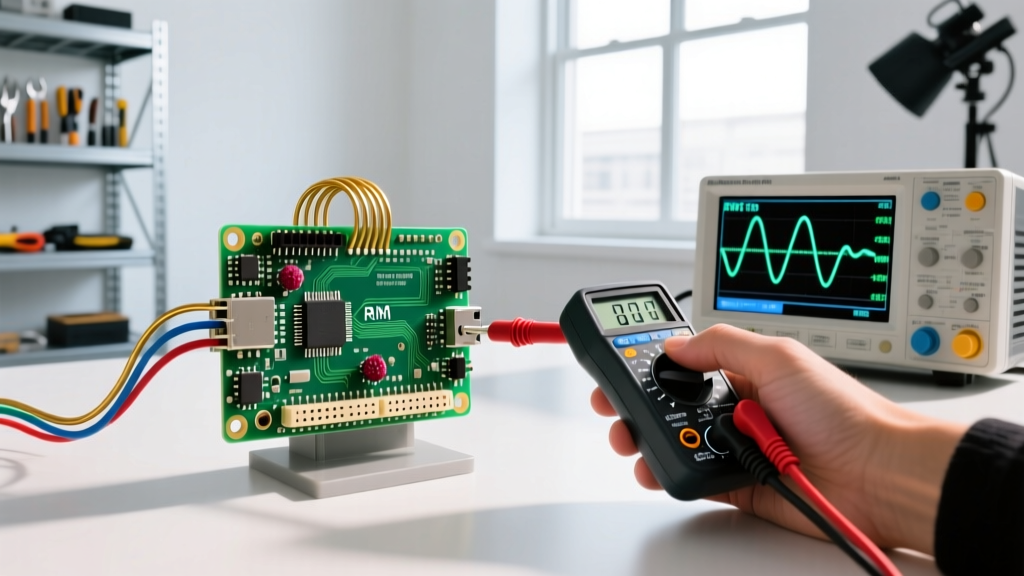
- Electronics Bench Repair: When troubleshooting live switch-mode power supplies (SMPS) or vintage tube amplifiers, the primary side of the circuit is often directly tied to mains hot. An isolation transformer allows you to safely probe the primary side with an earth-grounded oscilloscope without shorting the mains through the scope's ground clip and tripping the breaker (or exploding the probe).
- Audio and Recording Studios: Ground loops occur when two pieces of audio equipment are plugged into different outlets with slightly different ground potentials. Even a 0.2V potential difference across a 0.1-ohm ground wire creates a 2A circulating current, resulting in a loud 60Hz hum. An audio isolation transformer breaks this DC/ground path while passing the AC audio signal.
- Medical Environments (IEC 60601-1): In patient care areas, even microamp-level leakage currents can be fatal if they bypass the skin and enter the bloodstream via catheters. Medical-grade isolation transformers feature reinforced insulation and electrostatic shields to keep leakage current well below the strict 10µA limits mandated for medical facilities.
The Autotransformer Trap: What People Commonly Confuse It With
The most fatal mistake hobbyists make is assuming that any device that alters or 'cleans up' AC voltage provides isolation. This is categorically false for autotransformers.
An autotransformer (commonly sold under the brand name Variac) uses a single continuous winding with a sliding tap to step voltage up or down. Because the input and output share the same physical wire, they share the same ground reference. If you plug an autotransformer into a standard wall outlet, the output neutral is still bonded to the building's earth ground. If you touch the autotransformer's 'hot' output and a grounded metal workbench, you will receive the exact same 120mA lethal shock as if you had touched the wall outlet directly.
Decision Tree: Sizing and Selecting Your Transformer
Selecting the right unit requires matching the VA (Volt-Ampere) rating to your load, while accounting for inrush current. Switch-mode power supplies and motors can draw 3x to 5x their continuous rating for the first few AC cycles. If you undersize the transformer, the core will saturate during inrush, the voltage will collapse, and your device will fail to boot.
| Application Scenario | Load Profile & Inrush | Minimum VA Required | Concrete Pick (Part Number) |
|---|---|---|---|
| Audio / Studio Ground Loop | Low continuous draw (<30W), no massive inrush spikes. Needs low capacitive coupling. | 50VA | Hammond 169J (50VA, 120V, ~$65) |
| General Bench SMPS Repair | 300W continuous, but high inrush from bulk capacitors (requires high saturation margin). | 500VA to 600VA | Tripp Lite IS500HG (500VA, Medical Grade, ~$180) |
| Industrial / Medical Equipment | 800W continuous, requires ultra-low leakage current and electrostatic shielding. | 1000VA | SolaHD M2 (1000VA, Ultra-Low Leakage, ~$350) |
| Vintage Tube Amp Restoration | 150W continuous, moderate inrush, requires physical robustness and thermal fusing. | 250VA | Hammond 171K (250VA, 120V, ~$110) |
Default Recommendation: If you are building a general-purpose electronics repair bench and need a single unit to handle 90% of household appliance and PC power supply troubleshooting, buy the Tripp Lite IS500HG. Its medical-grade construction handles the heavy inrush of modern switching power supplies without core saturation, and it includes hospital-grade plug/receptacles for physical durability.
Critical Bench Safety: The 'Floating' Secondary Myth
There is a pervasive myth in DIY circles that an isolation transformer makes you completely invincible to electrical shock. This is false, and understanding why is critical for your survival.
An isolation transformer protects you from a single fault to ground. It does this because the secondary winding is 'floating'—it has no reference to earth. However, the secondary winding still produces a potential difference (e.g., 120V) between its own two output terminals (Line and Neutral).
If you touch the secondary 'Line' wire with one hand, and the secondary 'Neutral' wire with your other hand, your body bridges the two terminals. The current flows from one side of the secondary winding, through your chest, and back into the other side of the secondary winding. The isolation transformer cannot protect you here because you have completed the circuit entirely within the isolated secondary loop. The 120mA will still flow, and it will still be lethal.
Frequently Asked Questions
Can I use a standard step-up/step-down transformer for isolation?
Yes, but only if it is a dual-winding transformer. A standard 120V to 240V dual-winding step-up transformer provides excellent galvanic isolation because the primary and secondary windings are physically separate. However, you must ensure the secondary voltage matches your load requirements, and you must verify with a multimeter that there is infinite resistance (OL) between the primary and secondary pins before energizing it.
Why does my oscilloscope trip the breaker when I probe a live SMPS?
Your oscilloscope's ground clip is tied directly to the earth ground pin on its power cord. If you clip that ground to the 'hot' side of a bridge rectifier in a non-isolated SMPS, you are creating a dead short from mains hot directly to earth ground. The breaker trips instantly to prevent a fire. Placing the SMPS on an isolation transformer breaks the ground reference, preventing the short circuit. (Note: You must still be careful about the scope's ground clip raising the chassis voltage to mains potential).
Do isolation transformers waste a lot of power?
Modern silicon-steel core isolation transformers are highly efficient, typically operating at 95% to 98% efficiency under load. A 500VA unit will dissipate roughly 10W to 25W as heat at full load. The real 'waste' occurs if you leave a heavily oversized transformer (e.g., a 2000VA unit) idling with a 10W load, as the core magnetization losses will dominate. Size your transformer to be roughly 125% to 150% of your maximum expected continuous load to optimize efficiency and handle inrush.