Electrical voltage in Canada is the standardized electrical potential difference delivered to homes and businesses, nominally set at 120V for standard branch circuits and 240V for heavy loads, operating at a frequency of 60Hz. This standardized potential dictates the insulation thickness, breaker sizing, and appliance compatibility for every circuit you wire or troubleshoot. Beginners and imported-equipment buyers commonly confuse nominal voltage (the nameplate rating) with actual measured voltage at the receptacle, or mistakenly assume Canadian 240V single-phase is identical to European 230V single-phase.
The Core Standard: 120V/240V Split-Phase at 60Hz
The Canadian residential grid relies on a split-phase system. A pole-mounted or pad-mounted distribution transformer steps down the primary distribution voltage (typically 4kV to 27kV) to a secondary 240V. The secondary winding has a center tap that is grounded, creating the neutral. This gives you three accessible potentials:
- Line 1 to Neutral: 120V (used for lighting and standard receptacles)
- Line 2 to Neutral: 120V (used to balance the panel loads)
- Line 1 to Line 2: 240V (used for high-wattage resistive loads and motors)
Worked Numeric Example: Consider a 3000W electric baseboard heater. If wired to a 240V circuit, the current draw is calculated using Ohm's law derived power formula: I = P / V. Therefore, 3000W / 240V = 12.5 Amps. This safely fits on a 20A breaker using 12 AWG copper wire. If you attempted to run that exact same 3000W heating element on a 120V circuit, the current draw would double to 25 Amps (3000W / 120V). That would require a 30A breaker and 10 AWG wire, generating significantly more heat in the conductors and wasting infrastructure costs. This is why high-wattage loads are strictly assigned to the 240V legs.
Where You Meet This in Practice
On the jobsite or at the workbench, Canadian voltage standards manifest in specific NEMA receptacle configurations and Canadian Electrical Code (CEC) rules. The CEC, published by the CSA Group, governs these installations and differs slightly from the US NEC.
Here is how voltage maps to physical hardware in a standard Canadian installation:
- 120V, 15A (NEMA 5-15R): Standard bedroom and living room outlets. 14 AWG wire, 15A breaker.
- 120V, 20A (NEMA 5-20R): Kitchen counters and heavy-duty garage tools. 12 AWG wire, 20A breaker.
- 240V/120V, 30A (NEMA 14-30R): Electric clothes dryers. Uses both 240V for the heating element and 120V for the drum motor and control board. 10 AWG wire.
- 240V/120V, 50A (NEMA 14-50R): Electric ranges and Level 2 EV chargers. 6 AWG copper or 4 AWG aluminum wire.
Real-World Scenario: The 208V vs 240V Commercial Water Heater Mistake
Voltage mismatches rarely cause immediate explosions, but they silently destroy performance. Here is a walkthrough of a common commercial wiring error.
- The Setup: An apprentice is tasked with installing a standard residential 3000W, 240V electric water heater in a small commercial auto shop. The shop is fed by a 120/208V 3-phase wye panel, not a residential split-phase panel. The apprentice hooks the heater up to two phases of the 208V supply, assuming "208 is close enough to 240."
- The Numbers: The heating element's resistance is fixed at the factory. Using the rated values: R = V² / P. So, 240² / 3000 = 19.2 Ohms. When connected to the actual 208V supply, the new power output becomes P = V² / R. So, 208² / 19.2 = 2253 Watts.
- The Outcome: The water heater produces 25% less heat than its nameplate claims. The shop's wash bay runs out of hot water by mid-morning because the recovery rate has plummeted.
- What Went Wrong: The apprentice confused residential split-phase (240V) with commercial wye (208V line-to-line). While resistive loads won't immediately burn out at a lower voltage, they suffer massive performance penalties. Conversely, if you wire a 208V-rated commercial heater to a 240V residential supply, the power output spikes to 3461W, rapidly burning out the elements and tripping the breaker.
Nominal vs. Measured Voltage: What Your Multimeter Should Read
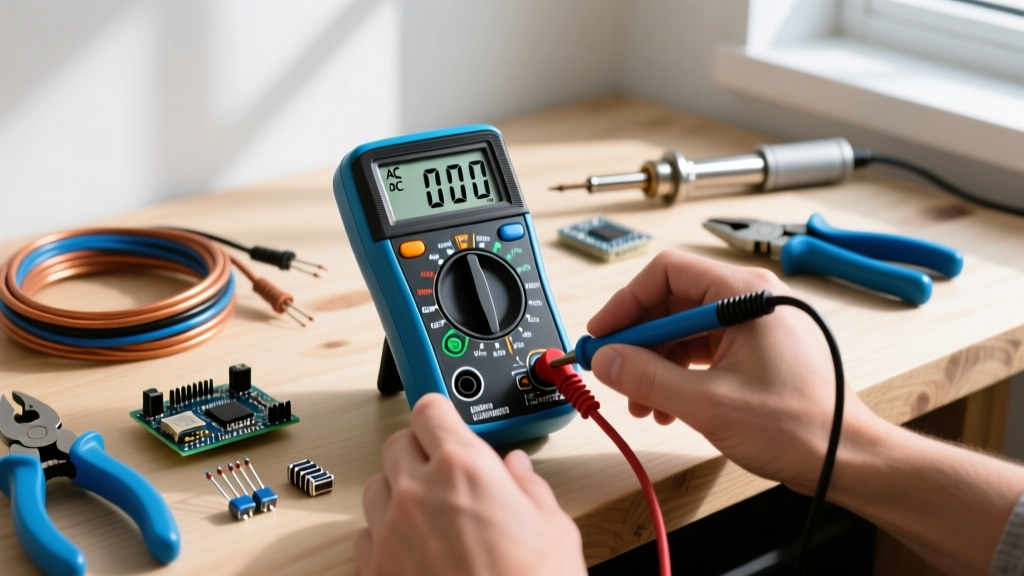
When you put your multimeter probes into a receptacle, you will almost never read exactly 120.0V or 240.0V. According to Natural Resources Canada and utility standards like ANSI C84.1 (adopted by Canadian utilities like Hydro One), voltage is allowed to fluctuate within a specific tolerance band to account for line losses, transformer tap settings, and grid load.
| Nominal Voltage | Utility Service Point (Min - Max) | Utilization Equipment (Min - Max) | Common Multimeter Reading |
|---|---|---|---|
| 120V | 114V - 126V | 108V - 132V | 118V - 122V |
| 240V | 228V - 252V | 216V - 264V | 236V - 244V |
| 208V (3-Phase) | 197V - 218V | 187V - 228V | 204V - 210V |
Frequently Asked Questions About Canadian Voltage
Can I use US-bought appliances in Canada?
Yes, in almost all cases. The US and Canada share the same 120V/240V 60Hz grid standard. The only exceptions are appliances with synchronous motors (like some vintage turntables or analog clocks) that might run at the wrong speed if they were designed for a 50Hz market, or ultra-cheap imports that lack CSA/cUL certification, which may violate your home insurance policy if they cause a fire.
Why does my 240V baseboard heater have a 3-wire cable instead of 2-wire?
Pure 240V resistive loads (like baseboard heaters) only require two current-carrying conductors and a ground. However, if the heater includes a built-in thermostat with a 120V pilot light, or if it's a hybrid unit, it will need a neutral. Always check the wiring diagram on the unit's junction box cover. If it strictly calls for Line 1, Line 2, and Ground, cap the neutral wire in the panel and do not connect it to the heater.
Is Canadian 240V the same as European 230V?
No. Canadian 240V is derived from a center-tapped split-phase transformer, meaning you have two 120V legs that are 180 degrees out of phase with each other. European 230V is a single-phase line-to-neutral connection derived from a 400V 3-phase wye system. Plugging a European 230V appliance into a Canadian 240V receptacle without a proper adapter and frequency check can result in catastrophic failure, as the plug物理 shapes differ and the grounding schemes are not always compatible.