
The 3-Year Cycle: Why Code Update Classes Are Non-Negotiable
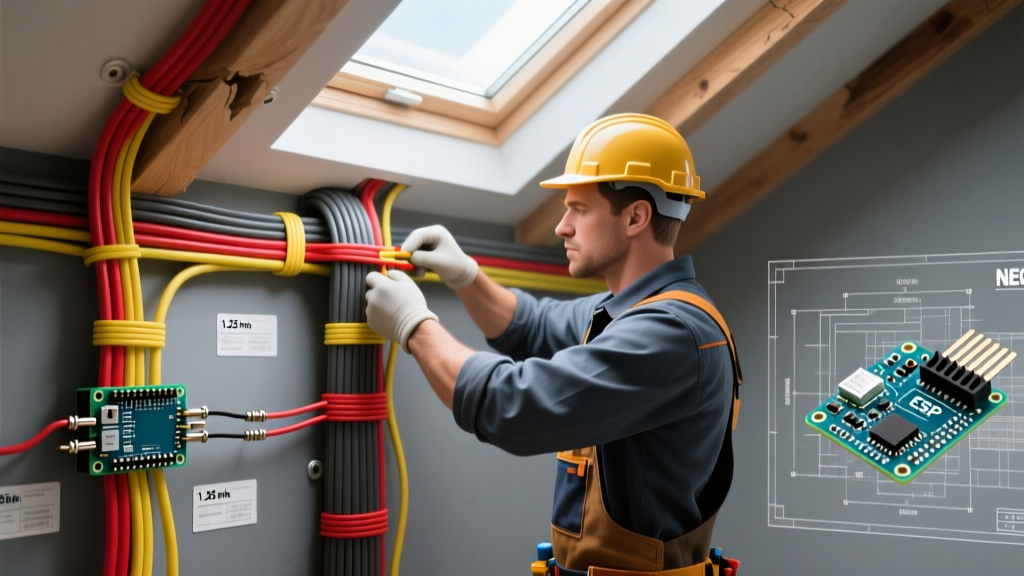
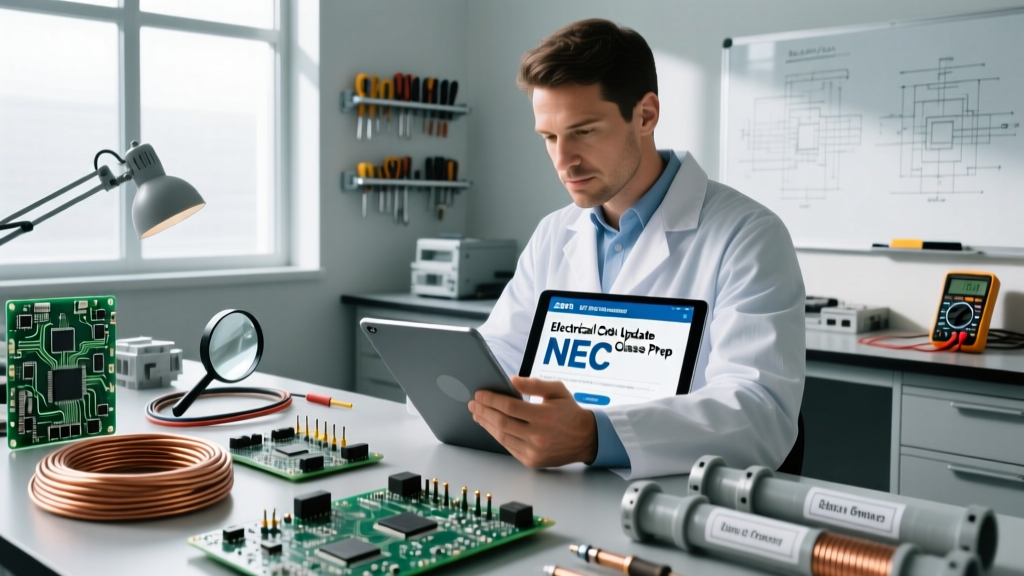
The National Electrical Code (NEC), published by the National Fire Protection Association as NFPA 70, operates on a strict three-year revision cycle. For licensed electricians, master contractors, and electrical inspectors, adapting to these changes is not merely a matter of best practices; it is a legal requirement to maintain state licensure. As the industry looks toward the rollout and state-level adoption of the 2026 NEC, enrolling in accredited electrical code update classes is the only reliable way to bridge the gap between legacy wiring habits and modern safety mandates.
Many journeyman and master electricians make the critical mistake of waiting until their state officially adopts the new code before seeking education. However, state adoption lags can range from six months to over three years. By the time your local Authority Having Jurisdiction (AHJ) begins enforcing the new standards, the learning curve for complex additions—like expanded Energy Storage System (ESS) requirements or revised ampacity derating tables—can result in failed inspections, torn-out work, and severe profit margin erosion. Proactive continuing education is your primary defense against these costly field failures.
State Adoption Lags vs. Immediate CEU Requirements
While the NFPA publishes the NEC on a predictable schedule, state legislatures and local municipalities adopt it at their own pace. For example, states like Massachusetts and Minnesota often adopt the newest code within a year of publication, while others may lag by two or more cycles. Despite this, many state licensing boards require Continuing Education Units (CEUs) that specifically cover the latest published NEC, regardless of local enforcement. Taking electrical code update classes early ensures you satisfy your CEU renewal requirements while simultaneously future-proofing your business against upcoming local inspections.
Comparing Top Providers for Electrical Code Update Classes
Not all continuing education is created equal. The market is saturated with generic safety courses that offer little practical value for field wiring. When selecting a provider, you must look for curriculum depth, AHJ recognition, and practical field applications. Below is a comparative framework of the most authoritative providers in the industry.
| Provider | Format & Duration | Est. Cost | CEU Value | Best Suited For |
|---|---|---|---|---|
| NFPA (Official) | 2-Day Seminar / Live Virtual | $595 - $750 | 14-16 Hours | Inspectors, Plan Reviewers, Large Commercial Contractors |
| Mike Holt Enterprises | Online Video / DVD / Textbook | $139 - $189 | 14 Hours | Journeyman & Master Electricians, Residential Wiremen |
| IAEI (Local Chapters) | 1-Day In-Person Seminars | $50 - $125 | 6-8 Hours | Local Contractors seeking AHJ networking & specific rulings |
| IBEW/NECA JATC | In-House Union Training | Free (Members) | Variable | Union Apprentices and Journeyman Wiremen |
For the independent contractor or journeyman needing to renew a license efficiently, Mike Holt Enterprises remains the industry gold standard for visual, field-oriented electrical code update classes. Conversely, if you are an electrical inspector or a project manager overseeing multi-million dollar commercial builds, the official NFPA seminars provide the granular, legalistic breakdown of code intent required for high-level plan reviews.
Core Curriculum: What You Will Actually Learn
A high-quality code update course does not just read the book to you; it translates dense legal text into actionable wiring methodologies. When preparing for the 2026 NEC and reflecting on the massive shifts from the 2020/2023 cycles, here are the technical deep-dives you must expect from a premium curriculum.
1. GFCI and AFCI Expansion in Dwelling Units
The relentless expansion of Ground-Fault Circuit Interrupter (GFCI) and Arc-Fault Circuit Interrupter (AFCI) protection continues to be a primary focus of any electrical code update class. Recent cycles expanded GFCI protection to all 125-volt through 250-volt receptacles supplied by single-phase, 150-volt or less to ground, and 150-ampere or less. This includes areas previously overlooked, such as basements, crawl spaces, and specific outdoor HVAC disconnects. Classes teach the practical troubleshooting of nuisance tripping, the proper installation of 2-pole GFCI breakers for 240V appliances, and the transition away from standard dead-front receptacles in favor of upstream breaker protection to minimize service callbacks.
2. Emergency Disconnects and Surge Protection
Article 230.85 revolutionized residential services by mandating an exterior emergency disconnect for one- and two-family dwellings. Update classes spend hours dissecting how to integrate this into standard meter-main combinations versus standalone disconnect enclosures. Furthermore, Article 230.67 now requires Type 1 or Type 2 Surge Protective Devices (SPDs) on all new dwelling unit services. Instructors will cover the physical mounting constraints, the required wire bending space in standard 200A load centers, and how to properly route the SPD leads to minimize impedance and maximize surge clamping performance.
3. Conductor Ampacity and Article 310 Revisions
No electrical code update class is complete without a grueling review of Article 310 (Conductors for General Wiring). The reorganization of ampacity tables and the strict enforcement of the 90°C column for derating purposes—while limiting the final termination ampacity to the 60°C or 75°C column—causes frequent inspection failures. Advanced classes provide cheat sheets and practical exercises on calculating adjustment factors for more than three current-carrying conductors in a single raceway, a scenario that frequently forces contractors to upsize from 10 AWG THHN to 8 AWG THHN in commercial EMT runs to avoid melting insulation.
4. Energy Storage Systems (ESS) and Solar Integration
With the explosion of residential solar-plus-storage, Article 480 (Storage Batteries) and Article 706 (Energy Storage Systems) are heavily emphasized. You will learn the specific ventilation requirements, the mandatory rapid shutdown mechanisms for DC conductors, and the strict labeling protocols required by the AHJ. Failing to understand the disconnecting means for ESS can result in an immediate red tag on a $30,000 solar installation.
Expert Insight: 'The most common failure mode I see in the field isn't a deliberate code violation; it's an electrician applying a 2014 wiring method to a 2023/2026 inspection. Taking a dedicated code update class isn't about memorizing article numbers; it's about retraining your muscle memory for things like MC cable securing distances and neutral conductor sizing.' — Senior Electrical Inspector, IAEI Member
Strategic Framework: Scheduling Your Continuing Education
To maximize the ROI of your electrical code update classes, align your CEU schedule with your state's legislative session. Most states adopt new codes during the first or second quarter of the year following the NFPA publication. Schedule your classes 60 to 90 days before your license renewal date, which ideally should coincide with the anticipated local adoption date.
If you operate a contracting business, mandate that your lead journeyman attend an IAEI or NFPA seminar, and then host an internal 'lunch and learn' to cascade the critical wiring method changes down to your apprentices and wiremen. This hierarchical approach to code education ensures your entire crew is pulling wire, bending EMT, and terminating panels to the exact same modern standard, drastically reducing the friction between your crew and the local electrical inspector.
References & Official Resources
- NFPA 70: National Electrical Code (NEC) Development Page - Official source for code cycle timelines and technical committee reports.
- International Association of Electrical Inspectors (IAEI) - Resource for local chapter seminars and inspector-perspective code analysis.
- Mike Holt NEC Code Forum and Articles - Practical field applications and visual guides for complex NEC articles.