
Understanding the Peruvian Electrical Grid
Installing a Peru electrical outlet requires a fundamental shift in thinking for anyone accustomed to North American 120V systems. Peru operates on a single-phase 220V, 60Hz alternating current (AC) grid. While the physical plug shapes often resemble those in the United States, the voltage is nearly double, meaning wiring errors can instantly destroy 120V appliances or cause severe electrical fires.
According to international electrical databases like World Standards, Peru officially utilizes Type A (two flat parallel pins, ungrounded) and Type C (two round pins, ungrounded) plugs. However, for modern residential installations, grounding is critical. Therefore, electricians in Peru predominantly install Type B (NEMA 5-15R) or Schuko (Type F) receptacles to provide a safe earth ground for appliances like refrigerators and microwaves.
Peru vs. North America: Grid Specifications
| Specification | Peru Standard | North America (US/CA) |
|---|---|---|
| Voltage | 220V | 120V |
| Frequency | 60Hz | 60Hz |
| Standard Breaker Size | 16A or 20A | 15A or 20A |
| Common Wire Gauge | 2.5 mm² (approx. 14 AWG) | 14 AWG |
| Primary Plug Types | Type A, C, B | Type A, B |
Tools and Materials Required
Before beginning your installation, gather the correct materials. As of 2026, sourcing high-quality, code-compliant materials in Peru is easier than ever, with brands like Bticino, Schneider Electric, and Philips dominating the market. A standard Bticino universal grounded receptacle will cost between 25 and 45 PEN (Peruvian Soles), roughly $7 to $12 USD.
- Receptacle: Grounded Type B (NEMA 5-15R) or a high-quality Universal Socket with internal safety shutters.
- Wire: 2.5 mm² copper wire with THW-90 or THHN insulation. (Note: 2.5 mm² is the metric equivalent to 14 AWG and is the standard for 16A/20A circuits in Peru).
- Circuit Breaker: 16A or 20A single-pole MCB (Miniature Circuit Breaker).
- Safety Gear: Insulated gloves, safety glasses, and a CAT III or CAT IV digital multimeter.
- Tools: Wire strippers (calibrated for metric sizes), Phillips and flathead screwdrivers, voltage tester, and electrical tape.
Step-by-Step Installation Guide
Step 1: Power Down and Verify
Safety is paramount when working with 220V. A shock from a 220V line can cause severe cardiac arrest. Navigate to your main distribution board (tablero de distribución) and turn off the specific MCB controlling the room. If you are unsure, turn off the main breaker. Use a non-contact voltage tester and a multimeter at an existing outlet in the same room to confirm the power is completely dead.
Step 2: Prepare the 2.5 mm² Cable
Peruvian electrical code (Código Nacional de Electricidad - CNE) strictly mandates color coding for safety. Modern installations follow IEC standards, though older US-imported cables may still be present.
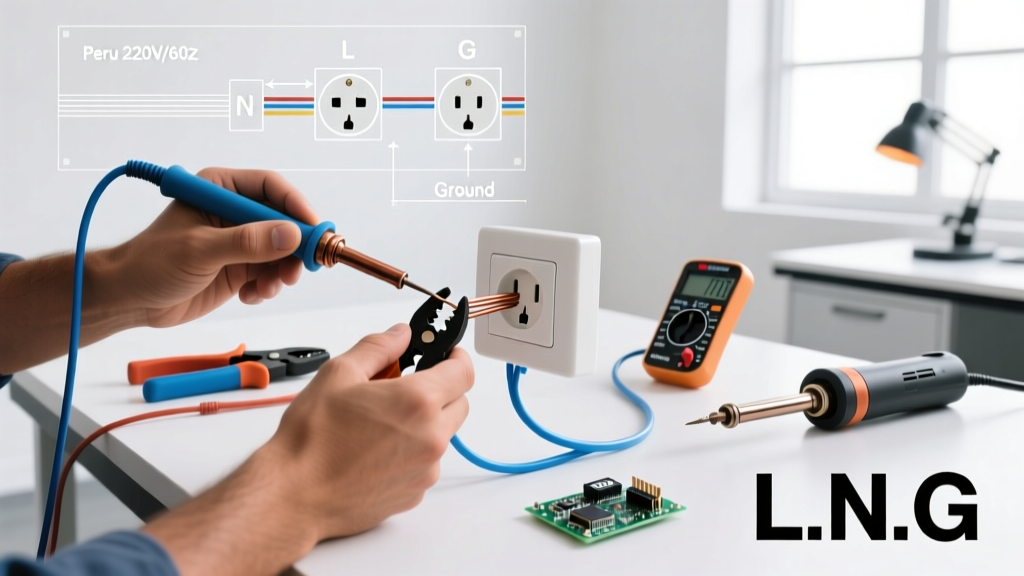
- Phase (Line / Hot): Brown (or Black in older US-style cables)
- Neutral: Blue (or White)
- Earth Ground: Green/Yellow stripe (or Bare/Green)
Strip approximately 15mm (5/8 inch) of insulation from the end of each 2.5 mm² wire using your metric-calibrated wire strippers. Ensure no copper is exposed beyond the terminal connection points to prevent short circuits.
Step 3: Wire the Receptacle
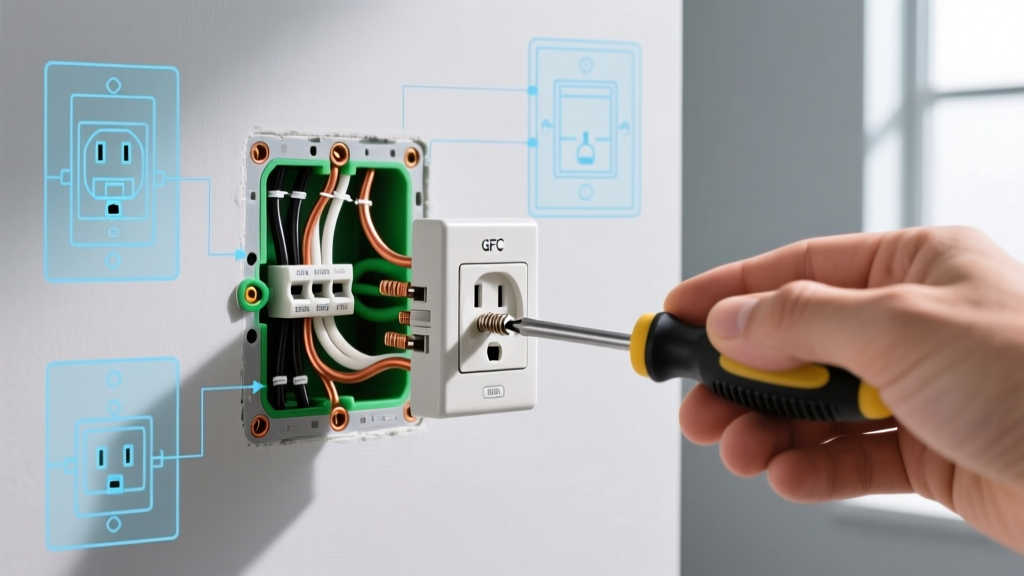
Connect the wires to the corresponding terminals on the back or side of the receptacle. For a standard Type B (NEMA 5-15R) outlet:
- Line (Phase): Connect the Brown (or Black) wire to the Brass screw. This is the hot wire carrying the 220V potential.
- Neutral: Connect the Blue (or White) wire to the Silver screw. This completes the 220V circuit back to the panel.
- Ground: Connect the Green/Yellow wire to the Green grounding screw. This provides a safe path for fault currents.
Pro Tip: Always use the 'back-wire' clamping plates if your receptacle has them, rather than wrapping the wire around the screw. Clamping plates provide a more secure connection for 2.5 mm² solid copper wire, reducing the risk of arcing over time.
Step 4: Secure and Test
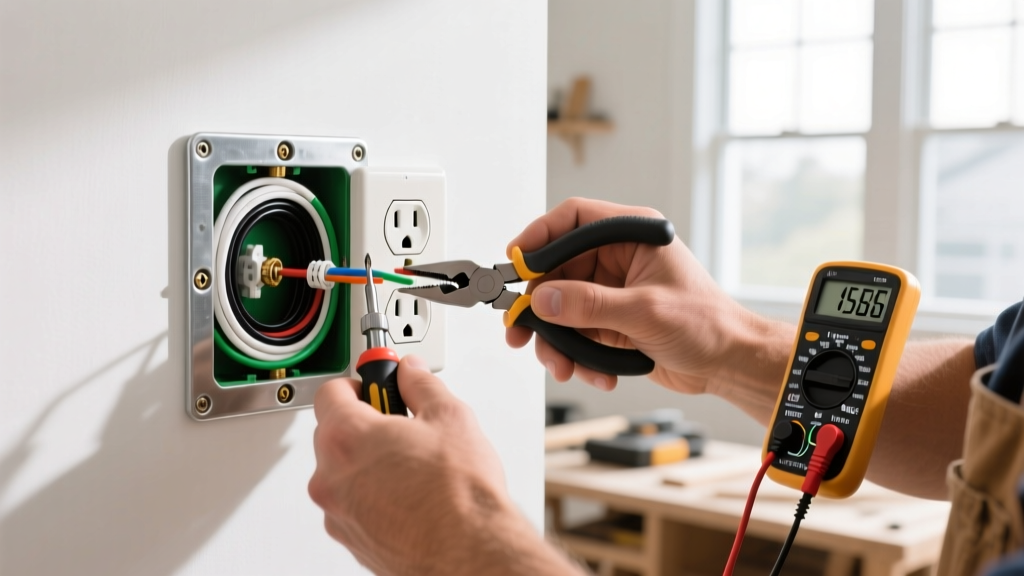
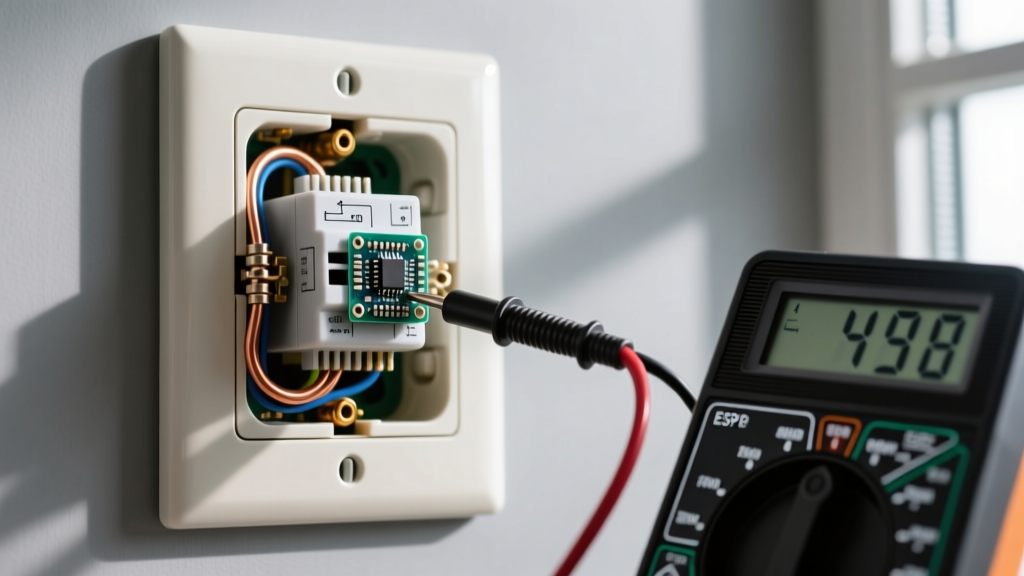
Carefully fold the wires into the back of the junction box, ensuring the ground wire is not pinched against the hot terminal. Screw the receptacle firmly into the wall box and attach the faceplate. Restore power at the breaker panel. Set your multimeter to AC Voltage (V~) and test the receptacle:
Line to Neutral: Should read between 210V and 230V.
Line to Ground: Should read between 210V and 230V.
Neutral to Ground: Should read close to 0V (anything above 2V indicates a poor neutral connection or overloaded circuit).
Navigating Older Peruvian Homes: Edge Cases
If you are renovating a home in historic districts of Lima, Cusco, or Arequipa, you will likely encounter outdated wiring. Many older homes lack a dedicated earth ground wire, relying instead on two-wire (Line and Neutral) setups.
The Danger of Floating Grounds: Installing a 3-prong grounded outlet on a 2-wire system is illegal and highly dangerous. It gives users a false sense of security. If an appliance develops an internal fault, the metal casing will become energized at 220V, and the breaker will not trip because there is no ground path to create a short circuit.
The RCD Solution
If running a new ground wire back to the panel is structurally impossible, the Peruvian CNE allows the use of an RCD (Residual Current Device), known locally as an Interruptor Diferencial. You must install a 30mA RCD at the breaker panel for that specific circuit. The RCD monitors the current imbalance between Line and Neutral; if it detects a leak (such as current passing through a human body to the earth), it trips in milliseconds, saving lives. You must label the outlet 'No Equipment Ground' if using this workaround.
For comprehensive safety guidelines regarding electrical shock prevention and grounding protocols, refer to the OSHA Electrical Safety standards, which align closely with international best practices for 220V systems.
Frequently Asked Questions
Can I plug a US 120V appliance into a Peru electrical outlet?
No. Plugging a standard US 120V appliance directly into a 220V Peruvian outlet will result in immediate catastrophic failure, likely causing a fire or exploding the appliance's power supply. You must use a step-down voltage transformer (220V to 120V) rated for at least 20% more wattage than your appliance requires. Always check the appliance's power brick; many modern laptop chargers are 'dual voltage' (100-240V) and only require a physical plug adapter, not a transformer.
Why do some outlets in Peru accept both flat and round pins?
Because Peru historically imported appliances from both North America (Type A/B) and Europe (Type C/F), the local market adapted by popularizing 'Universal' or 'Multi-standard' receptacles. While convenient, cheap universal sockets often lack internal tension springs, leading to loose connections, arcing, and melted faceplates. Always opt for dedicated Type B or high-end branded universal sockets with tight internal grip mechanisms.
What size breaker should I use for a 2.5 mm² wire?
A 2.5 mm² copper wire is typically rated for up to 20A to 25A depending on the insulation type and ambient temperature. In Peru, it is standard practice to protect a 2.5 mm² lighting or general receptacle circuit with a 16A or 20A single-pole MCB. Never use a 32A breaker on 2.5 mm² wire, as the wire will melt and catch fire before the breaker ever trips during an overload.