
Diagnosing the Spain Electric Outlet: A Technical Guide
Troubleshooting a Spain electric outlet requires an understanding of both the physical Type F (Schuko) receptacle and the unique Spanish residential electrical panel, known locally as the cuadro de mando. Spain operates on a 230V / 50Hz grid. While the infrastructure is highly modernized, expats, travelers, and DIYers frequently encounter issues ranging from tripped differential switches to floating grounds in older rural properties.
Whether you are dealing with a dead socket in a Madrid apartment or diagnosing voltage drops in an Andalusian finca, this guide provides actionable, code-compliant troubleshooting steps based on Spain's electrical standards.
The Spanish Switchboard: Decoding the Cuadro de Mando
Before touching a physical Spain electric outlet, you must understand the breakers protecting it. Spanish electrical panels are strictly regulated by the REBT (Reglamento Electrotécnico de Baja Tensión). A standard residential panel contains four distinct types of protection modules. Misidentifying these is the most common error DIYers make when an outlet loses power.
- ICP (Interruptor de Control de Potencia): Limits total house consumption to your contracted kW tier (e.g., 3.45 kW or 4.6 kW). Note: As of 2026, most digital smart meters (contadores inteligentes) integrate the ICP internally, rendering physical ICP modules in older panels redundant.
- IGA (Interruptor General Automático): The main MCB (Miniature Circuit Breaker) that protects the entire installation from overloads and short circuits.
- ID (Interruptor Diferencial): The equivalent of a GFCI/RCD. It detects ground fault leakage (typically 30mA in residential settings) and trips to prevent electrocution. It features a physical 'T' (Test) button.
- PIA (Pequeño Interruptor Automático): Individual MCBs for specific circuits (lighting, general outlets, oven, etc.).
Breaker Diagnostic Matrix: Why Did Your Outlet Stop Working?
| Symptom | Likely Tripped Module | Diagnostic Action |
|---|---|---|
| All outlets dead, main lights off | IGA or ICP | Check contracted power limit; unplug high-draw appliances (HVAC, oven) and reset IGA. |
| Outlets dead, but lights work | PIA (Circuit C2 or C5) | Locate the specific PIA labeled for outlets (usually 16A). Check for a short circuit in a plugged-in device. |
| Random power loss, ID switch tripped | ID (Diferencial) | Ground fault detected. Unplug all devices, reset ID, and plug in devices one by one to find the faulty appliance leaking current to earth. |
| Single outlet dead, breakers fine | N/A (Wiring/Receptacle) | Physical failure at the Spain electric outlet. Proceed to multimeter testing below. |
Physical Receptacle Troubleshooting: The Type F Schuko
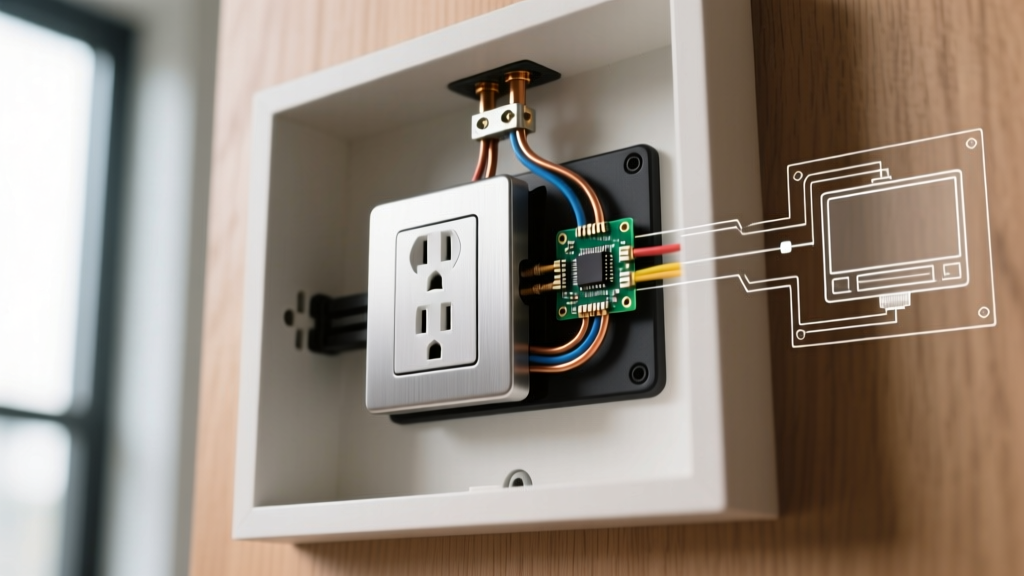
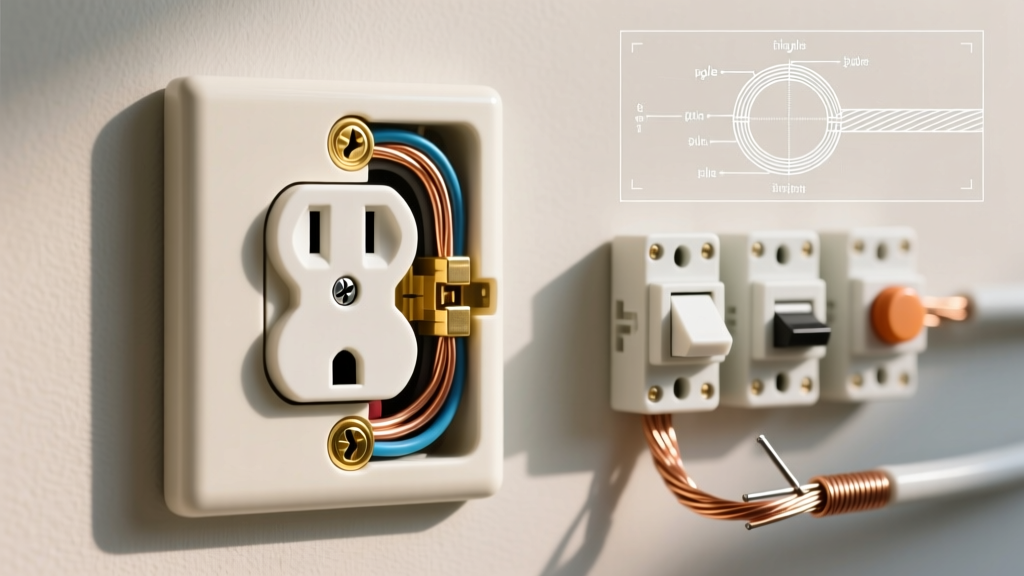
The standard Spain electric outlet is the Type F Schuko. Unlike UK or US plugs that use a dedicated third pin for grounding, the Schuko system relies on two metallic grounding clips on the top and bottom edges of the recessed receptacle. According to the World Standards Type F guide, this design allows for reversible plug insertion but introduces specific mechanical failure modes over time.
Testing Ground Integrity with a Multimeter
If an appliance with an EMI filter (like a desktop PC or washing machine) gives a mild shock or causes the ID breaker to trip, the Schuko grounding clips are likely bent inward or oxidized, failing to make contact with the male plug's grounding strips.
- Set your multimeter to AC Voltage (V~).
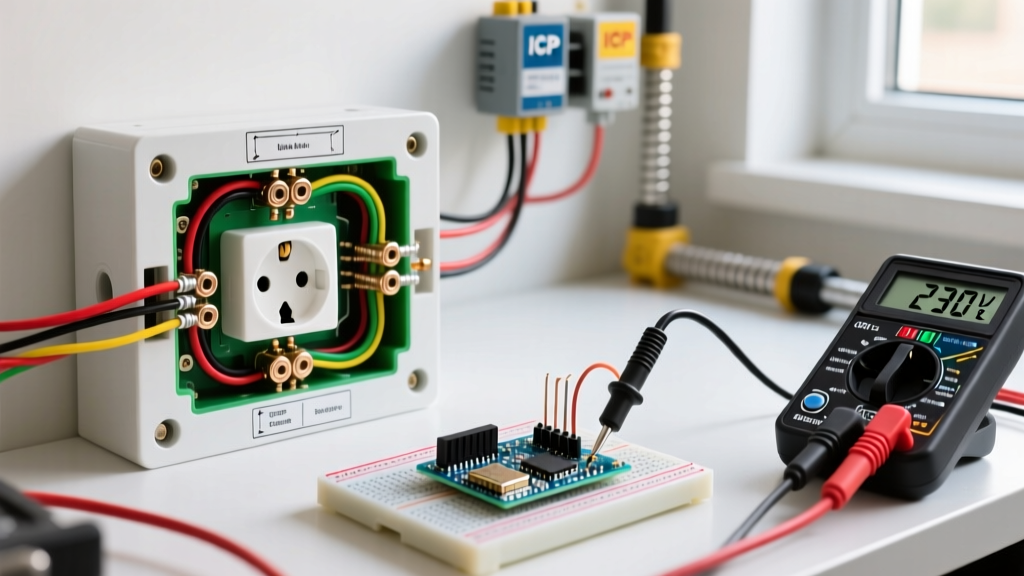
- Measure Line to Neutral (L-N): Insert probes into the two main holes. You should read between 225V and 235V.
- Measure Line to Earth (L-PE): Insert one probe into a main hole and touch the other to the metal grounding clip. It should also read ~230V.
- Measure Neutral to Earth (N-PE): This should read under 2V. If you read a high voltage here, you have a floating neutral or a severed ground wire in the wall junction box.
Safety Warning: Never bypass the Schuko grounding clips by using a 'cheater' adapter to fit a US/Japanese 110V appliance. Spain's 230V grid will instantly destroy 110V electronics and pose a severe fire hazard. Always use a high-quality step-down transformer rated for at least 1.5x the appliance's wattage.
Decoding Spanish Wire Colors and REBT Circuits
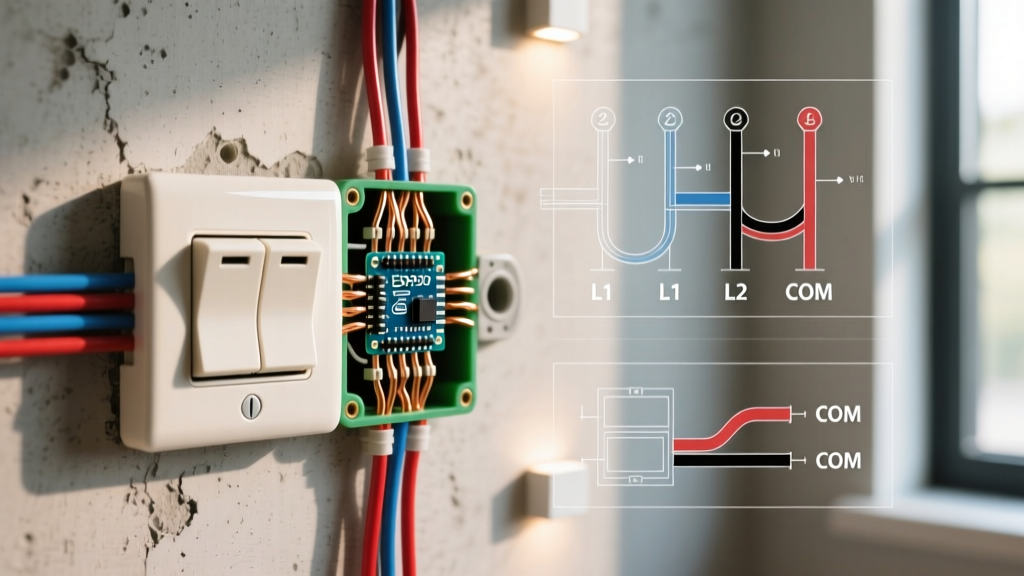
When you remove the faceplate of a Spain electric outlet, the wire colors you encounter will dictate your next steps. Spain follows the European IEC 60446 / HD 308 S2 standard, but older homes present a major troubleshooting trap.
Modern Wiring (Post-2002 REBT Update)
If the home was built or rewired after 2002, you will see:
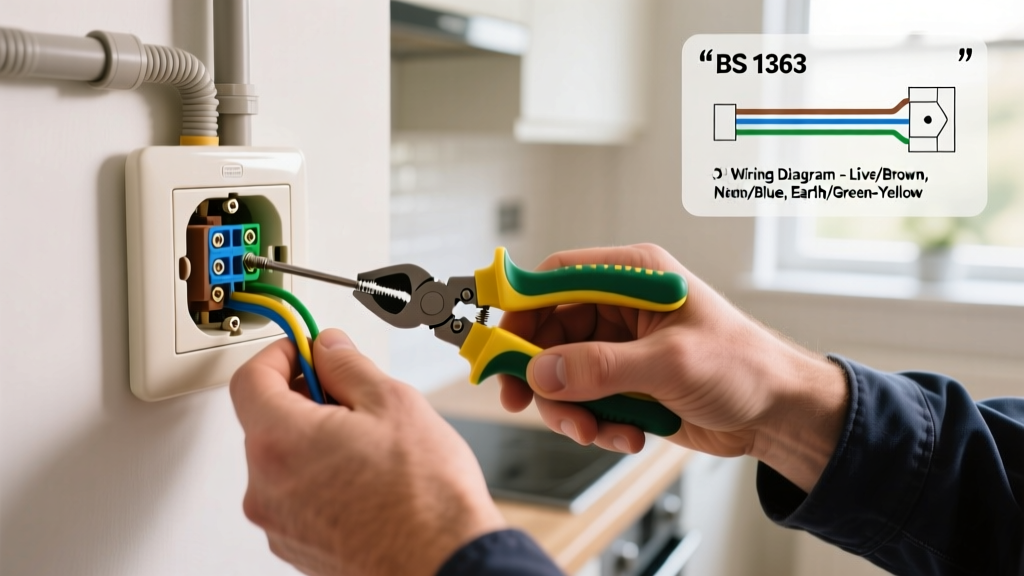
- Brown (Marrón): Line / Phase (L)
- Blue (Azul): Neutral (N)
- Green/Yellow (Verde/Amarillo): Earth / Ground (PE)
Legacy Wiring (Pre-2002)
In older Spanish apartments, you may open a receptacle and find Red, Yellow, and Green wires. Under the old code, Red/Yellow/Brown were used for phases, and Gray or White was often used for Neutral. If you are replacing an outlet in a legacy building, never trust the colors blindly. Always use a non-contact voltage tester or multimeter to identify the live phase before disconnecting anything.
Furthermore, the REBT mandates specific circuit limits (ITC-BT-25). A standard Spanish home splits outlets across multiple circuits: C2 (general living space outlets, 16A PIA), C4 (washing machine/water heater, 20A PIA), and C5 (bathroom outlets, 16A PIA). If your bathroom outlet is dead but the living room works, you must check the C5 PIA breaker, not the C2.
Step-by-Step: Replacing a Worn Spain Electric Outlet
If your multimeter confirms voltage at the wall but the Schuko clips are physically loose (a common issue in high-use areas like kitchens), you need to replace the receptacle. Popular, code-compliant models in Spain include the Simon 27 Play or the Bticino Living Now, typically costing between €6 and €14 at local hardware stores like Leroy Merlin or Bauhaus.
- Kill the Power: Turn off the specific PIA breaker for that room's outlets. Verify with a non-contact voltage tester.
- Remove the Faceplate: Modern Spanish outlets use a snap-on frame. Pry it off with a flathead screwdriver, then unscrew the two 3.5mm machine screws holding the chassis to the wall box.
- Extract and Document: Pull the outlet out. Take a photo of the wiring. Note that Spanish wall boxes are typically 65mm deep, allowing for ample wire slack.
- Disconnect Wires: Loosen the terminal screws. If the copper wire ends are oxidized or brittle, snip them back, strip 8mm of fresh insulation, and twist the strands tightly.
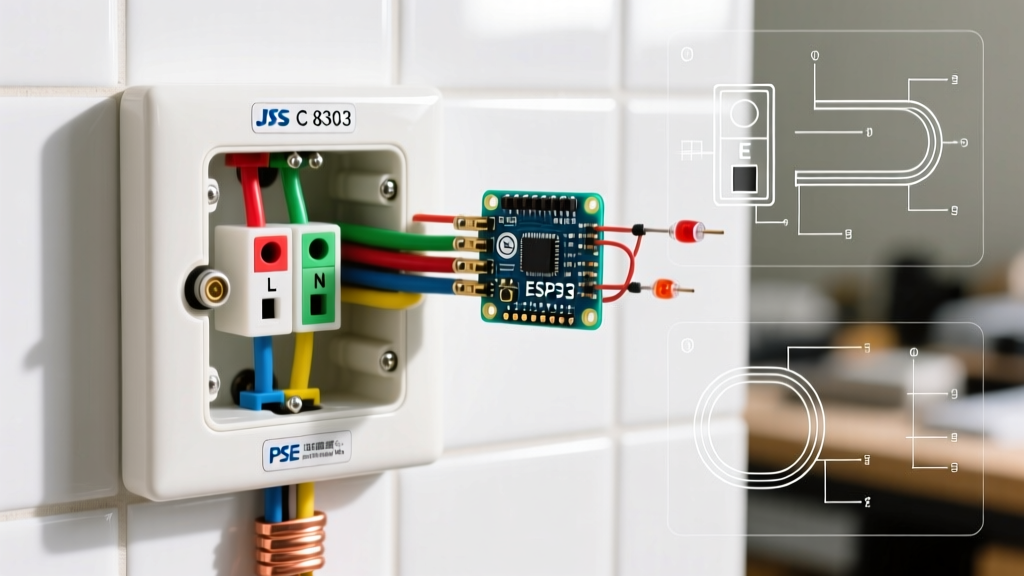
- Wire the New Receptacle: Connect Brown to L, Blue to N, and Green/Yellow to the central Earth terminal (marked with the ⏚ symbol). Ensure no bare copper is exposed outside the terminal block.
- Secure and Test: Push the wires back into the box, screw in the chassis, snap on the frame, and restore the PIA breaker. Test with a commercial outlet tester or multimeter.
Addressing Rural Grid and 'Finca' Grounding Issues
For those troubleshooting a Spain electric outlet in rural areas or off-grid fincas, voltage fluctuation and poor grounding are endemic. The IEC World Plugs database notes that while Spain's national grid is robust, rural micro-grids can suffer from voltage sags under heavy agricultural loads.
If your L-N multimeter reading consistently drops below 210V when heavy appliances (like a well pump) kick on, you are experiencing voltage sag. This can damage sensitive electronics. The solution is not at the outlet itself, but requires installing a whole-home AVR (Automatic Voltage Regulator) or a UPS system for critical electronics. Additionally, rural properties often rely on localized copper grounding rods (tomas de tierra). If the soil is highly dry or rocky, the ground resistance can exceed the REBT-mandated limit of 37 ohms for 30mA differential switches, causing nuisance tripping of the ID breaker. In these cases, an electrician must treat the grounding rod with conductive earth-enhancing compounds like bentonite clay to lower the resistance.
Final Code Compliance Check
Any permanent modifications to a Spain electric outlet must comply with the Spain's official REBT (Reglamento Electrotécnico de Baja Tensión). While replacing a single faceplate is a standard DIY task, adding new outlet circuits, upgrading the cuadro de mando, or altering the main grounding busbar legally requires a certified instalador electricista autorizado to issue a boletín eléctrico (electrical certificate). Always prioritize safety and code compliance over quick fixes when dealing with 230V European power systems.