
Understanding the Mexican Electrical Grid and Receptacle Standards
When evaluating residential or commercial properties south of the border, inspecting a mexico electric outlet requires an understanding of local grid characteristics and national electrical codes. Unlike the United States and Canada, which operate on a nominal 120V system, Mexico's electrical infrastructure operates at a nominal 127V at 60Hz. While tourists often colloquially refer to this as '110V' or '120V', the 127V standard means that multimeter readings between 125V and 132V are perfectly normal and should not be mistaken for overvoltage faults.
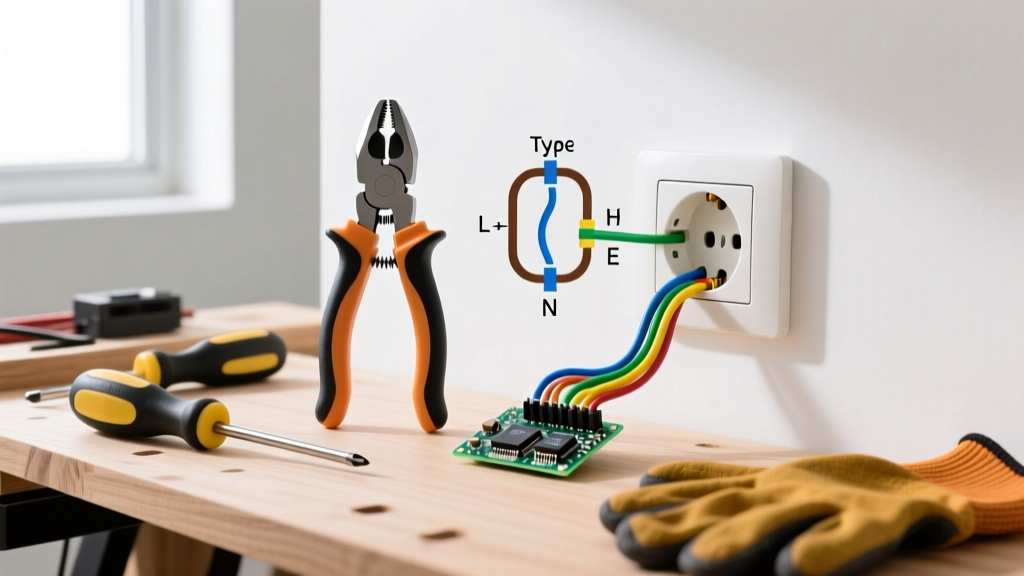
Physically, Mexican receptacles mirror North American standards. According to the IEC World Plugs database, Mexico utilizes Type A (NEMA 1-15, ungrounded two-prong) and Type B (NEMA 5-15, grounded three-prong) configurations. However, the internal wiring, color codes, and safety mandates are governed by the NOM-001-SEDE (Norma Oficial Mexicana), which, while heavily based on the US NEC (National Electrical Code), features distinct local amendments that inspectors must verify.
Essential Diagnostic Tools for 127V Systems
Before opening any junction boxes or removing receptacle yokes, you must equip yourself with reliable testing instruments calibrated for 60Hz, 127V environments. As of 2026, relying on cheap neon-lamp testers is insufficient for verifying ground impedance and AFCI/GFCI trip thresholds.
- True RMS Digital Multimeter: The Fluke 117 True RMS Multimeter (retailing around $210 USD) is the industry standard. Its non-contact voltage (NCV) detection and low-impedance (LoZ) mode are critical for identifying 'ghost voltages' common in long Mexican cable runs.
- Advanced Receptacle Tester: The Klein Tools RT250 (approx. $35 USD) is essential. It not only checks basic wiring polarity but also features a dedicated button to test the trip time of GFCI (ICFAT) receptacles, ensuring they trip within the 20-40 millisecond window required by code.
- Non-Contact Voltage Detector: A secondary verification tool like the Fluke 2AC VoltAlert to ensure the circuit is dead before removing the outlet cover.
Step-by-Step Testing Protocol for a Mexico Electric Outlet
Proper inspection goes far beyond plugging in a lamp. Follow this systematic approach to verify the integrity of the branch circuit and the receptacle itself.
Phase 1: Visual and Physical Inspection
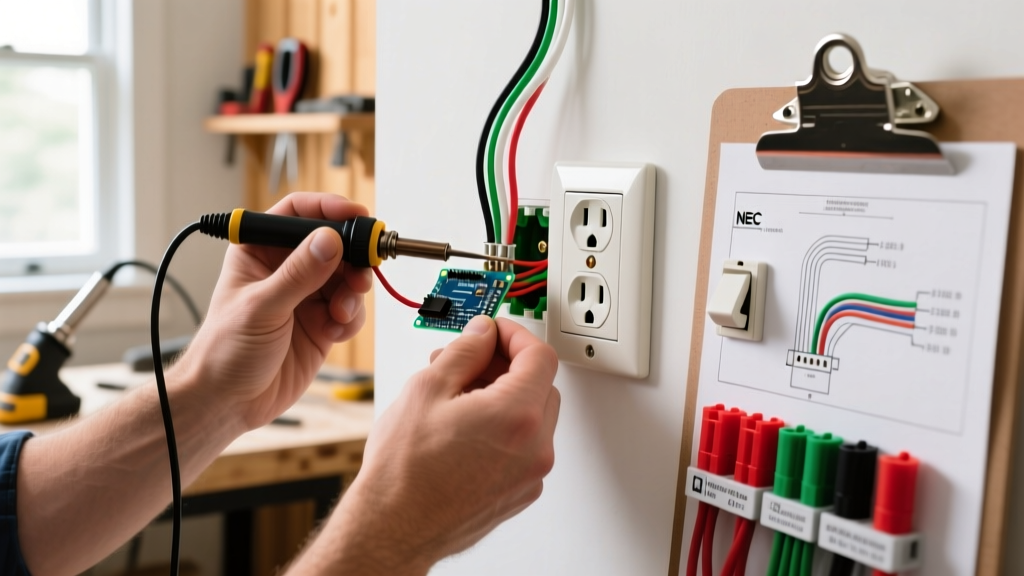
Before applying power, remove the faceplate and inspect the yoke and wiring. Under the latest revisions of NOM-001-SEDE, wire color coding is strictly enforced:
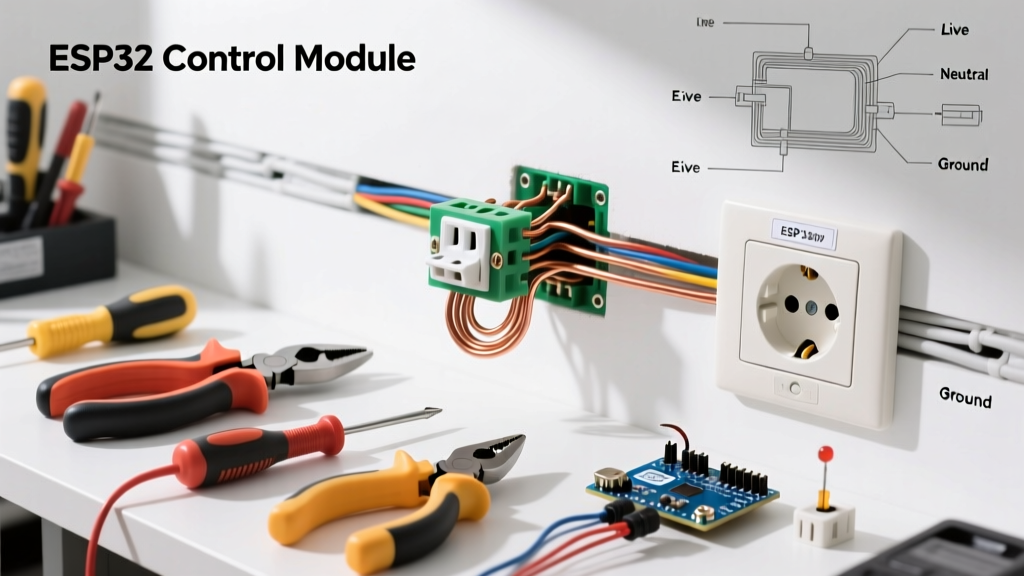
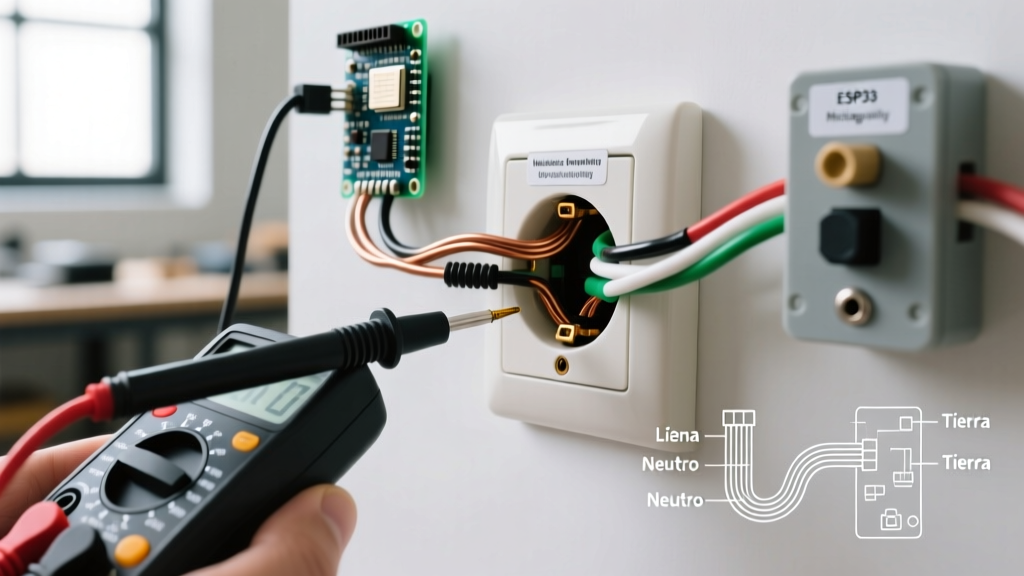
- Ground (Tierra Física): Green or bare copper.
- Neutral (Neutro): White or gray.
- Line/Hot (Fase): Black, red, or blue.
Check the wire gauge. A 15A circuit must use a minimum of 14 AWG copper, while a 20A circuit (common in modern Mexican kitchens) requires 12 AWG. Look for 'backstab' push-in connections; these are notorious for failing in high-humidity coastal regions like Cancun or Puerto Vallarta. All connections should be wrapped clockwise around the terminal screws or secured via high-quality lever-nut connectors (e.g., WAGO 221 series).
Phase 2: Multimeter Voltage Verification
Insert your multimeter probes into the receptacle slots to verify voltage drops and polarity. Refer to the testing matrix below to interpret your readings.
| Test Point | Expected Reading (127V Nominal) | Fault Indication | Probable Cause |
|---|---|---|---|
| Line to Neutral (Hot to White) | 114V to 140V | Less than 110V or Greater than 145V | Grid sag, overloaded local transformer, or loose neutral at the panel. |
| Line to Ground (Hot to Green) | 114V to 140V | 0V or significantly lower than L-N | Open ground, broken ground wire, or missing grounding electrode at the service. |
| Neutral to Ground (White to Green) | 0V to 2V | Greater than 3V | Shared neutral overload, reversed polarity, or a bootleg ground jumper. |
NOM-001-SEDE Compliance and GFCI Requirements
In Mexico, GFCI receptacles are referred to as Interruptores de Circuito por Falla a Tierra (ICFAT). According to NOM-001-SEDE Section 210.8, ICFAT protection is mandatory in all wet or damp locations. When inspecting a property, you must verify GFCI presence and functionality in:
- Bathrooms: All 127V, single-phase, 15A and 20A receptacles.
- Kitchens: Any receptacle serving the countertop surfaces within 1.5 meters of the sink edge.
- Outdoor Areas: Patios, balconies, and pool equipment zones (where weather-resistant 'WR' rated receptacles and in-use covers are also mandated).
- Laundry Areas: Receptacles within 1.8 meters of the washing machine hookup.
As detailed in Fluke's comprehensive receptacle testing guide, pressing the 'TEST' button on the physical outlet is not enough. You must use a solenoid or electronic tester to verify that the ground fault protection trips at a 5mA threshold. If the outlet is wired correctly but lacks an equipment grounding conductor (EGC), the GFCI will still protect against shock, but it must be labeled 'No Equipment Ground' (or 'Sin Tierra Física') to comply with code.
Common Failure Modes in Mexican Installations
Through years of field inspections across various Mexican states, several recurring edge cases and failure modes frequently appear in residential wiring.
1. The 'Bootleg' Ground (Falso Tierra)
In older buildings retrofitted with 3-prong Type B outlets, unscrupulous handymen often install a jumper wire between the neutral terminal and the ground screw. This tricks a basic 3-light tester into showing a 'correct' wiring status. However, if the neutral wire breaks upstream, the metal casing of any plugged-in appliance becomes energized at 127V. Always verify the Neutral-to-Ground voltage; a reading of exactly 0.0V under load, or identical L-N and L-G readings when the neutral is disconnected at the panel, confirms a bootleg ground.
2. Severe Voltage Sag in Rural Haciendas
Properties located far from the CFE (Comisión Federal de Electricidad) distribution transformers often suffer from voltage drop. Per NEMA wiring device standards and local code, voltage drop on a branch circuit should not exceed 3%. If you measure 112V at the panel but only 104V at the furthest Mexico electric outlet, the wire gauge is insufficient for the run length. Upgrading from 12 AWG to 10 AWG copper is the standard remediation.
3. Missing Arc-Fault (AFCI) Protection
While GFCI is widely adopted, AFCI (Arc-Fault Circuit Interrupter) adoption in Mexico has historically lagged behind the US. However, modern NOM-001-SEDE updates now require combination-type AFCI protection for 127V, 15A and 20A branch circuits supplying bedrooms, living rooms, and hallways. Inspectors should check the main distribution board (centro de carga) for AFCI breakers protecting these specific zones.
Inspector's Pro-Tip: When testing outlets in Mexican coastal properties (e.g., Baja California, Riviera Maya), always check for internal corrosion on the brass and nickel terminal screws. The high salinity in the air accelerates galvanic corrosion, especially if aluminum wire was improperly terminated without anti-oxidant paste (Noalox). If you see white, powdery residue on the yoke, the outlet must be replaced immediately to prevent high-resistance arcing.
Frequently Asked Questions
Can I use US 120V appliances on a 127V Mexican grid?
Yes. Modern electronics (laptops, phone chargers, LED drivers) feature universal switching power supplies rated for 100V-240V. Resistive appliances (hair dryers, toasters, space heaters) designed for 120V will run slightly hotter and draw marginally more wattage on a 127V grid, but this 5.8% increase is well within the safe operational tolerance of UL-listed heating elements.
Why does my receptacle tester show an 'Open Neutral' when the power is on?
This usually indicates a broken or disconnected white wire upstream, or a tripped GFCI outlet earlier in the daisy-chain. In Mexican wiring, it is common for daisy-chained receptacles to be wired using the 'loop-through' method on the receptacle screws rather than using wire nuts in the backbox. If the neutral tab breaks or a screw loosens, all downstream outlets lose their neutral path.
Are Type A (2-prong) outlets still legal in new construction?
No. Under current NOM-001-SEDE regulations, all new residential and commercial construction must utilize Type B (3-prong, grounded) receptacles. Type A outlets are only permissible in existing, unmodified older installations (grandfathered) or in specific double-insulated appliance cord caps, but the wall receptacle itself must provide a grounding path.