
Navigating the Prague Electrical Outlet Code Landscape
Whether you are renovating a historic flat in Vinohrady or upgrading the wiring in a mid-century panelák (prefabricated apartment building), understanding the local electrical codes is non-negotiable. When installing or replacing a Prague electrical outlet, you are fundamentally working within the framework of the Czech technical standards, specifically the ČSN 33 2000 series. These national standards are direct adoptions of the European harmonized IEC 60364 / HD 60364 documents, meaning the safety principles align with broader European Union directives, but with specific localized enforcement nuances.
This comprehensive guide breaks down the exact code requirements, wiring methodologies, and material specifications required for compliant and safe outlet installations in Prague as of 2026.
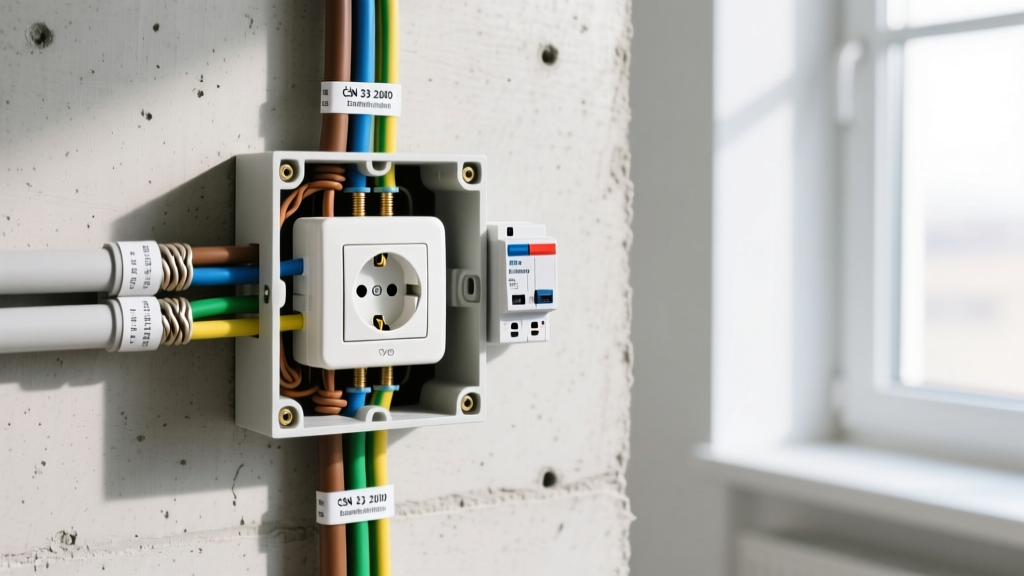
The Anatomy of a Prague Electrical Outlet (Type E)
Unlike the UK (Type G) or North America (Type A/B), Prague utilizes the Type E socket standard (CEE 7/5). While it is highly compatible with the Type F (Schuko) plugs found on most modern European appliances, the physical socket features a protruding earth pin rather than side earth clips. According to World Standards, the Type E configuration ensures that the earth connection is made before the live and neutral pins engage, providing a critical safety margin during insertion.
| Parameter | Specification | Code Reference / Notes |
|---|---|---|
| Nominal Voltage | 230V AC | Tolerance: +10% / -6% (216.2V to 253V) |
| Frequency | 50 Hz | Strict grid synchronization required |
| Socket Type | Type E (CEE 7/5) | Protruding male earth pin on socket |
| Standard Plug | Type E/F Hybrid (CEE 7/7) | Accepts both earth pin and side clips |
| Earthing System | TN-C-S or TN-S | TN-C strictly prohibited for new socket circuits |
Governing Codes: ČSN 33 2000 & IEC 60364
The backbone of all electrical installations in the Czech Republic is the ČSN 33 2000 series. As noted by the International Electrotechnical Commission (IEC), national adoptions of the 60364 standard ensure uniform safety baselines. For general socket outlet circuits, ČSN 33 2000-5-52 dictates the selection and erection of wiring systems, while ČSN 33 2000-4-41 covers protection for safety against electric shock.
The 'Panelák' Earthing Challenge (TN-C vs. TN-C-S)
A unique challenge in Prague is dealing with older communist-era panelák buildings. Many of these structures were originally wired with a TN-C earthing system, where the Protective Earth (PE) and Neutral (N) are combined into a single PEN conductor.
⚠️ CRITICAL CODE WARNING: Under current ČSN 33 2000 regulations, you cannot install a modern 3-pin Type E socket directly off a TN-C PEN conductor without proper separation. The PEN conductor must be split into distinct PE and N conductors at the main distribution board (or at the very least, in a dedicated junction box prior to the socket). If the neutral connection fails downstream of a split PEN at the socket, the appliance chassis can become energized at 230V, posing a lethal shock hazard.
Mandatory Circuit Protection & RCD Rules
The days of relying solely on thermal-magnetic circuit breakers (MCBs) for socket protection are over. Modern Czech code mandates the use of Residual Current Devices (RCDs), known locally as proudový chránič.
- Sensitivity: A maximum residual operating current of 30mA is strictly required for all general-use socket outlets rated up to 32A.
- RCD Type Selection: While Type AC RCDs were the historical norm, the 2026 consensus—supported by guidelines from the European Copper Institute—strongly recommends Type A or Type F RCDs. Modern appliances in Prague homes (inverter washing machines, smart HVAC systems, and EV chargers) generate pulsating DC fault currents that can blind a standard Type AC RCD, rendering it useless.
- Circuit Breaker Sizing: Standard socket rings or radial circuits are protected by a 16A Type B or Type C MCB. Type C is preferred in residential kitchens to handle the high inrush currents of appliances like microwaves and espresso machines.
Conductor Sizing & Color Coding Standards
For a standard 16A Prague electrical outlet circuit, the minimum allowable copper conductor cross-section is 2.5 mm². While 1.5 mm² is technically rated for 16A under ideal, unconstrained installation methods (Method B2), ČSN 33 2000-5-52 heavily restricts its use for general socket circuits due to voltage drop and mechanical stress concerns over long runs.
Mandatory Color Codes (Harmonized EU)
When stripping back a standard Czech installation cable (such as the ubiquitous CYKY-J 3x2.5 solid-core cable), you must adhere to the following color codes:
- Brown: Phase / Live (L)
- Blue: Neutral (N)
- Green/Yellow: Protective Earth (PE) — Never use this color for anything other than earth.
Bathroom & Kitchen Zone Restrictions (ČSN 33 2000-7-701)
Wet areas require stringent adherence to IP (Ingress Protection) ratings and zone classifications. Bathrooms in Prague are divided into specific zones:
- Zone 0 (Inside the tub/shower): No standard outlets permitted. Only SELV (Separated Extra-Low Voltage, max 12V) equipment allowed.
- Zone 1 (Directly above tub/shower up to 2.25m): No standard 230V outlets. Water heaters may be installed if hardwired and protected by a 30mA RCD.
- Zone 2 (60cm radius outside Zone 1): Shaver sockets (with isolating transformer) are permitted. Standard outlets are generally prohibited unless specific IPX4 enclosures are used.
- Zone 3 (Beyond Zone 2): Standard Type E outlets are permitted, provided the circuit is protected by a 30mA RCD and the socket has a minimum IP44 rating with a spring-loaded protective cover.
Step-by-Step: Compliant Type E Socket Wiring
Follow this exact sequence to ensure your installation passes a Czech electrical safety audit (revize):
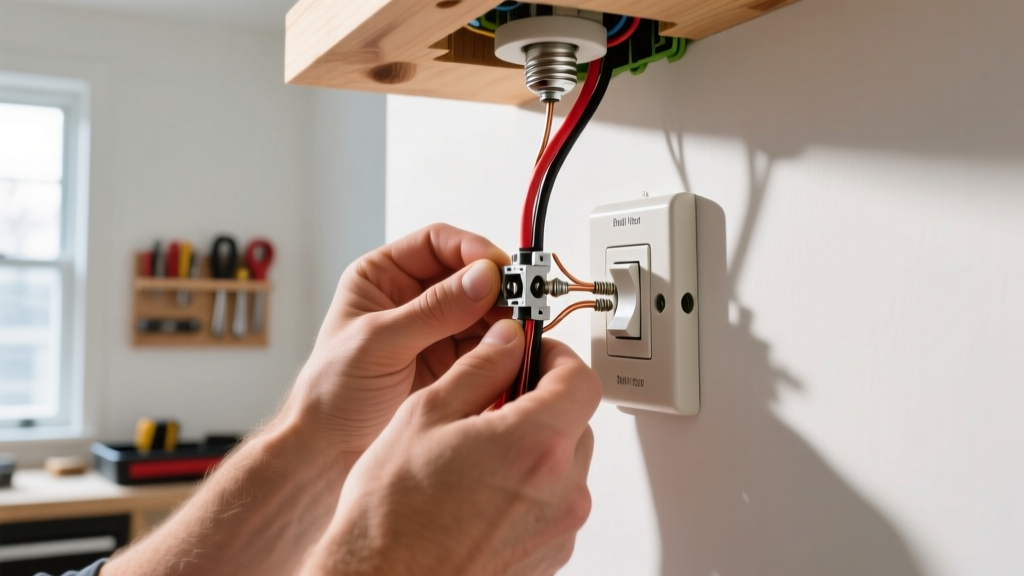
- Isolate & Verify: Turn off the main 3-pole breaker. Use a CAT III rated voltage tester to confirm 0V across L-N, L-PE, and N-PE.
- Prepare the Cable: Strip the outer CYKY sheath, leaving at least 150mm of inner conductors. Strip 12mm of insulation from the individual wires.
- Connect Earth First: Insert the Green/Yellow wire into the top or bottom earth terminal (aligned with the protruding pin). This is a mechanical safety feature; if the cable is yanked, the earth wire should be the last to disconnect.
- Connect Neutral & Phase: Insert Blue into the Neutral terminal (usually marked 'N' or left side). Insert Brown into the Phase terminal (right side).
- Apply Correct Torque: Tighten terminal screws to the manufacturer's specification—typically 1.2 Nm for standard 16A screw terminals. Under-torquing causes arcing and fires; over-torquing shears the copper strand.
- Mount & Test: Secure the faceplate to the flush-mounted box using the provided M3x16mm screws. Restore power and test with a calibrated Type E socket tester to verify correct phase rotation and RCD trip times.
2026 Material Costs & Brand Recommendations
Sourcing high-quality, CE-marked components is vital. Avoid unbranded imports that fail to meet IEC 60884-1 dimensions. Below is a snapshot of 2026 retail pricing in Prague for premium and mid-tier brands.
| Brand & Series | Product Type | Avg. Price (CZK) | Avg. Price (USD) |
|---|---|---|---|
| ABB Tango / Time | Type E Socket (Flush) | 180 - 250 CZK | $7.50 - $10.50 |
| Schneider Electric Asfora | Type E Socket (Flush) | 140 - 190 CZK | $5.80 - $8.00 |
| Legrand Valena Life | Type E Socket w/ Cover | 220 - 310 CZK | $9.20 - $13.00 |
| Eaton / Moeller | 30mA Type A RCD (2-Pole) | 1,100 - 1,400 CZK | $46.00 - $58.00 |
Common Code Violations in Older Prague Apartments
During renovations, electricians frequently uncover dangerous legacy wiring. Be on the lookout for these specific violations:
- The 'Bootleg' Ground: In older TN-C systems, DIYers often jumper the Neutral terminal to the Earth terminal directly on the back of the socket. This is incredibly dangerous. If the neutral wire breaks upstream, the metal chassis of any plugged-in appliance becomes live at 230V.
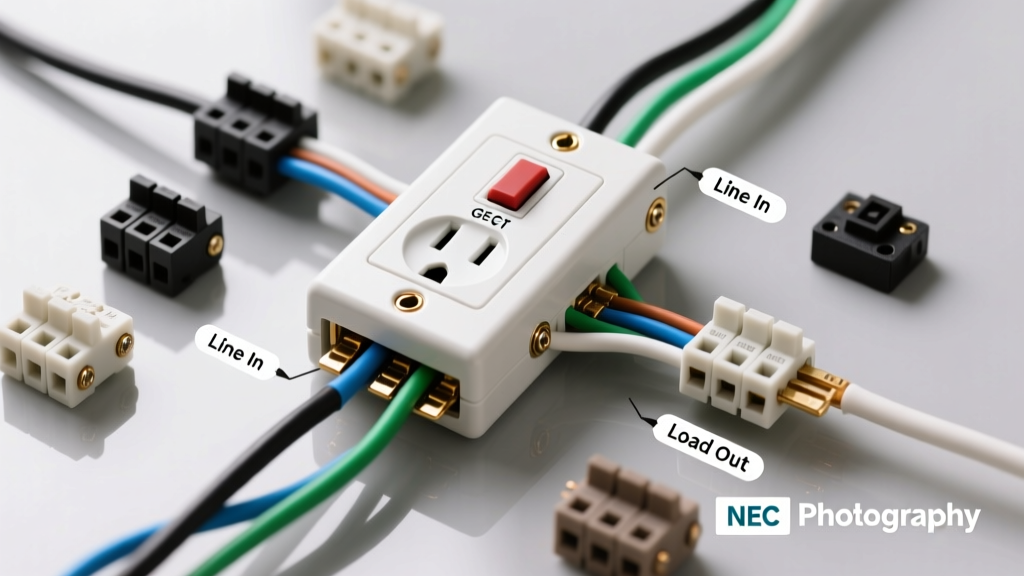
- Aluminum Wiring (Aluminum Oxidation): Pre-1990s buildings often used aluminum conductors. Aluminum creeps and oxidizes, leading to loose connections and high-resistance faults. If you are connecting a modern copper-backed Type E socket to legacy aluminum wire, you must use WAGO 2273 connectors filled with anti-oxidant paste (like Alu-Plus) or transition via bimetallic lugs.
- Missing RCDs: Many older distribution boards only feature MCBs. Upgrading the board to include 30mA Type A RCDs is legally required when adding new socket circuits or performing a major renovation.
Final Thoughts on Compliance
Designing and installing a compliant Prague electrical outlet requires more than just matching wire colors. It demands a thorough understanding of the ČSN 33 2000 standards, an awareness of the building's historical earthing topology, and the use of modern, fault-tolerant protection devices. Always ensure your final installation is inspected and stamped by a certified Czech electrical auditor (revizní technik) to guarantee both safety and legal compliance.