
Navigating the NEC for Electrical Outlet & Switch Installation
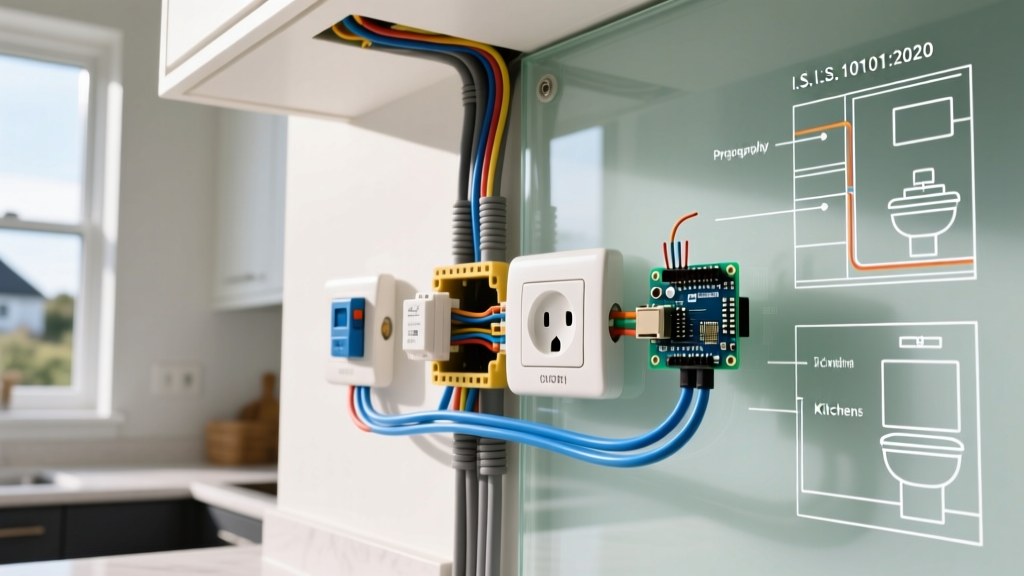
Whether you are wiring a new addition or upgrading a century-old home, understanding the National Electrical Code (NEC) is non-negotiable. The NEC, published by the National Fire Protection Association (NFPA), is updated every three years, with the 2023 edition currently serving as the baseline for most jurisdictions as we move through the 2026 adoption cycles. When it comes to electrical outlet & switch installation, the code has evolved significantly to accommodate modern smart home technology, increased power demands, and enhanced shock/fire prevention.
As a DIYer or an apprentice electrician, guessing the rules can lead to failed inspections, costly rework, or severe fire hazards. This guide breaks down the most critical, heavily enforced NEC articles governing receptacle placement, box fill limits, and circuit protection.
Receptacle Spacing: The "6/12 Rule" Explained
One of the most frequently cited violations during residential inspections involves improper receptacle spacing. NEC Article 210.52(A) dictates the placement of outlets in dwelling unit living areas, bedrooms, and hallways.
How to Measure Wall Space
The code requires that no point along the floor line in any wall space is more than 6 feet from a receptacle outlet. Furthermore, any wall space that is 2 feet or more in width must have at least one receptacle. This is universally known in the trade as the 6/12 Rule:
- 6 Feet: The maximum distance from any point along a wall to the nearest outlet.
- 12 Feet: The maximum distance allowed between two outlets on the same continuous wall.
Expert Insight: "Wall space" is defined as any uninterrupted span along the floor line. A doorway, fireplace, or fixed cabinet breaks the wall space. However, a wall broken by a hallway less than 6 feet wide does not break the wall space; the measurement continues through the hallway.
Mandatory Tamper-Resistant (TR) Receptacles
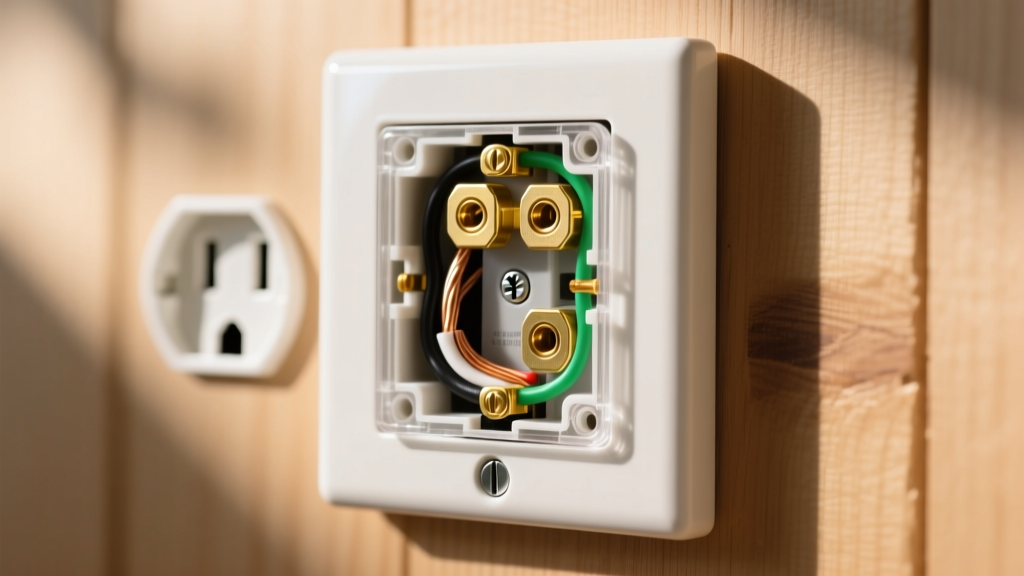
If you are still buying standard receptacles for residential living spaces, you are violating NEC 406.12. All 15-amp and 20-amp, 125V and 250V non-locking receptacles in dwelling units must be listed as Tamper-Resistant (TR).
TR receptacles feature internal spring-loaded shutters that only open when equal pressure is applied to both slots simultaneously (like a standard plug). This prevents children from inserting single objects like hairpins or keys. When purchasing, look for the "TR" stamp on the face of the device. A reliable, code-compliant choice is the Pass & Seymour TR5262-W (typically priced around $3.50 to $5.00 per unit), which offers smooth insertion compared to older, stiffer TR mechanisms.
GFCI vs. AFCI: Where Protection is Required
Confusing Ground Fault Circuit Interrupter (GFCI) and Arc Fault Circuit Interrupter (AFCI) requirements is a common pitfall. They protect against entirely different hazards.
GFCI Protection (NEC 210.8)
GFCIs protect humans from lethal electrical shocks by detecting ground faults (current leaking outside the intended path). As of the latest code cycles, GFCI protection is mandatory for 125V, 15A, and 20A receptacles in:
- Bathrooms and Kitchens (countertops)
- Garages and accessory buildings
- Outdoors (grade level and below, plus rooftops for HVAC)
- Crawl spaces, unfinished basements, and laundry/utility sinks
AFCI Protection (NEC 210.12)
AFCIs protect the structure from fires caused by arcing (sparking) in damaged or degraded wiring. Combination-type AFCI protection is now required on almost all 120V, 15A, and 20A branch circuits supplying outlets in living rooms, bedrooms, hallways, closets, and kitchens. The most efficient way to meet this is by installing an AFCI/GFCI dual-function circuit breaker, such as the Square D HOM220GFIC (approx. $45–$55), which satisfies both code requirements at the panel without needing specialized receptacles at the first outlet in the run.
Box Fill Calculations: Avoiding Overcrowded Boxes
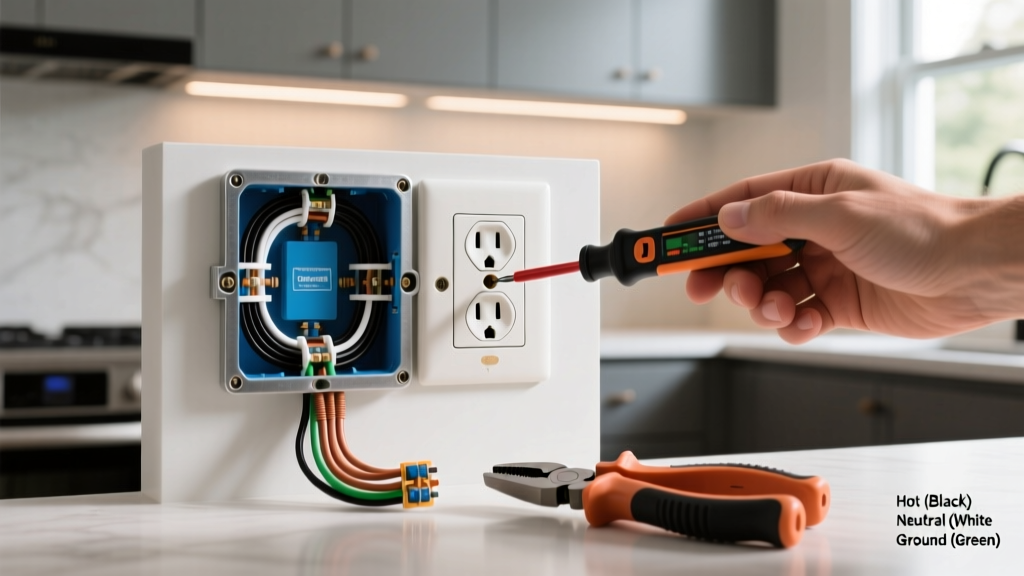
NEC Article 314.16 governs box fill calculations. Stuffing too many wires into a standard electrical box creates excessive heat, damaging wire insulation and creating a fire hazard. You must calculate the total cubic inch volume required and ensure your box meets or exceeds that number.
Volume Allowances per Conductor
Each current-carrying conductor (hot and neutral) counts as one volume allowance based on its AWG size. Equipment grounding wires count as a single volume allowance combined, regardless of how many enter the box.
| Wire Gauge (AWG) | Volume per Conductor (Cubic Inches) |
|---|---|
| 14 AWG | 2.0 cu in |
| 12 AWG | 2.25 cu in |
| 10 AWG | 2.5 cu in |
| 8 AWG | 3.0 cu in |
Real-World Calculation Example
Imagine you are installing a standard duplex receptacle in a single-gang box using 12/2 NM-B cable. You have two cables entering the box (one feed, one load).
- Current-Carrying Wires: 2 blacks, 2 whites = 4 wires. (4 x 2.25 = 9.0 cu in)
- Grounding Wires: 2 bare copper wires count as 1 volume. (1 x 2.25 = 2.25 cu in)
- Clamps: 0 (Plastic boxes have integral clamps; metal boxes require 1 volume allowance).
- Device (Receptacle):strong> Counts as 2 volume allowances. (2 x 2.25 = 4.5 cu in)
- Total Required Volume: 9.0 + 2.25 + 0 + 4.5 = 15.75 cubic inches.
A standard single-gang "old work" box is typically 14 to 16 cubic inches, which would be a code violation here. You must upgrade to a deep single-gang box (18 to 22 cubic inches) or use a larger 4-inch square box with a single-gang mud ring.
The Neutral Wire Mandate at Switch Boxes
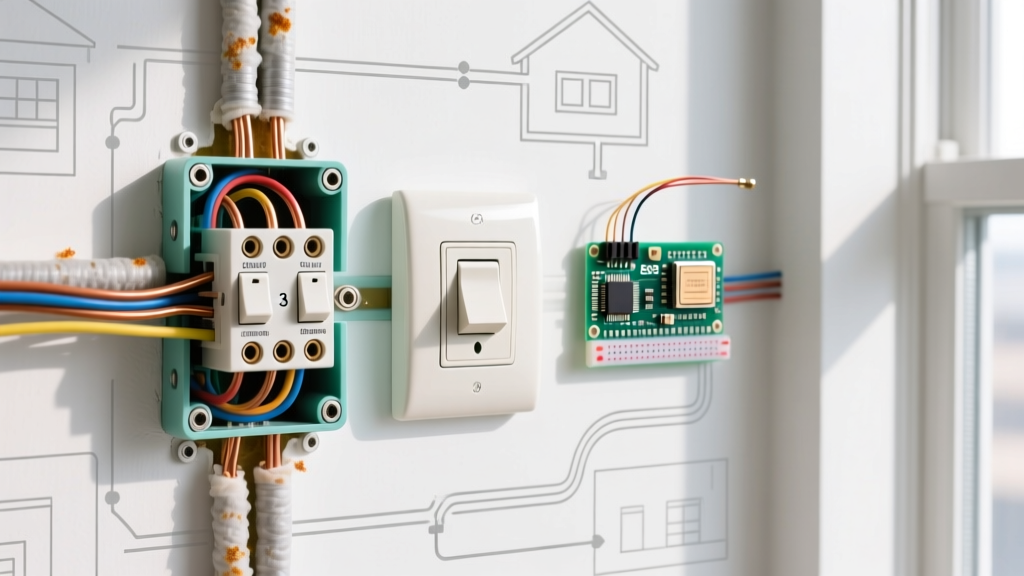
Historically, electricians ran a "switch loop" using a 2-wire cable, sending hot down to the switch and returning the switched hot to the light, leaving no neutral wire in the box. This is no longer compliant. NEC 404.2(C) requires that a neutral (grounded) conductor be provided at nearly every switch box controlling lighting loads.
Why the change? The explosion of smart home technology. Smart switches, Wi-Fi dimmers (like the Leviton Decora Smart DW6HD, ~$40), and motion sensors require a constant 120V power source to operate their internal radios and LEDs. Without a neutral wire, these devices attempt to trickle current through the light bulb, causing LEDs to flicker or glow when turned off. Always pull 3-wire cable (e.g., 14/3 or 12/3) to new switch locations, even if you are only installing a basic mechanical toggle today.
Kitchen Countertop Specifics
Kitchens are the most heavily regulated rooms in the home. For electrical outlet & switch installation in these areas, adhere strictly to NEC 210.52(C):
- Circuit Sizing: Countertop receptacles must be supplied by at least two 20-amp small-appliance branch circuits. No lighting or other room outlets can be on these circuits.
- Sink Proximity: Any countertop space wider than 12 inches requires a receptacle. No point along the countertop wall line can be more than 24 inches from an outlet.
- Face-Up Prohibition: NEC 406.5(E) strictly prohibits standard receptacles from being installed in a face-up position on countertops due to the risk of liquid spilling directly into the slots. If you want a flush countertop outlet, you must use a specialized, UL-listed pop-up or countertop-specific assembly (like the Leviton 42777 series).
Final Inspection Checklist
Before calling your local AHJ (Authority Having Jurisdiction) for a rough-in or final inspection, verify your installation against this quick checklist:
- [ ] All living area receptacles are Tamper-Resistant (TR).
- [ ] GFCI protection is installed in all wet/damp locations and within 6 feet of sinks.
- [ ] AFCI protection is active on all living space branch circuits.
- [ ] Box fill calculations were performed, and deep boxes were used where necessary.
- [ ] Neutral wires are present and capped in all switch boxes.
- [ ] The 6/12 rule is satisfied in all habitable rooms.
For the most up-to-date code language and local amendments, always consult the official NFPA 70 National Electrical Code documentation and industry resources like EC&M's National Electrical Code center. Safe, compliant electrical outlet & switch installation protects your home and ensures your electrical system is ready for the demands of modern living.