
Japan Electrical Outlet vs US: The Core Physical Differences
At first glance, a traveler or electronics importer comparing a Japan electrical outlet vs US receptacle might assume they are entirely identical. Both nations predominantly utilize the Type A (ungrounded) and Type B (grounded) physical plug configurations. However, beneath the faceplate, the electrical infrastructure, wiring standards, voltage delivery, and safety codes diverge significantly. According to the International Electrotechnical Commission (IEC), while the physical pins align, the nominal grid voltage and frequency standards create critical compatibility hurdles for high-draw appliances and sensitive electronics.
For DIY electricians, expats wiring homes, or hobbyists importing Japanese audio equipment and rice cookers, understanding the exact wiring diagrams and code requirements is essential to prevent equipment failure or electrical fires. This guide breaks down the exact physical, electrical, and structural differences between Japanese and American receptacle systems.
| Specification | United States (NEMA 5-15R) | Japan (JIS C 8303) |
|---|---|---|
| Physical Plug Type | Type A (NEMA 1-15) & Type B (NEMA 5-15) | Type A & Type B (Identical physical dimensions) |
| Nominal Grid Voltage | 120V (Range: 114V - 126V) | 100V (Range: 95V - 105V) |
| Standard Frequency | 60Hz (Nationwide) | 50Hz (East) / 60Hz (West) |
| Standard Branch Circuit Rating | 15A or 20A (125V rated) | 15A (125V rated physical, 100V operational) |
| Grounding Pin Requirement | Mandatory for all new 15A/20A 125V receptacles | Mandatory in new builds, but legacy 2-pin (ungrounded) still widespread |
Wiring Diagram Reference: Inside the Wall
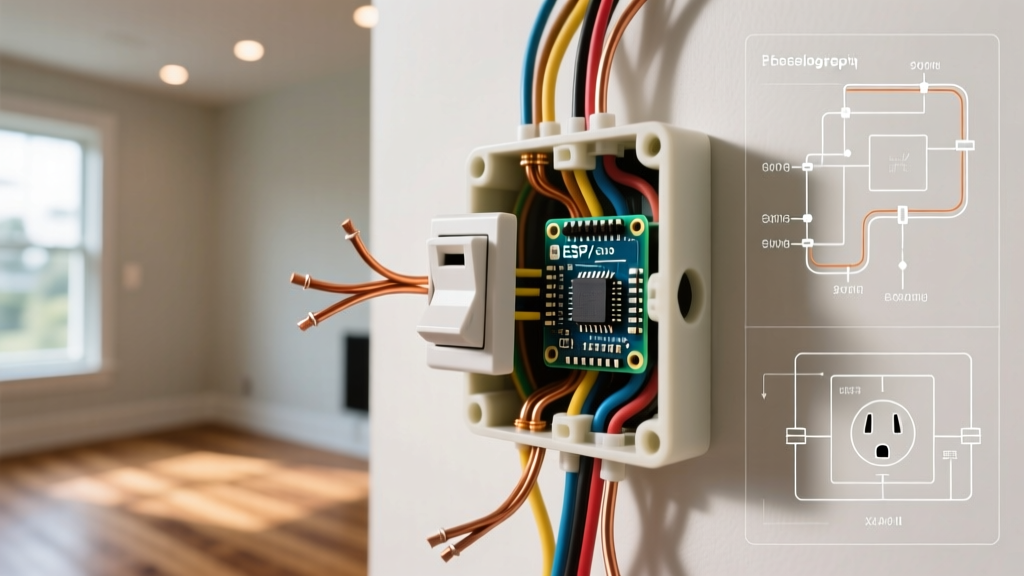
When wiring a receptacle, the color codes, cable types, and gauge measurements differ between the US National Electrical Code (NEC) and Japan's Electrical Wiring Regulations. Understanding these wiring diagrams is crucial if you are retrofitting a room or building custom extension cords for cross-border use.
US Standard: NEMA 5-15R and Romex NM-B
In the United States, standard 15-amp outlet circuits are wired using 14 AWG NM-B (Non-Metallic Sheathed) cable, commonly known by the brand name Romex. For 20-amp circuits (kitchens, bathrooms), 12 AWG is mandated. The standard 120V wiring diagram for a NEMA 5-15R receptacle follows strict NEC color coding:
- Black Wire (Hot/Line): Connects to the brass-colored screw terminal (shorter slot).
- White Wire (Neutral): Connects to the silver-colored screw terminal (longer slot).
- Bare Copper or Green Wire (Ground): Connects to the green grounding screw at the bottom of the yoke.
The physical orientation of the ground pin is typically installed facing down in residential settings, though the NEC does not strictly mandate orientation, commercial and healthcare facilities often install them ground-up to prevent short circuits from falling debris.
Japan Standard: JIS C 8303 and VVF Cable
Japanese residential wiring heavily relies on VVF (Vinyl Insulated Vinyl Flat) cable. Instead of the American Wire Gauge (AWG) system, Japan measures wire by cross-sectional area or diameter. A standard 15A branch circuit utilizes 1.6mm diameter (approx. 2.0 mm², roughly 14 AWG) or 2.0mm diameter (approx. 3.5 mm², roughly 12 AWG) VVF cable.
The wiring diagram for a standard Japanese grounded outlet (JIS C 8303) utilizes the following color codes:
- Black Wire (Line/Hot): Connects to the brass terminal (shorter slot). Note: In some older Japanese switch loops, Red may be used for the hot wire, but Black is standard for outlet line feeds.
- White Wire (Neutral): Connects to the silver terminal (longer slot).
- Green Wire (Ground): Connects to the grounding terminal. Unlike the US, where bare copper is common, Japanese VVF ground wires are almost always insulated with green vinyl.
Wiring Edge Case: In Japan, it is common to find older 2-pin ungrounded outlets wired with only Black and White VVF wires. If you are upgrading a Japanese home to modern grounded standards, you must pull new 3-core VVF cable with the green ground wire tied to a verified grounding rod or structural ground, as metallic conduit is rarely used as a ground path in Japanese wood-frame residential construction.
The Hidden Variables: 100V vs 120V and the 50/60Hz Split
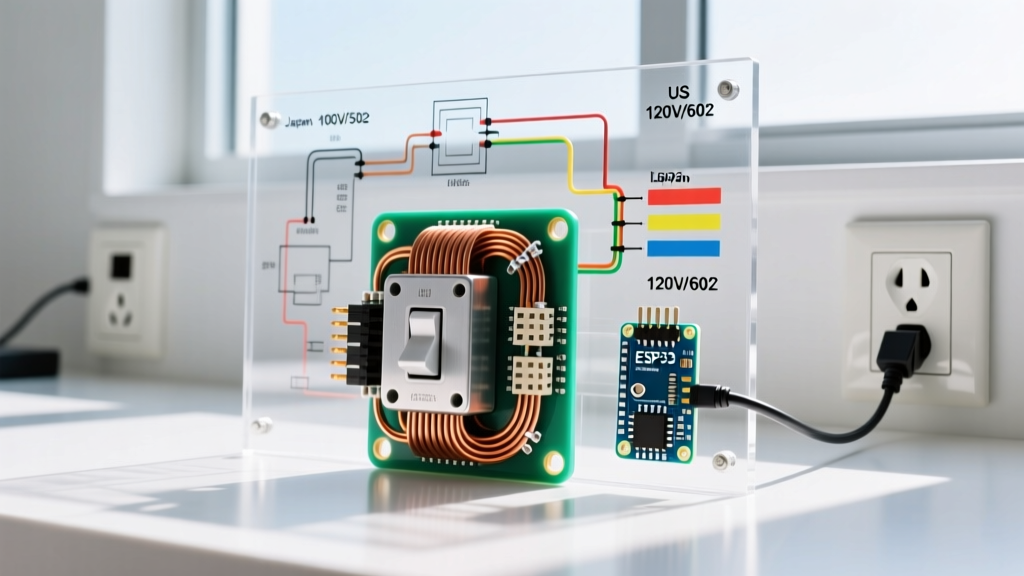
The most critical difference in the Japan electrical outlet vs US comparison is not physical, but electrical. As detailed in Electrical Technology's Global Voltage Standards, Japan is the only developed nation with a 100V nominal grid, and it is uniquely split into two distinct frequency zones.
The Voltage Gap: 100V vs 120V
Japanese appliances are engineered to operate optimally at exactly 100V. If you plug a Japanese 100V appliance (like a Zojirushi induction rice cooker or a high-end Denon AV receiver) directly into a US 120V outlet, the 20% overvoltage will cause severe damage. Heating elements will burn out prematurely, and internal power supply capacitors may rupture.
Conversely, plugging a US 120V appliance into a Japanese 100V outlet results in a 20% voltage drop. While switching power supplies (like laptop chargers) will compensate seamlessly, resistive loads like US hair dryers or space heaters will run significantly cooler and weaker, and AC motors may stall and overheat due to insufficient starting torque.
The Frequency Divide: 50Hz vs 60Hz
Japan's grid is split by the Itoigawa-Shizuoka Tectonic Line. Eastern Japan (including Tokyo) operates at 50Hz, a legacy of early 20th-century German AEG generators. Western Japan (including Osaka) operates at 60Hz, stemming from American GE generators. The US operates entirely at 60Hz.
According to Japan Guide's Electrical Infrastructure Overview, modern electronics with universal switching power supplies (100-240V, 50/60Hz) are immune to this split. However, appliances relying on AC synchronous motors (like analog clocks, older turntables, and some microwaves) will run 17% slower in Tokyo than in Osaka, and 17% slower in Tokyo than anywhere in the United States.
Grounding and Safety: GFCI vs ELCB
A major divergence in wiring diagrams is how the two nations handle ground-fault protection. In the US, the NEC mandates GFCI (Ground Fault Circuit Interrupter) receptacles at the point of use in wet areas (bathrooms, kitchens, exteriors). These devices monitor the current imbalance between the hot and neutral wires and trip in milliseconds.
In Japan, point-of-use GFCI receptacles are exceptionally rare. Instead, Japanese electrical codes rely on ELCBs (Earth Leakage Circuit Breakers), known locally as Rōden, installed at the main distribution panel. These panel-level devices monitor the entire branch circuit for leakage to ground. If you are wiring a Japanese-style wet room in a US jurisdiction, you cannot substitute a panel-level ELCB; you must install UL-listed GFCI receptacles to pass local US inspections.
Transformer Sizing for Cross-Border Appliance Use
To safely bridge the gap between a Japan electrical outlet vs US infrastructure, you must use a step-up or step-down transformer. Sizing this transformer correctly is a common failure point for DIYers.
- Identify the Appliance Wattage: Check the nameplate for the maximum wattage (W) or calculate it (Volts × Amps = Watts).
- Apply the Safety Multiplier: Transformers should never be run at 100% capacity. Multiply the appliance wattage by 1.5 to account for startup surges (inrush current) and thermal derating.
- Select the Transformer: For a 1000W Japanese toaster oven, you need a minimum 1500W step-down transformer (US 120V to Japan 100V). Reliable models include the KRIËGER 1750W Step Down or the Simran SMF-2000, which typically cost between $80 and $140 USD.
Warning: Never use a cheap, unshielded autotransformer for sensitive Japanese audio equipment or medical devices, as they do not provide galvanic isolation and can introduce severe EMI (Electromagnetic Interference) into the 100V line.
Frequently Asked Questions
Can I physically plug a US grounded plug into a Japanese outlet?
Physically, yes. The NEMA 5-15P (US grounded) plug will fit perfectly into a modern JIS C 8303 (Japanese grounded) outlet. However, you will be supplying the US appliance with 100V instead of 120V, which may cause underperformance or motor stalling as described above.
Are Japanese power strips safe to use in the US?
No. Japanese power strips are rated for 15A at 125V physically, but their internal wiring and surge protection components (MOVs) are calibrated for a 100V grid. If you plug a Japanese power strip into a US 120V outlet and draw 15 amps, the 100V-rated surge protection may trigger prematurely, or the internal wiring may overheat due to the higher voltage pushing through appliances designed for lower resistance.
Do I need a frequency converter for my US laptop in Japan?
No. Laptop power bricks are universally rated for 100-240V and 50/60Hz. They use high-frequency switching topologies that rectify the AC input to DC immediately, making them entirely indifferent to the 50Hz/60Hz split in Japan or the 100V vs 120V difference. You only need a simple physical plug adapter if your US plug lacks the holes required by some older Japanese shuttered outlets.