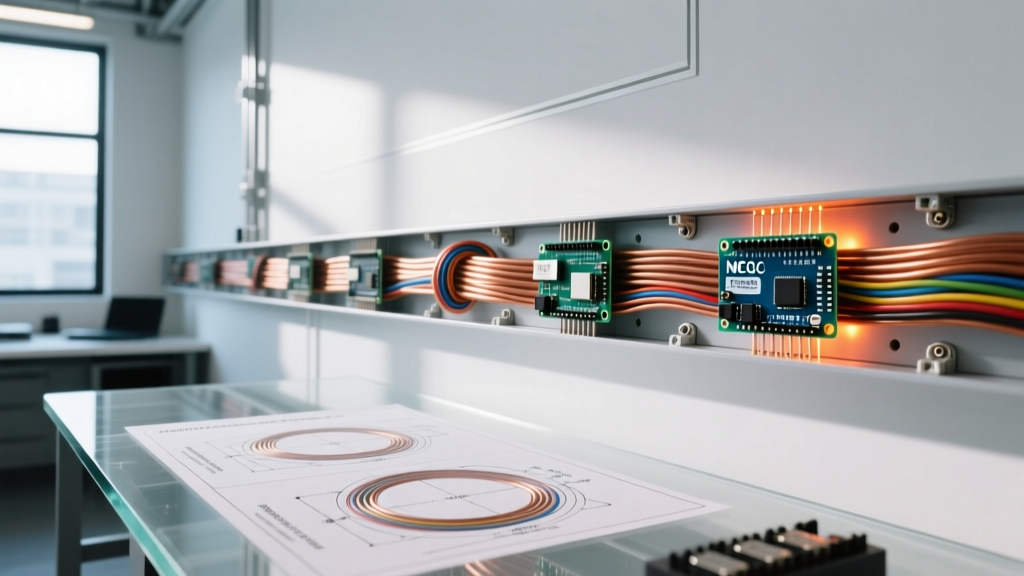

The Shift to Home Run Topologies in Modern Residential Wiring
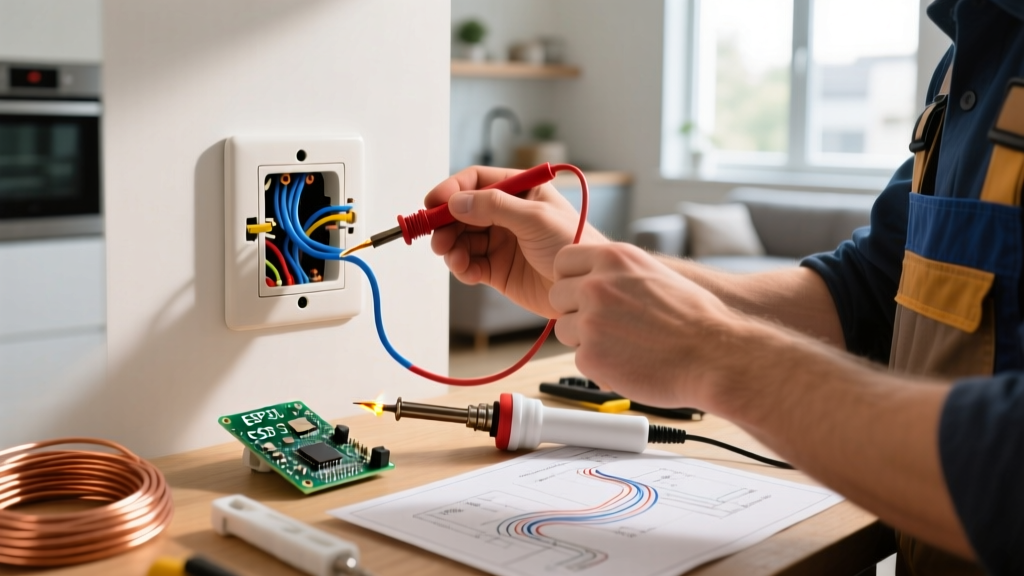
In residential and light commercial electrical installations, the term home run electrical wiring refers to a topology where a continuous, unbroken cable is routed directly from the main service panel (or subpanel) to a dedicated device, appliance, or a single centralized junction point. Unlike traditional daisy-chaining—where a single circuit loops through multiple receptacle boxes in series—a home run isolates the load, drastically reducing points of failure. While daisy-chaining remains code-compliant for general lighting and standard receptacle circuits, the 2026 electrical landscape heavily favors home run configurations for high-draw appliances, AFCI-protected bedroom circuits, and critical infrastructure due to superior safety and reliability.
As copper prices stabilize in 2026 (averaging $165 to $185 per 250-foot coil of 12/2 NM-B), the material cost premium of running dedicated lines is increasingly justified by the mitigation of catastrophic failure modes like series arcing and neutral overloading. This guide details the critical safety best practices, National Electrical Code (NEC) requirements, and precision installation techniques required for executing flawless home run circuits.
Core Safety Advantages: Eliminating the 'Weak Link'
1. Neutral Continuity and Arc Fault Mitigation
The most prevalent cause of residential electrical fires is not a short circuit, but a high-resistance connection, particularly on the neutral conductor. In a daisy-chained circuit, the neutral current for downstream devices passes through the terminal screws and pigtails of upstream receptacles. If a single wire nut fails or a terminal screw loosens due to thermal cycling, the downstream devices lose their neutral path. In multi-wire branch circuits (MWBC), this can instantly subject 120V appliances to 240V, destroying electronics and igniting fires.
By utilizing home run electrical wiring, the neutral conductor travels unbroken from the device back to the panel's neutral bus bar. This eliminates intermediate splice points. According to the Consumer Product Safety Commission (CPSC), eliminating hidden splices and ensuring neutral continuity is a primary defense against series arc faults, which standard thermal breakers cannot detect.
2. Simplified Troubleshooting and Isolation
When a fault occurs on a home run circuit, the issue is isolated to a single cable and a single point of termination. Electricians do not need to tear open drywall to find a buried, inaccessible junction box or test a dozen upstream receptacles to locate a broken backstab connection. This isolation is critical for commercial wiring harnesses and remodel wiring where minimizing downtime and diagnostic time is paramount.
2026 NEC Compliance: Conductor Sizing and Voltage Drop
Because home runs often cover longer distances than daisy-chained loops (which follow the perimeter of a room), voltage drop becomes a critical safety and performance factor. The National Fire Protection Association (NFPA 70 / NEC) recommends a maximum voltage drop of 3% for branch circuits and 5% for the combined feeder and branch circuit to ensure optimal efficiency and prevent motor burnout in appliances.
| Wire Gauge (Copper NM-B) | Breaker Size | Max Continuous Load | Max Length for 3% Drop (120V) | Typical 2026 Application |
|---|---|---|---|---|
| 14 AWG | 15 Amp | 12 Amps | 48 Feet | Dedicated LED lighting home runs |
| 12 AWG | 20 Amp | 16 Amps | 53 Feet | Kitchen small appliance, bathroom GFCI |
| 10 AWG | 30 Amp | 24 Amps | 64 Feet | Water heaters, RV receptacles |
| 8 AWG | 40 Amp | 32 Amps | 61 Feet | Level 2 EV Chargers, Subpanel feeds |
Note: If your home run exceeds the lengths listed above, you must upsize the conductor by one gauge to maintain the 3% voltage drop threshold, regardless of the breaker's ampacity rating.
Panel Thermal Management and Torque Specifications
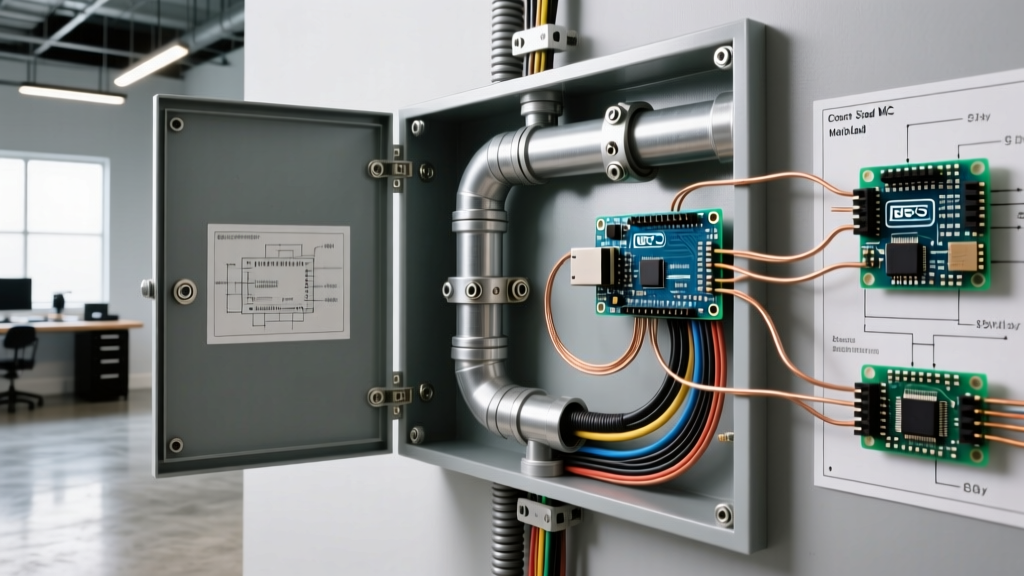
A common failure mode in panels heavily populated with home run cables is thermal buildup. Every cable entering the panel adds mass, which can restrict airflow and trap heat against the breaker terminals. Furthermore, the sheer volume of home runs increases the risk of loose terminations if installers rely on 'feel' rather than calibrated tools.
Pro-Tip for Panel Fill: NEC Article 312.8 dictates that conductors must not fill the wiring space at any cross section to more than 40% of the cross-sectional area of the space. When running multiple 12/2 and 10/2 home runs, use deep-gutter panels (like the Square D EZ-Branch or Eaton BR 32-space models) to ensure adequate thermal dissipation and physical bending radius.
The Mandate of NEC 110.14(D)
Since its introduction and subsequent strict enforcement through 2026, NEC 110.14(D) requires that all electrical connections be tightened using a calibrated torque tool to the manufacturer's specified values. Hand-tightening is no longer acceptable and is a leading cause of thermal imaging failures during insurance inspections.
- Tool Requirement: Use an insulated torque screwdriver, such as the Klein Tools 32500INS, calibrated in inch-pounds.
- Square D Homeline 15A/20A Breakers: Typically require 20 to 25 in-lbs for both the hot lug and the neutral bus bar.
- Eaton BR 15A/20A Breakers: Typically require 20 to 25 in-lbs.
- Ground Bus Bars: Often require 35 to 40 in-lbs depending on the lug size and wire gauge.
Applying the correct torque ensures the wire is compressed sufficiently to prevent micro-arcing under load, but not so tight that it shears the copper strands or strips the aluminum bus bar threads.
Step-by-Step Execution: The Safe Home Run Protocol
- Calculate the Load and Distance: Determine the exact continuous load of the device and measure the physical routing distance from the panel to the device. Add 15% to your measurement for panel dressing and box pigtails.
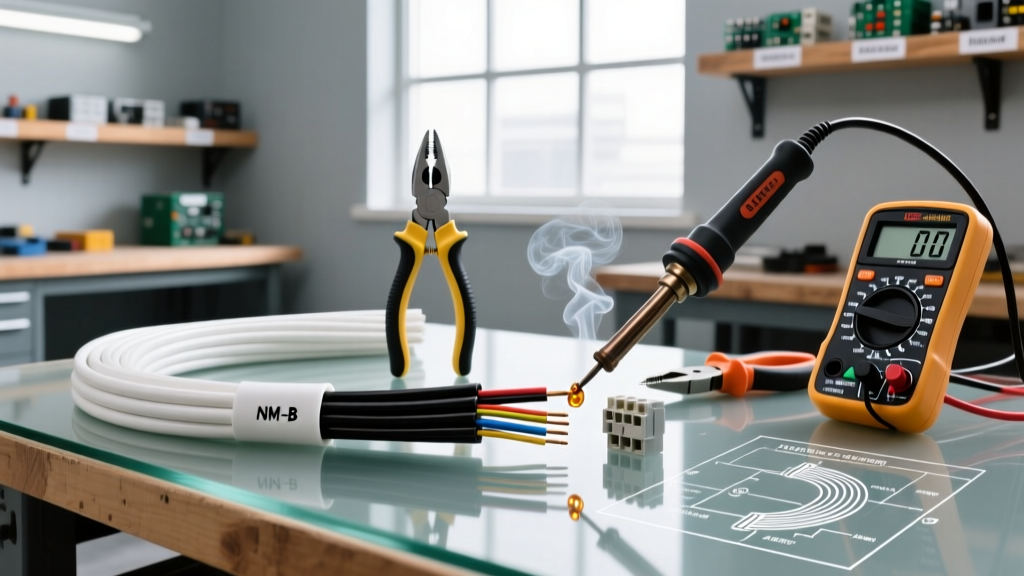
- Select the Proper Cable: For standard 20A home runs, use Southwire SIMpull 12/2 NM-B. The SIMpull jacket technology reduces friction by up to 50%, preventing insulation micro-tears when pulling long runs through tight joist bays.
- Drill and Protect: Drill 3/4-inch holes through the center of framing members. Maintain a 1.25-inch clearance from the edge of the stud to prevent drywall screw punctures. Install nail plates where clearance is compromised.
- Pull Without Kinking: Feed the cable smoothly. Never yank or use excessive force. If the cable kinks, the internal paper separator and PVC insulation can deform, creating a localized hot spot under heavy load.
- Terminate with Torque: Strip the jacket back exactly 8 inches inside the panel. Use your calibrated torque screwdriver to secure the hot conductor to the breaker and the neutral to the designated neutral bus bar. Never share a neutral lug with another circuit.
- Label and Document: Use a Brady or Brother heat-shrink labeler to mark both ends of the home run with the circuit number, destination, and date. Update the panel directory immediately.
Frequently Asked Questions
Are home runs required by the NEC for all circuits?
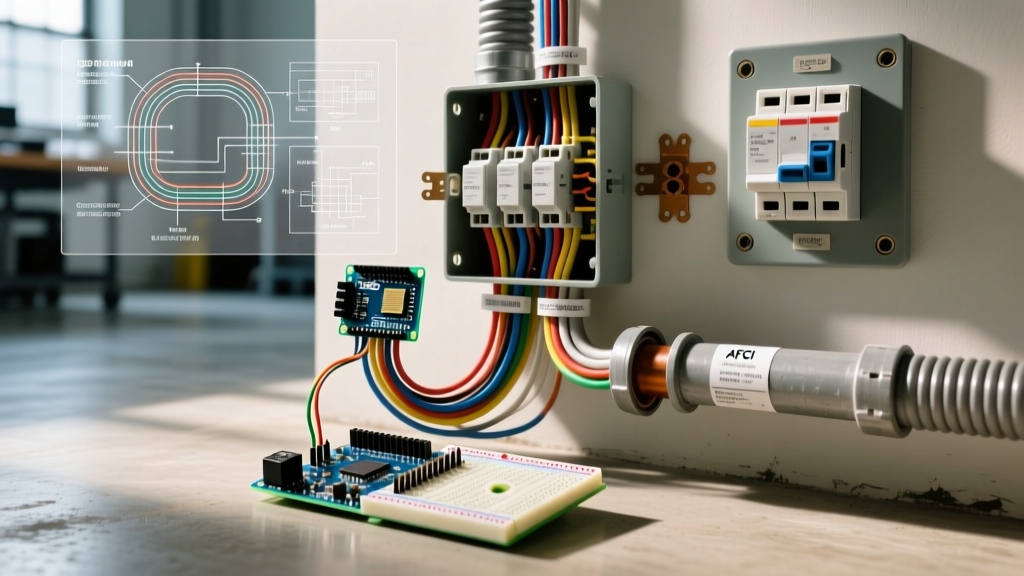
No. The NEC does not mandate home run wiring for standard general-purpose receptacle circuits; daisy-chaining is perfectly legal and safe when executed with proper pigtailing and torque. However, home runs are practically required for 240V appliances, dedicated HVAC equipment, and are highly recommended for AFCI-protected circuits to prevent nuisance tripping caused by long daisy-chained cable runs acting as antennas for high-frequency noise.
How do I handle Multi-Wire Branch Circuits (MWBC) in a home run setup?
If you are running a home run MWBC (using 12/3 or 10/3 NM-B to share a neutral between two 120V legs), the 2026 NEC strictly requires a common trip mechanism (a 2-pole breaker or handle-tied single-pole breakers) to ensure both ungrounded conductors are disconnected simultaneously. This prevents a scenario where an electrician assumes a circuit is dead, only to receive a 120V shock from the shared neutral carrying the return current of the still-energized second leg. For maximum safety, many electricians are abandoning MWBCs in favor of individual 12/2 home runs, despite the extra copper cost, to eliminate neutral-sharing risks entirely.
What are the OSHA guidelines for working on home run panels?
When terminating home runs in an energized panel (which should only be done by licensed professionals using proper PPE), OSHA Electrical Safety guidelines mandate the use of insulated tools, voltage-rated gloves, and arc-flash face shields if the incident energy level exceeds the threshold of the panel's labeling. Always de-energize the main bus whenever possible before adding new home run breakers.